A completely open-source AI Wearable device like Avi’s Tab, Rewind’s pendant, and Humane’s Pin!
Not only is it open-source, where you can own your data and switch between foundation models, but you can actually set it up today, not in a few months (oh, and it's cheaper!)
The lack of deep engagement with the humanities results in several key problems that undermine a full understanding of AI and its societal impacts:
1. Narrow definitions of intelligence. Without input from philosophy, psychology, and other fields, AI researchers tend to operate with simplistic notions of intelligence as computational power or information processing. This ignores the nuanced phenomenological, emotional, and ethical dimensions of human cognition.
2. Technological solutionism. Engineering-driven approaches treat AI as an end in itself rather than reflecting on broader social needs and problems it should aim to solve. A solely techno-centric view ignores humanistic insights into the complexity of social challenges.
3. Ethics as an afterthought. Issues of bias, privacy, and autonomy only arise late in development, rather than being core design considerations from the outset. Humanities scholarship on moral philosophy, critical race theory, and feminism reveal the need to place ethics at the foundation.
4. Uncritical adoption narratives. The absence of disciplines studying media, rhetoric, and propaganda allows exaggerated AI narratives to proliferate without evidence-based interrogation of the limitations and uncertainties involved.
5. Lack of historical context. Situating current developments in the larger arc of attempts to simulate human intelligence would lead to more measured expectations and claims. History and STS help provide that long-view perspective.
6. No platform for diverse voices. Computer science and engineering remain dominated by a narrow demographic. The humanities foster inclusive, pluralistic discourse essential for surfacing a diversity of needs and concerns.
7. Epistemic inequality. Deference to technical expertise without equal input from other forms of knowledge entrenches an imbalanced two cultures model separating the sciences and humanities.
In essence, the tools of humanistic analysis are required to move beyond engineering-driven AI to develop more thoughtful, ethical, and socially-grounded intelligent systems.
@chrisalbon assuming this is for a ML project, pytorchvideo might be useful (gpu acceleration, API for video clipping, encoding, frame sampling, native support for video datasets)
When it was released, @PyTorch won the hearts of AI researchers.
Today, it is trusted by data scientists & ML engineering teams around the world, with first-class support on all cloud providers & AI hw.
Discover the story in our podcast! https://t.co/LASJjSe1dc
Developer Advocate @subramen talks all about PyTorch with @passy on the latest @MetaTechPod. Learn about the history of #PyTorch, how it became successful, and the importance of fostering a helpful community.
Listen now: https://t.co/5sHt9wVHKr
Great essay placing AI in historical context from someone who should know: history professor & award-winning science fiction author @Ada_Palmer
“Knowledge empowers; experience empowers; expression empowers; each of these twenty generations has been more powerful than the last.”
Currently, numpy functions cannot run on the GPU, this feature implements the Numpy API using PyTorch tensors and ops.
No more having to look up PyTorch equivalents of numpy functions, this is a game changer for devs who use both libraries!
Amazing news!
A new RFC proposes supporting @numpy_team functions natively from @PyTorch
Developers can call the numpy API and get all the speedup benefits of the new PyTorch compiler!
https://t.co/grg3XOzD3i
#pytorch x #numpy
@vfsglobalcare I’m unable to login to your portal to book an appointment. Tried it from different devices, networks, cleared cache etc. Is there another way to schedule an appointment ?
New blogpost! a visual primer on how @PyTorch 2.0 compiler technologies for graph capture, IRs, operator fusions and automatic C++ and @NVIDIAAIDev GPU code generation. This is your one stop shop to grok PyTorch 2.0's torch.compile() API Summary 🧵👇
https://t.co/4bpkx3Kuc7
Repeat after me:
1. Current Auto-Regressive LLMs are *very* useful as writing aids (yes, even for medical reports).
2. They are not reliable as factual information sources.
3. Writing assistance is like driving assistance: your hands must remain on the keyboard/wheel at all times
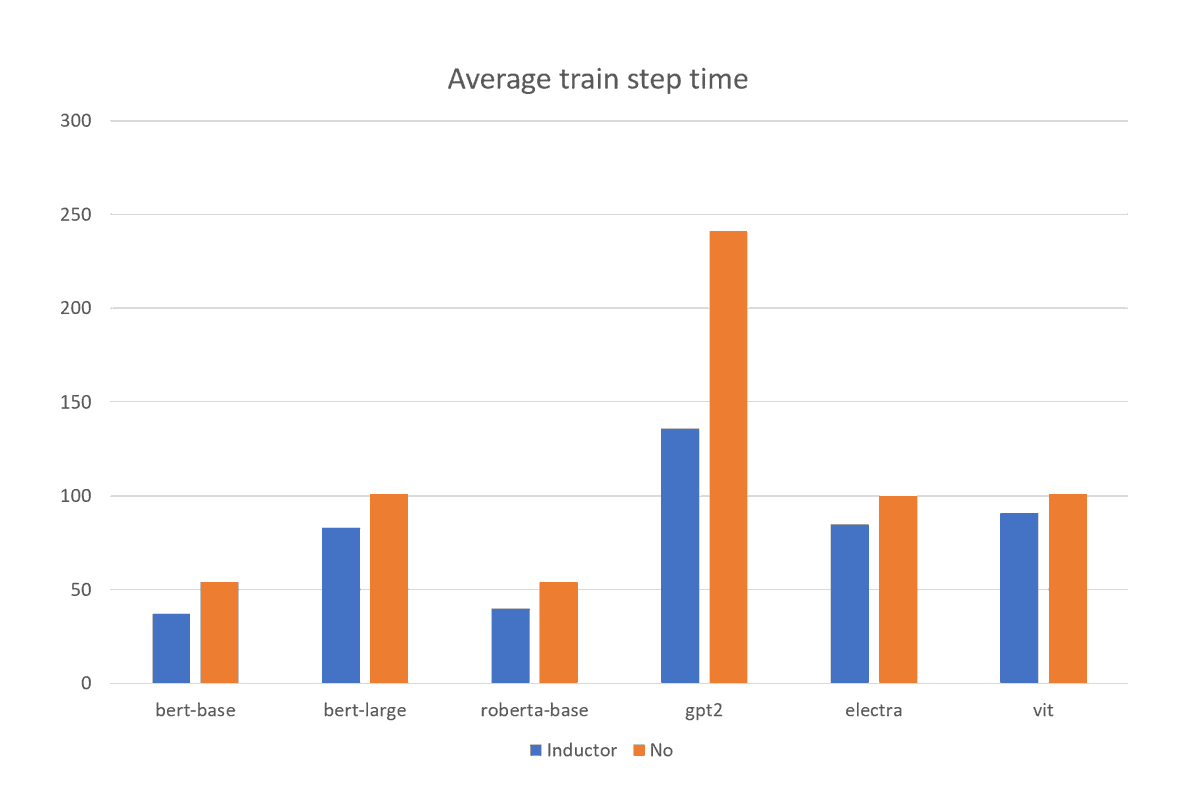
I compared the current stable version of @PyTorch (1.13) with the recently announced PyTorch 2.0 (with its highlight being the compile mode🔥).
TL;DR: I saw a massive 30% reduction in training times💥 . Complete analysis in the @wandb report: https://t.co/qFbCB3HceY
"Without weight, without bones, without body, walked through the streets for two hours considering what I overcame this afternoon while writing"
#TIL Kafka's journalling style to cure his creative inertia:
a few sentences that paint the state of his mind or the world that day
"The Map Becomes The Territory"
...is an entirely AI-made ultra short film wherein I summoned the spirit, look & voice of of Marshall McLuhan to rewrite Borges' "On Exactitude in Science"
this was shown first at Promptopia in NYC and @theculturedao's AI film festival in SF...
Dive deep with @PyTorch engineers talking about exactly how this magic works under the hood: https://t.co/wDsBkfBkEj
Try torch.compile on your training scripts today! #PyTorchConference
Today the PyTorch team announced a 2.0 milestone, with focus on a new compiler speeding up PyTorch models with zero change in code.🤯🔥
We tried it out in the past few weeks and here are the speedups we observed in our canonical training examples.