DO WATCH: If this won’t make you tear up, nothing will. Yes, there is a ‘new’ India that is SHINING but there is an India that is ANGRY and ANXIOUS too. Listen to their voices too. Well done @TheLallantop for giving a voice and a face to Mohammad Irfan. Salute the young man 👍🇮🇳
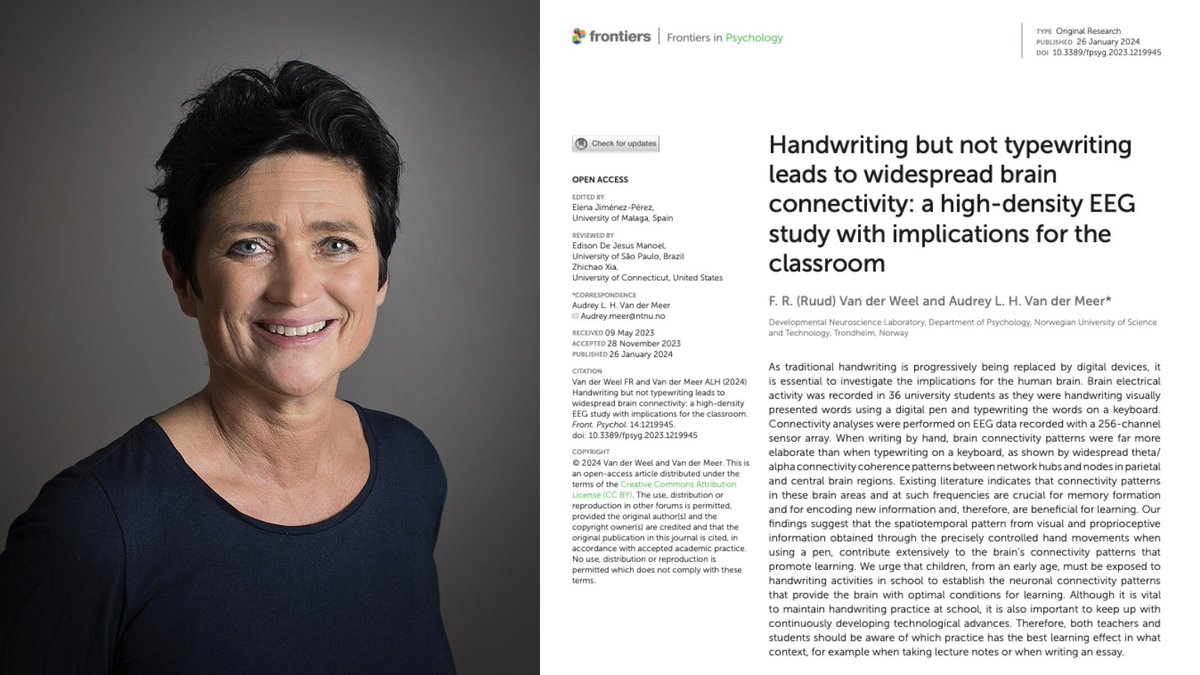
A Norwegian neuroscientist spent 20 years proving that the act of writing by hand changes the human brain in ways typing physically cannot, and almost nobody outside her field has read the paper.
Her name is Audrey van der Meer.
She runs a brain research lab in Trondheim, and the paper that closed the argument was published in 2024 in a journal called Frontiers in Psychology. The finding is brutal enough that it should have changed every classroom on Earth.
The experiment was simple. She recruited 36 university students and put each one in a cap with 256 sensors pressed against their scalp to record brain activity. Words flashed on a screen one at a time.
Sometimes the students wrote the word by hand on a touchscreen using a digital pen, and sometimes they typed the same word on a keyboard. Every neural response was recorded for the full five seconds the word stayed on screen.
Then her team looked at the part of the data most researchers had ignored for years, which is how different parts of the brain were communicating with each other during the task.
When the students wrote by hand, the brain lit up everywhere at once.
The regions responsible for memory, sensory integration, and the encoding of new information were all firing together in a coordinated pattern that spread across the entire cortex. The whole network was awake and connected.
When the same students typed the same word, that pattern collapsed almost completely.
Most of the brain went quiet, and the connections between regions that had been alive seconds earlier were nowhere to be found on the EEG.
Same word, same brain, same person, and two completely different neurological events.
The reason turned out to be something nobody had really paid attention to before her work. Writing by hand is not one motion but a sequence of thousands of tiny micro-movements coordinated with your eyes in real time, where each letter is a different shape that requires the brain to solve a slightly different spatial problem.
Your fingers, wrist, vision, and the parts of your brain that track position in space are all working together to produce one letter, then the next, then the next.
Typing throws all of that away. Every key on a keyboard requires the exact same finger motion regardless of which letter you are pressing, which means the brain has almost nothing to integrate and almost no problem to solve.
Van der Meer said it plainly in her interviews.
Pressing the same key with the same finger over and over does not stimulate the brain in any meaningful way, and she pointed out something that should scare every parent who handed their kid an iPad.
Children who learn to read and write on tablets often cannot tell letters like b and d apart, because they have never physically felt with their bodies what it takes to actually produce those letters on a page.
A decade before her, two researchers at Princeton ran the same fight using a completely different method and ended up at the same answer. Pam Mueller and Daniel Oppenheimer tested 327 students across three experiments, where half took notes on laptops with the internet disabled and half took notes by hand, before testing everyone on what they actually understood from the lectures they had watched.
The handwriting group won by a wide margin on every question that required real understanding rather than surface recall.
The reason was hiding in the transcripts of what the two groups had actually written down.
The laptop students typed almost word for word, capturing more total content but processing almost none of it as they went, while the handwriting students physically could not write fast enough to transcribe a lecture in real time, which forced them to listen carefully, decide what actually mattered, and put it in their own words on the page.
That single act of choosing what to keep was the learning itself, and the keyboard had quietly skipped the choosing and skipped the learning along with it.
Two studies. Two countries. Same answer.
Handwriting makes the brain work. Typing lets it coast.
Every note you have ever typed instead of written went into your brain through a thinner pipe. Every meeting, every book highlight, every idea you captured on your phone instead of on paper was processed at half depth.
You did not forget those things because your memory is bad. You forgot them because typing never woke the part of the brain that would have made them stick.
The fix is the thing your grandmother already knew.
Pick up a pen. Write the thing down. The slower road is the faster one.
Getting rid of your old mattress or a broken table or a worn out sofa in #Bengaluru has been made easy, free doorstep pickup available — says GBA.
Download the new DCLUTTER App 👇
@timesofindia
Bengaluru’s water crisis is deepening each summer and data centres are now part of that strain. Yet no government department can tell us how much water they actually use.
Read the full story by @kavashivani.
https://t.co/ZRA9Tq3TZU
Bengaluru's green cover has fallen from 78% to 6%, its natural cooling systems are gone, and the city is baking.
#KarnatakaNews#Bengaluru
https://t.co/MsRWxUS0I1
VIDEO | Delhi: Vice President CP Radhakrishnan releases Sindhi translations of the Constitution in Devanagari and Persian scripts at Uprashtrapati Bhavan.
He says, “Today is a great day as we release the Constitution of India in the Sindhi language. My greetings to all Sindhi-speaking people on Sindhi Bhasha Diwas. Sindhi is one of the oldest and most melodious languages. What makes its literature extraordinary is its blend of Vedantic thought and mystical Islamic influence, spreading the message of oneness, love and universal brotherhood. The joy of Sindhi-speaking people is doubled with the release of the Constitution in Devanagari script for the first time since independence. In addition, the Persian-Arabic script version has also been released today.”
(Full video available on PTI Videos - https://t.co/bIyFWTfmBd)
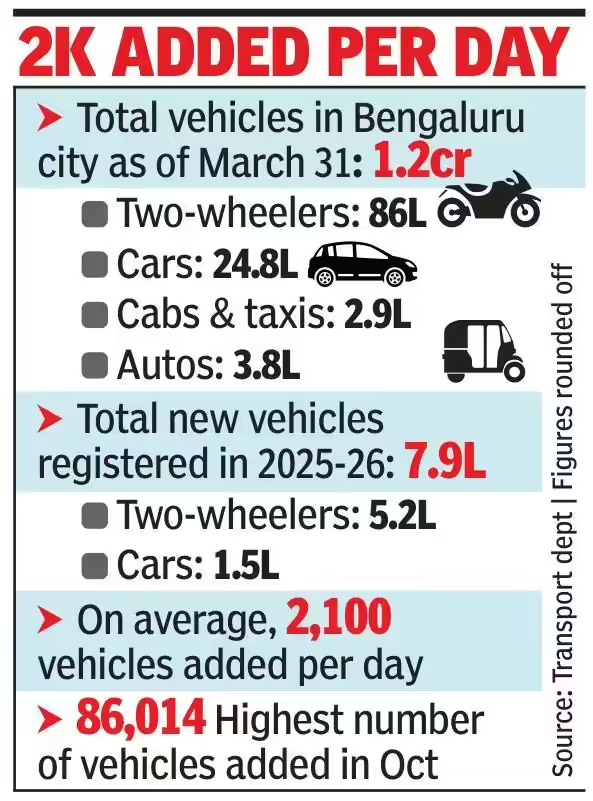
Congratulations Bengaluru! #1 in the World :)
from what I can see, no other city in the world, not just India, has 1.2 Crore vehicles - Beijing and Shanghai would have beat us except they have limits put in place years ago to restrict new vehicles coming in same policy as Singapore.
yes, I'm aware this includes some old and dead vehicles no longer being used. also aware many have multiple vehicles and can't possibly use all of them at once and 1.2 cr vehicles are not on the roads.
I'm also aware that Bengaluru is setting records for public transport ridership, both @BMTC_BENGALURU and @OfficialBMRCL are carrying more people than ever before. 48L Bus + 10L Metro daily ridership.
Parking is still free, on the streets and in offices.
No congestion charges anywhere in the city.
No local taxes on vehicles or fuel.
No cap on how many new vehicles can be registered.
More metro lines coming up this year & next year
Suburban train seem to be moving ahead.
More buses coming up. Some mini-buses.
ORR re-design includes dedicated bus priority lane.
Hopefully, more bus lanes will come up, too.
Bengaluru economy continues to grow - job growth, fuels vehicle ownership, supports our manufactuing and service industries in a big way, but also brings congestion - it's a good problem to deal with. India needs jobs more than anything else.
If a small portion of life-time tax from every vehicle sold & every liter of fuel is given to the city exclusively to develop footpaths and cycling infra, it will make a big difference. Right now, all taxes connected to vehicles go to State and Union and nothing comes to the city (GBA)
from @TOIBengaluru@Suchithkidiyoor
https://t.co/CsGexeBRCA
The kind of things citizens do to promote @BMTC_BENGALURU bus in Bengaluru should be a case study in some IIM
The public bus systems have zero marketing budgets and no time to do promotional activities either. But in Bengaluru, citizen groups are playing that role - the whatsapp group for this bus now has 750+ members many experiencing bus for the first time and happy to switch out of personal vehicles
Join the Bus Reads on the brand new MF22E on Sunday folks!
@SaveSarjapur@kdevforum@hsrcitizen4um@FriendsofBMTC@RLR_BTM@GBAChiefComm@OfficialBMRCL@doublethebus
So,
so you think you can tell
Heaven from Hell,
blue skies from pain
Can you tell a green field
from a cold steel rail?
A smile from a veil?
Do you think you can tell?
Did they get you to trade
your heroes for ghosts?
Hot ashes for trees?
Hot air for a cool breeze?
Cold comfort for change?
Did you exchange
A walk-on part in the war
for a lead role in a cage?
How I wish,
how I wish you were here
We're just two lost souls
swimming in a fishbowl,
year after year
Running over the same old ground
What have we found?
The same old fears
Wish you were here
On May 19, 1978, Dire Straits officially released "Sultans of Swing," a song that would become legendary for musicians and great.
But at Mark Knopfler's A Night in London in April 1996, the song was given new life. As the song faded, Knopfler launched into a slow and majestic solo—stretching the final minutes into a guitar lesson. Fluid, expressive, and full of emotion, the solo transformed a classical piece into something sublime, showcasing the depth and nuance for which he had been known for years.
When @arunpaiblrwalks announced the mega 26km New Year Day Walk from Jayanagara to Yeswanthapura, the buzz was palpable on the WhatsApp group - more than 700 joined. With my experience and considering its 7AM on Jan 1st, I figured a 100 will actually show up. To my utter surprise and joy, 300+ were there and came from koramangala, whitefield even yelahanka as you can see in the video!
The walk is still on, almost reaching the destination with many of them determined to walk all the way. Arun’s Bengaluru history anecdotes and the conversations with strangers united for the cause and the unmatched beauty of our city makes it a great experience.
I see #Walkaluru as a mass movement for pedestrian rights and a unique way for citizens to collaborate with civic authorities, parenting with them to make our city walkable and acknowledging their work. From poura karmikas to Chief Secretary everyone felt a degree of ownership and that’s just amazing.
Kudos to @arunpaiblrwalks and his team for taking on this mission and making everyone a part of it. Kudos to every one that joined.
As a senior citizen told me at 6:45AM this morning, attitude about footpaths changed once @GBAChiefComm started walking as soon as he took over. I tend to agree!
ANNOUNCING the world's longest group footpath walk - the New Year's Day 26KM Footpath Walk on Jan 1, 2026!
It's FREE, it's FUN, explore the city from South to North, hear its stories, see new places, meet like-minded people and most importantly enjoy walking on 26kms of good continuous footpaths!
ALL ARE WELCOME! No prior registration required.
We start at 7AM at RV Rd Metro, and plan to end by 4pm at Sandal Soap Metro (Orion Mall). The pace is relaxed, you can join/leave anytime and we stop every 5km for coffee/thindi.
Join the Whatsapp Group on the QR Code in the poster below for more info, and for Live Location.
Let's Make Bengaluru a Walkaluru!
@GBA_office@GBAChiefComm@BCCCofficial@BNCCofficial@comm_blr_south@BWCCofficial
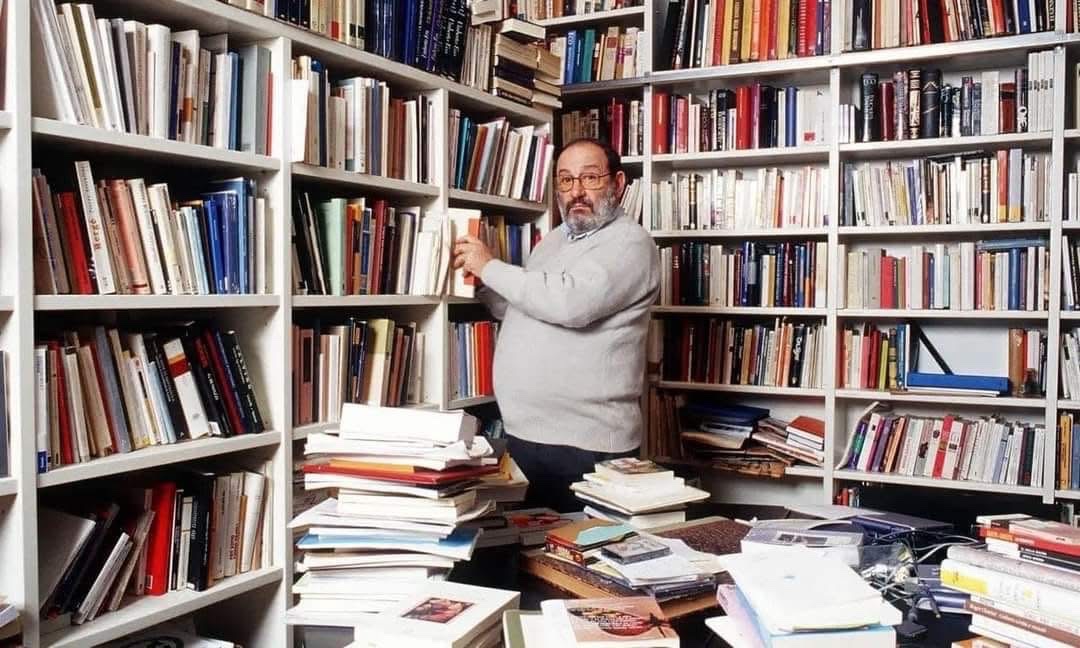
Umberto Eco, who owned 50,000 books, had this to say about home libraries:
“It is foolish to think that you have to read all the books you buy, as it is foolish to criticize those who buy more books than they will ever be able to read. It would be like saying that you should use all the cutlery or glasses or screwdrivers or drill bits you bought before buying new ones.
“There are things in life that we need to always have plenty of supplies, even if we will only use a small portion.
“If, for example, we consider books as medicine, we understand that it is good to have many at home rather than a few: when you want to feel better, then you go to the ‘medicine closet’ and choose a book. Not a random one, but the right book for that moment. That’s why you should always have a nutrition choice!
“Those who buy only one book, read only that one and then get rid of it. They simply apply the consumer mentality to books, that is, they consider them a consumer product, a good. Those who love books know that a book is anything but a commodity.”
Beyond Bus Fare Subsidy Schemes: Tracing Urban Women’s Access to Gender-Responsive Mobility https://t.co/5OXJGPY8bU
via Moneylife App. Download Now : https://t.co/oCY4nDLtoz
@suchetadalal@Moneylifers@yogtoday