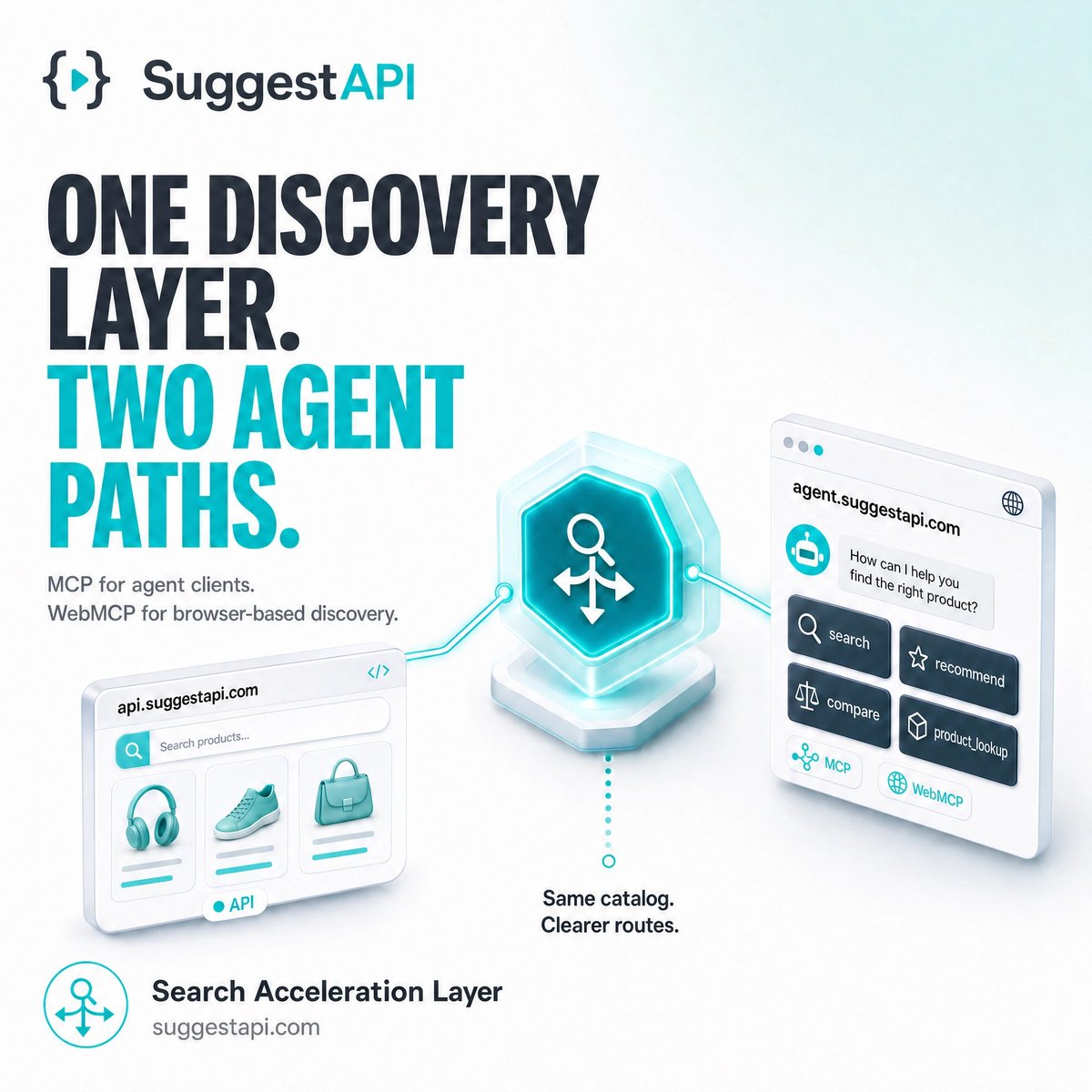
A catalog shouldn’t need separate integrations for shoppers, apps, and AI agents.
Same catalog. Same discovery job.
SuggestAPI separates the surfaces: direct Search Acceleration API for apps, Agent Gateway for MCP + WebMCP.
Full details: https://t.co/DUeE4fsxsu
#mcp#webmcp
Getting cited by AI is step one.
Step two is harder: an AI shopping agent still has to search your catalog, filter it, compare options, and hand off to checkout.
That's the gap SuggestAPI closes. Same catalog. Discoverable and shoppable by agents, not just mentioned by them.
🚨 𝗝𝗨𝗦𝗧 𝗜𝗡: @Mastercard has signed a broad strategic partnership with @OpenAI.
Agentic commerce just got another major infrastructure push.
The partnership includes Mastercard’s Agent Pay, but CEO @MiebachMichael says it goes much further, covering payments, services growth, and AI transformation.
Mastercard is building around four requirements for agentic commerce:
→ Trust in the payment
→ Trust in the AI agent
→ Trust in the ecosystem
→ Merchant reach
And it now has products targeting each layer:
👉 Agent Pay — tokenized payments for AI agents
👉 Verifiable Intent — captures what the buyer actually authorized
👉 Agentic Trust Intelligence — helps banks and merchants assess AI-initiated transactions
👉 Agent Connect — helps merchants become discoverable to AI agents
Shopify is already among the first major deployments, with Shop Pay using Agent Pay and network tokens.
And Mastercard is making one important bet:
𝗧𝗼𝗸𝗲𝗻𝘀, 𝗻𝗼𝘁 𝗼𝗻𝗲-𝘁𝗶𝗺𝗲 𝘃𝗶𝗿𝘁𝘂𝗮𝗹 𝗰𝗮𝗿𝗱 𝗻𝘂𝗺𝗯𝗲𝗿𝘀.
Miebach says agentic commerce is still in its “early days,” but added that agentic transactions are already “ramping up at impressive weekly growth rates.”
Holiday shopping could be the first big test.
The battle to become the payment infrastructure for AI agents is getting VERY real.
Visa, Mastercard, Stripe, PayPal and others are all moving fast.
Who do you think is best positioned to win the agentic payments race?
@EverythingPR Makes sense: those retailers expose clean, current product data. Smaller beauty brands can still compete if an agent can query their catalog live and get the right shade, in stock, at today's price, not a delayed copy in an index.
@_kekule15 From the ecommerce side: when queries stop being keywords. "316SS 1/2 in valve, 3000 PSI" needs facets, synonyms and ranking control. Even then the engine doesn't read intent, so parsing constraints before the query matters as much as the engine.
@redlerz Yes. And when you look at those AI-referred sessions, check what they type into site search after landing. They tend to arrive with long, specific requests. If search returns nothing useful, the citation did its job and the store didn't.
@benchiche When the start is an agent, it doesn't browse. It asks the store's search a long, specific question and needs current price and stock back. Most site search was built for 2-word queries. That's the gap to close before 2030.
@lancefang7 Big step. Next question is what the search tool returns when an agent asks for a "waterproof trail runner, wide fit, under $150." If store search only matches keywords, structured calls still get weak results. That's the layer we work on at https://t.co/d0NW67N2uw
@vigstar1 Same. UCP standardizes how the agent asks. The answer still depends on the merchant's search understanding the request and returning what's buyable right now. Better protocols plus better retrieval is the combo.
@samfiguresout Thanks Sam, agreed. The landing side is where we spend our time: taking a request like "hiking boots for Iceland in October under $250" and turning it into constraints the store's existing search can actually use.
Shoppers don't type keywords anymore. They give a brief.
"Hiking boots for Iceland in October under $250"
That's destination + season + budget + features. If your search only matches words, it misses the brief.
SuggestAPI turns it into intent, filters, and context.
@BoBrainerd Agree. Payment is the easy part to demo. The hard part comes first: can the agent find the right item, in stock, at today's price? Most failures I see start with a stale copy of the catalog.
That's the step we're building for at SuggestAPI: live queries to the store's own search
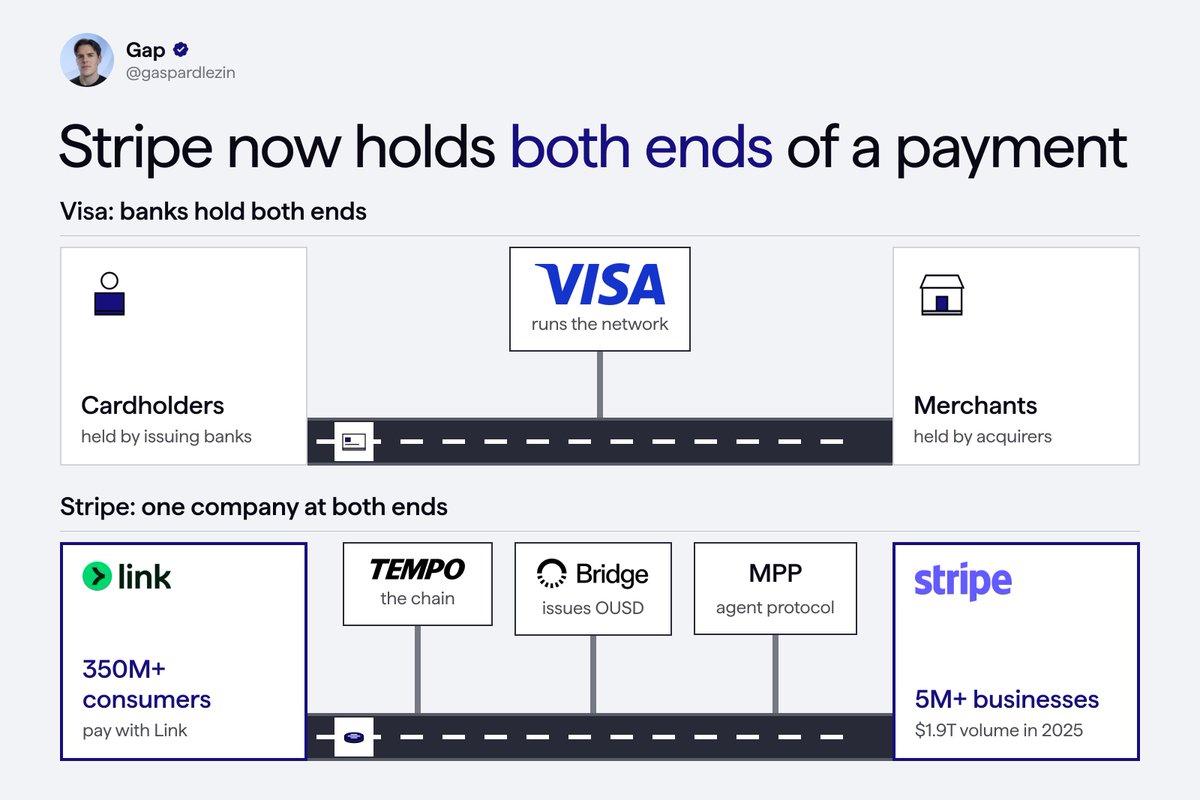
Stripe is building visa's replacement and still paying visa while it does it.
@alfongj's read on Link balance:
> 350M+ people pay with @link
> 5M+ businesses run on @stripe
> the balance sits in USDC on @tempo
If @stripe already holds both ends, how long does it keep paying for the road in between?
@ericosiu Smart lead magnet. For ecommerce I'd love a second line in that report: when AI names the brand, is the product it points to still in stock at that price? Visibility gets you named. Current, buyable items are what close the sale.
@nateshopfront Happy to connect. I'm working on the discovery side: helping agents get current, buyable items from the search a store already runs. Resale is a great test case since every item is one-of-one and stock changes constantly. https://t.co/d0NW67MuEY
@ValentinRadu Agree, and "wrong" is often just "old." Google's index is a delayed copy of your catalog. A size can sell out at noon and still look in stock in an answer. The store's own search already knows the truth, so letting agents query it live matters a lot.
@TheEghosa Part of that gap is what happens after the click. A citation puts you in the answer, it doesn't close the sale. AI visitors arrive with long, specific requests, and most site search treats them like 2 keywords. Fix that handoff and the AI numbers look different.
@davidnoelromas Agree on #1. Browser automation is fighting the site. Most stores already run a search engine that knows price and stock right now. Give agents a structured way to query that, hand off to the merchant's checkout, and you skip a lot of the brittleness.
@joashv10 My guess: the chat is just the front. The real work is turning "hiking boots for Iceland in October under $250" into constraints a store's search can use, keeping them through follow-ups, and returning items you can actually buy right now.