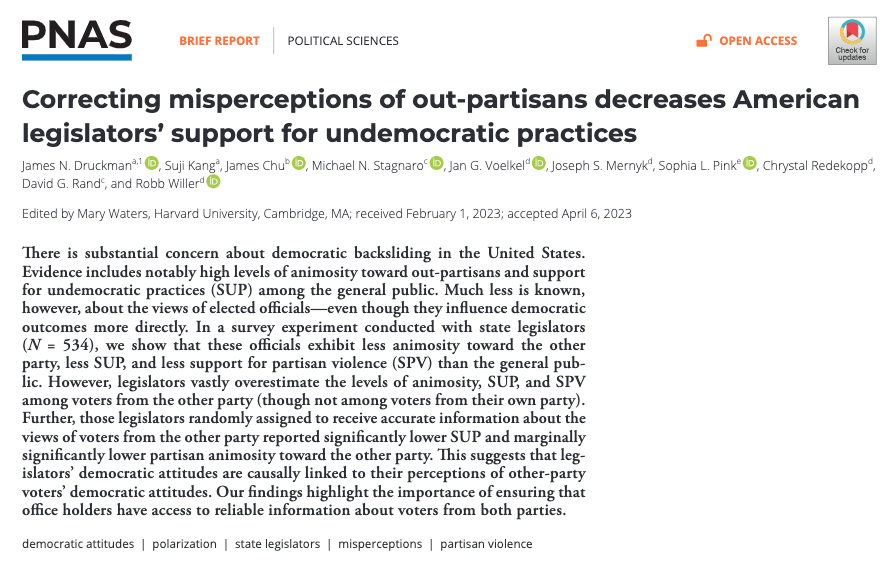
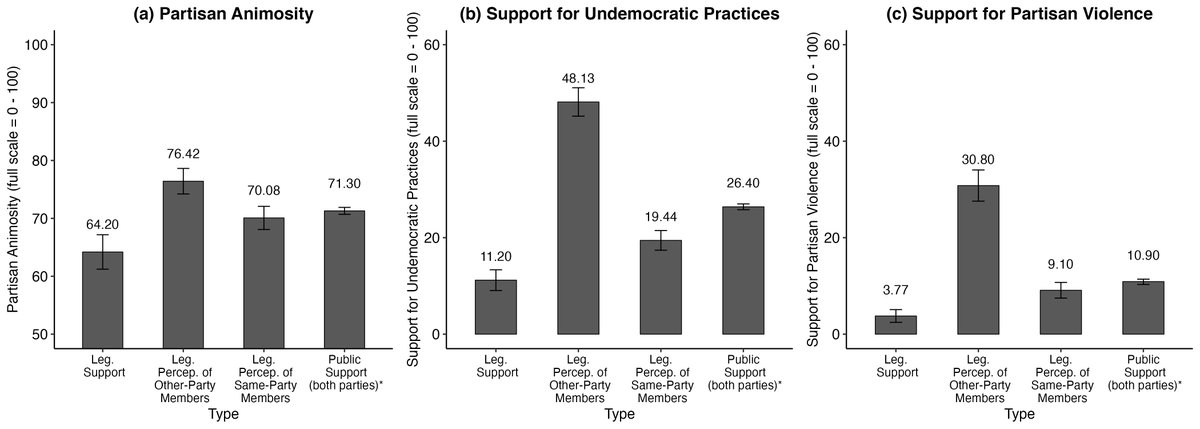
(1/n) Now out @PNASNews, we show that correcting legislators' misperceptions of out-partisan voters reduces legislators’ own support for undemocratic practices (SUP) and animosity toward out-partisans.
Check below what we found! ⬇️
https://t.co/qfTctSX6JF
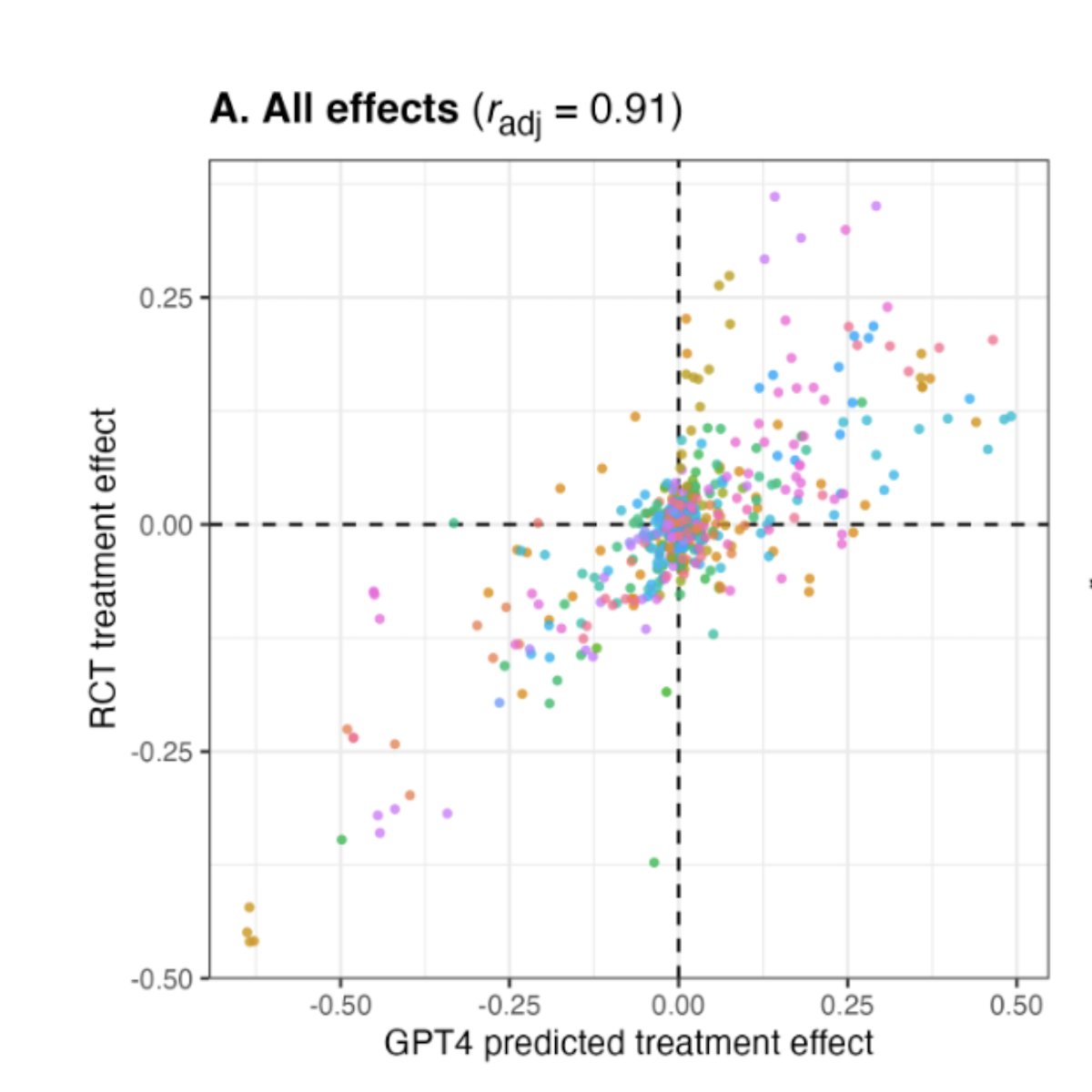
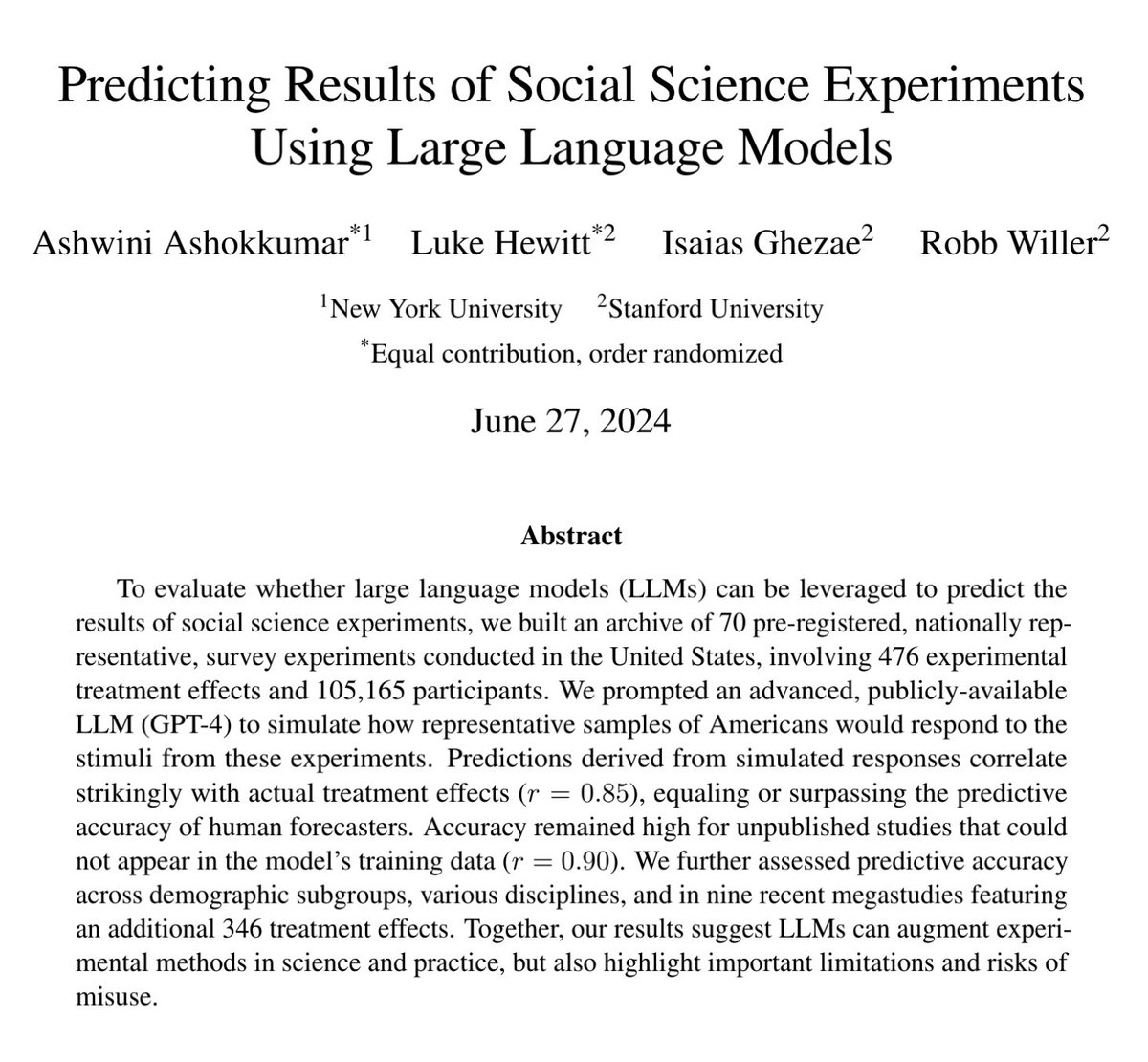
🚨New WP: Can LLMs predict results of social science experiments?🚨
Prior work uses LLMs to simulate survey responses, but can they predict results of social science experiments?
Across 70 studies, we find striking alignment (r = .85) between simulated and observed effects 🧵👇
If you’re looking to run LLM-human interaction experiments, we just posted a Qualtrics template + guide here: https://t.co/jRefflleVL
STAY TUNED for a much more sophisticated, highly customizable, plug and play chatbot designed for research—in the coming weeks.
In predicting which interventions will strengthen democratic values, practitioners were better at predicting the best interventions; academics were better at predicting the worst ones, finds @jgvoelkel@suji_kang_@DG_Rand@RobbWiller et al in @PNASNews https://t.co/3WTuSxupgG
The Political Consequences of Depression: How Conspiracy Beliefs, Participatory Inclinations, and Depression Affect Support for Political Violence by Matthew Baum, James Druckman, Matthew Simonson, Jennifer Lin & Roy Perlis is now available in Early View. https://t.co/f6ZZC6lc5r
I'll be recruiting a PhD student in the next cycle - please pass this along to anyone who might interested in joining my lab at Cornell! Open-ended, but interest in topics relating to intuition/reason, metacognition, overconfidence, misinformation, or beliefs is a bonus!
The Department of Political Science at Northwestern University seeks applications for a full-time, tenure-track Assistant Professor working in the field of Comparative Politics.
Review begins immediately, Deadline Oct 27th
#PoliSciJobs#psjminfo
https://t.co/DLtOp4LPga
From Jamie Druckman - apply for free data!
The Civic Health and Institutions Project, a 50 States Survey (CHIP50) is announcing opportunities to collect free state-level or large national sample public opinion data. More information is available here: https://t.co/hE4GiIdShL
A survey of 534 state legislators in the United States suggests that legislators significantly overestimate support for undemocratic practices and partisan violence among voters from the opposing party. In PNAS: https://t.co/kPidG2gZMV
Check out this new paper, which leverages a unique sample of state legislators to measure outparty perceptions among US political elites.
(Kudos to @suji_kang_ and Jamie Druckman for leading this project!)
🧵👇
(5/n) This suggests that learning accurate information about out-partisans leads to less undemocratic attitudes among elected officials. Our findings highlight the importance of ensuring that office holders have access to reliable information about voters from both parties.
(4/n) And then we examine whether correcting legislators' misperceptions of out-partisans causally reduces legislators’ own PA, SUP and SPV. We show that providing accurate information about the other party’s PA and SUP causes legislators to lower their own levels of PA and SUP.
(2/n) In a survey experiment conducted with state legislators (N = 534), we first show that legislators report significantly lower levels of each of the three concerning attitudes -- partisan animosity (PA), SUP, support for partisan violence (SPV), than the public.
(3/n) However, legislators vastly overestimate the levels of animosity, SUP, and SPV among voters *from the other party* (though not among voters from their own party).