🚨🇪🇺 The European Commission is about to steal your search history in one of the largest forced data grabs in the history of the open internet, and almost nobody is talking about it.
The scope is staggering:
🔴 Every query you type
🔴 Every voice and photo search
🔴 Every autocomplete you accept
🔴 Your language, your device
🔴 Your country pinned to a ~3km² grid
🔴 Every result you saw, every link you hovered
🔴 Every click and scroll
🔴 The full chronological order of your search sessions
Meaning the European Union now knows your:
🔴 Health symptoms
🔴 Pregnancy
🔴 Sexual orientation
🔴 Political views
🔴 Religious beliefs
🔴 Financial distress
🔴 Legal trouble
🔴 Addictions
🔴 Affairs
Under the proposed measures for DMA Article 6(11), Google would be ordered to ship the daily search behaviour of hundreds of millions of Europeans to multiple third parties through a daily API feed. Any approved "online search engine," AI chatbots included, would get five years of access.
The things people only ever type when they think no one is watching. All of it now scheduled to flow daily into an open-ended list of third parties scattered across the European Union.
Brussels promises "anonymisation." The reality is a thin technical veneer that has been broken in academic literature again and again for over a decade. Search behaviour is a fingerprint. Stripping a name does not change that.
Mass data leaks become inevitable. Every new beneficiary is a new attack surface, and every annual audit is a year of silent exposure between checks. The 2025 Discord vendor breach already showed how fast 70,000 government IDs can leak through a single weak link. Now imagine that link holding Europe's search history.
Surveillance without consent becomes the default. Hundreds of millions of EU citizens never agreed to have their queries packaged and shipped to companies they have never heard of. The legal fiction of "anonymisation" cannot manufacture consent that was never given.
Behavioural search data is a goldmine for phishing, blackmail, social engineering, and corporate espionage.
Foreign intelligence services get a back door without effort. They do not need to breach Google. They only need to compromise the weakest name on the beneficiary list. One insolvent startup. One compromised contractor. One approved entity quietly acquired by a hostile state.
In the name of "competition," the EU is about to manufacture a permanent, distributed, daily-refreshed copy of Europe's collective search history. A surveillance dataset Brussels itself would never approve if any other government tried to build it.
The public consultation closes Friday, May 1, 2026 at 23:59 CEST. The final binding decision lands July 27, 2026.
After that, the door does not close again.
Tag your MEPs! File a response! Make noise!
Destroying the @InternetArchive's @WayBackMachine would be the equivalent of the burning of the Library of Alexandria - one of the worst losses of knowledge in history.
Media giants are now threatening to do this.
We can't let this happen.
Pass it on.
A wealth registry can become a hit list for criminal organisations.
Top-down taxation will likely be met with resistance. A systematic change is the only long-term way to rebalance the scales in a durable way. The desirable system is one that leads to the emergent behavior we collectively want.
A potential solution:
- automated payment transaction (APT) tax. (https://t.co/q1J9NB30de)
- universal basic income (see Rutger's previous works)
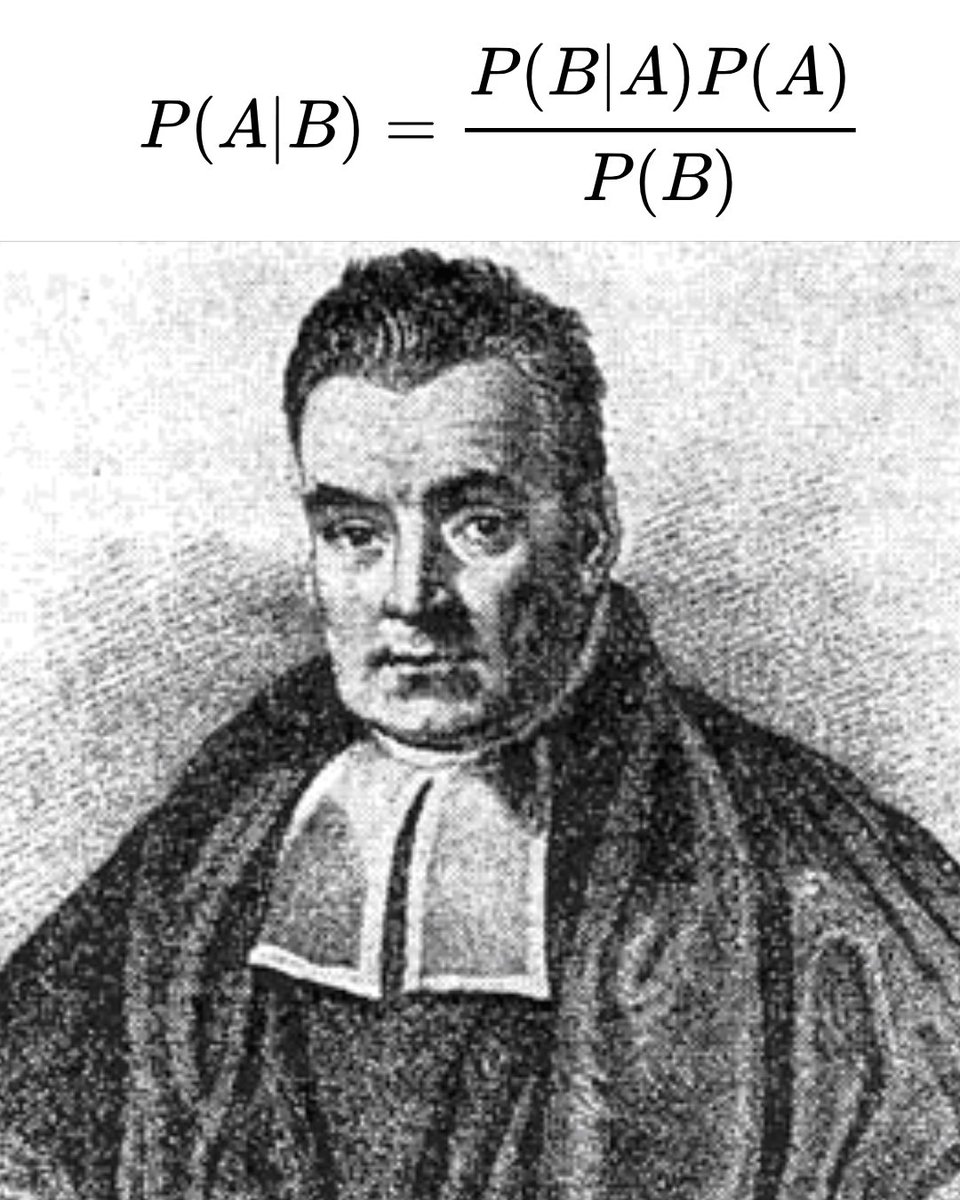
Bayes’ theorem is probably the single most important thing any rational person can learn.
So many of our debates and disagreements that we shout about are because we don’t understand Bayes’ theorem or how human rationality often works.
Bayes’ theorem is named after the 18th-century Thomas Bayes, and essentially it’s a formula that asks: when you are presented with all of the evidence for something, how much should you believe it?
Bayes’ theorem teaches us that our beliefs are not fixed; they are probabilities. Our beliefs change as we weigh new evidence against our assumptions, or our priors. In other words, we all carry certain ideas about how the world works, and new evidence can challenge them.
For example, somebody might believe that smoking is safe, that stress causes mouth ulcers, or that human activity is unrelated to climate change. These are their priors, their starting points. They can be formed by our culture, our biases, or even incomplete information.
Now imagine a new study comes along that challenges one of your priors. A single study might not carry enough weight to overturn your existing beliefs. But as studies accumulate, eventually the scales may tip. At some point, your prior will become less and less plausible.
Bayes’ theorem argues that being rational is not about black and white. It’s not even about true or false. It’s about what is most reasonable based on the best available evidence. But for this to work, we need to be presented with as much high-quality data as possible. Without evidence—without belief-forming data—we are left only with our priors and biases. And those aren’t all that rational.
Wat is dan een mogelijke oplossing? Een automatische transactie tax die programmatorisch is vastgelegd. Dit maakt het enorm simpel om fraude aan te pakken. De transactie is juist of frauduleus.
Chat Control �� Money Control… Stap voor stap, wet voor wet richting 1984 Totale controle door centrale macht. En de slapende massa slikt de excuses. Een vuist regel voor privacy/privésfeer; Als niet wilt of je ongemakkelijk voelt dat een vreemde medeburger het weet, mag de staat het ook niet weten!
(Dit staat los van het vergaren van informatie in het kader van een gerechtelijk onderzoek, die wetten hebben we al)
Ik lees vooral veel assumpties, zonder te refereren naar onderzoek die zijn kritiek ondersteunt. Ik heb ook bedenkingen bij een 'simpele' senaat naar burgerpanel switch, maar als we nooit experimenten uitvoeren, kunnen we het gewoon weg niet weten. Uit het experiment kunnen ook nieuwe inzichten komen en lijden tot nieuwe ideeën om democratie te doen evolueren.
There are a lot of Fords in Europe. They adapted models to the European market. People who like german cars, will stick to it. I terms of build, US (and many other) cars cannot compete.
So again, not because of 'tariffs'. Europe has between 1-5% import tax for US (goods) not 39.
Bonus info: If you take into account services and not only goods, trade between EU and US is quite balanced
📡 Airnode Investment Update 🌍
We invested $32,000 in a @WorldMobileTeam APEX 180 Airnode on Nov 12, 2024.
💰 Rewards so far (as of Mar 2025): $4,595.60
📈 ROI so far: 14.36%
📅 Projected breakeven: Oct 2027
🔮 Estimated 10-year revenue: $109,814
(based on $915.12/month avg)
Progress:
[██████░░░░░░░░░░░░] 14% repaid
An NFT tied to this Airnode will be minted soon — value TBD 👀
Performance may vary with network demand & uptime.
#DeWi #DePin #WorldMobile #WMTx #Airnode
@elonmusk You must be trolling... United *States* of America. Please just keep out of our politics. We have democracy not plutocracy. No private funding of politics allowed! Can we have more decentralised democracy in the EU, absolutely! So does the USA!
2024 was a game-changer for World Mobile!
We pushed boundaries, toppled outdated norms, and brought #DePIN connectivity to more people than ever.
Ready to relive just some of the highlights?
Let’s dive in. 🧵👇
$WMTX
Check out this exciting @TEDTalks video! "Would you swallow a micro-robot?" Micro-robots like PillBot could move us past the age of invasive endoscopies. The superstar team of Dr. Alex Luebke and Dr. Vivek Kumbhari demo this amazing tech @TEDTalks video https://t.co/D8LFj1nngj!
Een prijzenswaardig initiatief, maar het vereist opnieuw meer bestuur en administratie. Vergeet niet dat een vermogensregister kan leiden tot beveiligingsproblemen. De enige toekomstbestendige belastinghervorming die ik zie, is een geautomatiseerde betalingstransactiebelasting (APT).
https://t.co/ZsbfaXfF2C
Via itsme op website van de staat zou er potentieel een link tussen stem en identiteit kunnen geregistreerd worden. De technieken om het wel te doen bestaan wel degelijk, we zouden bijvoorbeeld een decentrale identiteit hebben op een blockchain, daar word ook de stem anoniem geregistreerd en om volledig veilig te zijn moet er ook een bewijs via een 2de weg ter controle. Dit allemaal met open source code. Ik vermoed als we dit willen (mezelf incl) het vanuit de gemeenschap gaat moeten komen.
Wederom beweert men dat online anoniem stemmen niet veilig zou zijn of te complex. 'Volgens experts' zonder bronvermelding. Er zijn echter meerdere bewezen technieken, zoals een combinatie van publieke blockchain, gedecentraliseerde identiteit en tweedewegcontrole (papier opsturen of pdf opladen), zoals dat nu ook al gebeurt bij digitaal stemmen. Als de lokale computers dezelfde blockchain gebruikt kan men kiezen naar een stembureau te gaan of niet. + Je kan zelf checken of je stem wel degelijk geteld is. #kies24 #vrt #digitalisering








![4thechain's tweet photo. 📡 Airnode Investment Update 🌍
We invested $32,000 in a @WorldMobileTeam APEX 180 Airnode on Nov 12, 2024.
💰 Rewards so far (as of Mar 2025): $4,595.60
📈 ROI so far: 14.36%
📅 Projected breakeven: Oct 2027
🔮 Estimated 10-year revenue: $109,814
(based on $915.12/month avg)
Progress:
[██████░░░░░░░░░░░░] 14% repaid
An NFT tied to this Airnode will be minted soon — value TBD 👀
Performance may vary with network demand & uptime.
#DeWi #DePin #WorldMobile #WMTx #Airnode](https://pbs.twimg.com/media/Gnibo6jWIAEQfWJ.jpg)