The security industry has spent decades getting better at finding risk. The backlog is what that gets you.
That path is no longer feasible when your 𝘁𝗶𝗺𝗲-𝘁𝗼-𝗲𝘅𝗽𝗹𝗼𝗶𝘁 𝗶𝘀 𝗺𝗶𝗻𝘂𝘀 𝘀𝗲𝘃𝗲𝗻 𝗱𝗮𝘆𝘀.
When a developer opens a pull request, they shouldn't need a security review cycle to find out it's about to expose two AWS instances with critical vulnerabilities to the public internet.
They should just know. Before it merges.
𝗧𝗼𝗱𝗮𝘆 𝘄𝗲'𝗿𝗲 𝗶𝗻𝘁𝗿𝗼𝗱𝘂𝗰𝗶𝗻𝗴 𝗔𝘃𝗲𝗿𝗹𝗼𝗻 𝗣𝗿𝗲𝗰𝗼𝗴, predictive remediation that evaluates proposed changes in your actual environment, identifies what's genuinely exploitable, and delivers the fix in the developer workflow before it reaches production.
(and for all the Minority Report fans, you know what precog stands for)
With the window between exposure and exploitation going negative, the only place left to act is before the code ships.
https://t.co/zlCCOiyj0X
Exploitation timelines have gone negative.
Mandiant M-Trends 2026 report found that mean time-to-exploit collapsed from 63 days in 2018 to an estimated negative seven days in 2025.
Negative. Exploitation now begins before a patch exists.
Security teams have spent 20 years building programs designed to find risk after it reaches production and fix it before it's exploited.
That window no longer reliably exists.
The question now is what security programs look like when the exposure window keeps shrinking.
We're going to talk a lot more about this over the next week.
The internet is built on shared code. npm and PyPi are the places we share the code for javascript and python respectively.
The developers of the shared code have GitHub accounts that can get stolen. GitHub is where the devs publish the code. Once stolen the hackers can push malware to the very popular shared code those accounts have access to.
The malware then spreads to other developers of other shared code's GitHub accounts and implants itself there too. Turning it into what we call a worm. Self spreading malware.
All the while stealing lots of other secrets from these computers like passwords and API keys that let the hackers into other non-GitHub accounts to do bad guy hacker stuff.
We all rely on all this shared code whether we know it or not because nobody writes anything from scratch and we all borrow these bits of code for common things we all do.
𝗧𝗵𝗿𝗲𝗲 𝗶𝗻𝗰𝗶𝗱𝗲𝗻𝘁𝘀. 𝗧𝗵𝗿𝗲𝗲 𝗰𝗼𝗺𝗽𝗮𝗻𝗶𝗲𝘀. 𝗢𝗻𝗲 𝘂𝗻𝗱𝗲𝗿𝗹𝘆𝗶𝗻𝗴 𝗽𝗮𝘁𝘁𝗲𝗿𝗻.
Vercel. Lovable. Vimeo.
In each case, the breach wasn't in the target's own code. It was in a third-party tool with token-based access into connected environments.
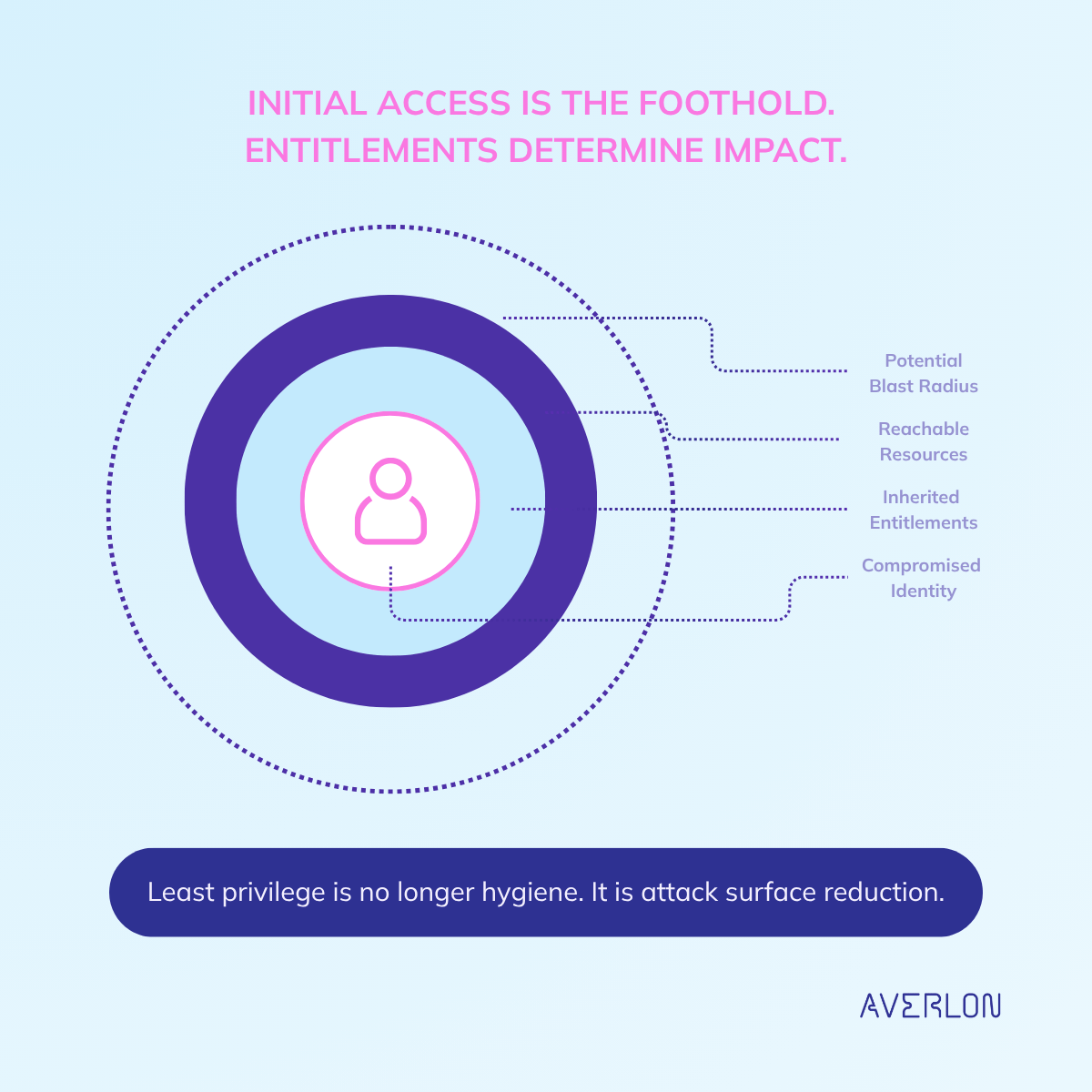
Once the token was compromised, the blast radius was defined by what that token was allowed to do.
𝗜𝗻𝗶𝘁𝗶𝗮𝗹 𝗮𝗰𝗰𝗲𝘀𝘀 𝘀𝗲𝘁𝘀 𝘁𝗵𝗲 𝗲𝗻𝘁𝗿𝘆 𝗽𝗼𝗶𝗻𝘁. 𝗘𝗻𝘁𝗶𝘁𝗹𝗲𝗺𝗲𝗻𝘁𝘀 𝘀𝗲𝘁 𝘁𝗵𝗲 𝗯𝗹𝗮𝘀𝘁 𝗿𝗮𝗱𝗶𝘂𝘀.
In practice: service principals accumulate permissions. Third-party integrations inherit broad access. Tokens sit dormant until they don't.
When something goes wrong, permissions decide how bad it gets.
https://t.co/GxnxJxxfOI
𝗖𝗹𝗮𝘂𝗱𝗲 𝗠𝘆𝘁𝗵𝗼𝘀 𝗿𝗲𝗮𝗱𝗶𝗻𝗲𝘀𝘀 𝗰𝗼𝗻𝘃𝗲𝗿𝘀𝗮𝘁𝗶𝗼𝗻𝘀 𝗱𝗼𝗻’𝘁 𝘀𝘁𝗮𝗿𝘁 𝘄𝗶𝘁𝗵 𝗔𝗜.
𝗧𝗵𝗲𝘆 𝘀𝘁𝗮𝗿𝘁 𝘄𝗶𝘁𝗵 𝗿𝗲𝗺𝗲𝗱𝗶𝗮𝘁𝗶𝗼𝗻 𝗮𝗻𝗱 𝗿𝗲𝘀𝗽𝗼𝗻𝘀𝗲 𝗿𝗲𝗮𝗱𝗶𝗻𝗲𝘀𝘀.
The first vulnerabilities surfaced at scale likely won’t be in proprietary code.
They’ll be in the vendor software and open-source components organizations already depend on.
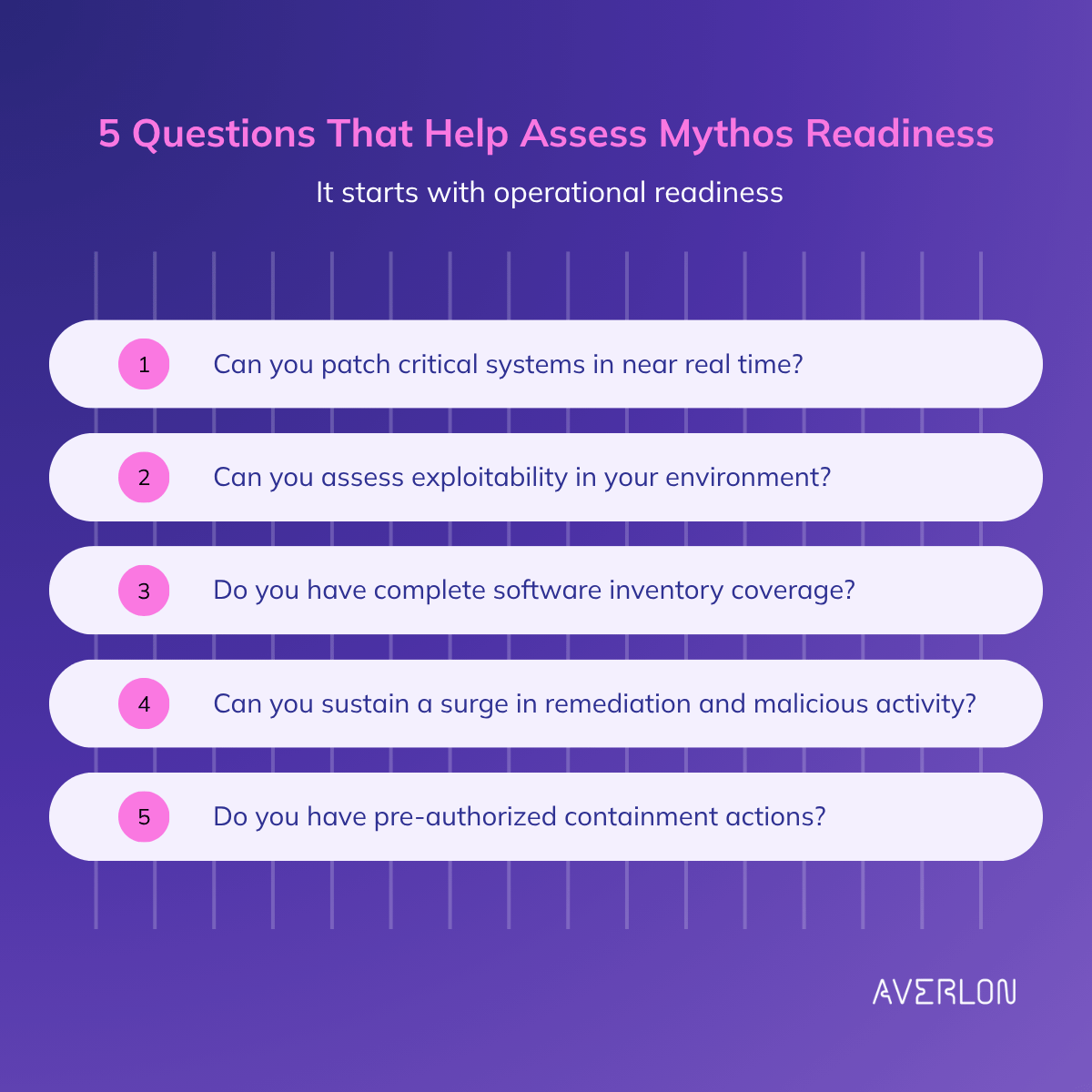
As Sunil Gottumukkala (@sunilgot) put it, the real readiness questions are simpler:
• Can you remediate critical systems in near real time?
• Can you assess exploitability in your own environment?
• Do you have a complete software inventory, including dependencies?
• Can your team sustain a surge in remediation and malicious activity?
• Do you have pre-authorized containment actions?
Most organizations haven’t pressure-tested these.
That’s where readiness starts.
More here:
https://t.co/AQtb6zvhYo
Most AI agents judge findings one at a time. Security risk often doesn't work that way.
Take a distributed storage system deployed across worker nodes in Kubernetes.
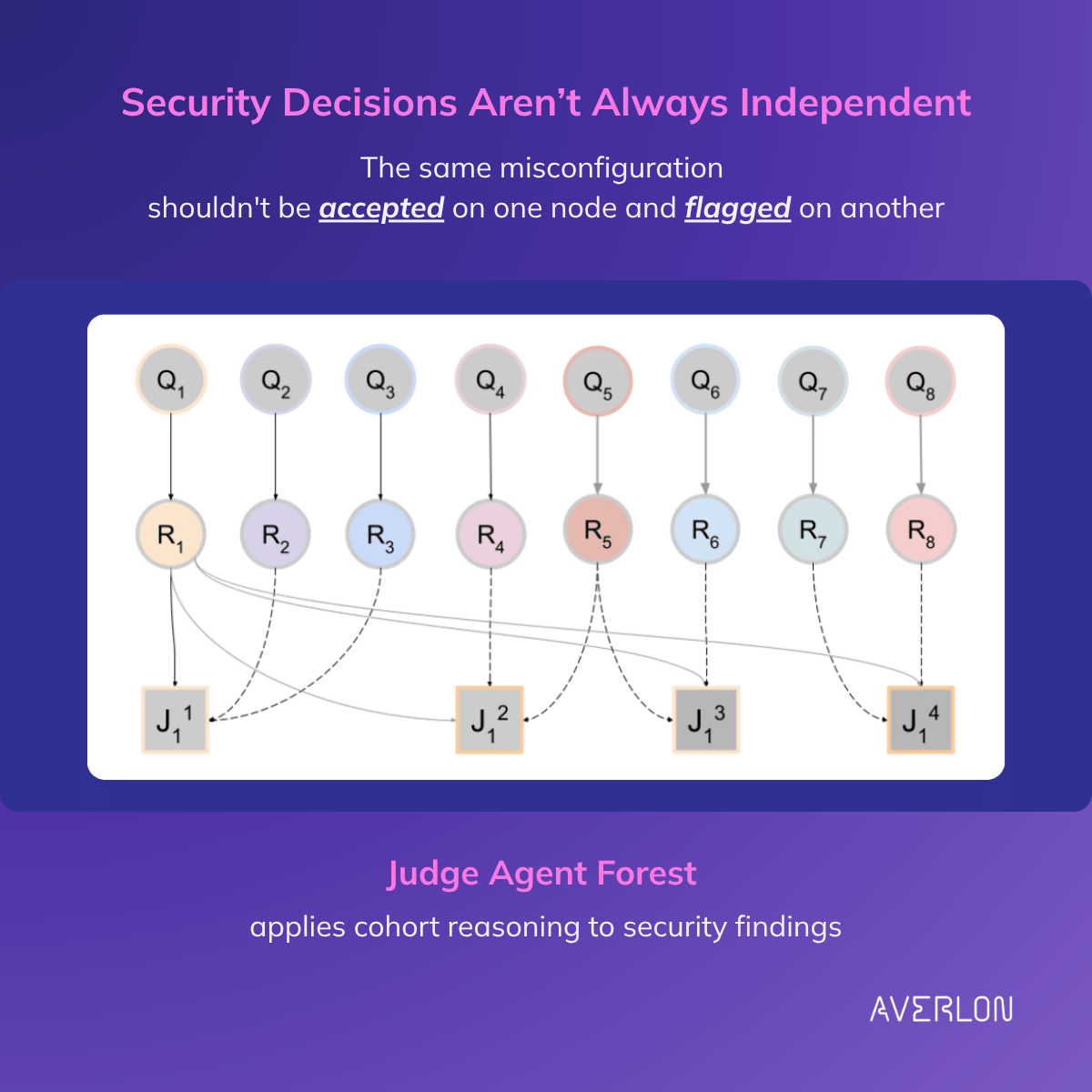
Each node may show the same misconfigurations: permissive security contexts, host-path mounts, and broad capabilities.
Viewed in isolation, each looks like a separate problem.
But those findings stem from a shared operational cause. The software legitimately requires elevated privileges, and that context should carry across every node running it.
Without joint evaluation, an agent may accept the pattern on one node and flag the identical pattern as dangerous on another.
Same environment. Same pattern. Different verdict.
That’s the consistency problem.
Sahil Garg (@sahil_garg_cs) and Vishal Agarwal (@vishalagarwa6c) address it with Judge Agent Forest (JAF): cohort-based reasoning instead of isolated judgment.
Read the paper and blog: https://t.co/4u7jXRnoP0
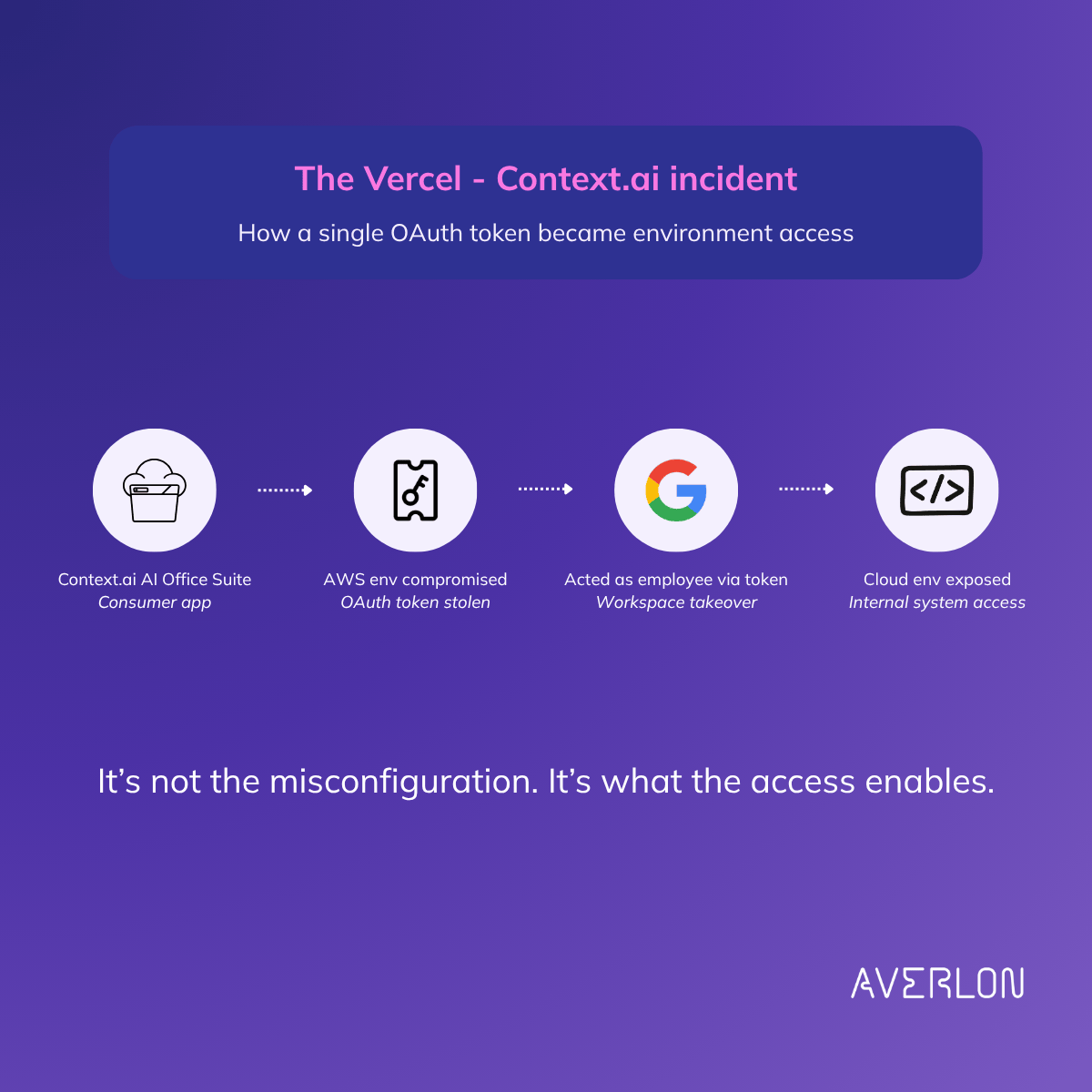
The Vercel - https://t.co/dWUSk8ljWV incident came down to a misconfiguration.
A third-party AI tool an employee connected to their Google Workspace account had its OAuth token compromised. The attacker used that token to pivot into Vercel’s environment.
What’s worth paying attention to is what broad OAuth access can expose: source code, credentials in .env files, architecture documents.
Together, that can give a clear picture of how a system is put together and how to move through it.
It’s not just about whether something is exposed.
It’s about what that access enables.
Vishal Agarwal (@vishalagarwa6c) breaks it down: https://t.co/LlTaml1mwQ
CISA added a Cisco SD-WAN Manager CVE, originally tagged medium by Cisco, to its Known Exploited Vulnerabilities catalog this week. Four days to fix for federal agencies. Why?
Sunil Gottumukkala (@sunilgot), Averlon CEO, explains:
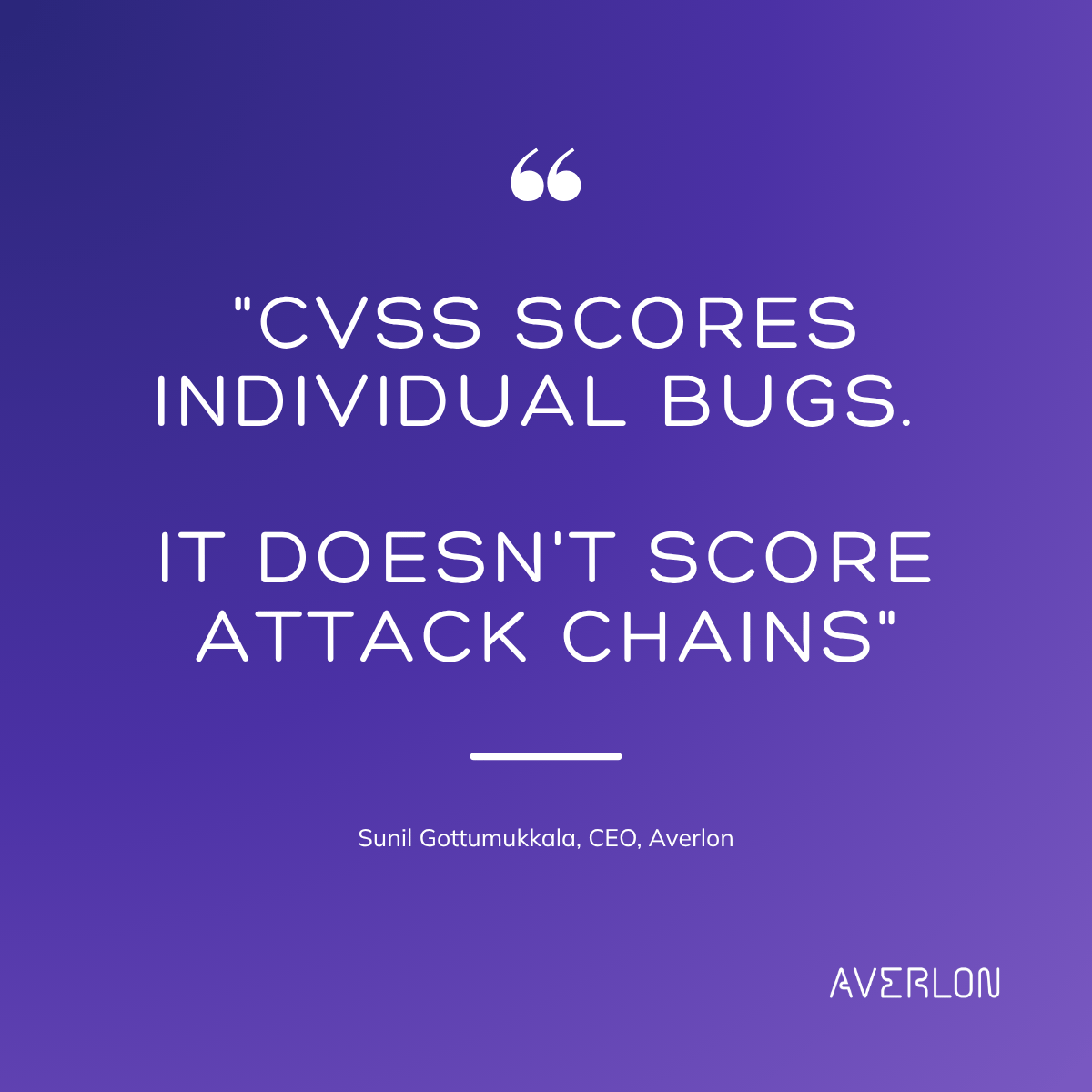
“CVSS scores individual bugs. It doesn't score attack chains. An information disclosure flaw that exposes keys and secrets on a high-leverage management asset can be far more consequential operationally than the score suggests. The more important signal is the attack-chain value.”
The KEV tells you something was exploited. It doesn’t tell you why it matters in your environment. That reasoning is still on you.
Understanding where a vulnerability sits in a potential attack pathway is what separates noise from risk that actually matters.
https://t.co/2P6dVcv3VZ
If you read this and don’t understand why it’s happening it’s an opportunity to reset your understanding of how the real world works.
The real world will need a ton of help actually getting agents going in the enterprise. Companies have legacy tech stacks they need to modernize, data in tons of fragmented tools, knowledge that isn’t captured or digitized, and change management needed to actually utilize agents effectively. And they have to do all this while still running their business day-to-day, unlike startups.
This is why there is so much opportunity for companies (software or services) to actually deploy agents in specific domains and workflows. This remains a big opportunity for both existing services providers but also tons of new startups as well. Every new technology wave produces a new era of consulting firms that can deliver on that technology.
It’s also why the FDE model is going to be alive and well for a long time because companies will want to have their vendor actually help drive the change management and implementation for their new workflows.
The people aren’t going away. Far from it.
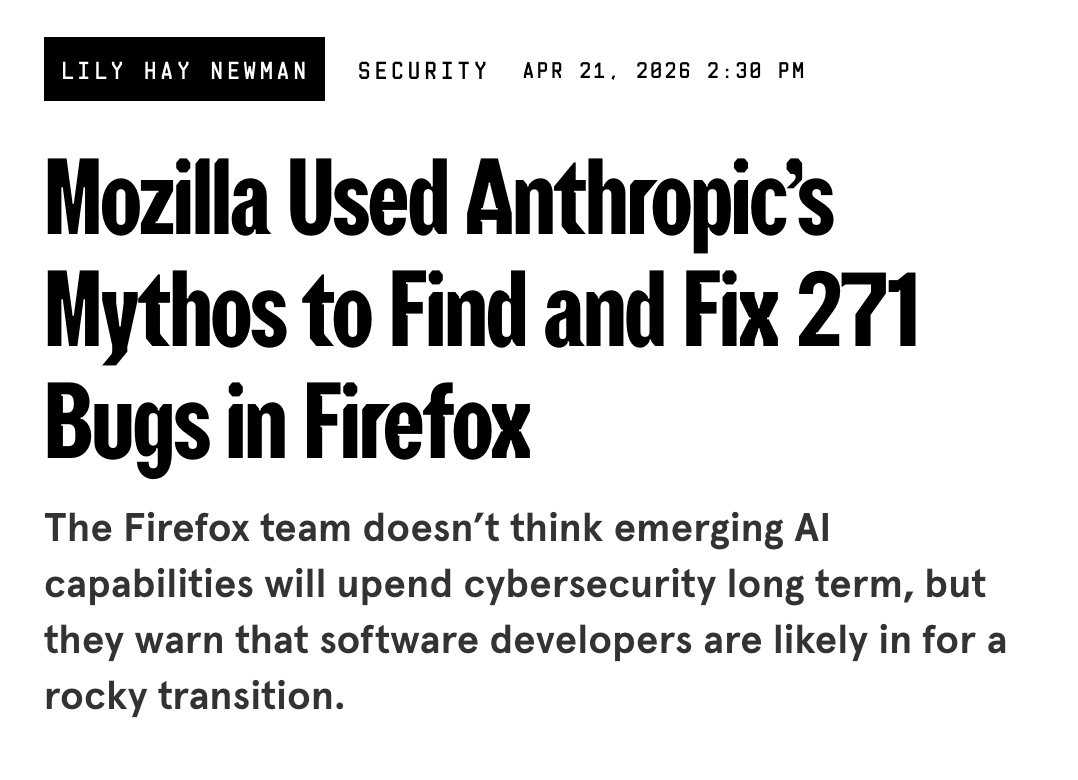
Excited to try Opus 4.7 which seems to be meaning fully better than 4.6, but still far behind Mythos even on non-cyber related tasks. Can't wait to get our hands on Mythos at some point :)
Introducing Claude Opus 4.7, our most capable Opus model yet.
It handles long-running tasks with more rigor, follows instructions more precisely, and verifies its own outputs before reporting back.
You can hand off your hardest work with less supervision.
It's been a heavy week talking about how vulnerability discovery is accelerating and what that means for teams trying to keep up.
One of our team members, Manish Varma (@manishv08576231), turned that into… a parody song.
Not sure if that means we've spent too much time on Glasswing this week, or not enough.
We couldn't not share it.
🔊 Sound on
Thx for sharing.
Your argument on what Microsoft could be willing to pay to fix ALL vulnerabilities is very interesting.
I think if you take AI model capability improvements to the limit, one could potentially treat this as a onetime cost of finding and fixing every issue in the existing code base.
In that world patching becomes one time issue for all existing systems. Interesting thought exercise.
Not sure if we have any evidence at this time on models getting to that stage in a realistic timeframe. Would be great if that's the future
The obvious headline is that Mythos could make zero-day discovery dramatically cheaper, faster, and more scalable.
The bigger issue is what happens next.
Even if access to Mythos is tightly controlled, the industry should expect a surge in dangerous vulnerabilities being found across major platforms. And once patches are released, threat actors are often able to reverse engineer them and turn them into working exploits fast.
Teams need to up-level their remediation operations now, with continuous visibility into exposed assets, a clear understanding of likely attack paths, and the ability to mitigate risk at machine speed.
Industry is not ready for this.
I’m proud that so many of the world’s leading companies have joined us for Project Glasswing to confront the cyber threat posed by increasingly capable AI systems head-on.
https://t.co/pn3HSVsThP
Introducing Project Glasswing: an urgent initiative to help secure the world’s most critical software.
It’s powered by our newest frontier model, Claude Mythos Preview, which can find software vulnerabilities better than all but the most skilled humans.
https://t.co/NQ7IfEtYk7
9.8 CVSS. High EPSS.
Apache Tomcat. Potential RCE.
Looks urgent.
Fix it first?
What if it’s not reachable?
The CVE is critical. The risk isn’t.
CVSS ≠ risk.
In this case:
- No exposure
- No meaningful path to impact
Not what you fix first.
That’s what Remediation Ops enables. At scale.
Security is shifting.
From finding issues
→ to actually fixing what matters.
That shift is starting to show up more clearly.
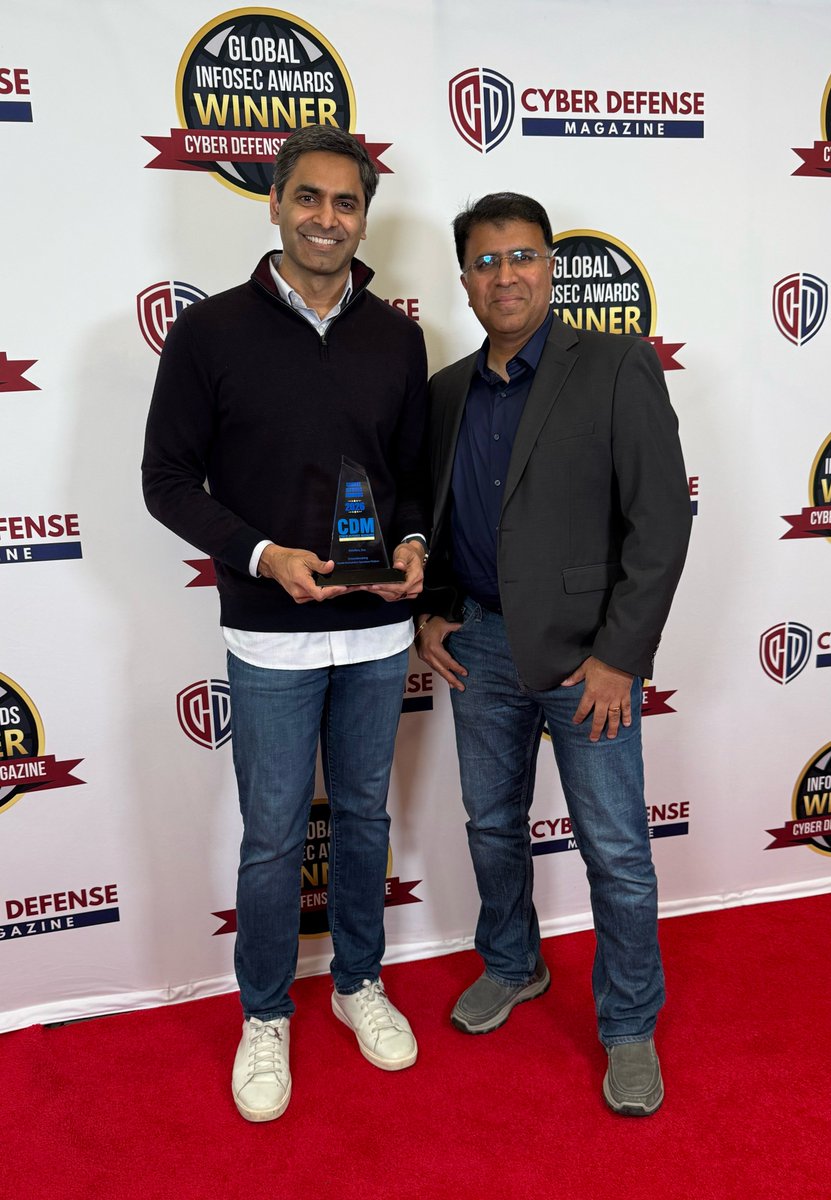
Averlon was named a winner at the Global InfoSec Awards by Cyber Defense Magazine in the category:
Groundbreaking Agentic Remediation Operations Platform
Not for finding more.
But for helping teams reduce real risk across their environment.
See how this works in practice:
https://t.co/OP82gpueRN
Finding issues isn’t the goal.
Reducing risk is.
That’s the shift we’ve been building toward.
We're excited to be recognized by Enterprise Security Tech’s Top Cybersecurity Companies of 2026.
Not for finding more.
But for fixing what matters what actually matters.
That's Remediation Operations.
If you want to see how this works in practice:
https://t.co/OP82gpueRN
Some of our team is in SF for RSA.
If you'd like to compare notes over coffee, reach out to Sunil Gottumukkala (@sunilgot) or Rajeev Raghunarayan (@raraghun).