mohon izin, saya coba jadikan poster sederhana agar lebih mudah dibaca di ipad for kids 🙏
mudah-mudahan dibaca juga oleh pak prabowo, biar lebih paham apa dampak kenaikan kurs dolar terhadap masyarakat desa.
nb: sudah disertai solusi juga.
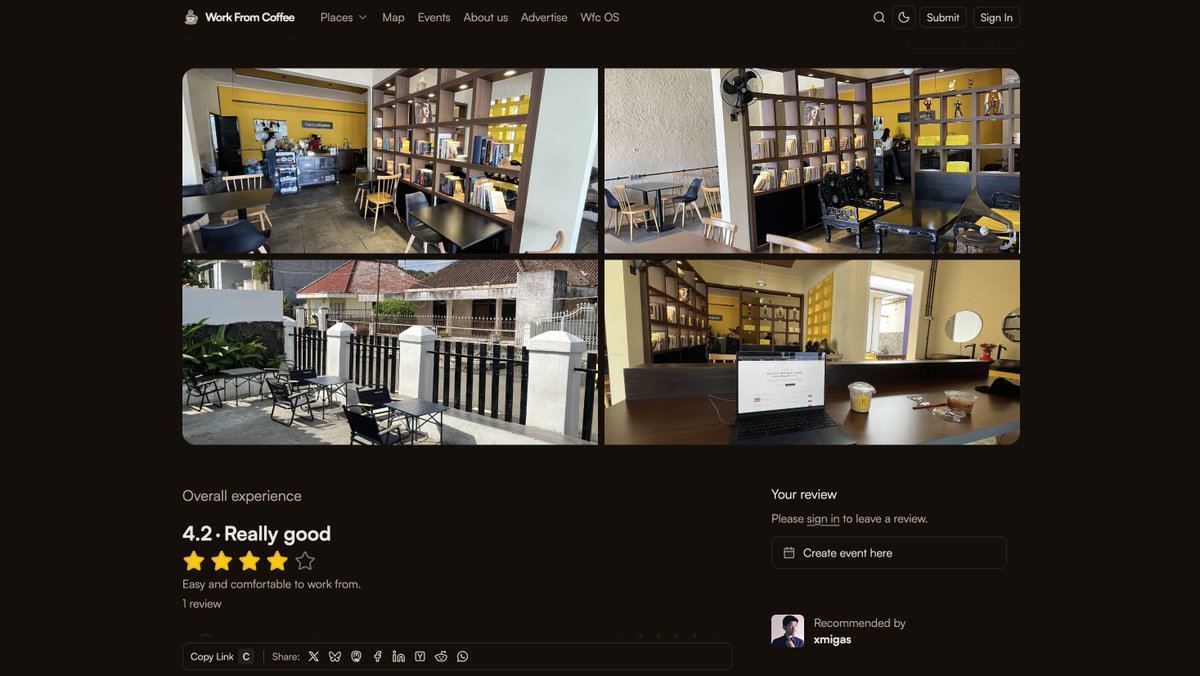
Halo! aku lg coba ngembangin website buat bantu orang-orang yg suka kerja buka laptop dari cafe atau coffee shop (WFC)
Lewat sini kamu bisa nyari, kasih rekomendasi, dan ngasih rating tempat dr aspek enak buat kerja atau ga
webnya bisa diakses gratis di https://t.co/ehoFMtZxXs
Your visual cortex burns 44% of your brain's energy budget. Turning off the lights in the shower is the fastest way to slash that load to near zero.
Your brain is 2% of your body weight but burns 20% of your total energy. Visual processing alone eats almost half of that. Every photon hitting your retina triggers a cascade of neural signaling that demands oxygen, glucose, and ATP at rates higher than almost any other cognitive function.
When you kill the lights, you're removing the single largest energy load on your cortex. That freed-up metabolic capacity gets reallocated.
This is where it gets interesting. A 2022 study from the Laureate Institute for Brain Research measured what happens when you strip sensory input from anxious patients. High-frequency heart rate variability, the gold standard marker of parasympathetic activation, increased significantly compared to controls. Blood pressure dropped. Breathing rate fell. The nervous system shifted from sympathetic dominance to parasympathetic mode within minutes.
The warm water adds a second mechanism. Core body temperature rises during the shower. When you step out, temperature drops rapidly. That cooling signal triggers melatonin production and primes the circadian system for sleep. Layer darkness on top: no photons suppressing melatonin through the retinal ganglion cells, no blue-light signaling to the suprachiasmatic nucleus that it's still daytime.
The shower is doing three things simultaneously. Reducing cortical energy demand by eliminating visual input. Activating the parasympathetic nervous system through sensory reduction. Triggering thermoregulatory sleep signaling through the heat-then-cool cycle.
A $0 float tank that takes 10 minutes.
Aku jg suka gini kl lg sedih. Btw, this is scientifically backed. Cara paling cepat untuk merasa lebih baik & dicintai adalah lewat giving. Endorphins, dopamine, & oxytocin dilepaskan. Giving jg ngalihin kita dr self-absorption terus nurunin cortisol (stress hormone).
The actual research is wild. Every time you push down a feeling, your brain has to choose between suppressing that emotion and recording what’s happening around you. It picks the suppression. The memory doesn’t get saved.
A 2000 Stanford study confirmed this: people told to hide their emotions while watching a film remembered far fewer details than people who just reacted naturally. Suppressing emotions uses up mental energy, and that leaves less brain power for saving new memories.
Brain scans show why. A 2012 study found that suppression quiets the hippocampus (your brain’s memory-recording center) right when it should be saving information. The two brain regions that normally team up to lock in memories stop talking to each other.
Over time it gets worse. Suppression keeps cortisol (the stress hormone) elevated, and cortisol shrinks the hippocampus. Chronically stressed people can lose 10 to 15% of its volume. Just three weeks of high cortisol can shrink the tiny connection points between brain cells by about 20%. The good news: studies show this shrinkage can partially reverse once stress levels drop. Not necessarily permanent.
A Finnish study of 1,137 older adults tracked over roughly a decade found that habitual emotion suppressors had nearly 5x the risk of developing dementia, even after controlling for genetics, smoking, obesity, and education.
There’s a better way to handle emotions that doesn’t cost you your memory. It’s called cognitive reappraisal: instead of bottling the feeling, you reframe what’s causing it. (“This meeting isn’t a threat, it’s practice.”) A 2003 Stanford/UC Berkeley study found reappraisers had more positive emotion, better relationships, and higher wellbeing. Suppressors got the opposite on every measure. And reappraisal carries zero memory cost.
The difference comes down to timing. Suppression kicks in after the emotion has already fired, so your brain is fighting its own response while simultaneously trying to record the moment. Reappraisal changes how you interpret the situation before the emotion fully activates. Same event, same person, but your hippocampus stays free to do its actual job: recording your life.
When someone says, “It’s in the cloud,” what they really mean is: it’s stored on someone else’s computer, in a data center, possibly in another country.
The cloud is basically physical computers lots of them located somewhere in the world.
Not in the sky. Not floating above us. Not in some invisible digital dimension. Just real machines sitting in massive buildings called data centers.
When you upload a picture to Google Drive, save files to iCloud, or stream a show on Netflix, your data travels through internet cables (including undersea fiber cables) to a physical location where racks and racks of servers are running 24/7. These buildings have heavy security, backup power systems, industrial cooling, and thousands of hard drives constantly spinning.
The reason we call it “the cloud” is because, from a user’s perspective, you don’t need to know exactly where those computers are. You just send something out… and it’s available everywhere. But behind the scenes, it’s simply remote storage and computing power owned by companies like Amazon (AWS), Microsoft (Azure), and Google.
No one knows you. No one has a story about who you are. No one is waiting for you to be the person you were yesterday. You're just a stranger in a chair by the window, watching a city that doesn't need anything from you.
It's the feeling that anything could happen. That the world is bigger than the walls you built around yourself back home. That the life you've been living is just one version of a life, and there are others, and they're not as far away as you thought.
At home, you're fixed. Known. You fit into a shape that other people recognize, and after a while, you forget you're even in a shape at all. But here, alone, somewhere new, the shape dissolves. You could be anyone. You could be more of yourself than you've ever been. No one is watching to see if you stay consistent.
After 10 days of drinking hot water every morning, I’ve noticed real changes in my body. My digestion feels smoother, my stomach is less bloated, and I feel lighter overall. My throat feels clearer, and my skin looks brighter. It’s such a simple habit, but the difference it’s making in my daily well being is honestly surprising.
Lo nggak bisa ngalahin orang yang lagi having fun.
Bukan karena dia paling jago.
Bukan karena dia paling pintar.
Tapi karena dia nggak kehabisan energi buat hal-hal receh: takut salah, mikirin omongan orang, sibuk bandingin diri.
They wake up curious, not pressured. kerja mungkin lama tapi bukan karena dipaksa. kalau jatuh bisa bangkit cepet, karena dia gak anggep identitasnya terluka. toh ini cuma permainan.
Fun is a cheat code.
Bikin effort kerasa ringan.
Bikin konsistensi kejadian tanpa dipaksa.
Bikin progress compounds.
Kalau lo sering ngerasa capek, belum tentu yang salah adalah disiplin atau skill.
You might just be playing the wrong game.