The biggest mistake I made in real estate was ignoring this one thing - Building a creative deal finding system.
We now have, and it's a fairly sophisticated off-market sourcing system for our flip fund.
We’re seeing a steady flow of deals almost daily that don’t fit our really strict buy box—but they’re still highly profitable.
Most investors never see these.
(2 examples attached ↓)
If you’re a flipper, realtor, or investor who wants first shot at the deals we pass on, comment “yes” and I’ll send you a link to get on a list.
We’re capping the list at 100 people and closing it Sunday.
First come, first serve. 🙌
Blown away by how fast AI is moving.
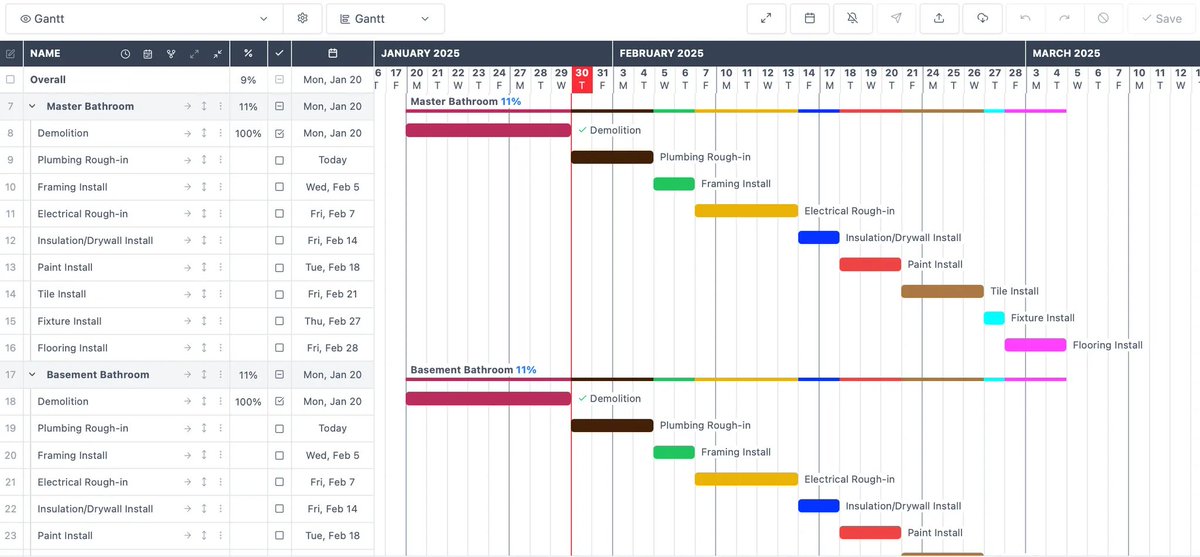
We’re launching a push to get better premarket leads and need a site where motivated sellers can fill out their info.
Options were,
-Hire a designer + developer for a few thousand bucks
Spend 2–3 weeks building it manually
- Use Squarespace, Wix etc, but more time-consuming.
Instead, I deep researched ChatGPT for AI website builders.
Got a few options. Fed them an example site—and in under a minute, the new site was ready that I could edit any way I liked.
15 minutes total, start to finish.
A couple of years ago, this would've taken weeks and thousands.
There’s never been a better time to be an entrepreneur.
It's been hard to find "good" deals—high rates, too much competition on-market.
In the current climate, the best play is forcing value into a property instead of chasing overpriced deals.
So we adapted. Flipping isn’t the highest return on effort or risk, but with a team of ex-consultants, we think we can crack an autonomous system especially with AI agents and integration, an assembly line that runs itself over time. May be that is over confidence but at least that's the hypothesis.
So for a POC, we closed a small fund in Jan, bought our first flip already, and now we’re fully in it.
Flipping also sharpens our off-market skills, gives us hands-on experience with rehab and dispo, and so builds optionality for the future.
Every deal will stacks skills, every skill creates options.
Long-term, we’re laying the groundwork for a vertically integrated operation with multiple core competencies.
So when the market shifts, we’ll have a toolbox to adjust and capitalize.
By the Numbers
Strategy: Flip Bought All Cash to reduce holding risk
Property Type: Single-family home
Bedrooms: 3 → 4 after renovation
Bathrooms: 1.5 → 2.5 after renovation
Purchase Price: $262.5K
Est. Current Valuation: $341K
Est. Renovation Cost: $80K
Est. Sale Price: $410K+ (conservative)
Est. Holding Period: 6 months
First time doing it, so will be sharing everything—the wins, mistakes, and lessons in between. Stay tuned for more updates!
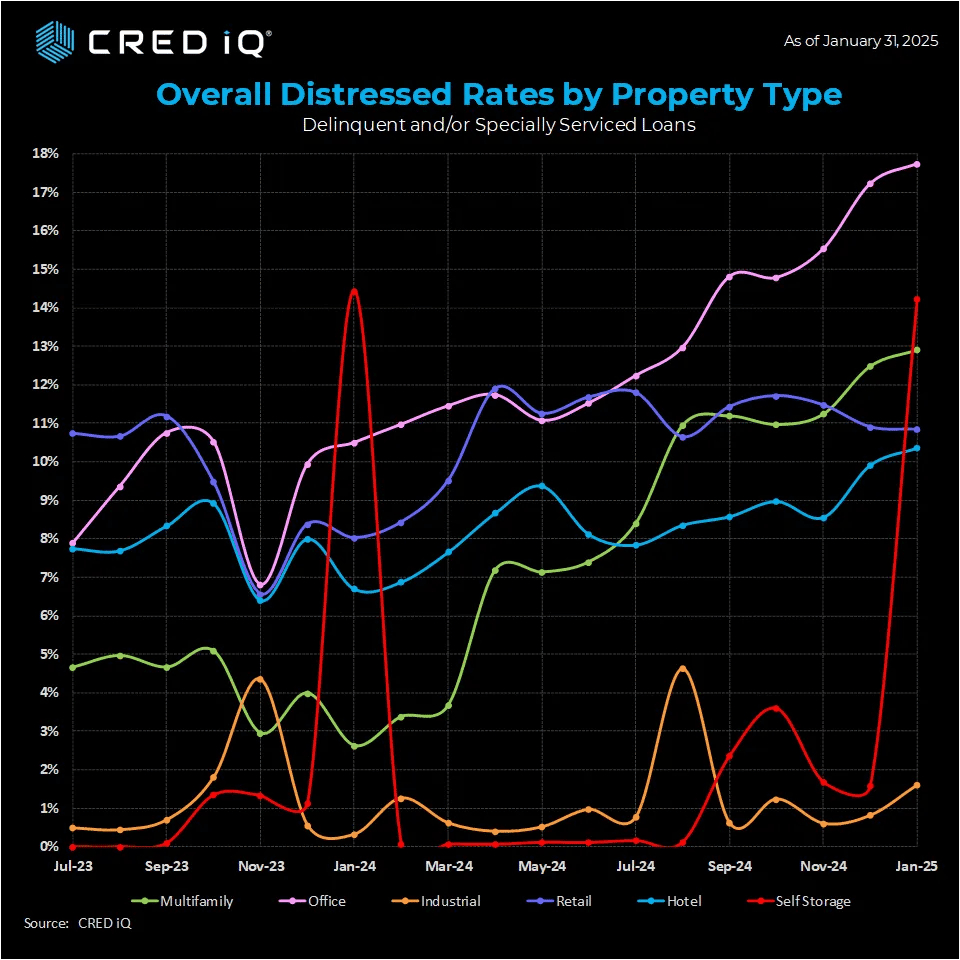
aggregates two indicators of distress – delinquency rate and specially serviced rate = the distress rate. index includes any loan with a payment status of 30+ days delinquent or worse, any loan actively with the special servicer, also includes non-performing and performing loans that have failed to pay off at maturity.
Overall distress by property types.
Sent this in my newsletter earlier, but a quick TLDR,
CMBS-financed property distress hit 11.5% in January, the fifth straight record high, rising 90 basis points from December.
Multifamily distress surged to 12.9%, a sharp increase from 2.6% a year ago.
Office remains the most distressed sector at 17.7%, though the rate of increase has slowed. Class A offices are holding up, while Class B and C properties continue struggling.
Self-storage distress spiked to 14.2%, largely due to a $2.08 billion loan tied to 16 Chelsea, NYC properties missing its maturity payment.
Industrial ftw......for now at least.
Just did a rent audit on part of our portfolio and found an extra $5K/month—just by checking current rents against market rates.
Takes almost no effort
Can be done every 6 months
Way better leverage than squeezing expenses
The easiest thing to do for any operator.
P.S - Market rents are based on AVMs but still.
Last year, we stopped acquiring and brought property management in-house. 3rd party PMs were a nightmare—broken incentives; they made money when we lost money.
So we offshored ops and hired a director from BCG with consulting chops, and the results? Massive turnaround.
Now we have optionality—if we want long-term holds, we’ve got a killer management team in place.
Just look at this one metric of economic occupancy.
Economic Occupancy %=(Actual Collected Rent/Gross Potential Rent)×100
Only wish we did this sooner!
@ClarenceWongCRE Appreciate that. Yeah, it was a grind—systems, hiring, offshoring, all of it. But now, it’s a competitive advantage.
Wouldnt have been possible without a great partner to give credit where it's due and strict hiring frameworks.