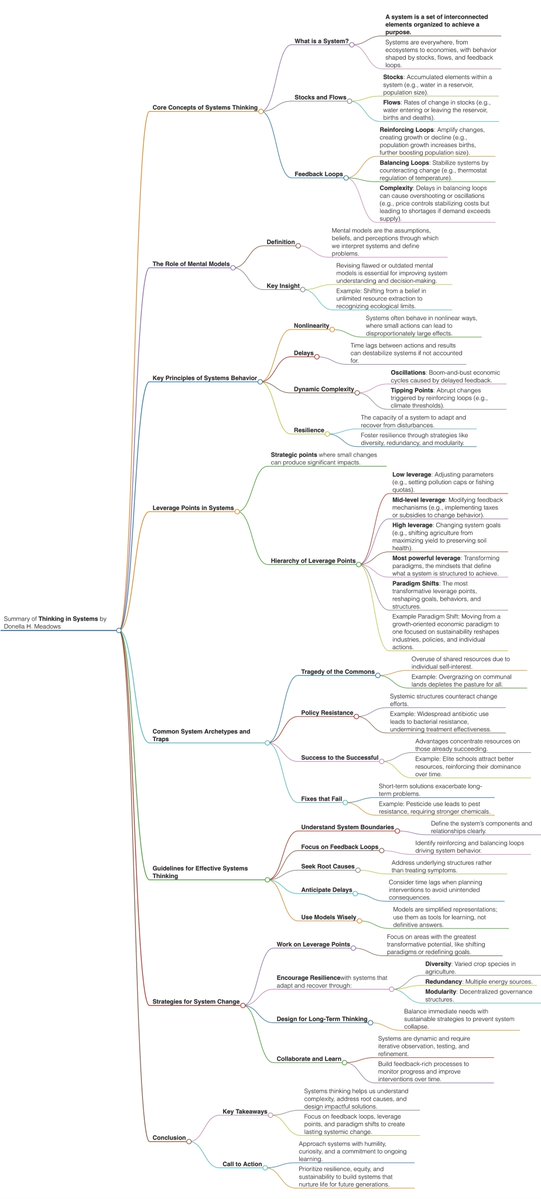
highly recommend you build a personal knowledge base for yourself.
total setup time: 45 minutes
1. Setup (5 min): 3 folders (raw, wiki, outputs) + CLAUDE.md schema file
2. Dump (10 min): every transcript, note, screenshot, and SOP into raw/
3. Build (30 min): AI reads everything, writes the wiki, creates the index
4. Compounding loop (ongoing): new sources in, sharper answers out
5. Health check (monthly): flag contradictions, find stale topics, fill gaps
for step 2, have claude code/codex pull relevant data from your connectors.
for step 4, set up a weekly cron that analyzes all the work you did that week, suggests updates to the knowledge base (this is what I have set up with my Hermes agent)
the craziest part now is that the modern computer probably has to be entirely reinvented, from scratch. pretty much like how jobs & co brought apple ii to market.
like not improved. not given a chatbot sidebar or something but really from the ground up like the iphone redefined what it meant to be a pocket computer.
the current paradigm for computers was built around a human staring at a screen, moving a cursor, opening apps, managing windows, naming files, remembering where things live, & manually translating intent into interface actions.
that made sense when the human was the runtime. but in an ai native world, it starts to look kinda ridiculous.
you can see this ridiculousness when you use computer use agents… they are useful sure, but they’re also obviously transitional. they’re teaching ai to operate machines designed for humans, which is clever, but also kind of absurd. it’s like making a robot hand so it can use a doorknob instead of asking why the door needs a knob at all. yes i know humans also need to use a door knob, but maybe in the future humans don’t need to use a computer, or at least what we think of a computer today at all.
this all leads to some interesting questions:
- what is a file when the system understands context?
- what is an app when intent can route itself?
- what is a desktop when work can be decomposed, executed, monitored, & summarized by agents?
- what is a browser when the agent can retrieve, compare, transact, & remember?
- what is an operating system when the primary user is no longer just a person, but a person plus a swarm of delegated intelligences? or no person at all.
the old computer assumed navigation.
the new computer has to assume a new kind of intention. the old computer organized information. the new computer has to try to organize agency.
we’re still in the hacky middle stage at the moment with sidebars, copilots, agents clicking through legacy ui, & automation layers sitting on top of 40 year old metaphors.
the new computer is likely one where memory, context, identity, permissions, tools, agents, & interfaces are native primitives. this means desktop, mobile, browser, apps, files, folders deserves another first principles look.
This is an interesting way to think about AI and jobs. The more intertwined your routine and discretionary tasks are, the more resilient you likely are to it. https://t.co/krMufl6CmU
I've been building brand tools with AI lately and it's the most fun i've had with design in years. not generating finished assets, but building the generator that makes on-brand textures / patterns / key visuals on demand.
turns out, many designers are vibecoding tools like this!
so i'm starting a running thread to collect the good ones.
built something like this? drop it below. 👇
McKinsey already generates 25% of its fees from outcomes-based pricing. Strategy advice accounts for less than 20% of the firm's work. They're shifting partner compensation into equity because revenue volatility is spiking. The transition is further along than this headline suggests.
Run the old math. A McKinsey engagement bills roughly $700 an hour. A six-person team scoped for three weeks on a market entry analysis ran somewhere around $500K. The client couldn't easily benchmark that against alternatives because the deliverable was proprietary methodology wrapped in a 200-slide deck.
AI broke the opacity. A client can now run the same market sizing, competitive landscape, and scenario analysis through Claude or GPT in an afternoon. The output isn't identical, but it's close enough that the client can see what $500K was actually buying: 70% data aggregation, 20% formatting, 10% genuine strategic insight. That last 10% is worth paying for. The first 90% is now a commodity.
McKinsey sees this, which is why they pivoted hard into implementation. 72% of their consultants actively use Lilli, their internal AI tool. They're selling multi-year transformation projects instead of three-week strategy sprints. The firm that defined strategy consulting is quietly exiting strategy consulting.
The pricing math is structural. In billable hours, AI productivity means more output per hour, more revenue per consultant. In outcomes-based pricing, AI productivity means same outcome delivered faster, less revenue per project. McKinsey chose outcomes-based because clients forced them to. Now every efficiency gain flows to the client instead of the firm.
$16 billion in annual revenue. 38,000 employees. A 100-year-old business model being unwound in real time. The firms that survive will look nothing like consulting firms. They'll look like AI-augmented implementation shops that happen to have McKinsey's rolodex.
Whether it’s existing consulting firms, new ones that emerge, FDEs from agent vendors, or new internal agent engineering roles, the amount of work that is going to be created to implement agents in enterprises will exceed anything we imagine today.
The complexity of implementing agents in any existing organizations is very real. When I talk to large enterprises, as you move from a chat paradigm to agents that participate in meaningful workflows, there are a number of things they need to do.
First, you have to get agents to be able to talk to your data securely across your systems. In many cases, enterprises have decades of legacy infrastructure that contain the valuable context for AI agents. That’s going to take a ton of work to go modernize and move to systems that work well with agents.
Then, you need to ensure that you’ve implemented agents with the right access controls and entitlements, the right scopes to be safely used, and have ways of monitoring, logging, and securing the work that they do.
Next, you need to actually document the processes in the organization in a way that agents can utilize for doing the work. You also need to figure out what the new workflow looks like when agents and people are working together on a process, and who steps in where. Just replicating the old workflow will mute the gains. Oh and you likely need to create evals for your top new end-state processes.
Finally, you have to keep up with a rapidly changing set of best practices and architectural shifts happening in the agent space. While it’s fun for people to change their personal productivity tools on a dime, it’s 100X harder to do this in a business process. The speed of change is a blessing and a curse right now for anyone trying to keep a stable system design.
All of this means that individuals and companies that develop expertise on the above set of components (and more) are going to be needed to help organizations actually implement agents at scale. This is also the rationale for vertical AI agents right now that can go in deep on a business domain and help bring automation to it.
This is a huge opportunity right now whether you’re doing this internally or as an external business provider.
anthropic's head of product just revealed how they're able to ship faster than any other AI company.
their secret: "side quest maxxing."
here's how it works:
instead of long-term roadmaps, anthropic runs on unplanned afternoon experiments.
anyone on the team gets full freedom to spend an afternoon prototyping an idea and show it to the team.
you get to skip the approval process entirely.
then, employees at anthropic try it.
if they keep using it the next day and the day after that, it gets polished into a real feature.
if nobody touches it again, it dies.
that's the whole process.
claude code on desktop started as one engineer's afternoon project.
he wanted it to work on desktop so he built a prototype.
people on the team started using it immediately. so they shipped it.
the todo list feature started the same way. someone built it, the team adopted it internally, and it became one of the most-used parts of the product.
plugins started when one engineer shared a spec with claude code and the prototype that came back was close to production-ready.
went from idea to working feature in a single session.
they also killed standup meetings. instead of telling people what you're working on, you just show a working demo. all walk no talk basically
the team structure makes this possible.
> designers ship code.
> engineers make product decisions.
> product managers build prototypes.
everyone can take an idea from concept to working demo without waiting on anyone else.
the biggest features at a $380b company came from afternoon experiments that nobody asked for.
honestly this matches my own experience cooking with ai.
some of the best workflows i use every day came from just fucking around.
opening a session with zero intention and asking claude what it can do, or jamming on a random idea to see where it goes.
if you're only using ai for tasks you already have in mind, you're missing the best part.
open a session with no agenda. ask it to surprise you. try building something stupid.
half the time it goes nowhere. the other half it becomes the thing you use most.
you need to be sidequestmaxxing.
Kenyan Sebastian Sawe won London Marathon with a 1:59:30 time (first official sub-2hr marathon).
The breakdown is insane:
▫️4:33 per mile pace (the record for one mile is 3:43 and he kept the pace 26x)
▫️2:49 per KM pace (he did it 42x)
▫️was faster in his second half (59:01) than first half (60:29)
▫️average speed was a ludicrous 13mp/h (21km/h)
▫️the average men’s marathon time for 5km is ~30 mins (Sawe’s 5km pace was 14:10 mins, which he did ~8x)
▫️the world record 10km track run is 26:11 (Sawe’s 10km pace was 28:19 which he did ~4x)
▫️His 100m pace was 17 seconds, which he did 422x
▫️The 21km per hour pace (or 13 miles per hour) isn’t even available on some treadmills
Sawe broke the previous world record by 65 seconds (Kelvin Kiptum ran 2:00:35 in 2023; RIP).
Eliud Kipchoge broke 2-hours in 2019 (1:59:40) but that was a controlled race.
Somewhat insanely, Ethiopian runner Yomif Kejelcha also broke 2 hours (1:59:41) and London Marathon was his first race!!!!
Incredible stuff.
***
More via Runner World’s: https://t.co/jeDrVwFX4m
Ten things that spark happiness in humans:
1. The Sun
Warm rays on your skin, natural vitamin D, and that instant mood lift from bright daylight. Nothing resets your brain quite like stepping into sunshine.
2. Deep Human Connection
Meaningful conversations, shared laughter, and feeling truly seen by people you care about. Belonging and love are foundational happiness boosters.
3. Sex
Intimate, pleasurable physical connection with a willing partner releases a powerful cocktail of oxytocin, dopamine, and endorphins that creates deep satisfaction and closeness.
4. Movement & Exercise
Running, dancing, lifting, or even a brisk walk—physical activity floods your body with feel-good chemicals and builds lasting confidence.
5. Music
The right song at the right moment can shift your entire emotional state and create instant joy.
6. Time in Nature
Forests, beaches, mountains, or parks—being surrounded by greenery and fresh air calms the mind and restores energy.
7. Acts of Kindness
Helping others triggers a warm, lasting glow of fulfillment that often outlives the act itself.
8. Good Food (Shared)
Delicious meals, especially when enjoyed with people you like, combine sensory pleasure with social bonding.
9. Laughter
Genuine, uncontrollable laughter reduces stress hormones and instantly elevates your mood.
10. Gratitude & Rest
Taking time to appreciate what you have, combined with quality sleep or deep relaxation, creates a stable base for daily happiness.
These ten tend to compound: sunshine often leads to more movement and connection, which can flow into intimacy, and so on. Prioritizing them consistently is one of the simplest ways to live a happier life. 🌞
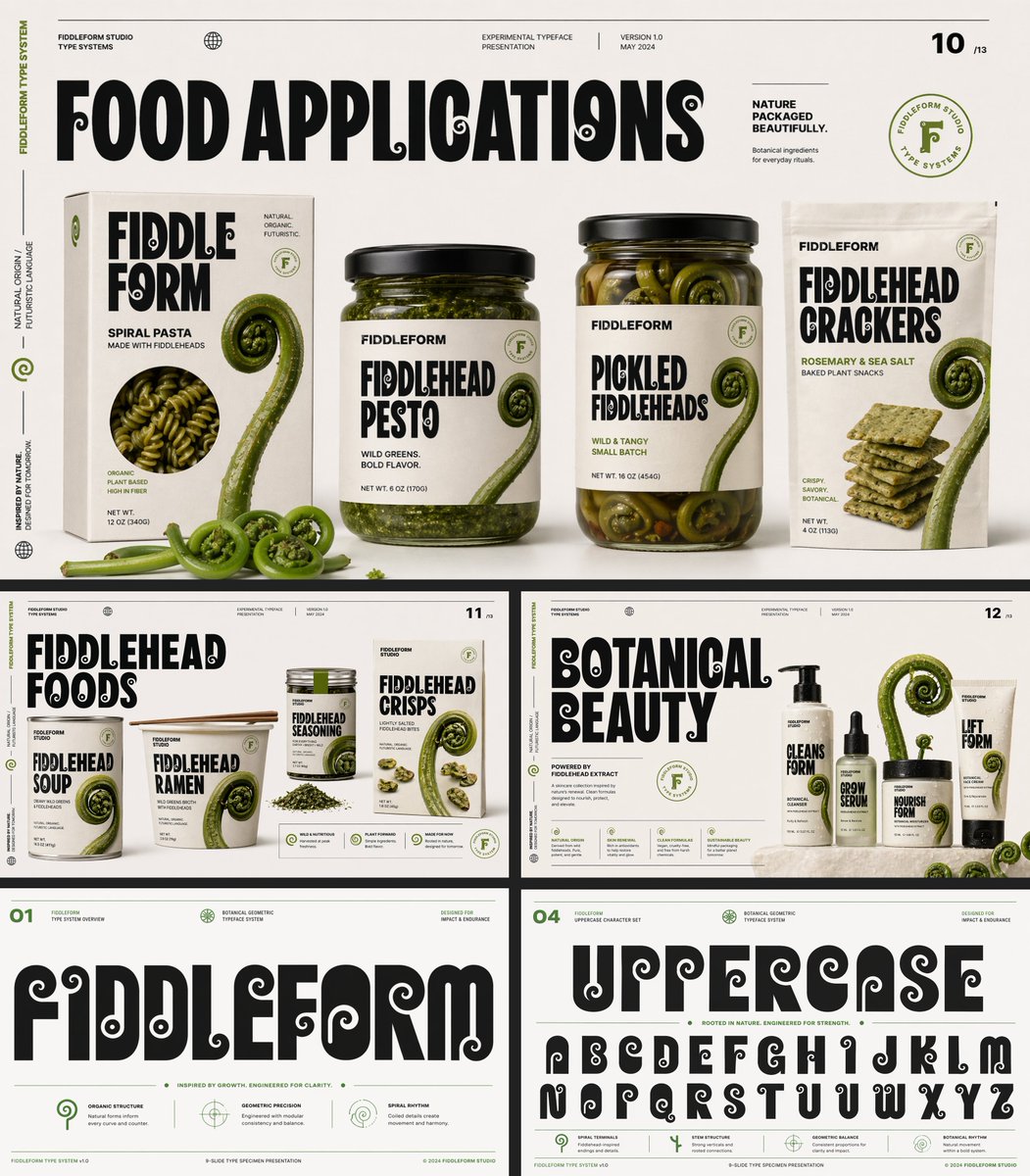
GPT-2 Image + Claude Code → Working OTF Files.
Still not sure how this is possible...
(Full process in thread)
PROCESS:
01. GPT Img 2 for concept
02. Claude Code to build font files.
03. That's it.
Plugged this into Figma in less than 30 mins.
And it works.
Today, we’re open-sourcing the draft specification for DESIGN.md, so it can be used across any tool or platform. We’re also adding new capabilities.
DESIGN.md lets you easily export and import your design rules from project to project. Instead of guessing intent, agents know exactly what a color is for and can even validate their choices against WCAG accessibility rules.
Watch David East break down this shared visual language in action👇. New capabilities and links in 🧵
@levie Enterprise AI adoption will be slower than consensus expects. Workflows are irreducibly firm-specific, and software requires customization to embed successfully.
As popularized by @PalantirTech, FDEs will be crucial for enterprise adoption. Karp on why:
https://t.co/Wrd7vW4EOI
The succession everyone called for years just happened, and it's the most revealing personnel decision in tech this year. Apple is the company most behind in AI: Siri delayed three times, Apple Intelligence launched with hallucinated news headlines, and the upgraded assistant is reportedly going to be powered by Google Gemini under the hood. The obvious move was to put a software or AI executive in the CEO seat. Instead the board picked the guy who runs hardware engineering.
Ternus has been at Apple 25 years. He's a mechanical engineer. He's never run software, services, or AI. His resume is iPhone, iPad, Mac, AirPods, Apple Watch, Vision Pro, and the M-series silicon transition. He is the silicon-and-systems candidate.
Cook leaves with the receipts. Market cap from $350B to $4T, a 10x in 14 years. Revenue from $108B to $416B, nearly quadrupled. Services from a footnote to a $100B business. He inherited a hardware company and built a recurring-revenue platform on top of it. The market said thanks by selling AAPL down 1% after hours.
The Ternus pick tells you what Apple's board actually believes about the next decade. The AI race won't be won at the model layer where Apple is hopeless and renting from Google. It'll be won at the silicon layer (on-device inference, custom NPUs, thermal envelope, battery), the form factor layer (glasses, wearables, ambient computing), and the integration layer (the chip talking to the OS talking to the model). All hardware-adjacent problems. All Ternus problems.
The bear case is straightforward. Apple just promoted the executive least connected to the technology that's eating the world, at the exact moment software-native companies (OpenAI with Jony Ive's device, Meta with Ray-Ban, Google with Gemini-everything) are coming for the iPhone's distribution. A mechanical engineer running the most valuable consumer software platform in history. That's a real bet.
The bull case is the same fact framed differently. Every competitor is converging on the realization that AI hardware (the device the model lives on) is the next platform, and Apple has spent 25 years building exactly that. Ternus shipped Apple Silicon, the only credible non-Nvidia AI chip in a consumer device. He runs Vision Pro. He inherited the robotics team in the April reorg.
The boring read is succession planned years in advance, no surprise. The interesting read is that Apple just told you it doesn't think the AI race ends with the best chatbot. It thinks it ends with the best device. And it picked the person who builds devices.