This screwdriver business needs to stop!!
Suryastra is just Elbit's PULS rebadged. Same launcher, same EXTRA rocket at 150 km, same Predator Hawk at 300 kms. There is nothing new being demonstrated here.
Nibe signed the technology collaboration agreement with Elbit in August 2025, and by January 2026 the system was rolling down Kartavya Path on Republic Day. That is four months from signature to parade.
Anyone who has worked on a real weapons program knows you cannot transfer rocket motor chemistry, INS-GPS fusion, terminal guidance and warhead design across continents in four months. What you can do in four months is unpack the shipping containers, bolt the sub-assemblies onto a chassis, calibrate the launcher and get it ready for a parade.
And we are paying 292 crore for this under emergency procurement powers. Look at what Nibe actually does as a business. Cable harnesses and mechanical fabrication. The kind of work hundreds of MSMEs in Pune do every day. We have written them a 292 crore cheque to assemble Israeli rockets and put a Sanskrit name on the side.
Meanwhile DRDO's Pralay, Prahar and Pranash sit there gathering dust.
Well done @SpokespersonMoD
@AniketFiles@iamrakeshbansal That's how it works, very well explained but who's going to explain it to this dimwit finfluencer .All his posts for engagement end up exposing his stupidity
THE COST OF FREEDOM - Long but please read.
This is an article by an anonymous Air Force Officer who flew out Kargil casualties: the just-missed ones, the injured survivors, the unknown Sikh soldier in the Kargil War. It is reproduced as received.
I remember it as if it were yesterday. It was 23 May 1999, and the Kargil conflict was ongoing. My crew and I were in Awantipur (Kashmir) to pick up 24 casualties (20 sitting & 4 on stretchers). The casualties on stretchers were extremely seriously wounded.
The age of the passengers ranged between 19–27 years. Some had bullet wounds where the bullet had gone through and through, but they still had their legs and could sit, stand, and walk—so weren’t on stretchers. (I guess, in a strange Army way, making them feel better—that’s how the system works. It actually works. I have seen a Gurkha with a bullet wound helping another Kumaoni who was limping along. It’s a system that teaches one to be empathetic towards others.)
The men who were on stretchers were the really badly hurt ones. They were those who had stepped on a landmine and had their legs blown off. A very different sight from what is seen on TV news—moving from wounded soldiers to heavy snowfall. The pain was terribly real. Also, it was not possible to merely change the channel.
The aircraft was the workhorse of the IAF, an An-32. It reeked of antiseptic and fear. As we waited for the last patient to arrive, I realised that my An-32 was also a micro India.
A Naga soldier was seated next to a tall Jat, a Tambi next to a Maratha, a Rajput next to a JAK LI jawan, a Mahar next to a tall Guards soldier, and the tiny Gurkha next to an equally small and sturdy Kumaoni.
All united by shades of olive green and the invisible thread of pain—injuries they had suffered on our behalf.
In the ambulance parked just at the edge of the ramp (behind the aircraft) was a Sikh Light Infantry soldier. He was really young—so young that his beard had barely started to grow, a mere boy. He had lost both his legs in a landmine explosion.
In an effort to distract him, I asked,
“Are you fond of cricket?”
His eyes brightened immediately, and he said,
“Yes, Sir.”
Seeing his response, I addressed all my passengers:
“The World Cup is ongoing in England. India is playing Kenya. Sachin Tendulkar has scored 140 runs in 101 balls, not out. He has helped India reach 329 in 50 overs. Tendulkar has dedicated his innings to his father, whose funeral he had returned from the previous day. What do you all think—will we win?”
“YES SIR!” came the immediate reply in unison.
All of a sudden, a Tendulkar tsunami swept through the aircraft and the ambulance behind it.
Everyone forgot their pain and injuries. They forgot their predicament. All they could talk about was Tendulkar and his century.
People began talking to the person next to them. Language and cultural barriers broke down instantly. New friendships were formed.
I could see my young friend in the ambulance talking animatedly. His eyes lit up. His smile was ecstatic as he described Tendulkar’s shots. His injuries and pain were forgotten briefly.
He was happy. All my passengers were happy.
For a brief moment, everything was the way it ought to be.
Epilogue
When I landed with my passengers in Delhi, I shared the good news—we had indeed won the match, far away in England.
My young friend, strapped to the stretcher, smiled at me. I shook his hand and wished him well.
I was relieved it was dark—he couldn’t see my eyes.
My crew and I stood behind the aircraft as they disembarked silently, wishing them well.
It is men like these—the ones who were passengers on my plane—who silently walk away after giving their youth for all of us.
They are the ones we owe our freedom to.
Dear countrymen and women,
Freedom doesn’t come for free.
It is paid for in full by the lives and blood of our soldiers, sailors, and airmen.
No country for bright minds.
I would love to see a mandate that says all Indian MPs must be operated by only these future doctors.
I do believe in giving a helping hand to underprivileged but this shit has gone beyond recovery point.
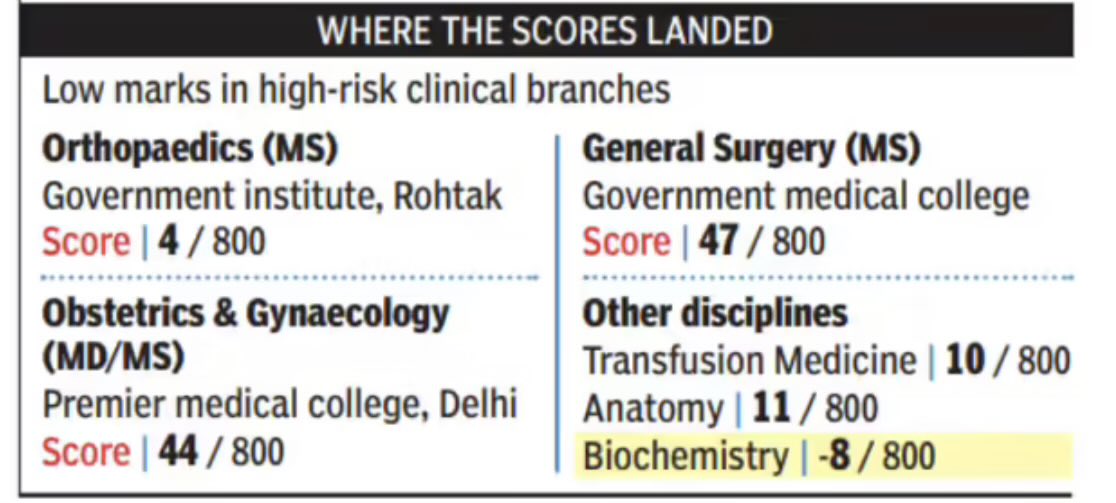
4 out of 800, 10 out of 800, 11 out of 800, 44 out of 800, 47 out of 800 and the academy award winner -8 out of 800.
In a few months, these guys would be treating real patients or assisting in key procedures.
My Demand: Make Long Term Capital Gain TAX on Equities NIL for individual investor.
I welcome the hike in STT (security transaction tax) on derivatives as it can curb reckless speculation. Nearly 90% of retail investors lose money in F&O, turning markets into gambling.
When STT was originally introduced, LTCG was zero. But now with both STT and LTCG in place, investors are disincentivised.
I urge the govt to abolish LTCG on equities for individuals, as done in Switzerland, Singapore, UAE & others. This will boost household wealth, reduce speculation, and shift savings from gold & real estate into equities.
Assessment of the Op Sindoor by Swiss Centre for Military History and Perspective Studies (CHPM):
The Blitz of May 10th
The first wave of Pakistani attacks on the night of 7–8 May 2025 resulted in a second stage of Indian escalation, planned during the preparatory phase of Operation Sindoor. On 8 May, the #IndianAirForce launched its own campaign of air interdiction and air strikes against Pakistani air-defences. This operation, focused on border surveillance radars and long-range surface-to-air missile batteries, carried on until the evening of 9 May.
It was relatively discreet, with the Indians employing Israeli-origin Harop and Harpy loitering munitions. Eight air-defence sites were struck on 8 May, and a further four the following day, resulting in the visually documented neutralisation of at least two early-warning radars at Chunian and Pasrur. The IAF also claimed to have struck at least one HQ-9 battery, although the Pakistani side stated that their air-defence systems had shot down 25 drones on the morning of
9 May. Notably, one of the IAF’s S-400 batteries reportedly surprised the PAF, likely by lying in ambush near the border, and engaged an Erieye or electronic warfare aircraft orbiting well beyond.
The IAF claimed to have destroyed the enemy aircraft at a range close to 300 kilometres. The cumulative effect of these operations was a drastic reduction in both the extent and quality of Pakistani airspace coverage, as several radars that remained intact ceased emissions to avoid attracting enemy strikes, thereby facilitating the potential penetration of a further escalation stage by Indian aviation.
Checkmate
The Indians detected preparations for the Pakistani attack scheduled on the evening of 9 May and opted for a quasi-immediate counterstrike. As soon as the Pakistani action had concluded, between 02:00 and 05:00 on 10 May, the IAF conducted a se-
ries of strikes using BrahMos, SCALP-EG and Rampage missiles launched from within Indian airspace by Su-30MKIs, Jaguars and Rafales. The missiles struck sev-
en sites up to 200 kilometres inside Pakistani territory, including one surface-to-air missile battery and five air bases. In north Pakistan, Nur Khan Air Base, near Islamabad, was hit by at least one missile, which destroyed a PAF command-and-control centre, while Murid Air Base, the hub of Pakistan’s MALE drone fleet, saw several hangars housing drones and a control centre struck.
In central Pakistan, the small Rahim Yar Khan Air Base sustained several missile impacts on its runway, while the civilian airport terminal, which reportedly hosted a drone control centre, was also se-
verely damaged. Rafiqi Air Base was also targeted, though the Indian side did not disclose specific objectives or damage inflicted. Finally, in the south, a hangar that housed drones and a radar at Sukkur Air Base were struck.
After having detected preparations for a PAF counterstrike, the IAF launched a second wave of attacks at 10:00 on 10 May, which employed the same munitions and the same tactics, but this time extending their targeting to manned aircraft, whereas the previous night’s strikes had mostly been restricted to drones and their support infrastructure. In central Pakistan, Sargodha Air Base, home to multiple combat squadrons, was rendered inoperative by several missile impacts at the intersection of its runways. Indian strikes were even more destructive in the south. At Jacobabad Air Base, an F-16 maintenance hangar suffered a direct hit, while a radar was also damaged or destroyed, along with electrical and cooling facilities. At Bholari Air Base,
another hangar housing one or more Erieye aircraft was severely damaged.
In total, the IAF assessed that at least four or five F-16s, one Erieye, one C-130 transport aircraft, several MALE drones, two radars, two command-and-control cen-
tres and one surface-to-air missile battery had been destroyed on the ground, at the cost of roughly fifty long-range munitions.46 The PAF, however, subsequently reported that the Erieye hit at Bholari was only lightly damaged and was quickly repaired,
though five personnel were killed in the strike.
Nevertheless, by noon on 10 May, Pakistani military authorities requested a ceasefire from their Indian counterparts. This was quickly accepted, as the political objectives assigned to the military, namely to conduct spectacular retaliatory strikes to deter JeM and LeT while countering the Pakistan military’s response, had been achieved. New Delhi thus claimed to have brought the conflict to a close, whereas other powers repeatedly get bogged down in the conflicts they initiate.
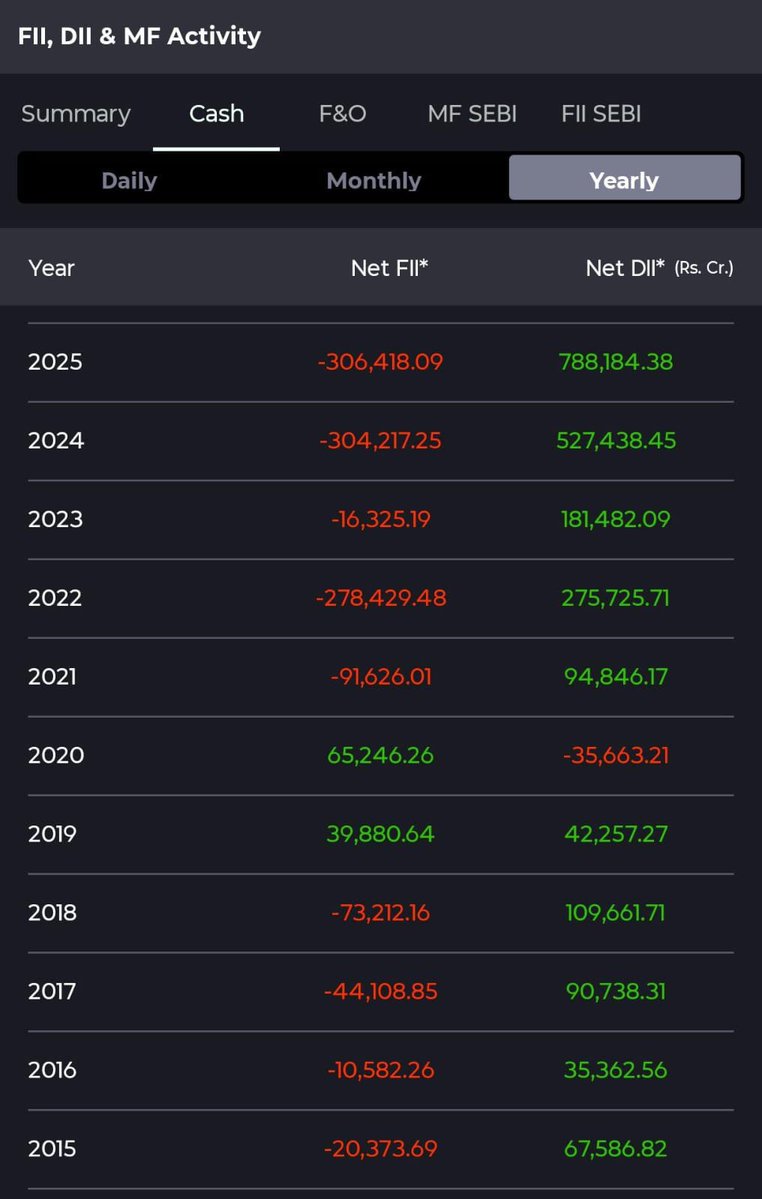
One of the biggest reasons India equity has not done well lately is because FIIs are selling India equity. Let’s understand why are they selling and what will get them back!
Imagine FIIs invested in India when rupee was 83 per dollar. On their stock investment they made 10% returns because the stock from 100 went to 110 but if the rupee depreciated by 10% to 91.50, their return in $ terms is zero!
India GDP last year grew by 8.2% - 8.4% which is the fastest growing country but rupee depreciation was 6-7% so in dollar terms India GDP grew by 1-2% which is lower than US
Now the worst part is, in the same period $ also fell by 9% so the rupee is not falling because $ is strengthening. Rupee seems to have its own problem!
Now you might say why are we letting the rupee to depreciate? The reason is tariff! Because of tariff, exporters are hurt and depreciating rupee is good for exporters.
The day there is clarity on the tariff, you will see a big reversal in the India markets.
2026 first month FII exit at 30k core (on top of 8 lakh crore of selling in last three years)
Post GFC, G7 debt markets average yield was 0-2% ( and now 3-5%) so practically no FII has incentives to keep money in a country where nominal growth is 8% and currently depreciated 7% effectively making nill USD denominated growth.
This in a year when USD depreciated 2.5% va other global currencies so effective we are at 2013 macro lows but in a very peculiar way and despite of oil at 60.
Hope someone can find at least 30 minutes with finance ministry and PMO and remind concept of “wealth effect” and “Laffer curve”.
Matter of time, SIP flow breaks as well and goes into safety into non productive assets like precious metals.
Sydney Schanberg, who covered 1971 Bangladesh 🇧🇩 Liberation War for The New York Times, wrote this about the Indian Army:
“I don’t like sitting around praising armies. I don’t like armies because armies mean wars. But this (Indian) army was something. They were great all the way. 1/3 🧵
@ishmohit1 The pilots, crew and the ground staff suffered the most. They're still stranded all over the country and trying to get back home with no support from the company. Facing abuse n harassment at the airport from passengers for no fault of theirs.
IndiGo network wide cancellations and delays :
To all ‘duopoly’ bashers - clinically if you examine the ongoing utter chaos and impunity with which it is done, few observations:
- Despite knowing , for two years now, the airline did nothing but for seeking extensions or exemptions to the prescribed FDTL - and got them. Till now . And wanted to have more.
-The question then- why did the regulator look away? Why weren’t any audits done of the number of the crew commensurate with number of aircraft added / planned for the airline ?
- why wasn’t the airline told in plain and simple way that to meet the ‘court mandated’ implementation of the FDTL they fall woefully short to run an approved schedule and passengers will be massively inconvenienced.
-why continuous exemptions are granted to the airline , even till yesterday, violating the FDTL.
- Why wasn’t any audit done to ascertain the number of crew needed in addition the existing ones to implement the new duty timing limitation norms?
- if the regulator had any teeth or intent - it would have just swooped down to take situation under its control , told IndiGo that you can fly only the number of flights you have ‘rested’ pilots and crew to operate for- and cancel, refund for the rest of the flights - but the regulator is actually just observing and busy clearing exemptions to ‘control the situation.
- Been writing on pilot fatigue for years- my two bits - nobody is really interested in ‘rest’ periods being given to pilots. Pilots flying you on 6E flights , even today, are stressed and fatigued- waiting at the gates, dead heading and no clue of the schedule- some have done six flights as well.
- Simple - it’s not about duopoly - duopoly does not mean you can flout all norms - it’s simply about why and how the regulator and the whole system looks the other way and why passenger discomfort and respect for their schedule and time is so dismissive - to the airline or the regulator or the ministry.
@IndiGo6E@DGCAIndia@MoCA_GoI