If science class explained everything with Midwest emo music, we would have a lot more people paying attention.
Nuclear power explained.
It’s just a fancy way to heat water and make electricity.
🔊
If you think the US has an inflation problem right now, and if you think that the AI spending boom is a key factor causing it (both points are open to debate), then the solution is a well-enforced corporate tax hike.
"But it will slow business investment."
Yes, exactly! And also bring down the deficit, which the other available tool for that purpose, interest rates, will not do. And also bring down the stock market, which, according to some, is a contributing factor in all this high-end consumption spending.
No chance of happening absent a change in political power, but if you believe that those are the problems, and you don't want to do anything that is politically unpopular, that's the best available solution.
Now, some will say, but today's investment is eventually going to create new supply for the future. Maybe, we'll see. But it's not going to solve the "now" problem. If all investment is good at all times, and nothing else matters, then why not cut the corporate tax to zero, *right now*? Or make it negative! A -20% corporate tax rate--if you generate profit, the government will pay you, versus the other way around.
"Investment is productive" does not settle the optimal tax question. If it did, we could create supply Nirvana by just printing money and giving it to the corporate sector to build things.
"With hindsight this seems obvious, yet it is striking how in both physics and mathematics there is a lack of proportion between the effort needed to understand something for the first time and the simplicity and naturalness of the solution once all the required stages have been completed. In the sciences as in poetry, there is hardly a trace in the finished product of the arduous work that the creative process has demanded, or of the doubts and hesitations that have been overcome in order to achieve it."
– Nobel physicist Giorgio Parisi, In a Flight of Starlings, 2023
https://t.co/pRPEu9URFq
A lot of lending to small/midsize companies is for a term of 5 to 7 years. A great deal of debt issued 3/2020 to 9/2021 is therefore coming due these days.
UST interest rates were near zero in that issuance time window. They are much higher today.
The consequence of those stupidly low rates back then is coming home to roost now with debt roll needs by small/midsize companies.
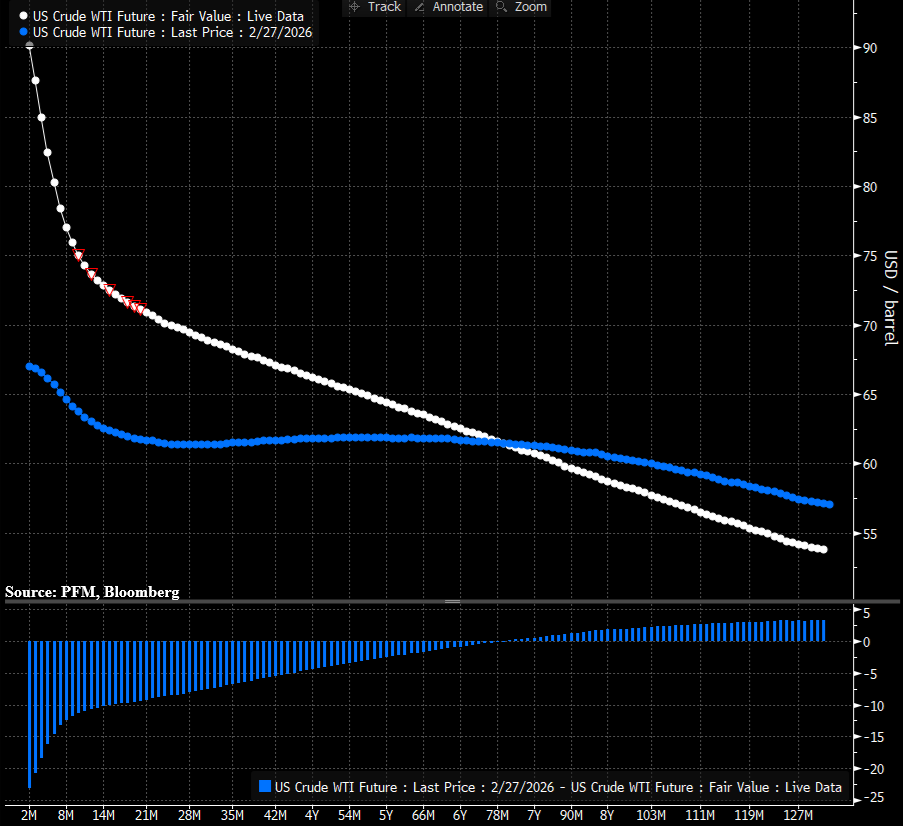
Is this normal?
The back end of the oil futures curve is priced substantially LOWER as a result of the Iran war.
Does this mean that the market is pricing increased supply in the out years as a result of the elevated price now?
RIP Doug Ramsey. You always treated me with respect, kindness, and generosity when you had no particular reason to. I appreciate every minute of time spent with you, and will miss you my friend.
Melting ice cube BUT...
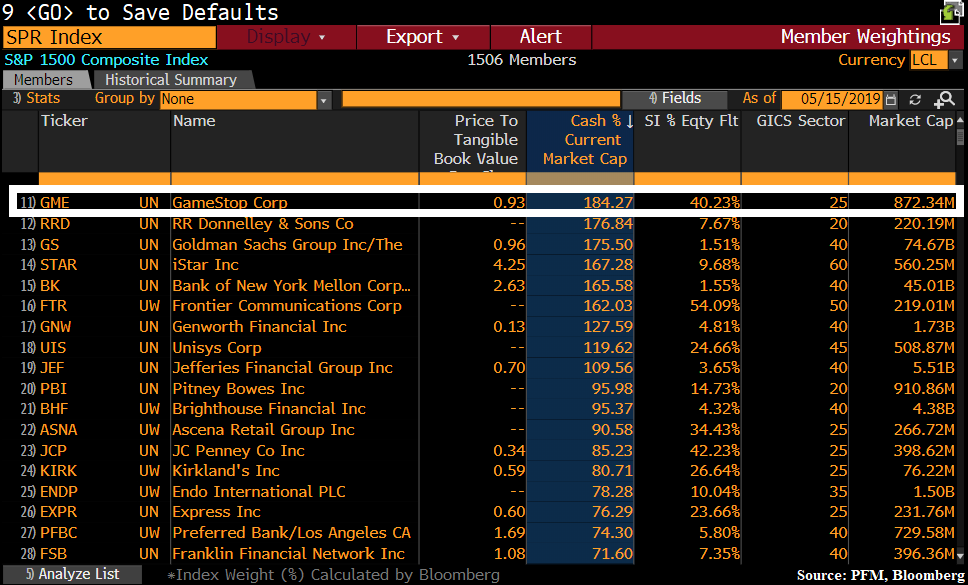
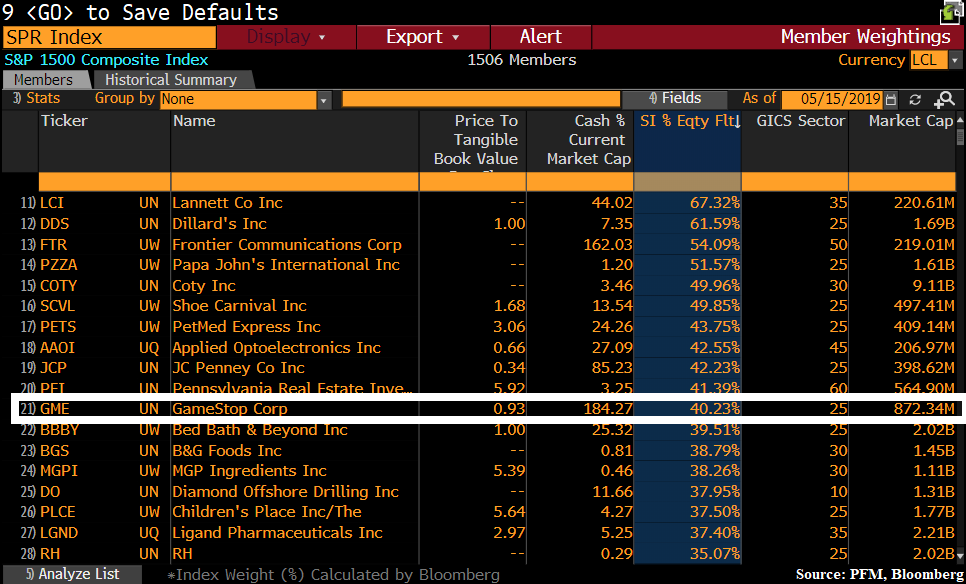
GME a potential wicked short squeeze?
Cash as % mkt cap=184% (highest in S&P 1500!)
Short interest as % of float=40% (#11 of 1500!)
Buyback authorization=$300M (over 1/3 of $875M mkt cap!)
Price to Tang Book @ 0.93!
Positive expected earnings & cash flow!
This is what passes for analysis these days?
Make it make sense.
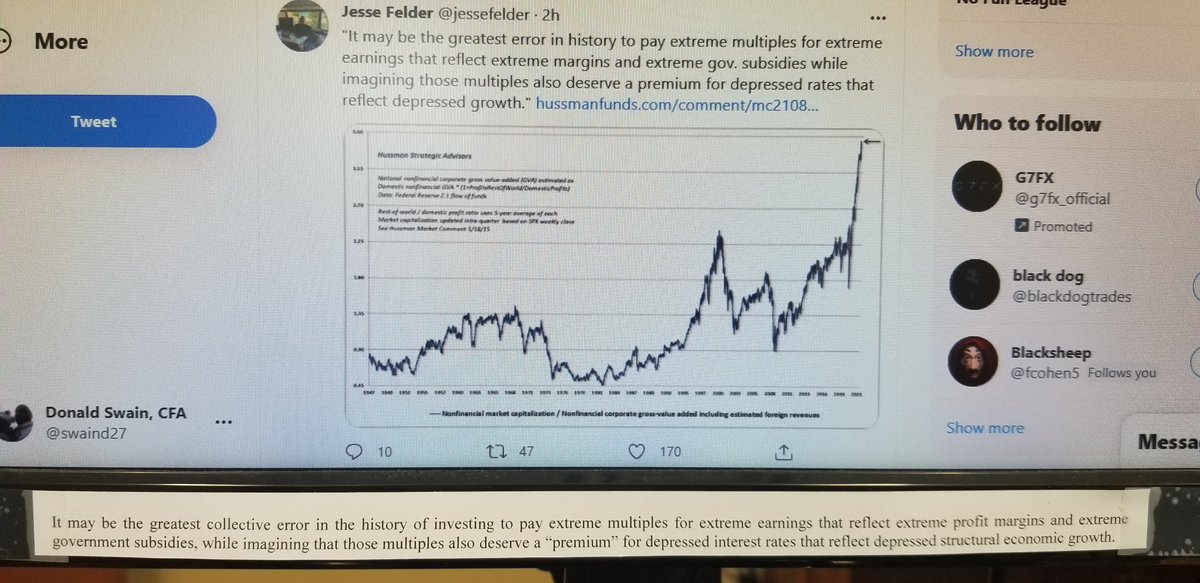
Donald Swain, CFA on X: "@jessefelder I literally printed this quote and taped it to my monitor yesterday. It's that important. @hussmanjp" / X
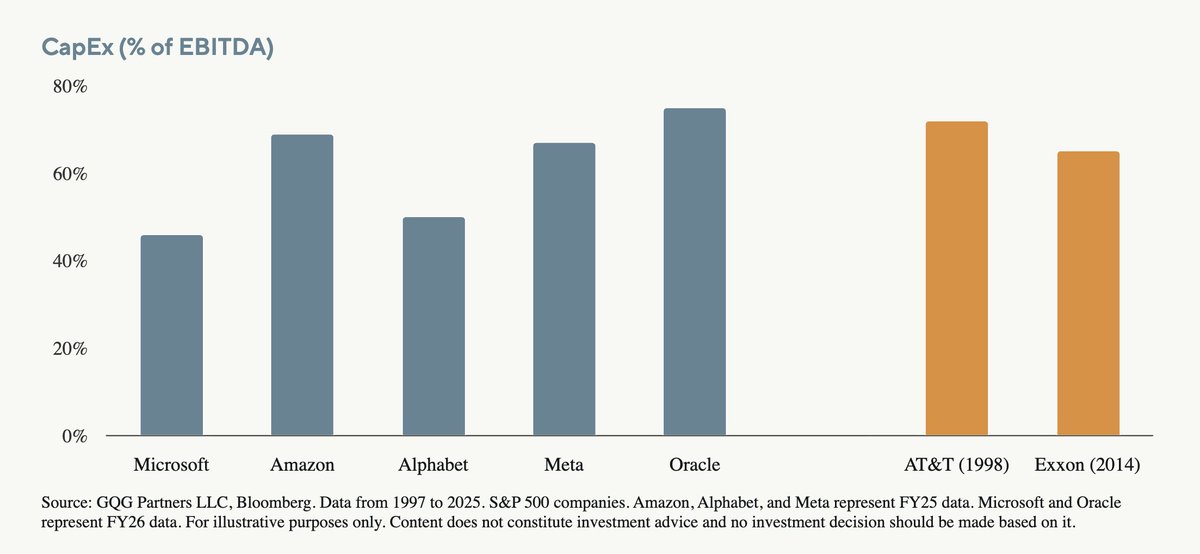
"Big tech CapEx as percentage of EBITDA is now running at 50%-70%, which is similar to AT&T’s 72% at the peak of the 2000 telecom bubble and Exxon’s 65% at the peak of the 2014 energy bubble.
Historically, companies experiencing higher capital intensity tend to be structurally poor investments.
In other words, AI CapEx has already caught up to prior bubble levels, even after adjusting for big tech’s initial high margins."
9/11 hits particularly hard this year after the heinous act of terror yesterday.
Donald Swain, CFA on X: "Believe by @Yellowcard One of the best tributes to the first responders on 9/11. It hits hard to this day every time I listen to it. https://t.co/crsrpoiCyw" / X
This particular comment is a real banger, John.
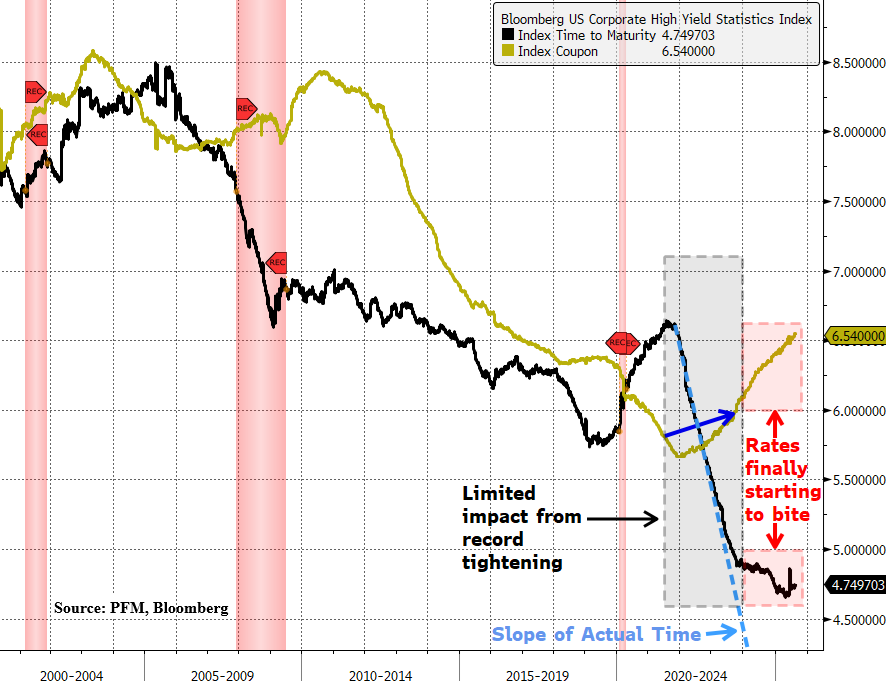
I love the emphasis on the effect of higher rates finally starting to become an issue. My own expectation is for stress to become evident in the high yield space first as time to maturity there is much shorter than IG.
Link: https://t.co/oA7KZWF3m8
@INArteCarloDoss Except, what if perceived tariff inflation isn't actually inflation...?
What if tariffs are actually a tax, and not a price signal?
Then perhaps properly measured real rates are not as low and falling as you suggest.
@DavidBCollum Why a 5-year lookback? Because short rates don't matter for previously issued longer dated bonds (until the debt rolls over), and 5yrs is the approximate historical duration of the Agg Bond Index.