KADIRS BOSS RECEIVES STUDENTS’ LEADERS ON UPCOMING BUSINESS ADMINISTRATION WEEK.
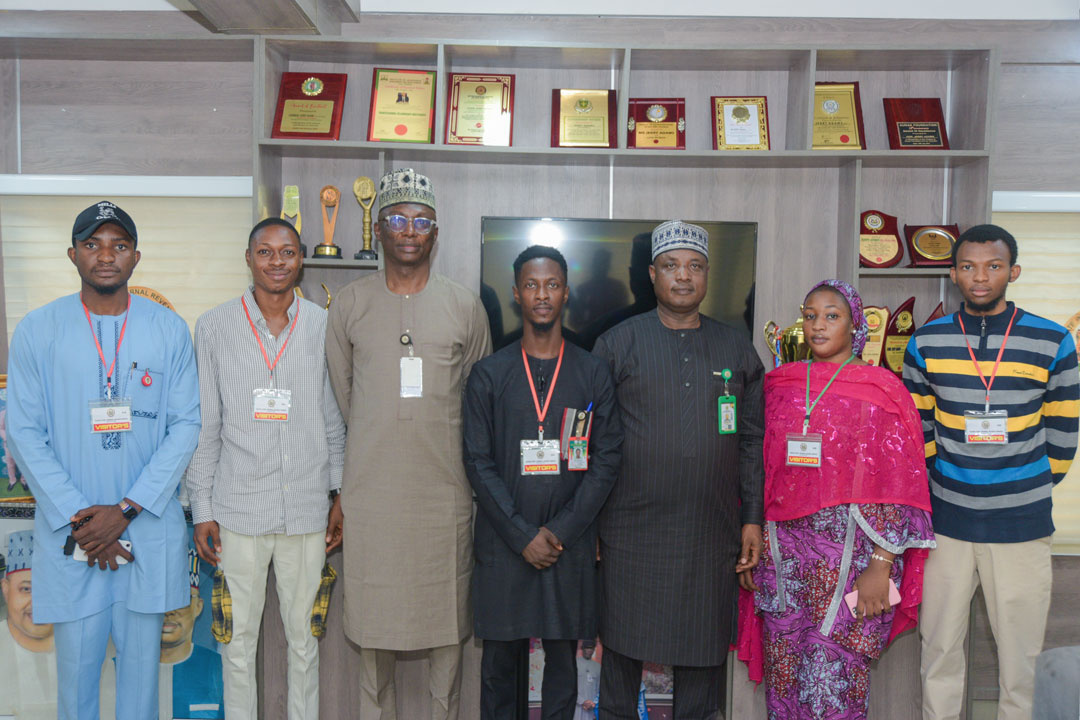
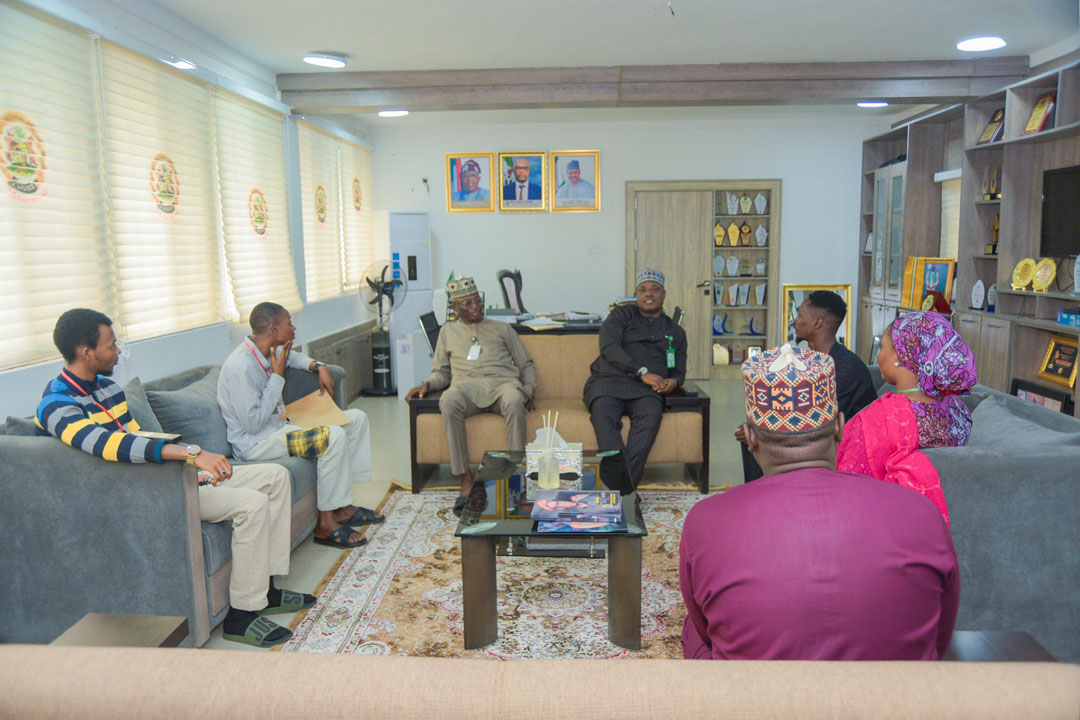
The Executive Chairman of the Kaduna State Internal Revenue Service (KADIRS), Comrade Jerry Adams, FCTI, FNIM, FCE, CNA, alongside the Executive Director, Standard and Compliance, Alhaji Ali Garba Gora, received in audience the leadership of the National Association of Business Administration Students (KASU Chapter).
The delegation, led by the Association’s President, Comrade Isaiah Elijah Baita, along with other executive members, visited KADIRS to formally intimate the Executive Chairman about the forthcoming First Ever Business Administration Students Week.
In his remarks, the Executive Chairman promised to continue supporting students in the areas of entrepreneurship and skill development. As an alumnus of the Business Administration Department, Kaduna State University, he assured them that his doors remain open for productive engagement.
Themed “Disrupt, Innovate, Dominate: Crafting the Future of Business,” the programme is being organized in conjunction with the Department of Business Administration and Entrepreneurship, Kaduna State University. It is scheduled to commence on Monday, 25th August 2025.
Signed:
Zakari Jamilu Muhammad.
Head: Corporate Communications.
18th August, 2025.
@ubasanius@jerryadams225
@RealQueenBee__ I heard from a caller from Italy on Brakate family programme that some embassies are rejecting NECO and accepting waec. Do you know the implication? : NECO is a "Nigerian thing"
@DeeOneAyekooto GCE is different from SSCE. It means the GCE is not the one used to be admitted into the University. He graduated before he sat for the GCE.I see no problem here.
@SamAmadi Were there no unstamped votes for the APC? How come it is only the ballot papers for the NNPP that were dictated from the same ballot boxes?!
If you are lawyer experienced in reading & analysing judgments, please pick up PEPC’s judgment and review pages 148 -187. It would just jump at you that the judgment has not followed the structure of writing judgments.
The judgment was deliberately written to obfuscate issues.
TINUBU'S DISQUALIFICATION AND JUDGMENTS SUPREME COURT WILL OVERTURN TO SAVE TINUBU, WHICH IS AN IMPOSSIBLE TASK!
THREAD
As the presidential election petition tribunal progresses, Nigerians are already looking forward to how the judges will decide, not just at the tribunal level but also at the Supreme Court. Confidence is very very low, and one can't blame people for feeling this way. Because base on recent rulings of the Supreme Court have turned logic and the law upside down, so it's understandable that people lose confidence. Many people might be saying that all judges are the same, they have collected money, they have taken bribes and believing that nothing will come out of it, that no one can remove a sitting president. These are just some of the many permutations and issues being discussed.
However, when one looks at the gravity of what Tinubu has done and all the baggage that comes with him, along with the massive evidence presented in court, the judges at the Supreme Court will need to go to extreme levels in order to free Tinubu.
There have been many judicial precedents that the Supreme Court Justices have been a part of in the past few years. While the Supreme Court has the right to revisit a case or reverse their decisions if they have new information, the question is, how many times will they do this in order to free Tinubu? If it's just one judgment that they need to reverse, people might think it's just a one-off and public opinion might not be against them. However, when you consider that they would need to reverse multiple judgments, say one, two, three, four, five, six, or even seven, in order to free him, it becomes a matter of morality rather than just taking bribes or favoring someone.
And it doesn't stop there. What about the implications of the judgment if they eventually overturn all past judgments in order to favor him? What would that mean for Nigeria going forward in terms of politics and governance? It would undoubtedly change the political landscape in Nigeria. For example, the Supreme Court judgment that made Lawan, who didn't contest for the senatorial primaries, to become the winner of the election. Before this judgment, it was possible for someone who didn't contest the elections properly but won the primary election at the party level to become the winner of the election. That was how Wike became the governor of River State. He won the PDP governorship primaries, but somehow INEC put Celestine Omehe's name on the ballot for the general election, and the Supreme Court restored him. Many people hailed the Supreme Court for delivering justice in that case. However, why didn't many people hail the Supreme Court when they delivered judgments on Lawan's case and that of Akpabio? It shows that something was definitely wrong with those judgments.
Now, let's look at the first judgment that the Supreme Court Justices would need to overturn in order to free Tinubu. In 2003, Buhari lost the presidential election to Obasanjo and went to the presidential election petition tribunal. Eventually, the Supreme Court ruled that despite Obasanjo not winning Abuja, what was needed was for the candidate to score at least 25 percent of the total votes cast in the Federal Capital Territory (Abuja). It was the first judicial interpretation of the 25 percent requirement in Abuja since the Fourth Republic began. The Supreme Court interpreted it as a presidential candidate needing to score 25 percent in two-thirds of the states in Nigeria, must still score 25 percent in Abuja. This was the interpretation.
@Ngnwuanmaghyi@General_Oluchi Exactly! They had objected to the evidences which they brought to court. The witnesses will be screwed during cross examination and INEC is afraid of the outcome.