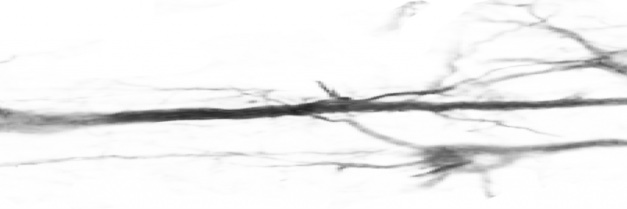
Maybe the amygdala is not angry or sad or afraid - it's just misunderstood!
“An active inference perspective for the amygdala complex” is online in @TrendsCognSci https://t.co/7rs2WhyQRf @ScanUnit @HaubensakL @univienna [1/8]
In this talk, I will gently introduce you to the Predictive Processing theory and Karl Friston's Free Energy Principle - concepts that could transform the way we understand the brain and our everyday experiences. It turns out, thinking might not be what you think.
According to the brain, it is the most fascinating organ in the universe. Despite all we have learned, we’re still far from fully understanding how it works, how it shapes our reality, and fuels both joy and sorrow. Yet, a groundbreaking new theory could change that.
i had a wonderful time with the @moc5conference community. i presented my new WIP preprint on minimal phenomenal experience × active inference × the dual origin hypothesis. does MPE break the free energy principle?
Of Hidden Springs and Endless Oceans
https://t.co/b9WO4rESgg
Our comparative MAPseq study is out at Current Biology today!
tl;dr: the organization of BLA projections to frontal cortex is different between macaques and mice
https://t.co/pf3s9WzUqg
📢Our latest preprint reveals that biological neurons can learn faster than deep Reinforcement Learning algorithms. Using DishBrain, we compared in vitro neuronal networks with RL algorithms.
The result? Biological neurons showed superior sample efficiency and learning speed!
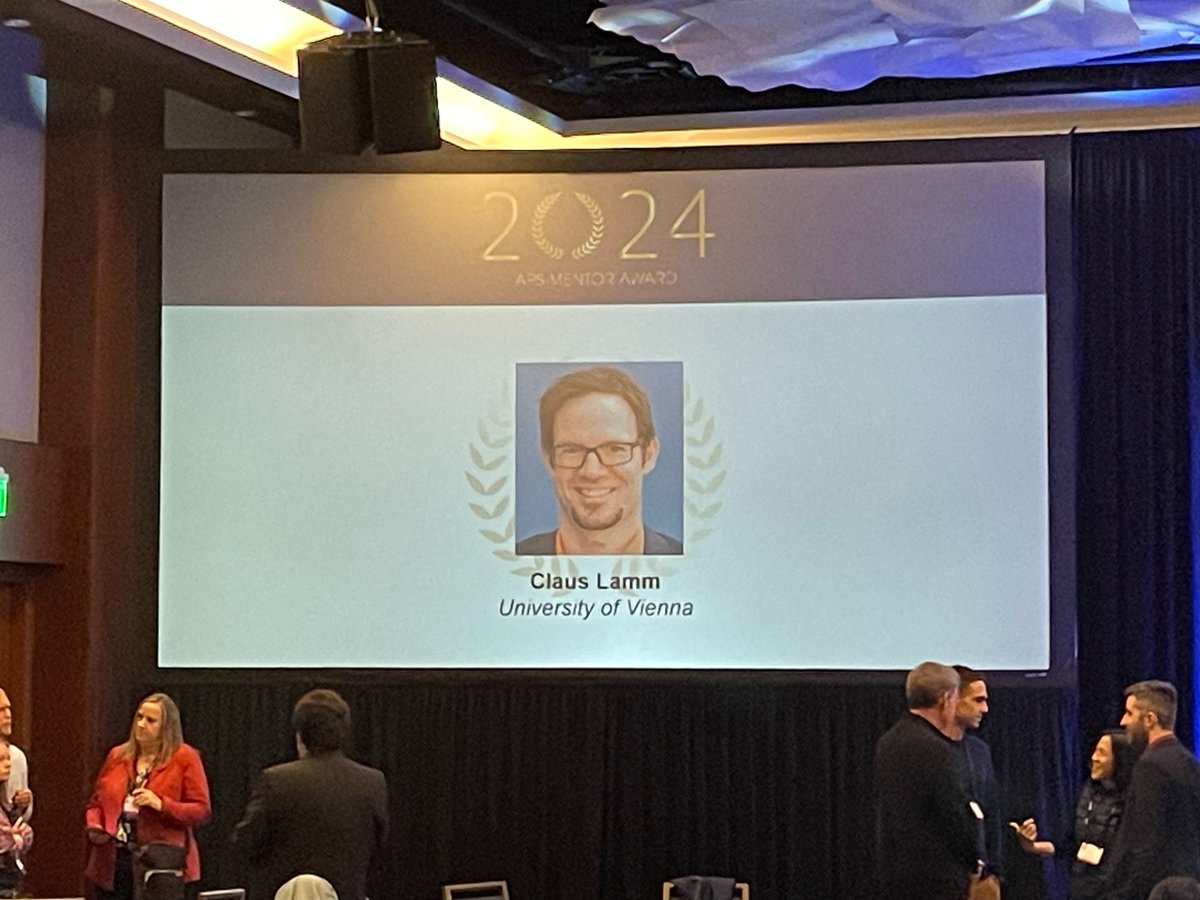
Honored&humbled to receive APS 2024 Mentor Award. didn't pick it up in person at @PsychScience because I don't fly for 'business' anymore 👉 https://t.co/TyBfFr9CSz But I look 4wd to the APS Global Psychological Science virtual summit in fall🙏to my mentees & @robert_bohm 4 pic
💢5th International Conference on #ActiveInference (IWAI2024) 📷https://t.co/493vyo2T9b
⏰When: September 9-11, 2024
Where: Oxford University
--Deadlines--
Abstract: May 24th, 2024
Submission: May 31st, 2024
Acceptance: July 14, 2024
Happy to announce that my book is now published.
It's an undergrad level computational neuroscience textbook with a focus on modeling.
It's great for the classroom, but also for readers from other fields (such as ML/AI) who want to learn about biological neural networks
(1/n)
Second session of my lecture is about to start. #ik2024@IKspringschool We discuss brain connectivity, DCM and how free energy becomes useful for data analysis.
We are active with the RxInfer.jl learning and application group at the Institute.
All are welcome to join and participate, as together we upskill in this cutting-edge open source package for Active Inference models from @bertdv0 et al.
Next week on at 14 UTC on 2/29 we will be focusing on the Coin Toss example (each week will feature an example, or later, a project). https://t.co/uU1voav8pD https://t.co/IVeG4ub1UB
Curious about what participation looks like? There are many ways to get involved, asynchronously and in live meetings.
Post here or contact [email protected] if you have any questions.






![sweetneuron's tweet photo. Maybe the amygdala is not angry or sad or afraid - it's just misunderstood!
“An active inference perspective for the amygdala complex” is online in @TrendsCognSci https://t.co/7rs2WhyQRf @ScanUnit @HaubensakL @univienna [1/8] https://t.co/PD6R7o00XD](https://pbs.twimg.com/media/GBoNDHIX0AADpJC.jpg)