According to a 2024 American Cancer Society study, about 40 percent of cancer cases and 44 percent of cancer deaths in US adults 30 and older trace to risk factors people can change. Smoking leads that list. Diet is on it too.
Some of the best cancer prevention is cheap. @drgoodyear recommends a high fiber diet of real food with as little ultra processed food as possible. Fiber feeds the gut microbiome. The microbiome helps regulate the immune system.
Meal planning doesn't need to mean preparing seven identical containers on Sunday. Having a few reliable meals, basic ingredients, and convenient protein sources ready can make balanced choices easier when your schedule gets busy.
Former Blizzard president Mike Ybarra says an $1,800 Xbox would never make sense for most gamers.
Microsoft is considering a next-gen Xbox that could cost between $1,200 and $1,800. Ybarra strongly disagrees with that idea.
He says consoles need to be affordable and aimed at a wide audience, with $399–$499 being a much more reasonable price range.
“A ‘console’ is a mass-audience device and you need great games and a low entry price.”
Ybarra believes an Xbox costing $1,200 or more would struggle to sell enough units to be worthwhile.
Instead, he says Microsoft should stick with the Xbox Series X and PS5 Pro for now.
“The capabilities of those boxes are both fine for 99% of the audience.”
A study of 460,000 people made headlines this week for finding no link between ultra-processed food and colon cancer. But is that all there is to it?
Tomorrow at 1pm on Beyond the Standard, the doctors break down what the study actually showed, plus what’s inside their first mini-book, soon to be available on Kindle.
Streaming here on X.
@thesobergym Noticing early signs of fatigue and reducing your workout volume can help you recover faster instead of pushing too hard and losing the next few training sessions.
Windows 11 users could have a problem with Windows Update in 2027 if they don’t keep their PCs updated.
Microsoft is replacing security certificates used by Windows Update.
Some of the current certificates will expire on May 17 and June 19, 2027, if your PC hasn’t received the replacements, it could lose access to the service and stop receiving updates automatically.
If a compatible PC misses the deadline, the required update can still be downloaded manually from Microsoft’s Update Catalog.
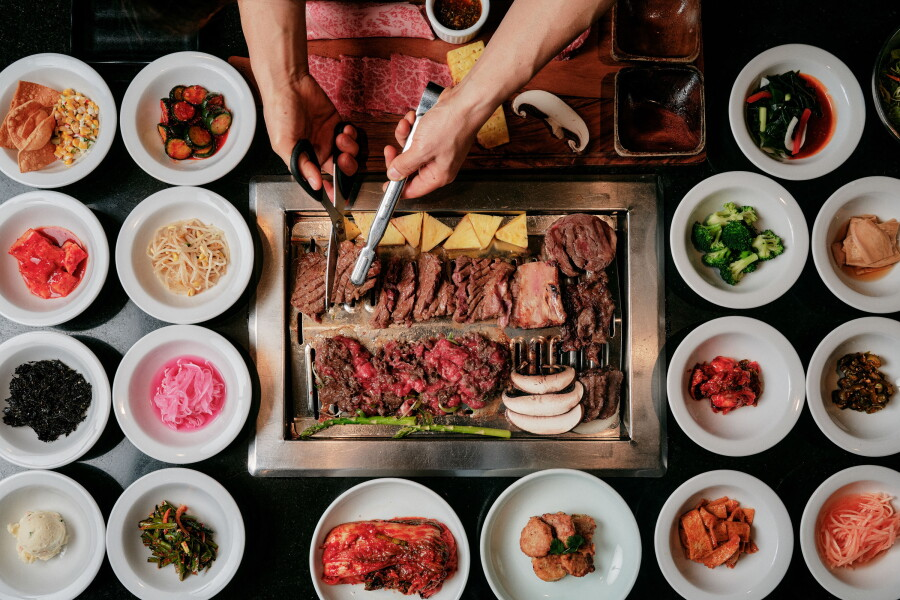
Korean BBQ is completely reshaping how America eats out.
From LA to middle America, Samgyupsal (grilled pork belly) is booming because it turns dinner into a social event. Unlike heavily processed fast food, you're getting whole foods, high protein, and tons of gut-healthy fermented banchan (sides).
Just wrap it in lettuce, pace yourself at the All-You-Can-Eat grill, and you've got a fresh, interactive meal that clears standard drive-thru grease any day. 🥩🥬
Before buying a supplement because it is trending online, ask what problem you are trying to solve and whether evidence supports it. A popular ingredient is not automatically useful for you, and marketing is not the same as science.
Vanilla ice cream has three legal names. The difference is a word or two on the front of the carton. Under FDA's ice cream standard, it's vanilla ice cream when there's no artificial flavor in it. It's vanilla flavored ice cream when there's some artificial flavor but the natural vanilla flavor predominates. When the artificial flavor predominates or is the only flavor, it has to say artificially flavored vanilla ice cream.
The rule only sorts natural flavor from artificial. Vanillin, the main flavor compound in vanilla, can be made by fermenting other plant material and still count as natural, which puts it in the same category as the bean. In 2020 a federal judge in New York dismissed a suit over Wegmans vanilla ice cream. The front said natural vanilla flavor, and the list had no vanilla beans or extract. The judge said a buyer wants ice cream that tastes like vanilla.
If you want vanilla from the bean, look for vanilla extract or vanilla beans in the ingredient list.
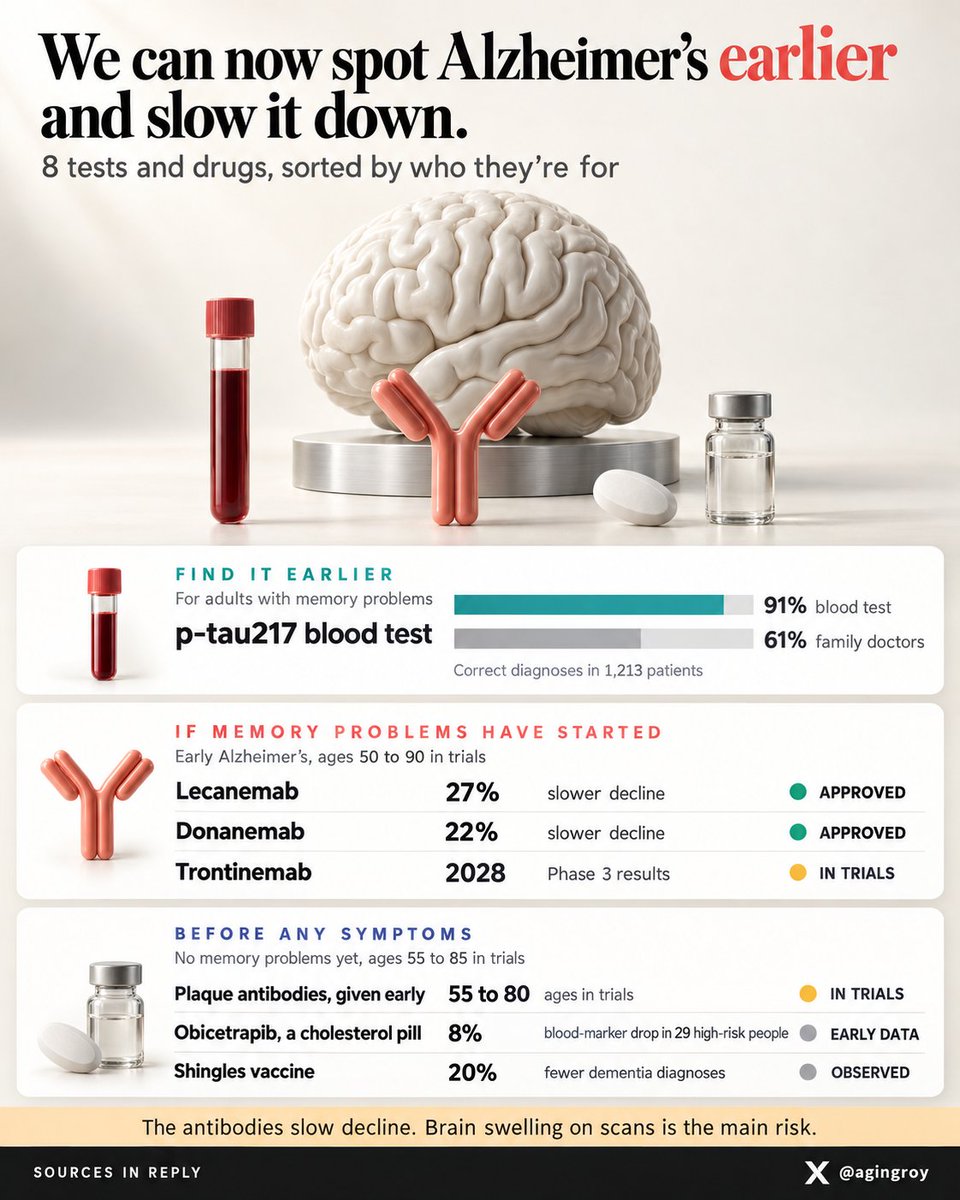
A blood test now spots Alzheimer's 91% of the time in people with memory problems. Family doctors get it right only 61% of the time.
Here are 8 tests and drugs changing Alzheimer's care and who each one is for.
TESTS THAT FIND IT EARLIER
1. p-tau217 blood tests. p-tau217 is a protein that rises as Alzheimer's builds. The 91% figure came from 1,213 Swedish patients with memory complaints. FDA has cleared four such tests since May 2025, but none for people without symptoms.
2. The same test as a clock. In people with no symptoms, it predicted when memory problems would start within about 3 to 4 years. Research use only for now.
TREATMENTS ONCE MEMORY PROBLEMS START
For early Alzheimer's, mild memory loss or mild dementia, with confirmed plaque, the sticky protein clumps:
3. Lecanemab (Leqembi, Eisai/Biogen). Tested in people aged 50 to 90, average 71. Slowed decline 27% over 18 months. Since July, it can be self-injected at home from the first dose.
4. Donanemab (Kisunla, Lilly). Tested in people aged 60 to 85, average 73. Slowed decline 22%, and 35% in an earlier-stage group.
5. Trontinemab (Roche). Built to cross the brain's protective barrier more easily. In an early trial, 91% of patients had plaque below the level a scan counts as positive by 28 weeks. Phase 3 reports in 2028.
PREVENTION BEFORE SYMPTOMS
6. The same antibodies, given earlier. Lilly and Roche are testing them in people aged 55 to 80 with plaque but little or no memory loss. A separate trial doses people aged 18 who carry a rare gene that causes Alzheimer's in midlife.
7. Obicetrapib (Ubeslo, NewAmsterdam/Menarini), a cholesterol pill, was approved in Europe on Monday. In a heart trial, 29 people with two copies of ApoE4, the strongest common risk gene, saw p-tau217 fall 8% on the pill and rise 13% on placebo over a year. A 400-person trial in ages 55 to 85 starts now.
8. Shingles vaccine. Wales offered it by birth date. People born just after the cutoff, then about 80, had 20% fewer dementia diagnoses over 7 years than those born just before. Two randomized trials are now recruiting about 196,000 people, aged 76 and up in Finland and 65 and up in Denmark.
Bottom line: if memory problems have started, ask whether a p-tau217 blood test fits you. If they have not and Alzheimer’s runs in your family, ask a memory clinic about the prevention trials above.
Get your Calcium Score today. Best predictor of heart disease. $249. No referral needed. 10 minutes per scan. Same day appointments. Live across all 50 states.
SIBO, candida, bloating, and gas are 90% of the time low stomach acid.
Low stomach acid is 90% of the time hypothyroidism.
Hypothyroidism is 90% of the time nutrient deficiency plus low carbs.
People spend years on antimicrobials, antifungals, and restriction diets while the parietal cells still cannot make acid. That is treating smoke and leaving the fire.
Here is how to fix it from the root 👇
1. Why low T3 kills stomach acid
Parietal cells make hydrochloric acid with H+/K+ ATPase. That pump costs a huge amount of ATP. Active T3 drives Cytochrome c Oxidase (Complex IV) and keeps that ATP supply high.
Low T3 also slows gastrin signaling and carbonic anhydrase activity. Less acid reaches the stomach. Food sits. Bacteria and yeast move up into the small intestine. You get bloating, gas, SIBO, and candida that look like a “gut infection” but started as an energy failure.
2. Why low acid creates SIBO and candida
Stomach acid is the first kill-step. It denatures proteins, frees minerals, and stops most organisms from passing into the small bowel.
When pH rises:
• proteins do not digest, so they ferment
• zinc, copper, magnesium, iron, and B12 absorb poorly
• bile and pancreatic enzymes do not get the acid signal they need
• bacteria and candida colonize where they should not
Then people blame the organisms and never ask why the acid barrier died.
3. Why hypothyroidism is usually nutrients + low carbs
Hepatic deiodinase converts T4 to T3. That enzyme needs selenium, zinc, and enough liver glycogen. Low-carb dieting empties glycogen, raises cortisol, and increases reverse T3. Cortisol further suppresses T3 and acid production.
Zinc is required for both stomach acid and thyroid receptor function. Copper is required for Complex IV. B1 runs Pyruvate Dehydrogenase so glucose can become ATP. B2, B3, and magnesium keep the electron transport chain moving. Miss this matrix and T3 stays low no matter how many “gut protocols” you run.
4. Why symptom targeting fails
Rifaximin, antifungals, and endless low-FODMAP can knock counts down. If HCl is still low, the same organisms return. You also absorb even fewer minerals on a restricted diet, which makes T3 and acid worse. That is the loop.
5. Root protocol
• Eat bioavailable carbs: ripe fruit, honey, juice, easy starches. Refill liver glycogen so T4-to-T3 conversion turns back on and cortisol drops.
• Saturate the base: B-complex, trace minerals (zinc, copper, selenium, molybdenum), magnesium, and fat-solubles A, D, K, E.
• Raise cellular voltage: morning sunlight, no blue light before bed, enough sleep. That supports Complex IV and overnight repair of the gut lining.
• Give the stomach a chance: chew, don’t drink huge water with meals, use enough salt. Acid production needs chloride and signal, not just wishful thinking.
• Only after voltage and acid start returning do short, targeted antimicrobials even make sense. Otherwise you are bleaching a house with no roof.
6. Downstream cascade once T3 rises
Higher T3 → more ATP in parietal cells → more HCl → better protein digestion and mineral uptake → more zinc and selenium for thyroid and acid → fewer organisms surviving into the small intestine → less gas, bloating, SIBO, and candida.
That is the self-reinforcing loop you actually want.
TLDR:
Stop waging war on bacteria and yeast while your stomach cannot make acid.
Low carbs and missing minerals collapse T3. Low T3 collapses ATP. Low ATP collapses HCl. Low HCl lets SIBO and candida move in.
Fix thyroid and mitochondria with carbs and the nutrient base. When stomach acid returns, most of the “infection” problem has nowhere left to live.