Le Québec a perdu le contrôle d'au moins quatre projets informatiques majeurs en santé, entraînant un dépassement de coûts d'un demi-milliard de dollars. Du fameux DSN, au SIFA, en passant par le portail Votre Santé et l'orchestrateur de rendez-vous, je vous résume tout ça.
Des chercheurs de 13 universités dénoncent le projet de loi C-30 qui permettra au gouvernement Carney d’invalider la science. Il donnera le pouvoir au Conseil des ministres de réautoriser des pesticides risqués interdits par Santé Canada. https://t.co/A8Jalqo0qE #polcan#canpoli
When @garrylineham took human performance expert Gary Brecka through our Fascial Maneuvers, the structural transformation was instant.
👇 Want to experience Fascial Maneuvers for yourself? Start with our 15-Minute Stress Reset.
https://t.co/YvyUnR153L
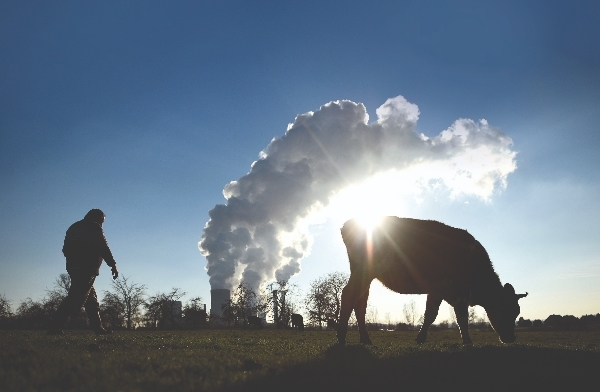
Reviewing a new study on carbon taxes in agriculture this morning. It’s not a Canadian study, but one scenario showed dairy production dropping by roughly 17% nationally after imposing a $150 per tonne carbon tax.
The study argues that agriculture, unlike many other sectors, needs to be treated differently.
Really surprising? We are starting to see more of these nuanced studies. About time.
The secret to living to 100?
HIGH CHOLESTEROL
A massive Swedish study tracking over 800,000 people for 35 years just revealed: Every single centenarian had HIGH total cholesterol. The higher your LDL, the longer you live.
800 millions de personnes sur la planète ont besoin d'un appareil auditif.
20 % seulement ont les moyens de s'en payer un.
Le coût moyen aux États-Unis : 4 700 dollars.
Des étudiants de McMaster en Ontario viennent d'en faire un pour 20 dollars.
Pas une version dégradée. Un changement de paradigme complet.
👉Au lieu de circuits imprimés et d'électronique, ils ont répliqué mécaniquement ce que fait l'oreille humaine.
Tympan. Osselets. Imprimé en 3D.
Tu prends une photo de ton oreille avec une pièce de monnaie comme référence de taille.
L'IA mesure exactement, génère le design sur mesure, l'imprimante 3D locale imprime.
Le test auditif se fait sur une plateforme infonuagique accessible par le web.
Coût total de l'opération : 20 dollars.
😲 Ce qui me frappe, c'est pas juste le prix.
C'est que pendant des décennies, on a laissé des quasi-monopoles dicter le coût de la santé auditive.
Le leader mondial de l'appareil auditif vaut 10 milliards. Bien établi. Bien connecté.
Quel intérêt a-t-il à faire fondre ses propres coûts ?
L'innovation qui dérange, ça vient pas de là. Ça vient de jeunes qui ont faim.
Des jeunes qui voient un problème dans la vie de leur famille et qui décident de le régler.
Chris Arsenal l'a dit il y a deux jours au cercle Canadiens de Montréal : « L'innovation n'est pas un risque à gérer, c'est un levier à activer. »
Ça s'appelle Amano. C'est en précommande sur leur site Internet, lien dans les commentaires ⬇️
Bonne écoute.
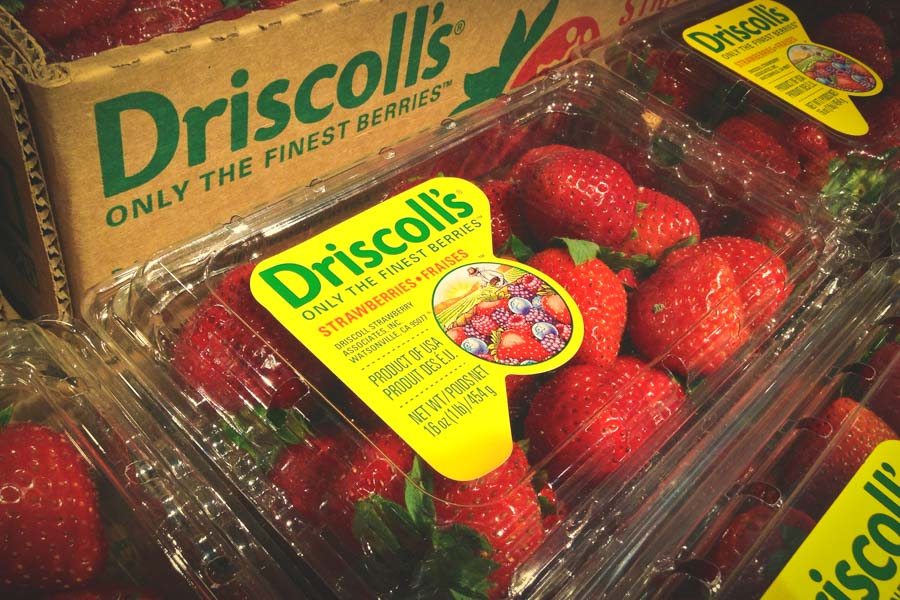
Children living near Driscoll's strawberry farms have a 38% higher childhood cancer rate than average.
But Driscoll's can't be sued for any of it.
They don't own a single farm, grow a single berry or apply an ounce of pesticides themselves
They are a genetics and marketing company making $3 billion a year, licensing plant patents to over 700 farms and taking a cut.
Their president said it himself: "Driscoll's is not involved in the fruit farming"
Researchers identified 13 pesticides linked to childhood cancer when sprayed within 2.5 miles of a home.
98.5% of those leukemia-linked pesticides were applied in Watsonville, California (Driscoll's main strawberry operation).
- Schools sit just yards from the fields
- 41,000 lbs of pesticides applied within 1 sq mi of an elementary school
- Pesticides linger in the air for up to 72 hours
Driscoll's is currently #1 strawberry in the U.S.
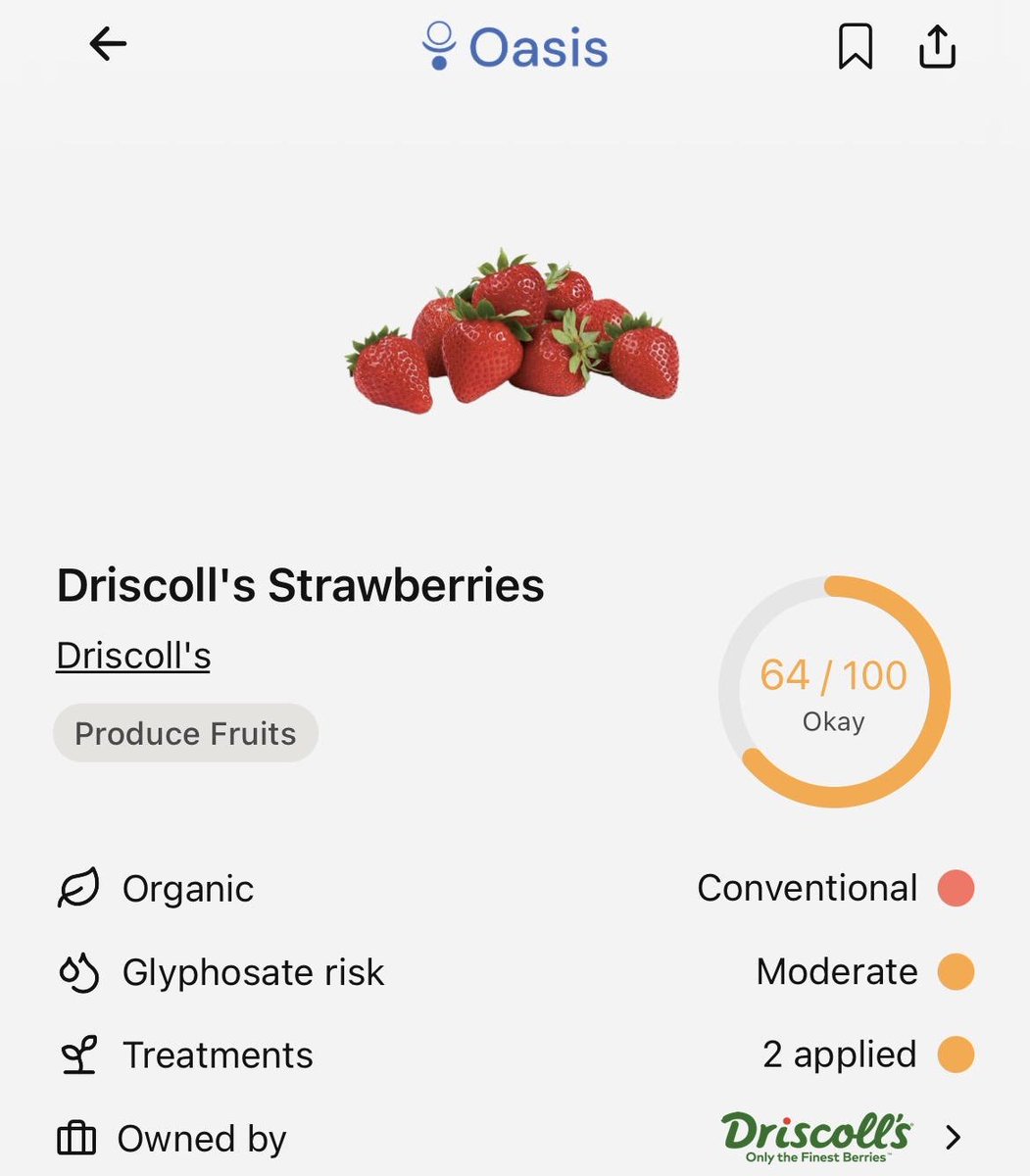
Check for pesticide testing on the Oasis app
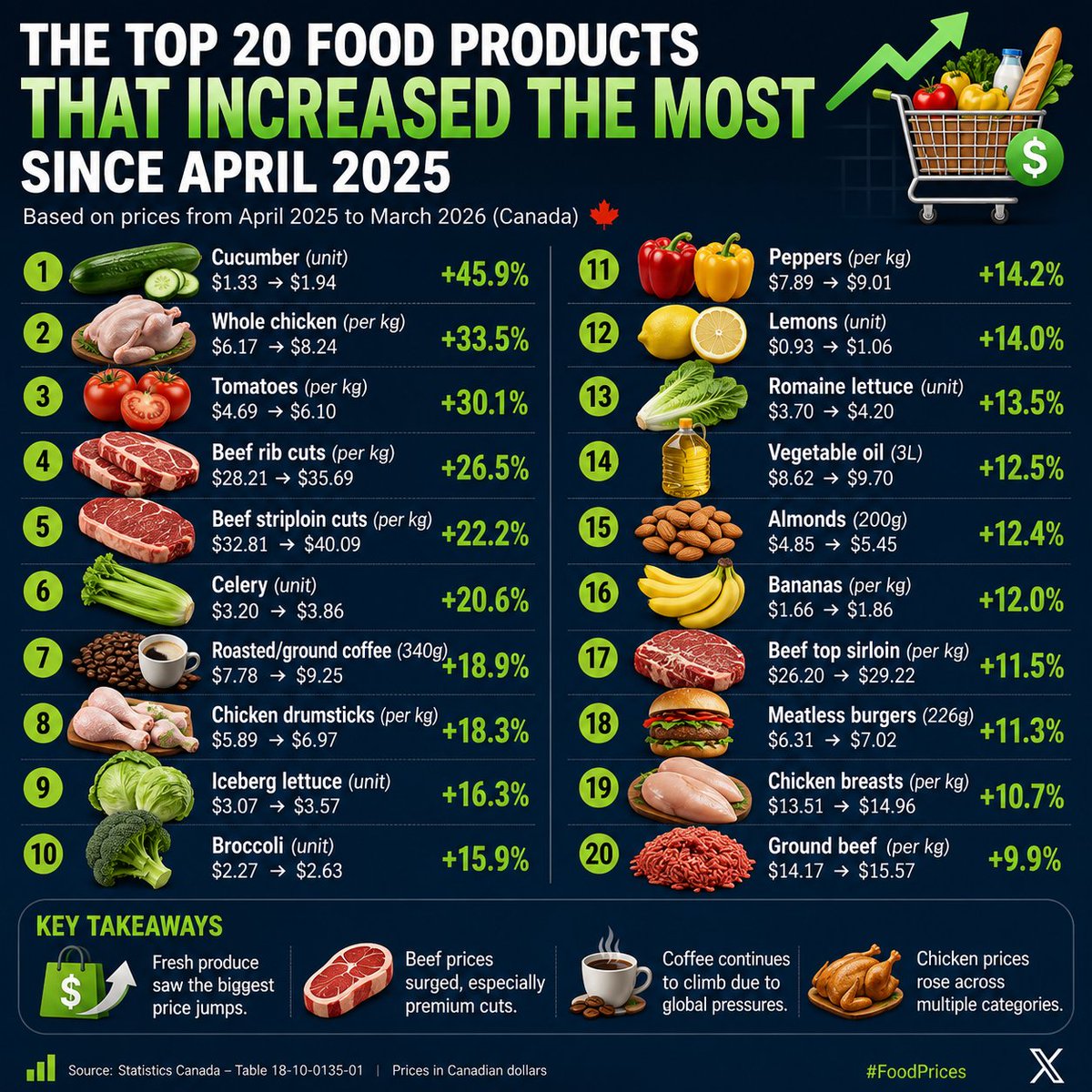
Chicken prices are becoming a problem in Canada — and it’s a supply-managed sector. It shouldn’t be this way.
At the same time, more produce is now coming from beyond North America (Non-American boycott), adding even more pressure on prices over the past year due to higher logistics and transportation costs.
New food inflation data coming next Tuesday, May 19!
If your nose is stuffed, try humming at 130 Hz with your mouth closed.
Google 130 Hz and play the video and then approximate the tune.
If your nose is so stuffed that nothing comes out, open your mouth as little as possible to be able to get a hum out. Hum this way until you can close your mouth.
Then keep humming with your mouth closed.
Stop if your nose gets runny.
The logic here is that you will get a 15-fold increase in local nitric oxide that can loosen up the stuffiness.
Report back here with your results👇
Rob Carrick, a columnist for the Globe and Mail, supports the idea of opening government-owned grocery stores on the premise that “we’ve tried everything else and it didn’t work.”
Well, have we?
Interprovincial trade barriers are still there. Supply management is still there. The industrial carbon tax is still there. Our poor logistics are still there. Retail price distortions are still there. The overwhelming red tape is still there.
Tried everything? Not quite. https://t.co/bs3wS3dAbo
9 of the most common magnesium deficiency symptoms:
1. Anxiety/panic attacks
2. Waking up at 2 AM
3. Eye twitching (tetany)
4. Heart pounding after eating
5. Exhausted from thinking
6. Random chest tightness
7. Sugar or carb cravings
8. Wired but tired
9. Feeling heavy
Dr. Eric Berg, DC, not MD; information only
"« Les inondations vont être un phénomène qui va être de plus en plus présent. Ça fait partie maintenant de la réalité du Québec, du fait des changements climatiques », a expliqué Mme Fréchette."
Mme @CFrechette, sur quelles papiers scientifiques basez-vous cette certitude?
"Le centre-ville de Montréal inondé… en 1886"
La grande inondation de 1896 ("on oublie souvent que la ville de Trois-Rivières a déjà essuyé de graves inondations au cours des deux dernières décennies du XIXe siècle").
"Québec, avril 1970. L'année 1970 est marquée par deux crues exceptionnelles, celle des rivières Saint-Maurice, Mattawin, l'Assomption et Maskinongé (5 mai), et celle du bassin de la Chaudière (22 avril)."
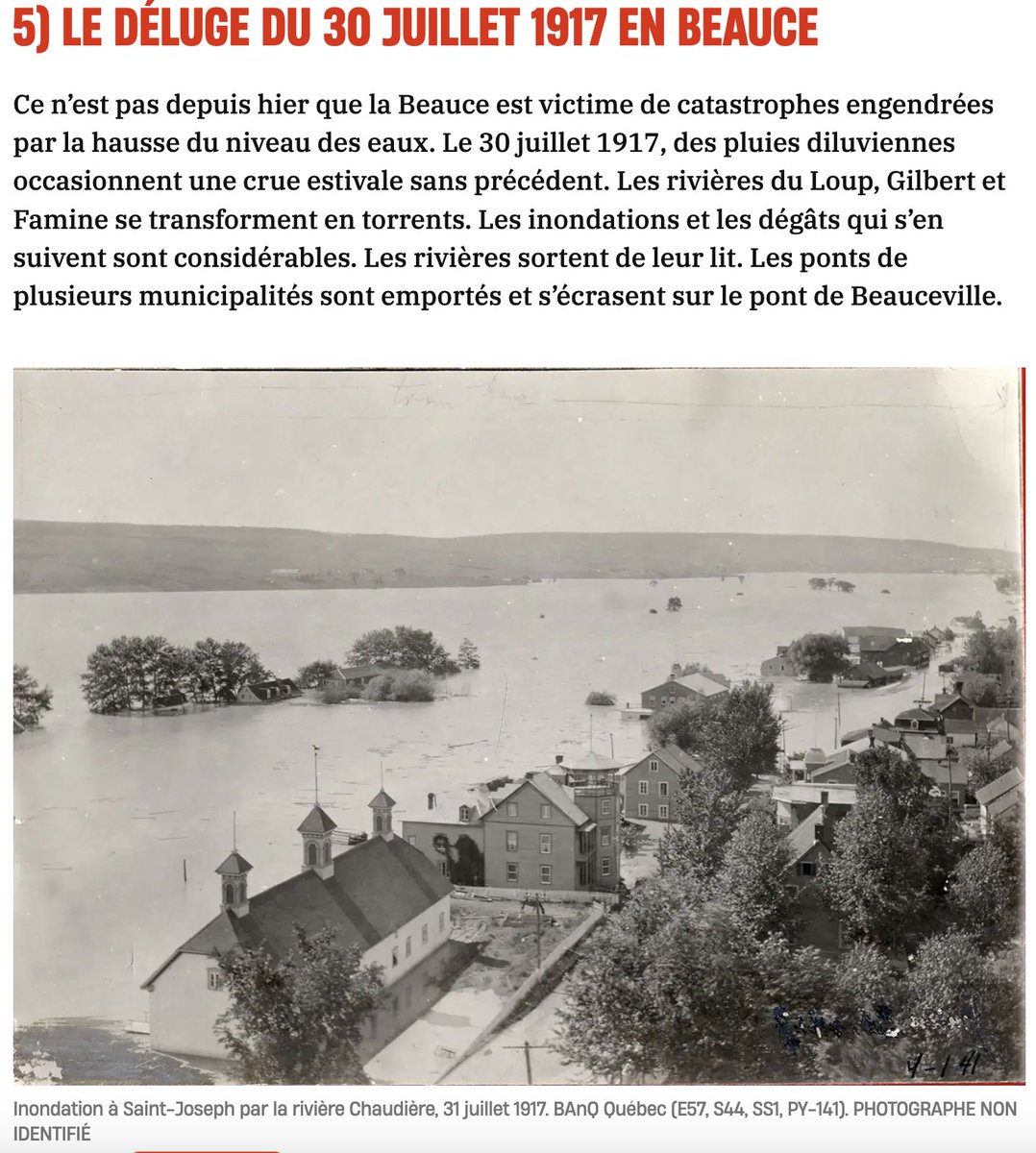
Déluge de 1917 en Beauce.
L'année record de 1974.
La crue centenaire de 1976.