Modern wellness is built for individuals.
But health is negotiated inside relationships.
Most couples run on shared habits they never designed.
The Sync Quiz™ shows where your routines are aligned—and where they quietly drift.
Take the 3-minute quiz
https://t.co/5jtyQjgmHq
The couples lifemaxxing stack:
- have more fun & less stress
- be biased to action
- move together everyday
- have a cheat day weekly where you don’t count macros
- play golf with your wife
- sleep 7 hours & get up at 5 am (let her sleep in)
- social media is for making content and not bingemaxxing to pass the time
- skip date night for an activity
Every Tuesday and Friday, we publish a weekly newsletter to help high agency couples build agency in health and their relationships.
Think of it as a “control the defaults” framework to help couples steer better in daily life.
https://t.co/ZLabFoVdIW
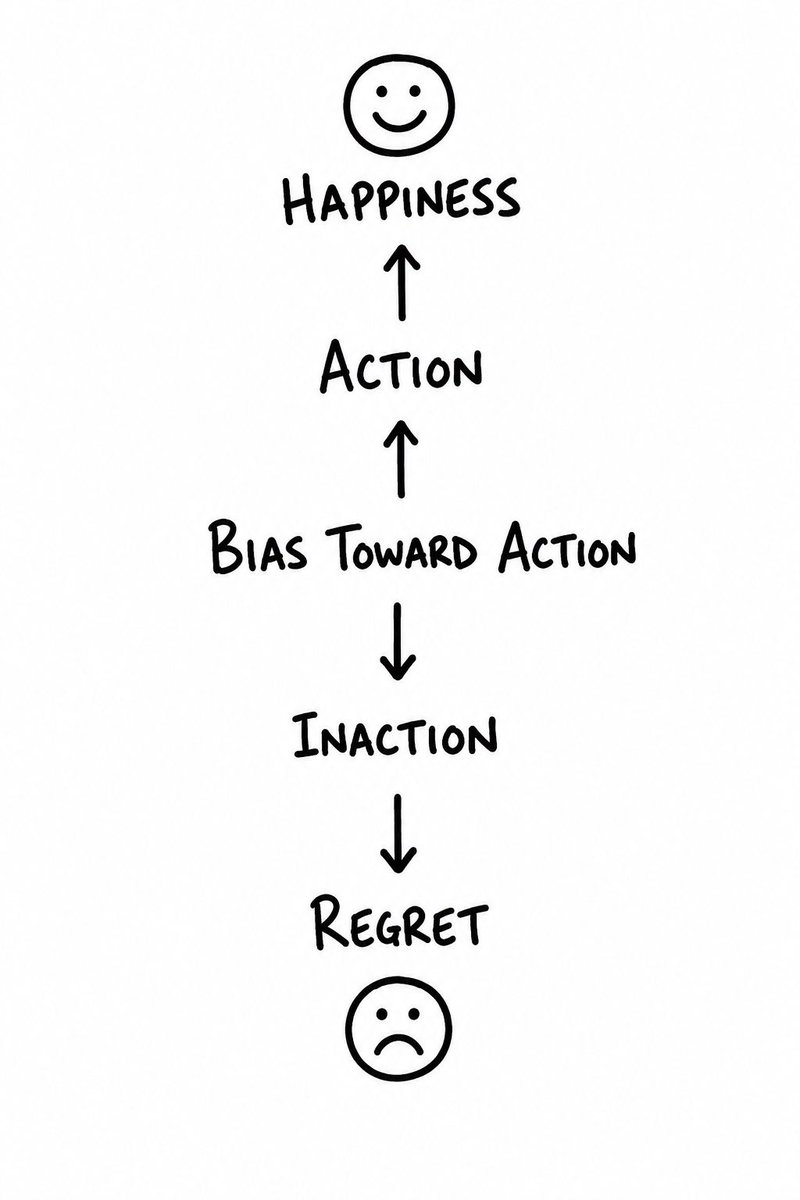
If Inaction increases:
Regret increases
If Regret increases:
Happiness decreases
If Bias To Action increases:
Action increases
If Action increases:
Regret decreases
Happiness increases
Regret is the enemy of happiness.
And not doing is a source of anxiety.
So being bias to action will make you less anxious and more happy.
We talk about building agency in your relationship and health every Tuesday and Friday.
https://t.co/MClgmsbUFg
We have gained tremendous value from operating @syncandthrive on beehiiv.
I’m not affiliated with the company outside of being a customer. However this platform has been a game changer for us as we grow.
Thanks @dankrenit and @denk_tweets!
The team at https://t.co/8nN4brV1Nz will be there !
"What is in the micro is in the macro."
What you do at the small level builds everything above it. The habits, the defaults, the choices you make without thinking. They shape your marriage, your health, and your life over time.
The question is simple: did you choose them, or were they handed to you?
https://t.co/NlhB5tWTdQ
Everybody wants to build a good life. But a good life changes when you are a couple.
Your life isn’t really yours anymore. It’s now ours.
It’s no longer “I don’t do cool stuff”, but we do cool stuff.
That’s why @jaylene and I operate the Sync&Thrive newsletter.
It’s just a quick read that helps make steering together easier.
Check it out. Our next issue drops tomorrow https://t.co/8nN4brV1Nz
Imagine it’s Friday, May 7, 2027.
You read one article a year ago and finally had the Harajuku moment that snapped you out of autopilot.
You stopped treating your real life like a draft.
What is your future self doing right now?
https://t.co/pjY2pXvtOo
All of my high-agency friends have one thing in common:
They are great at protecting the routines they love.
Morning runs.
Lift days.
Weekend skiing.
Dirt bikes.
Whatever it is, they make time for it.
And I get why.
Those routines help them stay sharp.
But once you get married, the game changes.
Now it is not just about protecting your own routine.
It is about building a shared rhythm that keeps both people strong.
Can you really call yourself high-agency in a relationship if the two of you have no system for staying connected, healthy, and in sync?
I wrote more about that in today’s newsletter:
https://t.co/hDYrR1b5hH
Curiosity is the unfair advantage that we all need. And fortunately, it’s something we can actually cultivate.
Today’s newsletter goes into it more.
Read or listen at https://t.co/3kFdUYJUDk
Enjoy your weekend.
Lack of time is lack of priorities. If I’m “busy,” it is because I’ve made choices that put me in that position, so I’ve forbidden myself to reply to “How are you?” with “Busy.” I have no right to complain. Instead, if I’m too busy, it’s a cue to reexamine my systems and rules.
Mandatory patterns for couples who want to stay connected:
1. Protect one evening on the calendar this month
2. Share one meal without distractions
3. Eat real food consistently
4. Learn one thing together
5. Take five minutes each week to notice what’s working
It starts with one small move. Protect your connection.
Resilient couples don't interpret challenges as failure.
They recognize them as transitions.
They don't avoid the friction; they lean into it, knowing that depth is built in these moments, not despite them.
So they choose to start with 5 minutes of intentional time together on a consistent basis.
They ask one another: "What's been on your mind lately?"
They listen attentively without trying to fix, advise, or redirect.
Depth doesn't require hours. It requires attention.
Supporting IRL relationships (especially couples and family) will become a top-tier societal priority, arguably the highest-leverage human need, especially in contrast to increasingly digital, mediated, or fragmented social interaction.
Most couples want better routines, more energy, and less decision fatigue.
But most health advice? It’s built for individuals—not partnerships.
Here’s what we’ve learned—and what we’re building.