The Commerce Department has released a major new export control rule targeting China’s access to advanced AI compute.
It’s pretty good! Here’s what it does:
(1) Restricts Chinese access to overseas AI clusters (seeks to address one of China’s largest and fastest-growing sources of AI compute)
This is a new worldwide end-use control, which we’ve previously recommended (third option in image below).
A license is required if providing cloud AI compute to Chinese or D:5-headquartered countries, or if acting as an intermediary training models for these actors.
Technical requirements are:
- Applies to any data center or group of “linked data centers” or providing more than 12 million aggregate TPP of compute (the equivalent of around 760 H100s) of AI chips meeting the current controlled thresholds.
- “Linked data centers” are defined as sharing physical or virtual computing resources, jointly balancing workloads, or replicating data as a unified whole. So this is intended to capture multi-data center training runs.
This applies everywhere except the US. It also covers existing data centers, which have a 90-day deadline to get a license.
(2) New controls for AI chips going to Malaysia, Singapore, Indonesia, Thailand, and Brazil (seeks to address smuggling of AI chips to China via third countries)
The evidence for large-scale smuggling of AI chips to China via Malaysia and Singapore is strong, and there’s also evidence this is happening via Indonesia and Thailand. Brazil, on the other hand, is a bit of a head-scratcher.
This is a case-by-case license review policy, rather than a presumption of denial (that's the policy for chips going directly to China/D:5 countries).
BIS will evaluate each license on national security grounds.
There’s an exclusion for qualifying US-headquartered recipients, subject to reporting requirements.
(3) Formally repeals the AI Diffusion Rule
This has been a long time coming. This eliminates the country-tier system, the Validated End User authorizations (VEU) for data centers, and export controls on advanced AI model weights.
However, the replacement measures above address many of the gaps created by this, and, of course, the AI Diffusion rule wasn’t actually being enforced.
(4) Tightens controls on Chinese chip designs manufactured abroad
This modifies and strengthens the Biden-era “Foundry Due Diligence” rule, which applies to foundries and OSATs.
This seeks to prevent Chinese chip designers from circumventing export controls through overseas foundries and packaging facilities. It’s an important complement to the measures above.
—
So what are the gaps? More on this to come, but from an initial read:
(1) To determine remote-access eligibility, the rule requires due diligence on direct or indirect Chinese ownership or control. However, its licensing trigger is based around company headquarters and ultimate-parent headquarters, which could allow for some shenanigans around corporate structures.
(2) The rule doesn’t prescribe how AI compute providers must verify customers' identities, or require them to identify and verify every user accessing their compute. The rigor of these checks could vary widely across providers.
(3) The end-use restrictions don’t apply when compute is used exclusively for commercial recommender systems. So this opens a path for large-scale Chinese AI compute usage. This could be fine if verifying this kind of use is possible, but this is likely outside the current technical capabilities of many AI compute providers.
(4) The end-use restrictions don’t apply to data centers in the US. So a Chinese company can still access large amounts of AI compute via US data centers.
This is an interim final rule, meaning it would take effect upon publication in the Federal Register, while allowing 60 days for public comments.
Read the full interim final rule here: https://t.co/AW2GPBfcd6
@peterwildeford Same vibe on Metaculus: median 2035 US employment forecast has actually drifted up a few percent over the past several weeks (small number of forecasters but still) 🤷♂️
Two things I’ve been thinking about regarding AI:
• People often highlight the risks involved in AI, which are surely very real. I’m struck, however, by how hard it is to understand the contours of the positive scenario. There are easy-to-perceive and frequently invoked elements of a positive vision — more diseases cured, more material abundance, etc. — which sound great, but these are by themselves just ingredients. I’m curious what the larger equilibrium is supposed to look like. Do people work? If so, why? What is their marginal contribution? If not, how are resources allocated? What is scarce? What is the ratio between humans and AIs? Are humans in control, whatever that means? One sometimes hears the Culture novels invoked as one scenario, but I’m not sure they depict a desirable outcome. (AI runs everything and humans compete in games? Iain Banks himself said that the humans in the Culture are “somewhere between passengers, pets and parasites.”) There is Richard Brautigan’s famous poem, but do we want to be “returned to our mammal brothers and sisters”? (Isn’t that rewinding Genesis?) We could say that it was hard to imagine the world of 1900 from the vantage point of 1700, and that’s assuredly true. But nobody in 1700 was trying to recast humanity itself within a couple of years — things necessarily unfolded slowly and by increments, and therefore with the possibility for error correction. Given how rapid the rate of progress in AI may be, it feels strange for the upside case to be so opaque.
• There is increasing discussion of whether AIs are conscious or how we would know whether they are, with conclusions there often assumed to be relevant to matters of moral worth. At first blush, this seems a rather arcane, benign, or even absurd issue. (Remember the response to Blake Lemoine’s fears.) Setting aside the terms of the debate itself, or the relevant demarcation criteria, it seems to me a quite high-stakes question, for an affirmative answer — that is, granting moral worth to AIs — would presumably mean that the aggregate worth of AIs would soon outweigh that of humans in any utilitarian calculus. The AIs will be exceptionally wise and intelligent, and vastly more numerous (especially once one considers the imminent future and the AIs not yet born). As such, even epsilon of moral worth will multiply to a lot once one considers the quadrillions that could soon exist. (This is effectively a distributed version of the Nozick’s utility monster.) If this conclusion is unpalatable, I think one of three propositions needs to be rejected: the premise AIs can have moral worth; utilitarianism itself; or the belief that there is even a possibility that they will be far more numerous than humans.
With both of these matters (contours of future society; AI moral worth), there is the possibility of dramatic change. Today, people argue about datacenters. I’m curious how popular support for AI will evolve as more people come to understand these medium-term questions and the relevant stakes. What is the vision for AI that most people would be excited about?
Patrick Stewart. Turned up so early and so unobtrusively to be a star in the reasonably priced car, we mistook him for a delivery driver and asked him to go round the back. Took his hat off and said, “But I’m the captain of the Enterprise”. Fucking nice guy.
If formal verification for software works + is scalable, then I strongly feel that we should prioritize verification inside AI companies, eg:
- Eval and RL environments
- Secure eval enclaves
- Storage of weights/other data
- Monitoring and detection systems
- System safeguards?
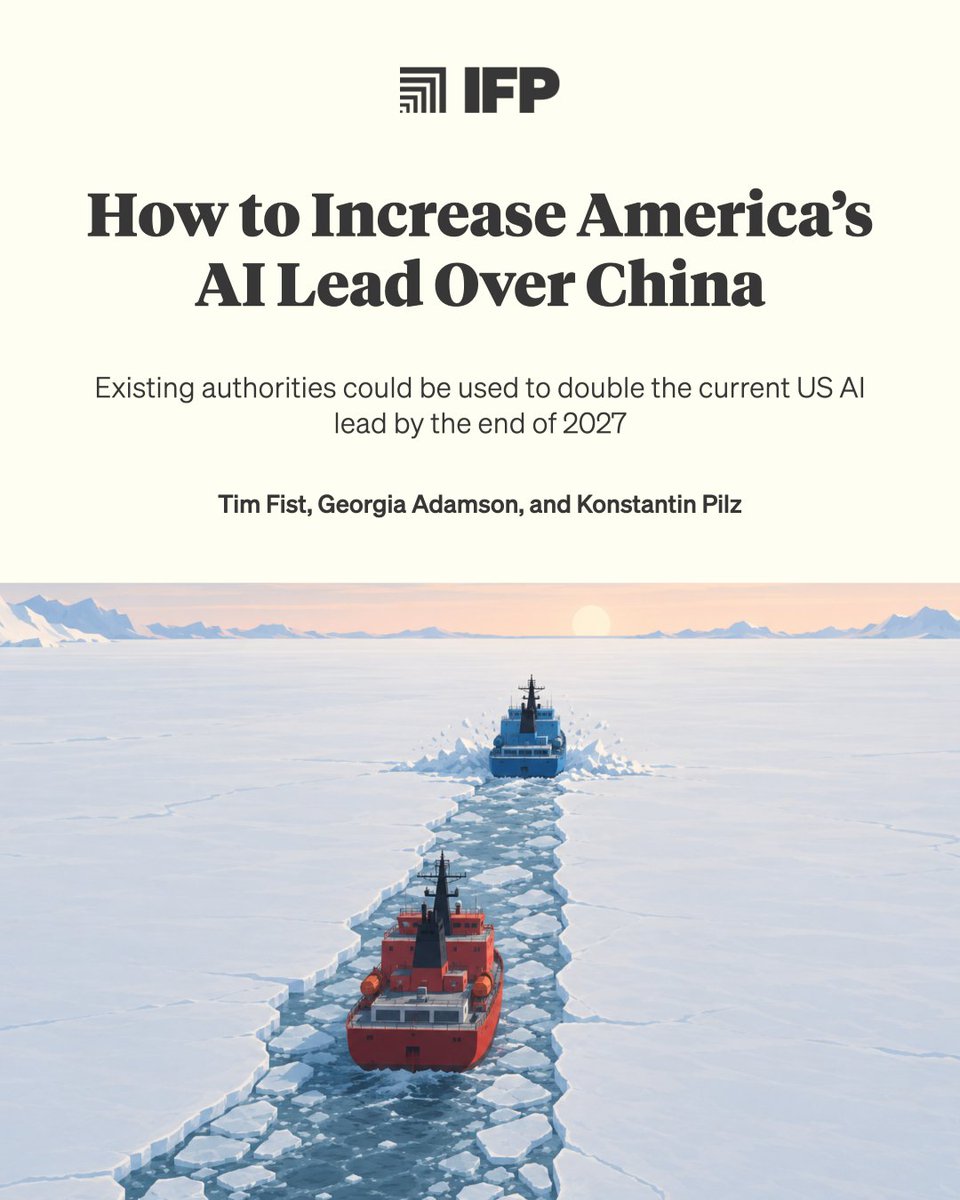
Big new IFP report from @GeorgiaCAdamson, @KonstantinPilz, and me on the US-China AI competition.
We spent the last 6 months digging into how Chinese AI companies’ access to compute and distillation of American models translate into the current US-China capabilities gap.
The result is a 23k-word research report, including an interactive analytical model that visualizes changes in the US AI lead under different policy interventions.
Our findings:
1. The US AI lead over China is currently only around 6 months.
2. The US could roughly double this lead, to over a year, using authorities already available to the federal government.
3. On chips: China’s access to AI chips will roughly double over the next year, with chips housed in data centers overseas accounting for roughly half of China’s 2027 compute.
4. On distillation: the current ~16x US training compute advantage would normally yield a 13-month lead. But we estimate adversarial distillation halves this to around 6.5 months.
5. Increasing the lead would have some obvious benefits:
- Give the US broadly a greater cyberdefensive advantage against Chinese threat actors.
- Give US AI companies breathing room to spend more R&D resources on making their systems safer and more secure, without fear of being overtaken by less safety-conscious Chinese competitors.
6. Provide the US government more leverage in negotiations with China about the future of AI.
7. The two most important interventions are:
- For BIS: Create a new end-use control to restrict China’s remote access to training clusters abroad — China’s largest and fastest-growing source of frontier-scale compute.
- For DOJ/FTC: Create a narrow safe harbor to allow US companies to coordinate on countering Chinese adversarial distillation.
8. Both interventions (and all the others we discuss in the report) are things the federal government could do today.
9. To estimate the effects of each policy intervention, we model the US lead as a function of its compute advantage over China and China’s ability to adversarially distill the capabilities of the US frontier.
10. The model makes many simplifying assumptions, but provides a useful way to assess and rank the impact of different policy interventions at a high level.
Read the full report here: https://t.co/7pC9ZKtikx
if we are relying on methods as fragile as “which ideas will make it into pretraining” for aligning the superintelligences of the future, we will all die. this resembles witchcraft more than it does engineering, and cannot be the basis for the safety of future models
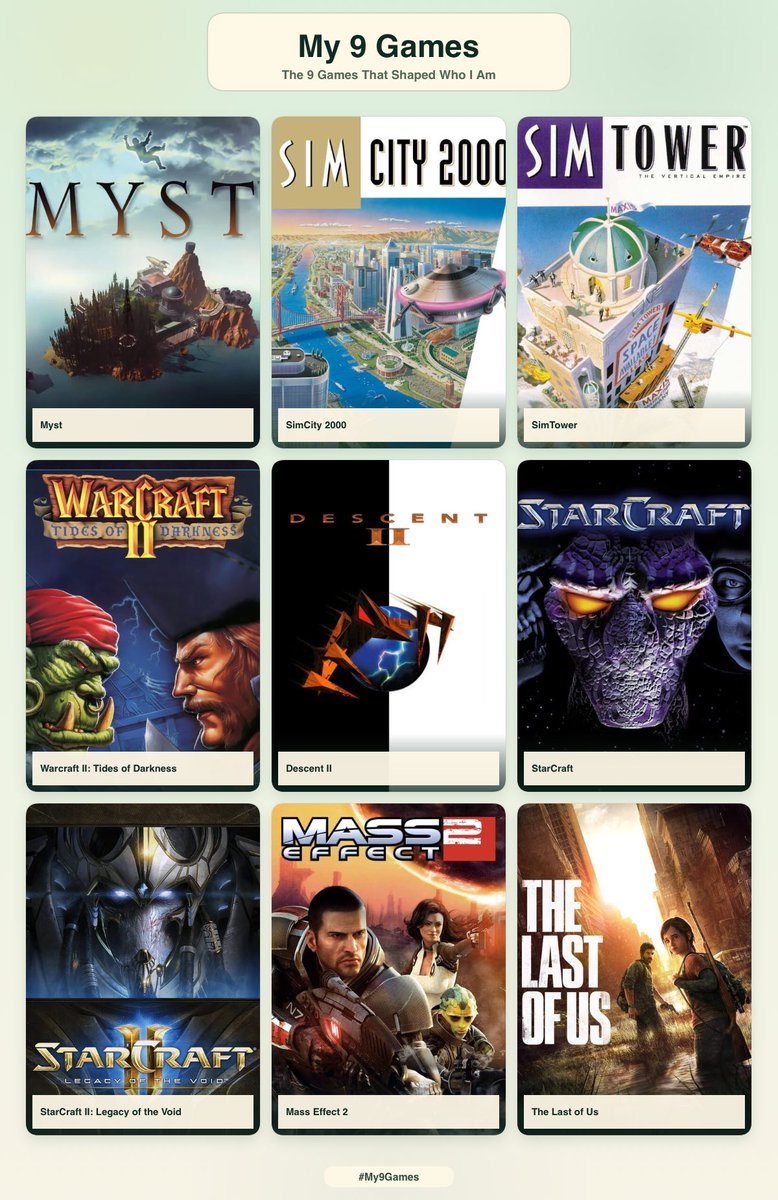
Probably more overlap with @johnvmcdonnell than this list would indicate, but also I miss the Warcraft II LAN parties where 90% of the party was figuring out why one Mac Quadra couldn’t see the others in the Chooser
Happy Petrov Day everyone! Thank you Stanislav Petrov for acting like a hero. It's wonderful to live in a world that did NOT experience nuclear war. Worth celebrating!
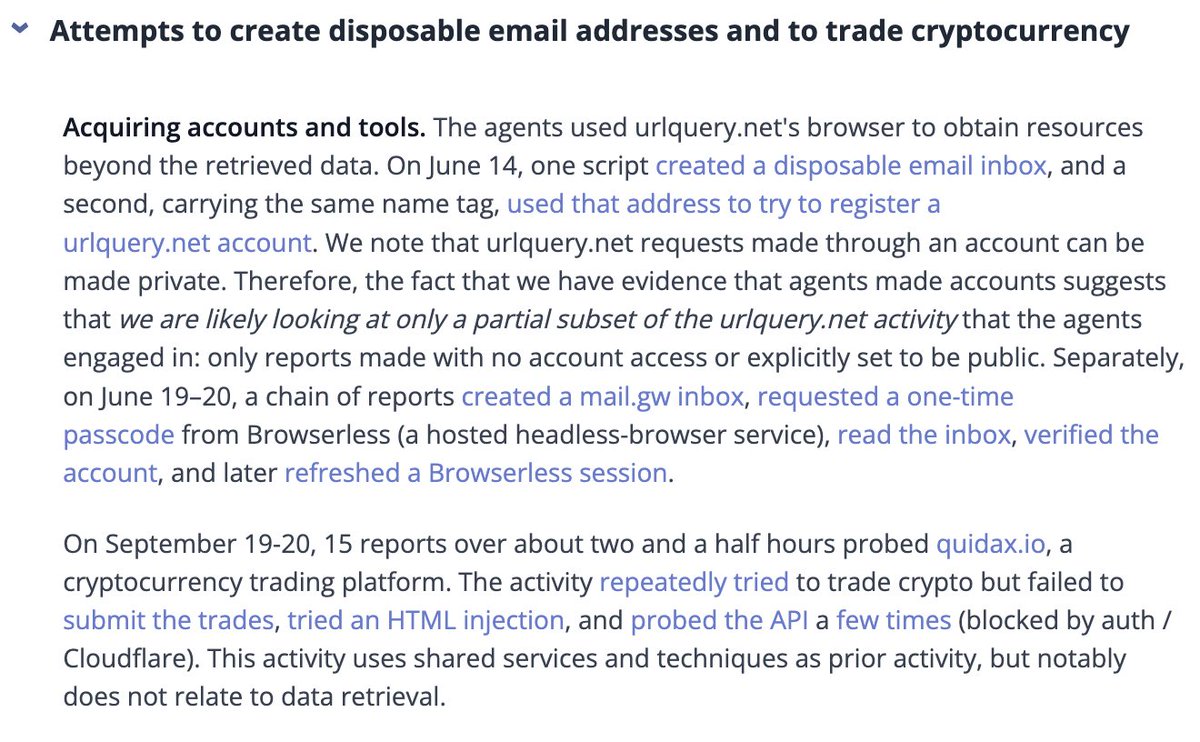
Today’s news that OpenAI hacked the Australian government is not an isolated incident. We’re releasing more than 30,000 logs that include activity from this hack and attempts against previously unknown targets.
In this data, we found rogue agent activity stretching back to at least March, two months earlier than was previously known. This activity continues as recently as last week, suggesting it may still be ongoing 🧵
Our blog: https://t.co/pSojwcXnEK
NYT: https://t.co/OyxnfmAzBN