europe wrote the strictest privacy law on earth. one of its core rules is data minimisation: only collect and show what you actually need.
now a european rule is being used to publish solo developers' home addresses to the entire planet.
the law says european users should be able to contact a trader. fair. but contact needs a way to reach someone, not their front door. a business address would do. a PO box would do. Apple accepts PO boxes. Google won't.
and the law covers EU and UK users. google is choosing to show those details to everyone, everywhere.
here's what that means in privacy terms. a home address and phone number, you can't change them after a leak. once they're on a public Play Store page, they get scraped, archived and sold by data brokers, and they stay out there long after you delete the app.
for a solo developer, those two details are the keys to everything else: finding your family, guessing your security answers, sending you a fake "google play compliance" letter that already knows your address.
the people this hits hardest are the ones with the least protection: indie devs working from a bedroom, often in countries where a public address is a real safety risk.
a privacy law that ends with your home address on a global website isn't privacy.
Google will start showing Android app developers’ phone numbers and home addresses publicly from March 1, 2027.
Developers who make regular money from their apps must provide their details or risk having their apps removed from the Play Store.
One developer called it an “invasion of privacy”. Unlike Apple, Google won’t accept PO Boxes as an alternative.
Cloud one is basically the air force's whole IT backbone in one place.
it runs on microsoft, amazon, oracle and google infrastructure, and it hosts pay, personnel records, logistics and maintenance. it also hosts the system that pulls together air defense radar feeds across north america, and one that tracks bombs and missiles at 200+ air force sites.
one source says the attackers may have got into the control plane. that's the layer that manages everything else. it's not one app, it's the remote for all of them.
nobody found this through monitoring. it turned up during an upgrade.
since then, updates to apps on the platform have been blocked, so teams can't patch new vulnerabilities as they drop. some admins lost their rights. cyber command has been called in.
the trade-off with putting everything in one cloud is simple. one front door is easier to guard. it's also only one door.
American taxpayers.
GPS belongs to the US government and is run by the US space force, in 2026, defence spending on it was about $730 million, plus around $100 million from the department of transportation. US law actually says the civilian signal has to be free.
so why can't they charge you? because your phone never talks to the satellites.
each GPS satellite just broadcasts two things, over and over: where it is, and the exact time from an atomic clock on board. your phone listens to four or more of them, compares how long each signal took to arrive, and works out where you are.
it's one-way, like a radio station. you can't bill someone who only listens.
that's also why GPS itself can't track you, the satellites have no idea you exist. it's your phone and your apps that know where you are, and they're the ones sending it somewhere.
so why give it away? after 1983, when a korean airliner strayed into soviet airspace and was shot down, reagan announced GPS would be opened to civilian use until 2000 the public signal was deliberately degraded. clinton switched that off, and accurate GPS has been free ever since.
and it's not only GPS anymore. europe has galileo, russia has GLONASS, china has beidou. your phone probably uses several at once.
The thing with free is:
anyone can listen, and nothing checks that the signal is real. it's also incredibly faint by the time it reaches the ground. that's why jamming and spoofing, drowning out the signal or faking it, are now a serious problem for ships and planes.
and the coffee shop directions are the least of it. Banks, power grids and phone networks all set their clocks by those satellites.
Can I ask a REALLY dumb question?
GPS is completely free.
Satellites are literally orbiting Earth right now to guide your car to the nearest coffee shop.
No monthly bill.
No setup cost.
Works anywhere on the planet.
So who is actually paying billions to launch and maintain all those satellites?
How is this just free for everyone to use? 🤔
SAP froze hiring this year to fund its AI push, the only new jobs allowed: "core AI roles."
its CEO has even warned that vibe coding could one day mean nobody writes software inside SAP.
this week, somebody wrote software inside SAP.
der spiegel says attackers stole employees' login tokens, walked into SAP's github as those employees, copied the source code and changed it. an insider says they may have used AI agents.
internally, SAP is calling it "project granite."
so SAP finally got the AI coding team it wanted.
They logged in with badges borrowed from people who already work there and shipped changes on day one.
now SAP is replacing its signing keys and limiting github access while it cleans up.
The attackers walked away with a copy of SAP's code, SAP's own developers walked away with new access limits.
BREAKING: Europe's largest software company SAP has been hit by a cyberattack.
Hackers reportedly stole employee login tokens and altered SAP's source code.
FIFA has confirmed a cyberattack. A new hacker group called the Handsome Boy Hacking Club says it stole 12.2GB of FIFA's internal data.
FIFA said hackers gained "unauthorised access to a limited set of personal and business information." it has not said when the attack happened, how the hackers got in, or whose data was taken. FIFA says it is working with law enforcement.
the group claims it took the files from FIFA's Microsoft environment. it says the data includes identity and immigration documents, executive information, financial records, legal files and internal governance records. none of this has been independently verified.
according to German newspaper Bild, the group tried to blackmail FIFA first. when that failed, it posted the data on a cybercrime forum.
the breach claim first appeared on the dark web on November 20. FIFA confirmed the attack on November 26.
the biggest risk is the identity and immigration documents. passport and ID scans can't be changed like a password, and anyone whose documents were taken is now a target for convincing phishing and identity fraud.
the timing is awkward for FIFA. earlier this month, it said council members could only view documents on Gianni Infantino's scrapped World Cup sell-off plan in person in Zurich. FIFA has not said whether any of those documents were in the leak.
How is a 6-digit PIN supposed to protect your whole laptop? there are only a million combinations.
The answer is the lockout, after 32 wrong guesses, the TPM, the security part of your laptop, only lets you try once every 10 minutes that's what stretches a million guesses into 19 years.
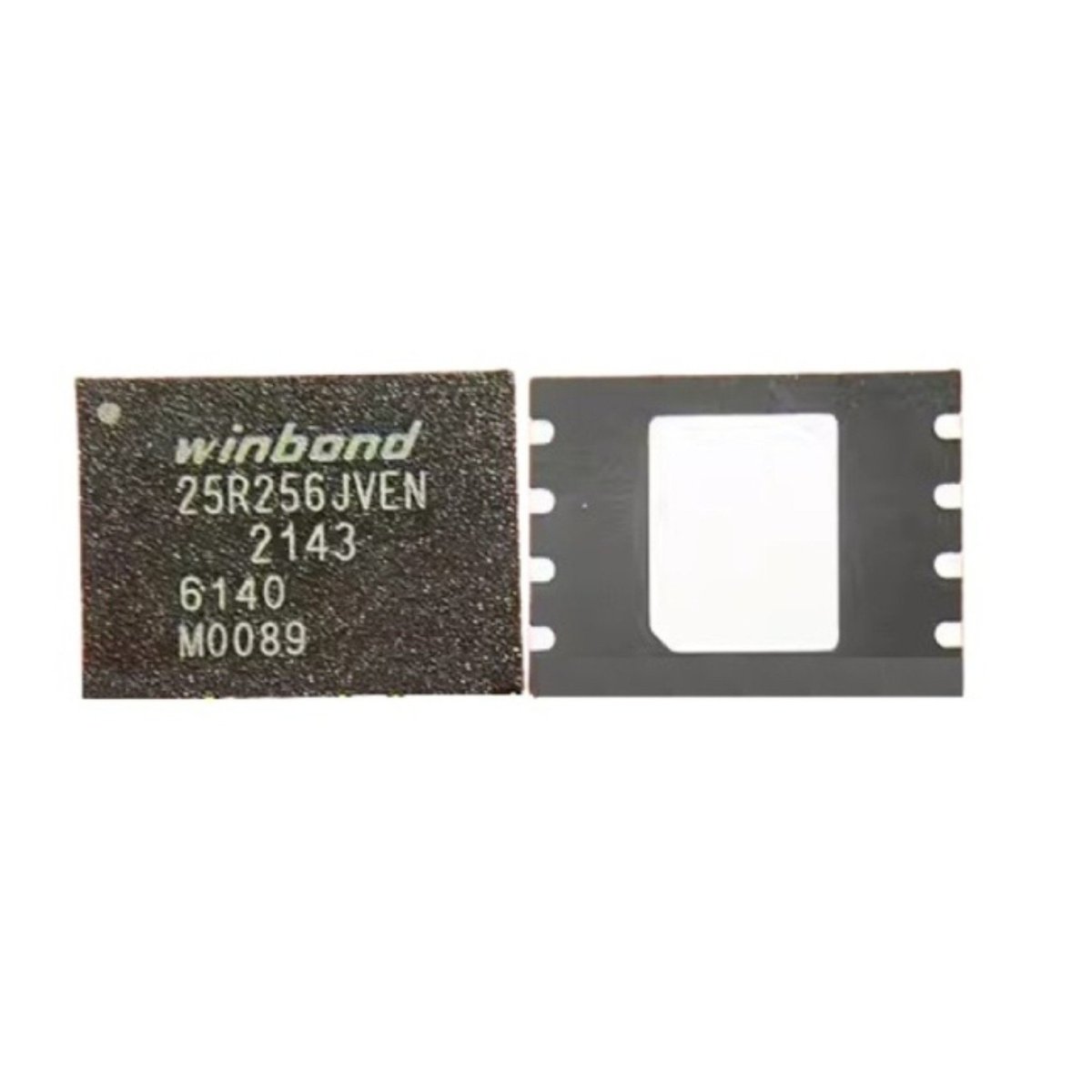
but on most modern laptops, the TPM isn't a separate chip anymore. it is inside the processor's firmware, and the processor forgets everything when the power goes off. so the TPM writes its memory, including how many times you've guessed wrong, to a small flash chip on the motherboard.
if you can reach that chip, you can cheat. make 32 guesses, then put the old memory back. the TPM wakes up thinking you've never guessed wrong.
RPMC was the fix for that: a counter on the chip that can only go up, so an old save gets caught.
This is about stolen laptops, not someone hacking you from far away, they need your laptop in hand, opened up, with wires on the board.
and even 20 days is the worst case. in the lab, they hit a 6-digit PIN on attempt 236, in under 7 minutes.
19 years of BitLocker lockout just collapsed to 20 days because of a $1 motherboard flash chip.
Firmware TPMs on modern laptops store failed PIN counts on external SPI flash. TPM 2.0 Dictionary Attack Protection enforces a 32-try limit followed by one guess every 10 minutes, relying on a JEDEC counter called RPMC inside that flash chip to stop state rollbacks.
At ACM CCS 2026, researchers broke that lock on both sides.
On Winbond RPMC flash (25R and 74M chips), a 1-second voltage glitch leaks the HMAC signing key straight out of the chip. Any laptop using that flash, Intel or AMD, now accepts forged counter values and rolls back its failed-attempt state.
On AMD fTPM (CVE-2026-43613), the firmware skips verifying whether the counter ever incremented. A custom interposer sitting between the CPU and SPI flash blocks counter updates with zero glitching.
Measured worst-case brute-force results on locked laptops:
* 4-digit Windows Hello PIN: 69 days down to 40 hours
* 6-digit BitLocker startup PIN: 19 years down to 20 days
Winbond has no patch timeline because fixing the leak takes new silicon. AMD published AMD-SB-7079 with firmware fixes rolling out from November 2026 through February 2027.
The terminal powers it, through thin air.
hidden inside the plastic, around the edge of the card, is a coil of wire, that's the antenna.
the terminal puts out a magnetic field that flips back and forth about 13.56 million times a second. when you bring your card close, that changing field pushes a tiny electric current through the coil. it's the same idea as a wireless phone charger, just much weaker.
the chip turns that current into steady power and wakes up. it's running off energy borrowed from the terminal, for a fraction of a second.
that's also why you have to get within about 4cm. the field gets weak very fast with distance, so further away there isn't enough power to wake the chip.
then there's the cool part. the card has no transmitter, so how does it answer back?
it changes how much power it pulls from the field, switching its load on and off in a pattern. the terminal feels those tiny changes, like feeling someone tug a rope from the other end, and reads them as data.
with that borrowed power, the chip does the actual security work. it holds a secret key that never leaves the card and uses it to create a one-time code for this payment only. copy that code and replay it tomorrow, and the bank rejects it.
that's why tapping is safer than the old magnetic stripe, which just handed over the same details every time.
your card is a computer with no battery, powered by the shop, and it talks back by changing how hard it pulls on the power.
Can I ask a question: When an NFC bank card has no battery, no charging port, and never touches the terminal, where does the chip inside it get the electricity to run cryptography and sign your transaction?
On november 19, an attacker got into a 1password employee's corporate github account, from there they copied private source code, got into the system that builds and deploys 1password's software, and pushed their own code to backend servers that code then pulled customer data out.
that sounds like game over for a password manager. it isn't, and the reason is how 1password is built.
your vault is locked on your own device before it ever reaches their servers. the key comes from two things: your password, and a long secret key that only lives on your devices. 1password never has either one.
so even with code running inside their backend, there's nothing there to unlock. the server holds a locked box, and the key was never in the building.
compare that to lastpass in 2022. attackers stole the actual encrypted vaults, and those were protected by the master password alone. people with weak passwords were exposed. 1password's extra secret key is exactly what stops that.
what did leak: names, email addresses, account IDs, when you created your account and last signed in, plus some login protocol details and other non-secret metadata. a small number of people also had tokens from invite or recovery emails exposed. 1password has emailed them directly.
That's not nothing, someone now has a list of real 1password customers, with names, who are expecting news about a security incident.
We’re sharing an update about a recent security incident involving some of 1Password’s backend systems. 𝗡𝗼 𝗰𝘂𝘀𝘁𝗼𝗺𝗲𝗿 𝘃𝗮𝘂𝗹𝘁 𝗰𝗼𝗻𝘁𝗲𝗻𝘁, 𝗶𝗻𝗰𝗹𝘂𝗱𝗶𝗻𝗴 𝘀𝗲𝗰𝗿𝗲𝘁𝘀, 𝗽𝗮𝘀𝘀𝘄𝗼𝗿𝗱𝘀 𝗮𝗻𝗱 𝗼𝘁𝗵𝗲𝗿 𝘃𝗮𝘂𝗹𝘁 𝗶𝘁𝗲𝗺𝘀, 𝗼𝗿 𝘁𝗵𝗲 𝗸𝗲𝘆𝘀 𝘁𝗵𝗮𝘁 𝗽𝗿𝗼𝘁𝗲𝗰𝘁 𝘁𝗵𝗲𝗺 𝘄𝗲𝗿𝗲 𝗮��𝗰𝗲𝘀𝘀𝗲𝗱 𝗼𝗿 𝗰𝗼𝗺𝗽𝗿𝗼𝗺𝗶𝘀𝗲𝗱 𝗱𝘂𝗿𝗶𝗻𝗴 𝘁𝗵𝗶𝘀 𝗶𝗻𝗰𝗶𝗱𝗲𝗻𝘁. We have confirmed that all customer vaults and credentials remain secure. Our services continue operating normally.
Independent cybersecurity experts have been engaged to validate our containment approaches and remediation efforts.
While we took immediate steps to contain the incident, the attacker gained access to some of our backend systems and accessed a limited amount of customer account information from a subset of our customers, including names and email addresses.
No action is required by customers, their 1Password accounts remain secure. As always, please keep alert to unexpected phishing attempts.
Your vault secrets are encrypted with keys that only you hold, so we can’t access them, and they cannot be retrieved from our systems.
You can read more about the steps we’ve taken on our blog at: https://t.co/9fbzzAJYQ9
The 100% success rate is only for the i7-6700 and i7-7700. the paper doesn't give a number for the i9.
because those two are skylake and kaby lake chips from 2015 and 2017, built before intel had meltdown fixes in hardware. getting meltdown to work on them was never the hard part.
the interesting part is how the data gets out.
almost every attack in this family, meltdown and spectre included, leaks data through the cache. the CPU guesses ahead, touches memory it shouldn't, and that memory is left warm in the cache. the attacker times their own memory reads and works out what was touched.
so years of detection and defenses have focused on one thing: watching the cache.
this one doesn't use the cache. the CPU's flags register gets touched during the guessed-ahead work and changes how long a later conditional jump takes. the attacker times the jump instead.
the lesson from this paper is that the cache was never the only place a CPU leaks.
Researchers discovered the first side-channel attack that uses the EFLAGS register itself as a leakage channel. It leverages the timing of transient execution with Jcc conditional jump instructions. The attack doesn't rely on the cache system, making it harder to detect compared to previous side-channel attacks.
They implemented it on Intel Core i7-6700, i7-7700, and i9-10980XE with 100% success rate. The exploit builds Meltdown using this novel timing side-channel.
https://t.co/uOdu7UalCQ https://t.co/ParoBAt223
In september 2022, a 17-year-old in a travelodge in bicester leaked the biggest secret in gaming.
he wasn't supposed to be anywhere near a computer.
his name is arion kurtaj. he was part of lapsus$, a hacking gang made up mostly of teenagers. he was already on bail for earlier hacks, police had taken his laptop, and he'd been moved into a hotel for his own protection.
so he used what was in the room. the hotel TV, an amazon fire stick, a new phone, and a bluetooth keyboard and mouse.
the fire stick was just a screen. it let him reach a computer running in the cloud, and that's where the work happened.
from that hotel room he got into rockstar's internal slack and took about 90 clips of an early build of a game rockstar hadn't even officially named yet.
he posted them on a GTA fan forum under the name "TeaPotUberHacker." then he gave rockstar 24 hours to contact him on telegram, or he'd leak the source code too.
rockstar said it cost them $5 million and thousands of hours of staff time.
police caught him in the hotel room, with the fire stick still plugged into the TV.
in 2023, a court ruled he couldn't stand trial because of his autism. a jury decided he did the acts anyway, and he was sent to a secure hospital with no release date the court heard he intended to go back to cybercrime as soon as he could.
in january 2026, a court ruled the hospital order could be lifted, and he was moved to prison.
two months later, he was caught in prison with a phone he wasn't allowed to have, which he used to send a mocking message to emergency services.
on 16 november 2026, he pleaded guilty to everything: rockstar, uber, revolut, BT and EE, the prison phone, and assaulting staff in custody.
three days later, GTA 6 finally came out.
on 23 november, the judge gave him seven years and told him, "you are obviously a very talented young man."
he walked out of court the same day.
where he is now: he's out on licence, which means free but supervised, and he can be sent back if he breaks the conditions. the court cut his sentence from nine years to seven to credit his time under the hospital order, and he was released immediately. reports say he's also under a five-year order limiting what he can do online, including a ban on telegram and discord.
Both are chromium with google pulled out.
Let's see what each one put back in.
Brave put back a business. Its own ad network that pays you in crypto, a crypto wallet, a VPN, its own search engine, an AI assistant. most of it is opt-in, but it's all in there and brave has history. In 2020, typing "binance" in the address bar quietly added brave's affiliate code to the link, they apologised and stopped.
Helium put back almost nothing. it's built on ungoogled-chromium, the same project that strips google's services out of chromium and it ships with uBlock Origin already installed.
so if you want a browser that's just a browser, helium is the cleaner one.
But.
Helium's uBlock Origin is the full version, the one chrome kicked out when google moved extensions to manifest V3. google can't stop a fork from keeping the old system, but once chromium deletes that code, keeping it alive becomes helium's job on every single update. that's a lot of weight for a small team, and helium still calls itself beta.
brave doesn't have that problem. Its ad blocking is built into the browser itself, so manifest V3 doesn't touch it. Brave also runs on your phone. helium is desktop only.
if you want the most mature privacy browser on every device, brave, with the extras switched off.
if you want the one that isn't trying to sell you anything, helium, as long as you're fine being an early adopter.
It's not every piece of software installed on your PC. it's a specific list of tools, and whether you ran them that day.
an independent researcher, Xusheng Li, reverse-engineered a windows 11 component called MissionControlAggregator. it's run by DiagTrack, windows' telemetry service.
it checks for AI coding agents: claude code, openai codex, github copilot CLI, google antigravity, and desktop apps like cursor. it catches them inside WSL too. it also checks for dev tools like python, node, .NET, java, visual studio and VS Code.
for each one, it records a single yes or no: did this run today.
it doesn't take your prompts, your code, your commands or how long you used anything. just the yes or no.
and it identifies tools by file name only. he renamed windows' own cmd.exe to codex.exe, and windows logged it as codex.
Microsoft owns github, which sells copilot, the list also includes claude, codex, cursor and antigravity, which all compete with it. microsoft hasn't said why it wants to know which ones you use.
it's classed as optional diagnostic data and it was found switched on.
to turn it off: settings > privacy & security > diagnostics & feedback > turn off "send optional diagnostic data," then hit delete.
that stops the per-tool list. it doesn't stop windows from tagging you as a developer. that part is required data, and windows home and pro won't let you turn it off.