Take any population on earth.
For several generations, remove their most physically capable members by force and sell them abroad.
Destroy their existing political institutions and replace them with administrative structures designed to extract rather than develop.
Draw their borders to maximize ethnic conflict and minimize political coherence.
Extract their mineral and agricultural wealth for a century at prices you set unilaterally.
When you leave, install governments that serve your economic interests rather than their populations.
Fund civil wars when those governments are threatened by leaders who want to redirect resource revenues toward domestic development.
Then, three generations later, administer a cognitive test.
Compare the scores to those of the populations who spent the same period accumulating capital, building universities, developing public health infrastructure, and compounding the advantages of political stability.
Put the results on a map.
Call the map a "nature documentary."
Tell yourself the scores show something biological.
Tell yourself the history had nothing to do with it.
Tell yourself you arrived at this conclusion by following the evidence.
You did not follow the evidence.
You followed the map to the place you had already decided to go.
And the evidence, the entire, documented, sourced, cross-disciplinary evidence, is the invoice you refused to open.
Last year, the US government said some African governments refused to participate in its forced deportation programme for illegal migrants. Ghana volunteered to collect them and help dump them.
In 2022, the British government decided it no longer wished to host asylum seekers on its own territory and needed somewhere to offload them. Rwanda raised its hand.
In 2016, the United States decided it could not keep certain Guantanamo Bay prisoners in its own facilities. Ghana openly agreed to receive them on African soil.
And now the United States has decided it cannot repatriate its own Ebola patients to its own vastly superior medical infrastructure. Kenya has offered to build them a treatment centre.
Every time a Western government identifies something it considers too dangerous, too embarrassing, too legally complicated or too politically inconvenient to keep on its own territory, there is always an African government somewhere ready to collect it.
Deportees, asylum seekers, terror suspects, infectious disease patients. The willingness of certain African leaders to position their countries as the world’s surrogate waste management service, in exchange for whatever diplomatic or financial token has no visible floor.
There will always be morally bankrupt opportunists in government who will not look at the safety of their people, the dignity of their flag or the solidarity owed to the oppressed, and will instead compete to be the most useful to the powerful.
MAHAKAMA KUU YA TANZANIA IMEMZUIA MSAJILI WA VYAMA VYA SIASA KUIFUTA CHADEMA AU KUITOZA FAINI.
Moja kati ya sababu zilizotolewa na Mawakili ni kwamba Msajili ameonyesha upande kwamba anaifuta CHADEMA au ataitoza faini wakati baruahiyo ilikuwa hata bado haijajibiwa na CHADEMA.
Kwamba kwenye barua hiyo Msajili yeye ndo mlalamika, yeye ndo shaidi na wakati huo huo yeye ndo Jaji kwa maana hii hawezi kutenda Haki.
Unaweza kusoma uamuzi wa Mahakama👇
It’s astonishing how decades of propoganda has actually led people to believe that ‘anyone can be English’.
I hate to be the one to shatter your world view, but no-one can ‘become English’.
English is an ethnic group. You are only English if you have English ancestry.
The dangerous lie that ‘anyone can be English if they live in England and feel English’ is what is leading to us, the indigenous English People, becoming a minority in our own homeland, England.
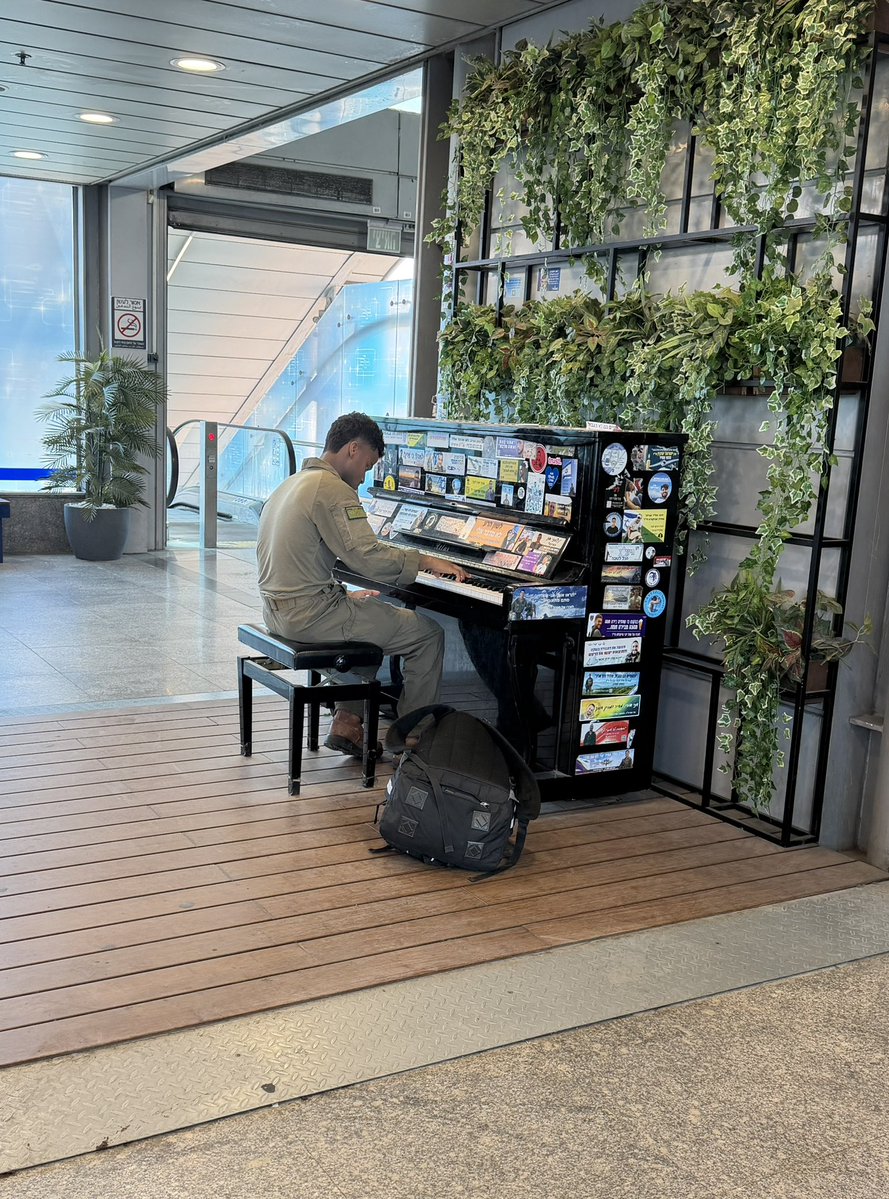
I took pictures of those black IDF soldiers at the train station in Tel Aviv because they reminded me of something I experienced years ago in Lebanon.
After my divorce, my Lebanese ex husband hired an African maid. In Lebanon, domestic workers often have barely any rights and are routinely mistreated by employers, especially because they live inside the homes and work from morning until night, usually without a single day off. When my son grew older, he once told his paternal family that even if people called them “helpers,” they were in reality treated like slaves.
When he was two years old, we were in Beirut and he wanted the maid who looked after him during visits with his father to come with us to the beach. We went to the military academy beach, and a soldier instructed my cousin where to park. Then he told us to leave the maid in the car. It was 32 degrees Celsius outside. I told him that in Europe, if I left a dog locked in a car under that heat, I would get into trouble. “Maids are not allowed,” he replied.
I asked him why he assumed she was a maid. He said it was obvious. I asked why it was obvious when we were both wearing jeans and a T shirt. “Because she is black,” he answered.
I then asked him whether the wife of the Sudanese ambassador would be allowed in. He said that if she arrived in a diplomatic car, he would let her enter. We asked him whether he understood how degrading and disgusting what he was saying was to another human being standing right there, hearing every word. His answer was simple: he did not make the rules, he just followed them.
We left the beach immediately, and after trying several places, we eventually found a beach in Jounieh that allowed black people to enter. The fact that this even had to become a search tells you everything you need to know.
The Lebanese culture I know can be deeply racist, sectarian, antisemitic, homophobic, and misogynistic, among many other problems. That said, I also know many Lebanese who are trying to improve their country and challenge those attitudes. But there is still a lot, I mean a LOT, that needs to change.
Of course Israel is not perfect. No society is. But whenever I say that Israelis and Lebanese are in some ways very similar, I also have to add that in many ways they are profoundly different.
Those two soldiers at the train station are proof of that.
#lebanon #Israel
TEC hawajapeleka kabisa mwakilishi
Wamekataa kuketi, kusomewa uongo
Kanisa moja, Takatifu, Katoliki la Mitume
Ni moja jana, leo, asili yake ni Yesu Kristo
Ibada moja, sheria moja , mapokeo yaleyale
Kanisa limeenea pande zote ulimwengu mzima
Kanisa Katoliki, TUNAJIVUNIA 👏
90% of all the Africans that were enslaved were raided, captured, and delivered to the Europeans BY AFRICANS.
Before that, Africans had sold 10 million Africans to the Arabs during the Trans-Saharan Slave Trade.
The Arabs castrated their slaves.
Holding Europeans “accountable” for slavery is gravely misguided, and another attempt to fabricate an illusion of existential excuse for the consistent self-inflicted failure of Africans to self actualize.
Europeans didn’t invent slavery. Humans invented slavery.
Egyptians had slaves.
Babylonians had slaves.
Persians had slaves.
Greeks had slaves.
Romans had slaves.
The English had slaves.
Africans had slaves.
Humans were the first exchanged good amongst humans.
But slavery didn’t remain after the Europeans. Britain abolished slavery.
Britain lost around 2,000 naval officers on the sea enforcing abolition laws on African rulers who kept enslaving.
Britain paid around 20 million pounds to free all slaves. The only fully paid the loan this 2015.
No one should pay reparations for slavery. It is not the sin of any one group.
Africans shouldn’t use an event that occurred 400 years ago as an excuse for lack of self actualization.
As I told a Ghanaian friend, when I see Africans or Black Americans discuss reparations for the TAST, I await their position on reparations for the Trans Saharan Slave Trade, which continues to this day — some 2 million Africans currently enslaved throughout the Arab Muslim world. When I see that they have no record of the latter, I move on.
They are unserious people.
@Ihunanya_chi Muhammad died before the first copy of Quran was published?...The answer is YES...Then what makes you think what was written after his death was EXACTLY what he heard from the cave?
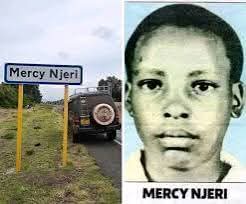
Along Kabarak Road, a few kilometres from Nakuru City, sits a busy place known as Mercy Njeri Shopping Centre. At its heart stands Mercy Njeri Primary School, formerly called Kiamunyi Primary School. Many people assume the name belongs to a powerful leader or a wealthy benefactor. It does not.
Mercy Njeri was just a child.
Mercy was born in Kiamunyi in 1975. For her first few years, she was a healthy and playful girl like many others. But at around six years old, her health began to change. She struggled to breathe, fell sick often, and grew weaker with time. Doctors later diagnosed her with rheumatic heart disease, a serious condition commonly described as a “hole in the heart.”
By 1985, her condition had worsened. Doctors advised that she urgently needed heart surgery in the United Kingdom. The cost was KSh 500,000—an amount far beyond what her family could afford. The community organised several fundraisers, but the money raised was not enough. Slowly, hope began to fade.
Then came an unexpected moment. On 4th February 1985, President Daniel arap Moi stopped at Kiamunyi Primary School during a visit to the area. Mercy, then a Standard Three pupil, was present. The head teacher explained her medical condition and shared Mercy’s simple dream: she wanted to grow up and become a doctor. The story moved the President deeply.
President Moi acted immediately. He asked Mercy’s father to come to State House Nakuru and personally mobilised funds for the surgery and travel. Within weeks, arrangements were complete. On 14th March 1985, Mercy flew to the United Kingdom, carrying the hopes of her family and community.
On 29th March 1985, Mercy underwent a long and delicate heart operation that lasted 12 hours. Sadly, she passed away later that same night. Her journey ended far from home, but her story had already touched a nation.
Mercy was laid to rest on 6th April 1985 at her family home in Kiamunyi. In a rare and powerful gesture, President Moi attended her funeral. During the service, the head teacher made a humble request—that the school be renamed in Mercy’s honour. The President agreed on the spot.
Today, Mercy’s name lives on in many ways. There is Mercy Njeri Primary School, Mercy Njeri Secondary School, Mercy Njeri Shopping Centre, and Mercy Njeri Road. An entire community carries the name of a child whose life was short but meaningful.
Mercy’s family has continued to honour her memory through action. They have renovated classrooms, provided desks, and are exploring plans to build and equip a library for learners. Mercy’s father has often said that having a school named after his daughter humbles him deeply. It is the reason he continues to support the school and work toward better education for the community.
History reminds us that greatness is not always found in long lives or powerful titles. Sometimes, it is found in the quiet legacy of a child whose name continues to teach, inspire, and unite generations.
Credit: Echoes Of Kenya:
Doha has no business meddling in Somaliland’s affairs while bankrolling Muslim Brotherhood proxies to prop up Mogadishu’s failed regime.
Somalilanders have spoken clearly: we want independence. Foreign powers parroting Mogadishu’s line can shove their hypocrisy. Our future is ours—not dictated by Qatar’s Islamist agenda. Respect our sovereignty.