Thrilled to share our paper in @NatureComms
RNA-binding proteins can enhance transcription largely independently of condensation
Nascent RNA recruits FUS to transcription site, boosting RNAP loading and preventing R-loops to enhance elongation.
https://t.co/6KC1knQYkR
IISER Berhampur is inviting applications for Ph.D. admission for the January 2027 session!
If you are interested in joining us on this exciting journey, please apply by 24 October 2026. Details: https://t.co/AVrqzw6QVC
How do you make reading DNA faster, cheaper and scalable enough to transform medicine?
That question sits at the heart of the breakthrough behind the 2026 Wolf Prize in Chemistry, awarded to Pascal Mayer, Shankar Balasubramanian and David Klenerman.
Their work helped turn DNA sequencing into a massively parallel process, dramatically reducing the cost and time needed to read genetic information, and helping make large-scale genomics possible.
But what does that actually mean? How does next-generation sequencing work, and why was this such a major leap forward?
Watch the video to see the science behind the breakthrough and understand how three researchers helped change the way we read the human genome.
@Cambridge_Uni
Check out our @NatStructMolBiol comment on non-equilibrium phase separation! We highlight how metastable nanoclusters and RNA dynamics serve as key intermediates shaping condensate formation, stability, and function.
https://t.co/gHnkdW2BBp
Collaborative work published in Neuron! Proud to be part of this study uncovering new insights into the molecular mechanisms underlying cellular organization.
Happy to share our latest research published in Nature Communications!
“ FUS nanoclusters are a distinct within the dilute phase”
https://t.co/BwsECNy7sw
Thanks TJ @taekjip for giving me the opportunity to work on this,
“Mechanistic insights into direct DNA and RNA strand transfer and dynamic protein exchange of SSB and RPA”https://t.co/LMGHFm6nuQ
Fun study led by Sam Sanford @glowingtelomere, Samuel Johnson and Tapas Paul. G-quadruplex antibody BG4 promotes folding of G-quads containing destabilizing G mutations or damage. https://t.co/QhWuyyqure
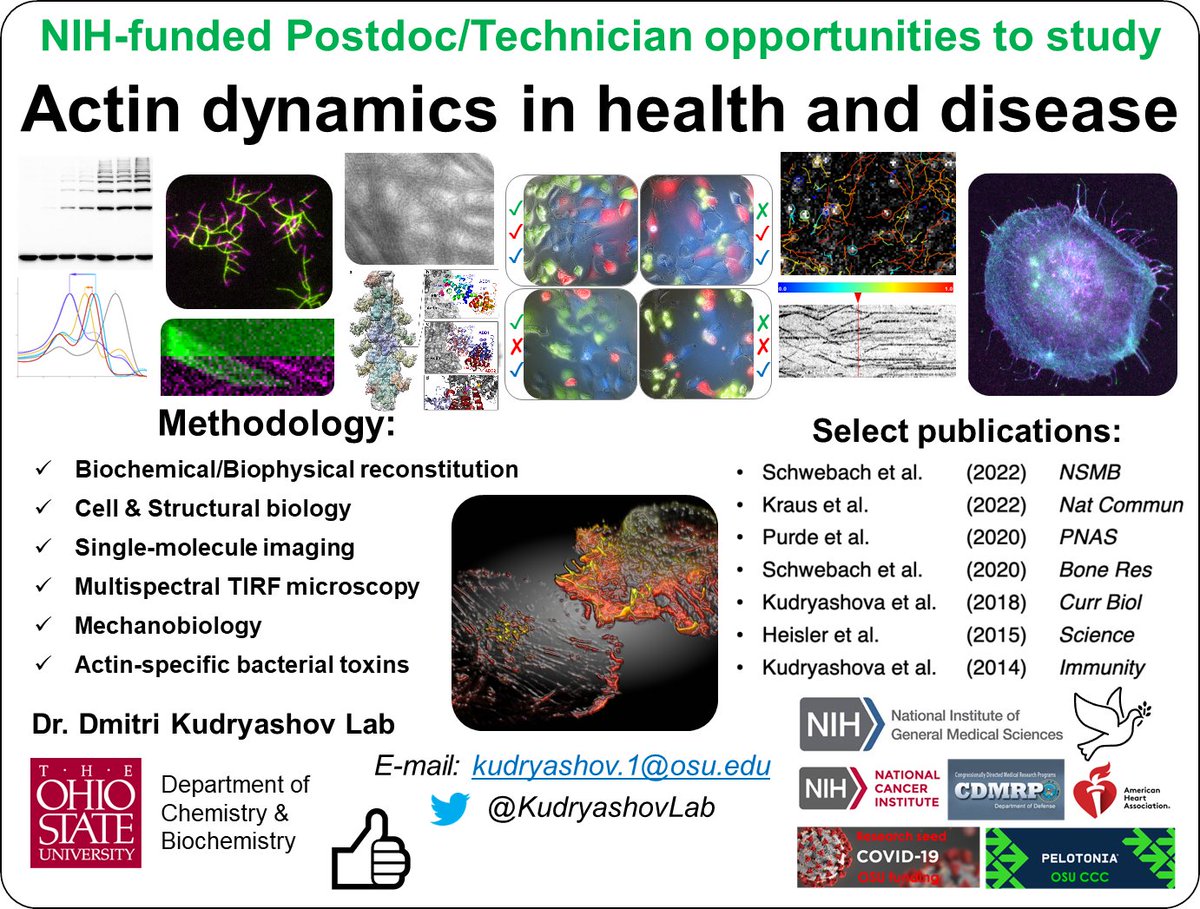
Please retweet! We invite applications for NIH-funded job opportunities in #KudryashovLab from enthusiastic biochemists, biophysicists, cell & structural biologists. Knowledge of the actin cytoskeleton is a plus. Passion for scientific research is a must.
The study is now published in NAR. Congrats to all authors!🎉 Special kudos to the amazing @b_subhas and Pim America, the 2 first authors of the article, and collaborators Anssi Malinen @UniTurku and Martin Depken @tudelft. @VU_Science@UniFAU
https://t.co/a0Nj6aJg5m