Historian at @kingscollegelon, creator of The Drinking Archive on Instagram, author of In Pursuit of Proof, a book on the history of IDs, views personal.
In Pursuit of Proof is 4 years old, and I am thrilled that it has a global readership. The hardcover is still available in India and elsewhere. In Pursuit of Proof: A History of Identification Documents in India https://t.co/e8wN2gYu42
As we run our annual campaign to raise ₹30 lakhs to keep our work free and funded by readers like you, here’s why rigorous analysis on issues of citizenship matters now more than ever. A thread. 🧵
Donate here to keep us going: https://t.co/KEYzlXYpc1
A lawyer’s midnight thoughts as Didi is set to take centerstage in SC in a few hours!
#MamataBanerjee (Didi) is set to argue in the SC today, challenging the ECI on the #SIR exercise. I like millions of others can’t wait to watch this unfold!
But here is the BIG HOPE that I am putting out there - perhaps this will be a chance to ask the META question that the SC hasn’t answered so far in the SIR debate!
The legal debate on SIR has so far revolved around safeguards: which documents should be accepted, how names should be published, what timelines should apply. Courts have rightly insisted on transparency and fairness.
Yet, the most fundamental question remains largely unaddressed -
Why is the burden of proving citizenship placed on the citizen in the first place?
That question is not procedural.
It is constitutional.
India’s legal system is extraordinarily efficient at answering technical questions.
Which rule applies.
Which document is valid.
Which authority has jurisdiction.
But when it comes to first-order constitutional questions - about power, accountability, & the moral architecture of the State, it often falls silent.
This silence is not accidental.
It’s structural.
Our system is designed to resolve disputes, not to interrogate design. It prefers procedure over philosophy, compliance over consequence. The result is a legal culture that constantly answers how something is done, but rarely asks whether it should exist in that form at all.
The current controversy around SIR is a telling example -not because SIR is unique, but because it exposes this deeper institutional habit.
Citizenship, under our constitutional framework, is a foundational status. Rights flow from it; it is not something that must be continuously re-established to the satisfaction of the State. When administrative exercises begin from suspicion rather than presumption, citizenship quietly shifts from being a right to being a claim.
This is not unique to SIR.
We saw it earlier in the NRC process in Assam - where documentary proof became the gateway to belonging, & where the absence of paper was treated as evidence of doubt. The legal system managed the process, supervised timelines, & resolved disputes but never fully confronted the deeper implication of what it meant for a republic to ask its citizens to prove their right to exist within it.
When electoral bonds were struck down as unconstitutional, the Court addressed the structure of the scheme but left untouched the democratic consequences already produced by it.
In criminal justice, undertrials spend years in prison only to be acquitted later. The system calls this delay. The Constitution calls liberty fundamental. Yet there is no serious institutional mechanism to ask who bears responsibility for stolen time.
Media trials destroy reputations long before courts speak. We invoke free speech & move on, without asking why parallel systems of punishment are allowed to flourish.
Even within courtrooms, deeper questions remain unasked.
Why does access to judicial time correlate so strongly with wealth?
Why do some cases stretch over days while others are dismissed in minutes?
Why do judges exercise enormous administrative power without structured accountability or continuity?
These are not accusations.
They are design questions.
But design questions are the ones institutions most resist because they expose not individual failures, but systemic choices.
The absence of meta questioning serves a purpose. A system that keeps citizens occupied with technicalities prevents them from seeing the larger picture. Procedure becomes a substitute for justice; compliance becomes a substitute for legitimacy.
And yet, constitutional law was never meant to be a technical toolkit alone. It was meant to be a moral framework that disciplines power.
Will Didi’s presence in the court, setting a precedence of a sitting CM arguing in the SC, change this?
Cannot wait to watch & hear!
Image - AI
Pushing for menstrual cups at the behest of companies and NGOs without even trying to understand the social/cultural context that many girls and women live in, access to water, privacy in homes and schools/workplaces under the pretext of sustainability
https://t.co/xr23ZHJjcd
Indian vegans and vegetarians misused the older corporate driven US food pyramid to manipulate Indians.
The current one, closer to science, will pull the rug from under your feet
On the eve of Human Rights Day, 50+ Indian organisations and many individuals have issued a joint statement: “Beware of Aadhaar.” For 15 years, India’s Aadhaar biometric ID system has been projected globally as a “success story”, from the World Bank’s ID4D to pilots and proposals in countries like Kenya, Nigeria, Uganda, and now renewed debates on a national ID in the UK.
Aadhaar is not a model to emulate but it raises serious concerns about surveillance, exclusion, and rights violations on the ground. “Beware of Aadhaar” offers a concise critique of India’s digital ID experiment and why exporting it is dangerous.
For more information, please follow the Rethink Aadhaar Campaign : https://t.co/HzJuMuFxrf
#No2UID #AadhaarNahiSudhaarChaahiye CC: @no2uid
📢 Join us for Dialogue #2 in our Digital Rights Activism series!
🗓️ Dec 16, 3pm GMT 🎯 Topic: Digital Rights & Public Health Services in the Global South
Featuring Paul Kimumwe (@cipesaug); @pkimumwe and Dr Sylvia Karpagam (@sakie339 )
Register: https://t.co/508JiZc920
Proud to bring you DRA Dialogue #2 through collaboration between: @KingsCollegeLon
Labor Tech Research Network @ALC_KCL and @KingsIndiaInst and Global Institutes of KCL.
Before Lord Curzon razed the overgrown gardens of the Taj Mahal to create the ‘English-style’ lawns, this engraving by French traveller Louis Rousselet gives an idea of the lush orchards and flowers that would have surrounded the Taj
Rousselet, 1865-75, in The French and Delhi
Grateful to share this reflection piece thinking through field ethics, brahminical panopticism, & archival methods in Surveillance Studies, starting from my own work. Now out for @STSIndiaNetwork 🤍
https://t.co/uVZagAsTfi
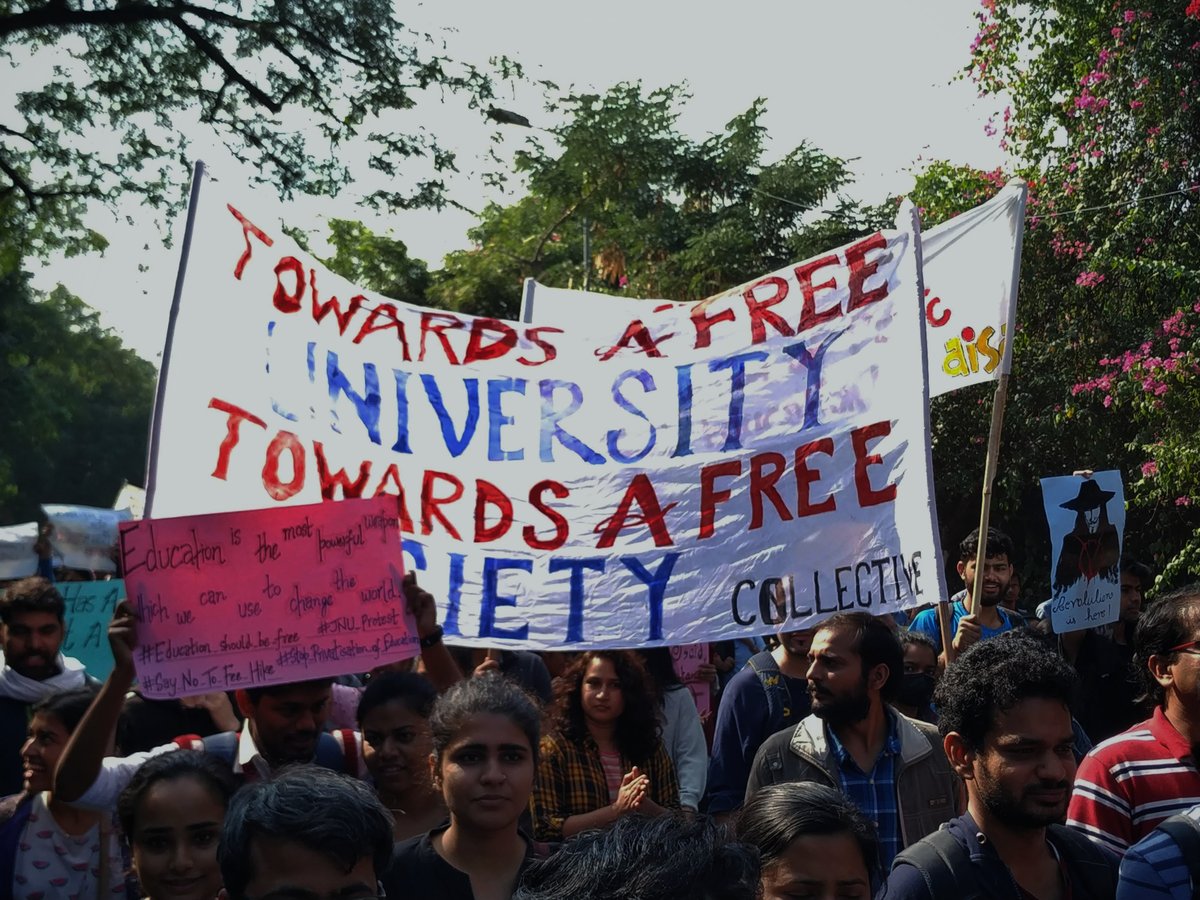
Students and faculty in South Asian universities are facing new academic freedom-related challenges.
Join us for a discussion on Dec 3 at @KingsCollegeLon with scholars from India, Bangladesh, Sri Lanka & Pakistan.
Register: https://t.co/VzpVUG9rdd @Kings_SGA@BASASofficial
book clubs are nice and cute for those who can afford books and come from communities/families where book reading has been inculcated. In addition to book clubs (and clean air), Delhi needs its #PublicLibraries to serve the 30 million+ residents 24 x 7 cc @FreeLibNetwork
Excited to announce the launch of our Digital Rights Activism dialogue series! 🎉 Hosted by @KingsCollegeLon History Dept, Labor Tech Network, and King's Global Institutes. First event: Nov 14, 4pm GMT (free, registration required)
We'll also discuss the social, economic & psychological harms faced by content moderators training large language models and handling harmful content reports for tech companies.