100K+ searches per second on turbopuffer across trillions of docs
to celebrate, a few teams puffin’ hard modeled for our new puffer jackets
Cognition • Ramp • Harvey • Notion • Legora
https://t.co/JvdhbFjmpv
The people of Silicon Valley are unwell.
If you work at a frontier lab or decacorn, you’ve got it bad. You haven’t seen your kids, your girlfriend’s annoyed, invites from friends to hang out are waning, even weddings are on hold. This is the time to make your mark and make your money, after all.
If you’re building a startup that’s trying to compete with or be one of these companies, you’ve got it bad. Maybe you passed up a job offer at one a couple years back, which means you left $100M on the table, you fucking idiot. Being an underdog isn't as fun as you thought.
If you’re working on a pre-AI startup, you’ve got it bad. Not too long ago you were the belle of the ball, but now your 30% year-on-year growth doesn’t feel like growth at all. It feels like death.
"Too many of my friends are spiraling," Brie Wolfson writes. "I don’t know how we’re supposed to live and work like this."
It’s all too much, too fast. Too much money, too much growth, too much power, too much change. Every month, a new frontier model is released. Every day, a new unicorn is minted. Seriously. 300 days into the year 2026, and 311 unicorns have been minted so far.
So what’s left for the sane ones? Brie went looking for teams playing a different game. She found one in Ottawa: a search infrastructure company that many of the AI darlings rely on.
It's growing fast, and its people are well.
Read @zebriez’s latest company dispatch from inside the sane asylum of turbopuffer.
https://t.co/wn0zpo9Gld
everyone at WarpStream sells, but @turbopuffer takes it to the next level
the employees will look you in the eyes at a dinner party after just meeting you five seconds ago and ask “does your company puf? should you be puffin’?” with a completely straight face
I can’t stress enough how little an idea matters compared to the agency of the people executing the idea.
I have had the privilege of knowing and sometimes even working with some of the most successful people (by various metrics).
The difference between mediocre and excellent work and outcomes is predominantly one of agency.
In practice this means: they dont wait for things to happen to them they go out and make things happen for them.
They don’t wait for someone else to do something, for someone to teach them, for someone to give them the path, etc. They just go out and find a way to do it.
I think the single biggest superpower these people have is the realization/belief that the world around them is completely mutable. Most everything that happens is because a person made it happen.
I used to tell people to look around the room you’re sitting in. Look at everything. Every noun. It almost all exists because a person willed it into existence. Nothing is stopping you from doing the same.
I see people online all the time dismissing someone else’s success because “I had that idea first” or whatever. I mean… yeah? If so then the difference is… you. So a bit of a self own whenever I hear that.
Number one tip: act with agency.
@nuonjon@Sirupsen yep, and that's the only way to keep engineers on both sides (vendor & vendee) happy with the ability to ship flexibly and fast!
using object storage for state helps us a lot with this, though. not all databases have this flexibility, obv.
. @Sirupsen has a story about how, in the early days of tpuf (ran in prod on tmux), he did upgrades by Ctrl+C. We decided that was a bad idea, but the spirit of moving fast lives on
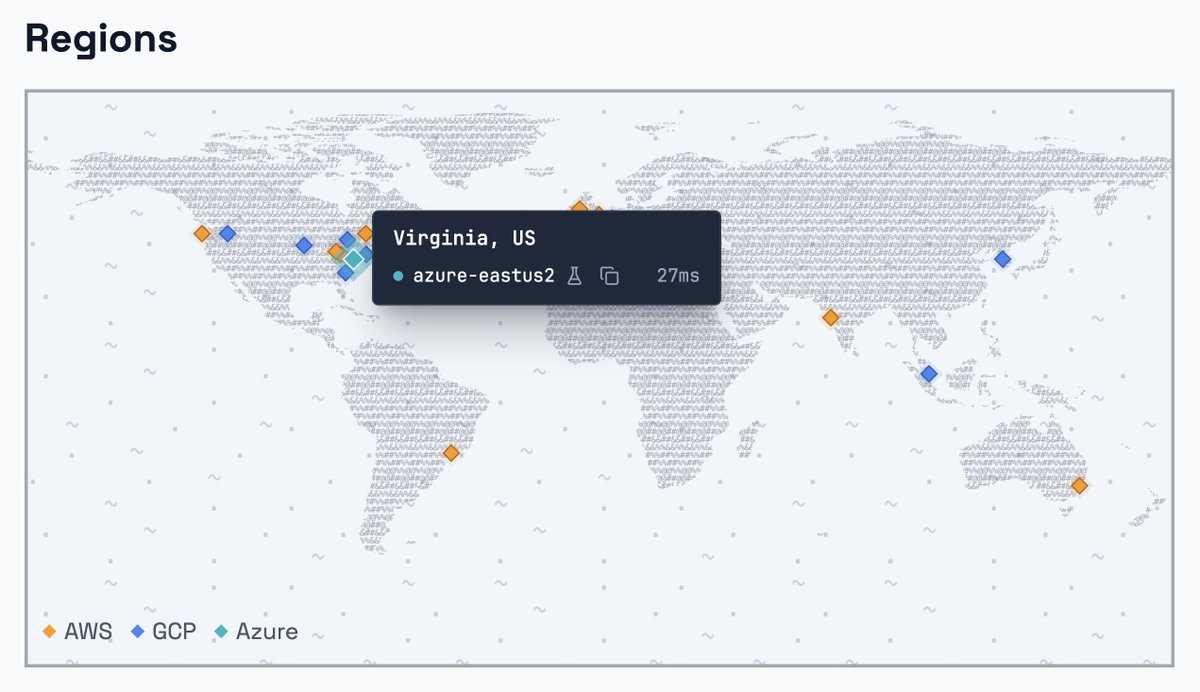
we run 100+ tpuf clusters, including many that live inside customers' clouds (BYOC). how do you operate a cluster you can't touch?
we don't use Terraform for this. instead, we build a custom control plane to manage the entire fleet without ever reaching in
https://t.co/biEJq4HkvE
hello fatih,
thanks for the kind words, and yes, an egress-only pull agent seems to be the way to go, which means a way to queue stuff on both the agent (i.e. a k8s controller) & the backend!
helm chart, CRD, and agent are all pinned to the chart version and updated together, a lot less frequently. CRD versioning gets complicated fast, so we deliberately keep ours simple by modeling one general Operation primitive, and we try to limit it to additions.
controller settings haven't been as much of a hassle, tbh. tpuf runs as a single deployment per cluster right now because the database itself is multi-tenant, so the agent isn't juggling many operations at a time, and the default controller settings have mostly worked well.