Science’s carbon footprint - lab research produced an estimated 5.5 million tonnes globally in 2015, accounting for nearly 2% of total plastic waste. Now a @wellcometrust report looks at how health research can cut emissions https://t.co/2nXdwq4PRq
Researchers are much more likely than the general population to experience depression and anxiety. And recent studies suggest that scientists’ mental-health struggles are a direct result of a toxic research culture https://t.co/u8jGixSH1z
It's #InternationalTeaDay! There are multiple protein structures in the PDB from Camellia sinensis - the tea plant. That includes this structure of Beta-primeverosidase, an enzyme involved in aroma formation. View all structures at #PDBeKB:
https://t.co/dVAMtwgQn1
“The reader must come first.”
That's the principle behind Scientific Papers Made Easy, a new book that underscores clarity and brevity as key to readable research papers. Learn more in a new @SciMagBooks review: https://t.co/OE07S3JIUb
Are you planning to apply for a #MSCA#Postdoctoral Fellowship? @UniTurku is calling for candidatesin
Selected candidates will have in-depth help during the application process.
Find out more and apply by 23 April 2023 https://t.co/bm9WSbWWTP
Now available: a virtual thematic special issue on room-temperature crystallography comprising both recent and newly commissioned articles in @IUCrJ, @ActaCrystD and @ActaCrystF. Read it here: https://t.co/WYdOpykzlf
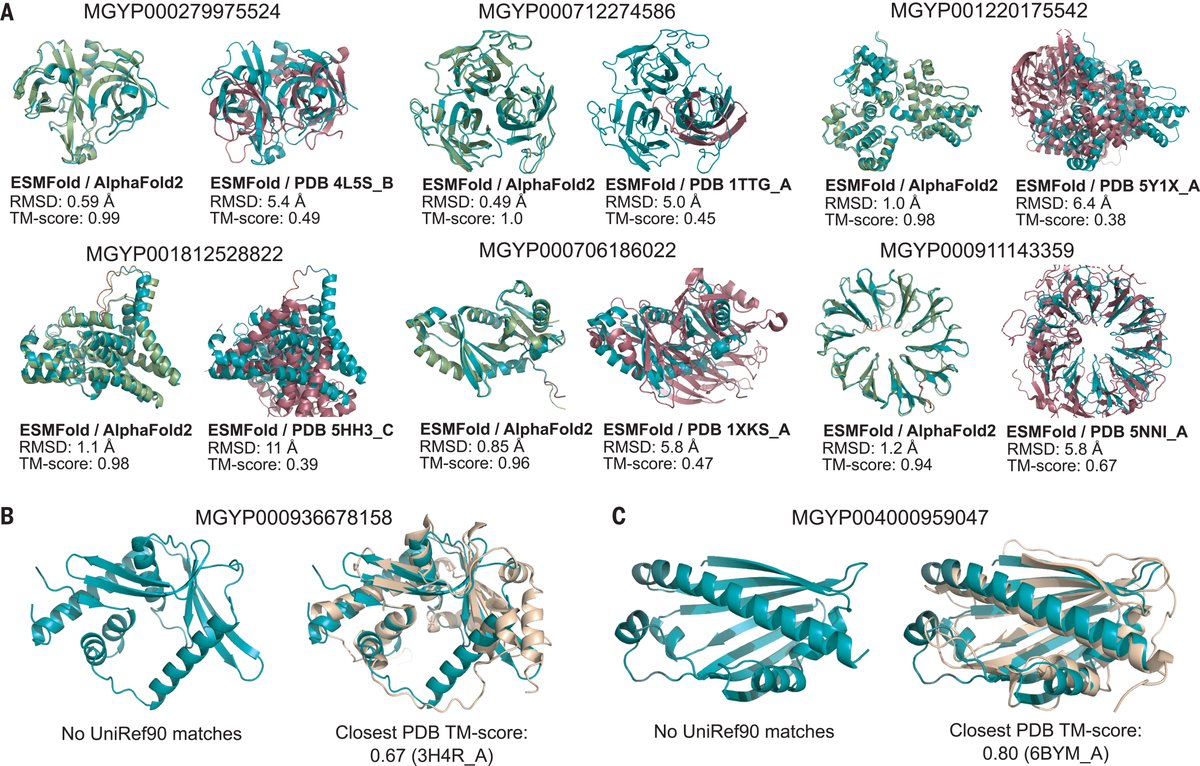
In a Science study, @MetaAI researchers show the power of a large language model, #ESMFold, to enable protein structure prediction and analysis.
Using ESMFold, they generated a database—the ESM Metagenomic Atlas—of over 600 million metagenomic proteins. https://t.co/jfOUtFy95a
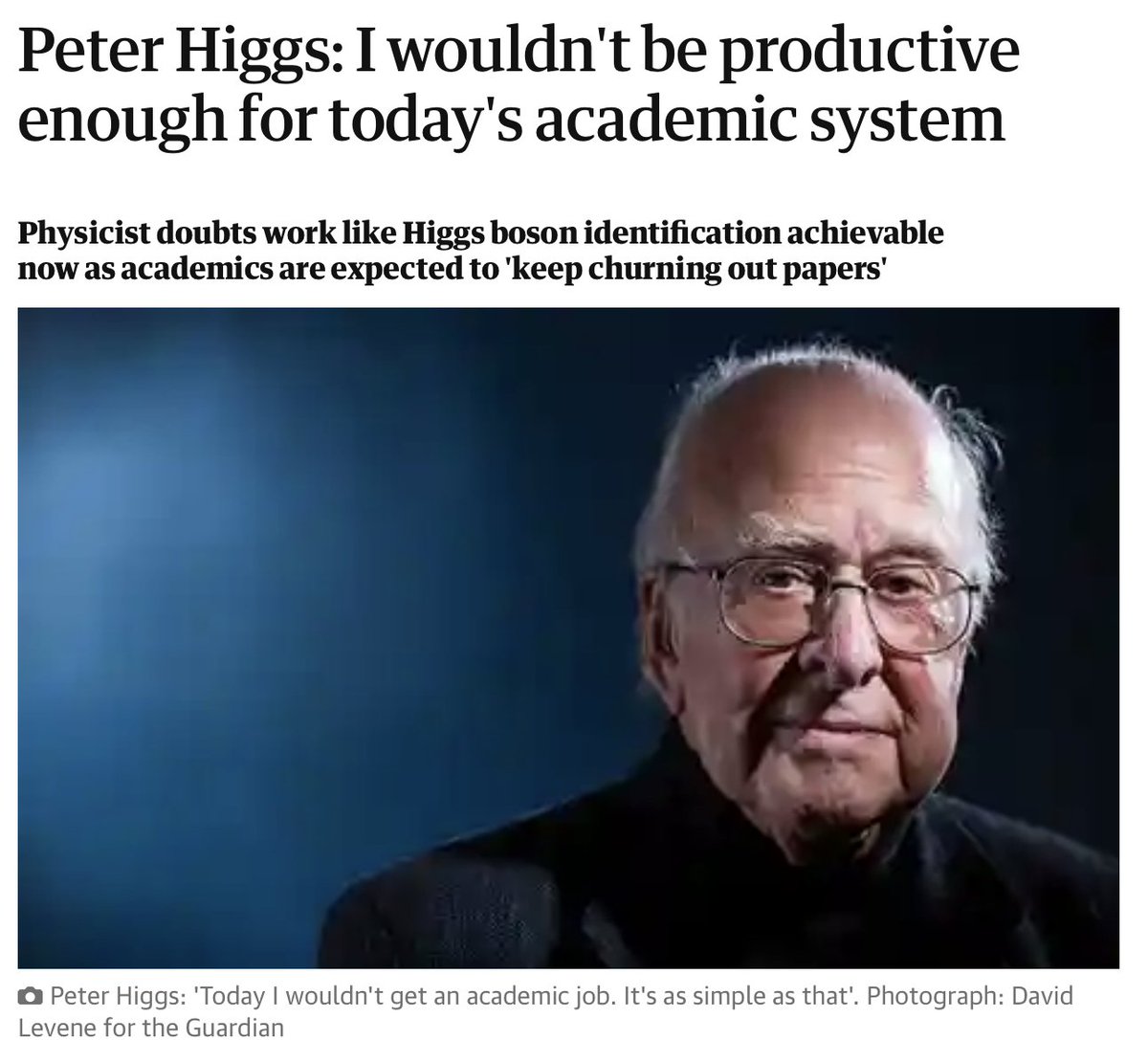
Peter Higgs believes he would be regarded as “unproductive" in today’s academic system. He simply wouldn’t be able to “survive” in #science.
On his way to Stockholm to receive a Nobel Prize in 2013, he said the following in an interview to Guardian:
#AcademicTwitter#phdlife
The artificial-intelligence chatbot #ChatGPT can write fake abstracts that scientists have trouble distinguishing from those written by humans. Increasing sophistication of chatbots could undermine research integrity and accuracy, researchers fear. https://t.co/X0ewctgxJq @Nature
Today's release sees the PDB archive pass the milestone of 200,000 structures - testament to the work of structural biologists around the world. The PDB passed 100k structures in 2014 - how have these structures changed since then? A thread 1/10
Interested in Supramolecular (Systems) Chemistry? Want to make functional chemical systems? Here is a three-year opportunity of working with us as a postdoc in these field.