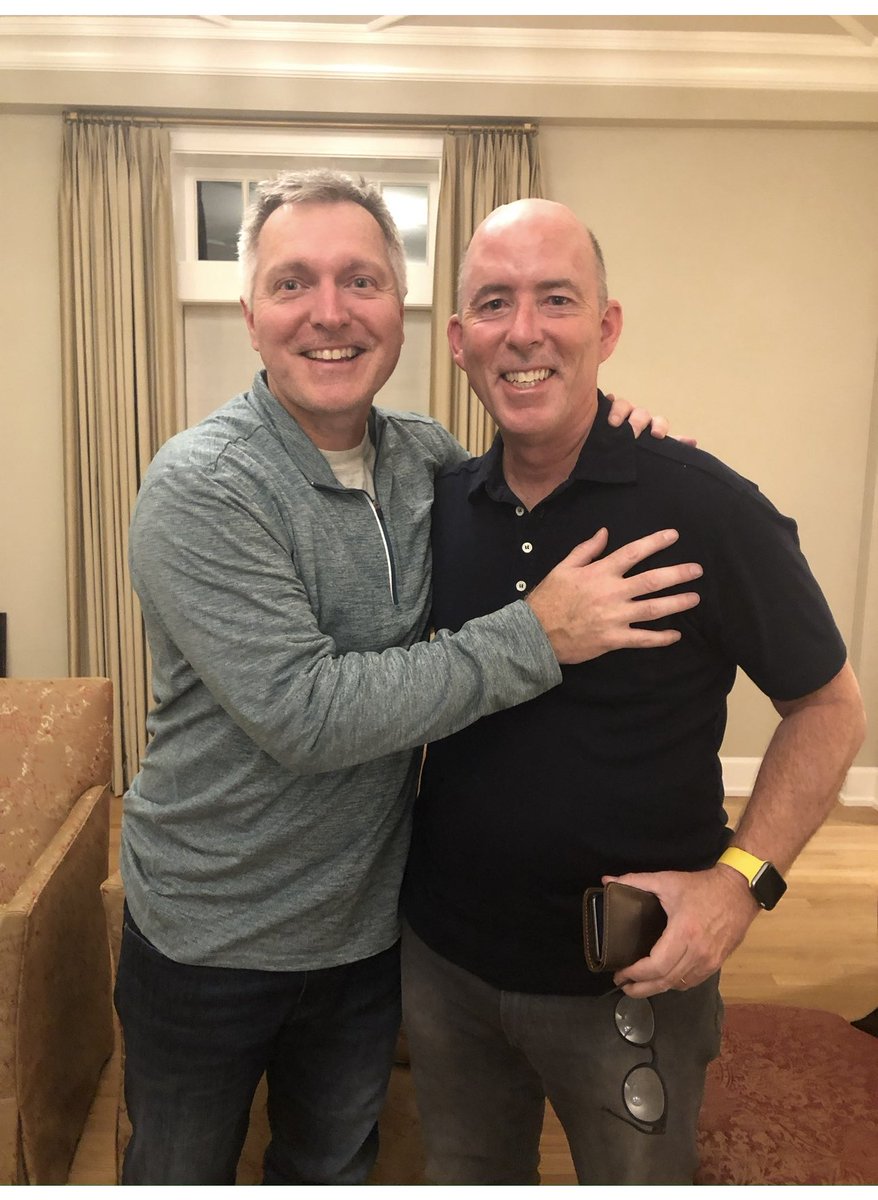
Today I mourn the loss of a great person and economist. Jim Andreoni has been a friend and mentor since the early 1990s. Jim was a Wisconsin kid through and through. Big heart, always friendly and wise, and one of the most caring people you will ever meet.
Professionally, Jim inspired us all across areas as diverse as charitable giving and GARP. At one point I was introducing Jim for a keynote and I simply pulled out my most recent working paper and showed the first page of the references. It was all Andreoni references. There was no more to say. We lost an intellectual giant today but more importantly we lost a great human being.
Jim, we will miss you deeply my friend.
Jim was my advisor in graduate school. I came in with a notebook of completely insane ideas, and he sat there patiently week after week helping me turn at least some of them into actual economics.
I learned so much from him intellectually. But even more so, I learned from him how to teach, how to be mentor, how to sit there, week after week listening to crazy ideas and getting excited about them along with the students. I've missed him since leaving graduate school, and I will miss him even more now that I can't see him again.
Thank you Jim, for all you've done for me, and for all the others you've touched with your brilliance and kindness.
This is one of the most important pieces of social science on human and AI interaction that I’ve seen in some time. Experts follow agentic advice the vast majority of the time (causally), but only a tiny fraction credit the agent—majority think they came to decision on their own volition.
Reminds me of the classic Nisbett and Wilson study on people following outside influence without realizing it
“ But as more work is handed to AI—including AI safety research—these judgment calls are the main levers for people's own values to influence outcomes.
If people defer to AI without noticing, then "human in the loop" might provide less assurance than people expect.”
The shared repository for discussing the ETH refutation (https://t.co/3P5XZnIn6D) contains a folder labeled Anthropic which contains what looks like a different proof of the same result.
Is there an announcement somewhere?
@WelfareEconomic join us today, 12pm EDT/ 5pm Paris, for Nicola Lacetera on: “Trading Off Openness: Economic Information and Immigration Policy Preferences”
Email us for the zoom link!
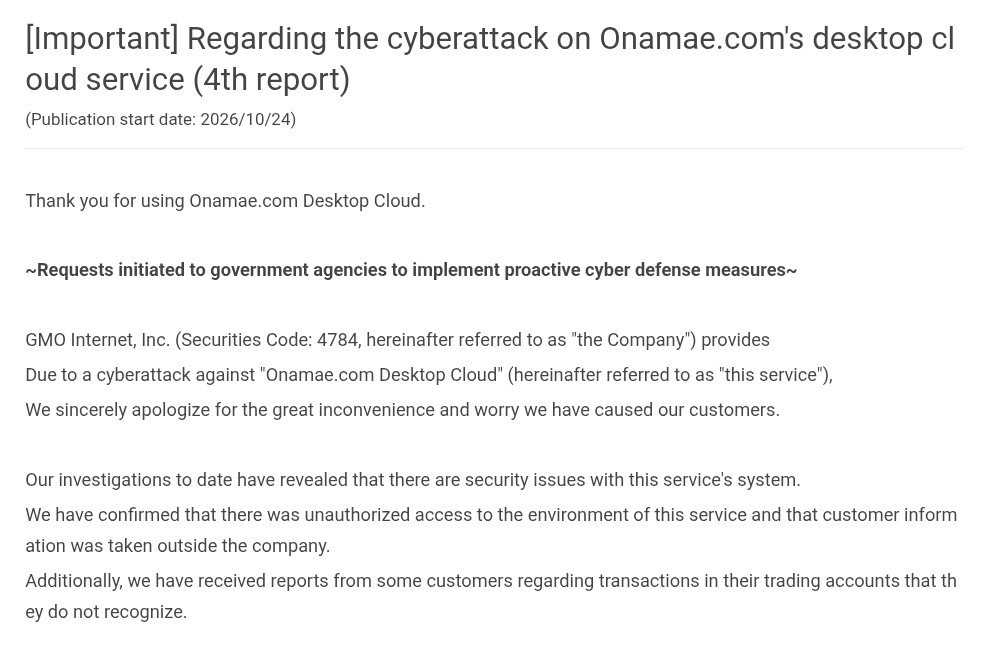
A cloud VPS service from Japan's massive GMO Internet Group used by foreign-exchange traders has been hacked. Attackers breached the servers, stole customer credentials, and executed balance-destroying trades across over 70 brokerages. GMO has asked government agencies for help.
This is a good question.
So labor economics circa 2026 reflects insights from institutionalist and heterodox ideas from 1950s, 1970s, 1980s that were neglected for many years in mainstream economics at the time.
This includes the ideas of wage contours, segmented labor markets, contested exchange. (Even as these terms may be unfamiliar to many labor economists today.)
Part of the empirical turn in labor economics is that we today are much more attuned to realistic aspects or wage setting, and can incorporate insights from a variety of sources that were ignored at the time.
I write about this in my book, The Wage Standard.
🔴 🗣Mobilisation du 17 octobre : la CFDT appelle à "une grande mobilisation des secteurs privés et publics sur les enjeux du pouvoir d'achat le 5 novembre", déclare Marylise Léon, secrétaire générale de la CFDT. #canal16
Read this book: even if you have doubts about the fascist vs anti-fascist perspective, you will enjoy the concrete proposals on affordability, dignity & democracy
If you are interested in applying economic policy research to better understand how different types of policy changes affect innovation, productivity, and economic growth, please consider applying to work with my research team at Dartmouth:
https://t.co/nHo9dJYkHV
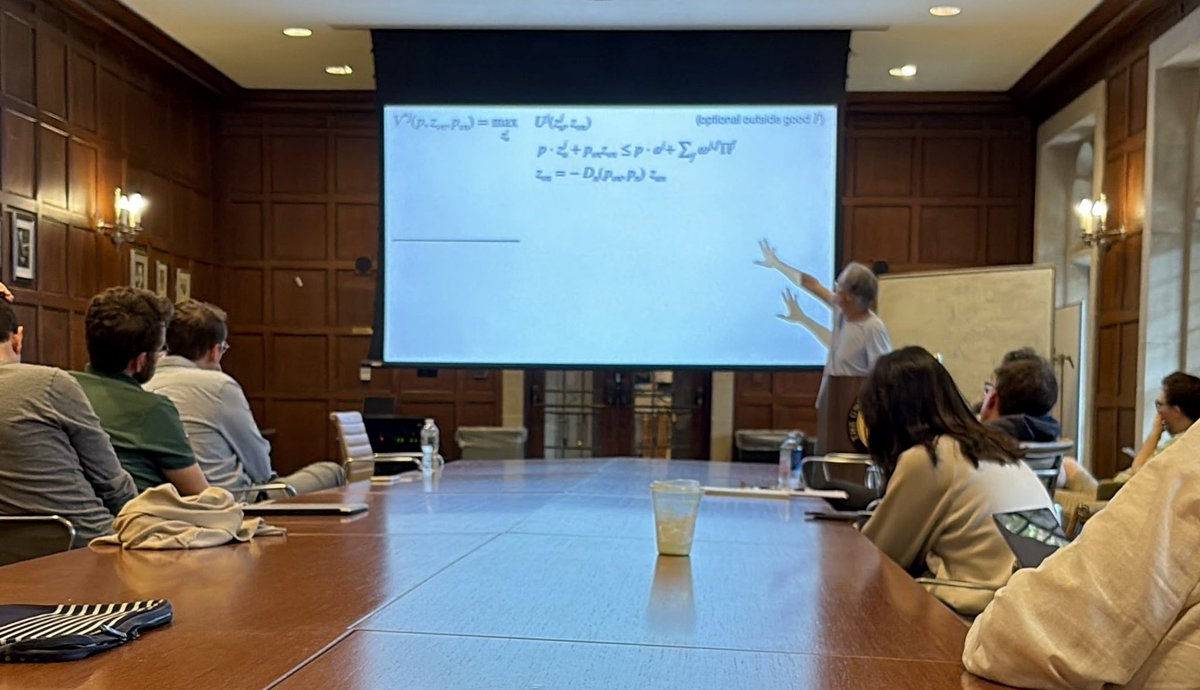
Had a great time back to back at the University of Chicago and Northwestern working on and presenting our Tâtonnement paper in two micro theory seminars. Not my typical venues. Fun and challenging.
An honor to have @IvanWerning at Northwestern theory presenting his important work with @guido_lorenzoni on tâtonnement, a topic unwisely left for dead
Shows that returning to fundamental and thorny questions can be highly rewarding!
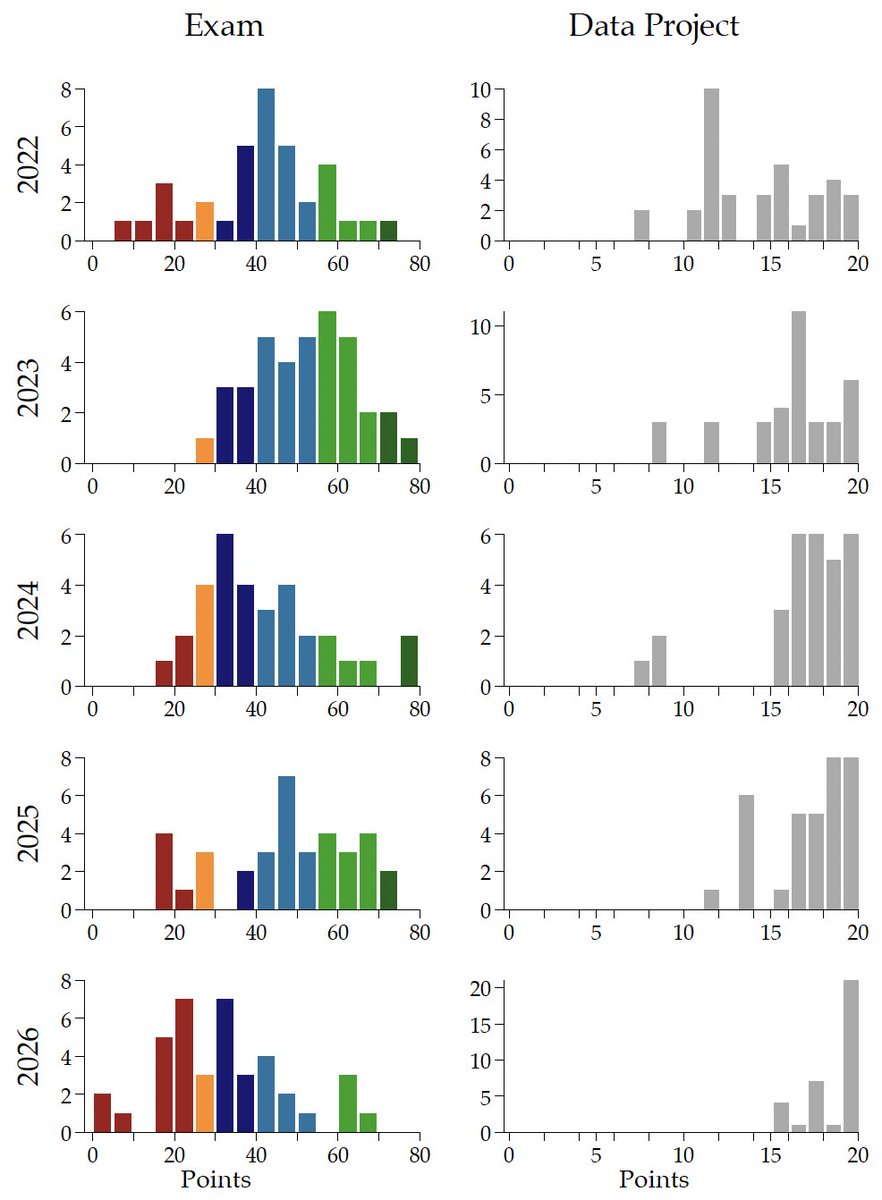
Data project (AI-able) and exam (paper, no aids) score distribution on the undergraduate Development Economics course I have been teaching at Stockholm University, 2022-2026.
.@Siqi_MIT and I have started a new Asia Urbanization initiative that I'm hoping my @usc will notice! Our 2028 book (under contract with Harvard Univ Press) is going to be quite good. @USCDornsife , @USC_Econ
https://t.co/EBe57wqCmd