SARS-CoV-2 infection can lead to long-lasting immune compromise. "The sustained subnormal lymphocytes—particularly in cardiovascular disease cohorts—[in study] highlight a key immunologic feature of LongCOVID and underscore the need for personalized care"
https://t.co/uuvdHrniET
The way we feel and the psychiatric symptoms some of us end up experiencing could emerge from the way energy flows, or fails to flow smoothly, in mitochondria.
The ATP model (Allostatic Triage in Psychopathology) by Parker Kelley @sequencemyneuro
https://t.co/MzVpB5suZH
SARS-CoV-2 delta and omicron variants alter trophoblast cell fusion and syncytiotrophoblast dynamics: new insights into placental vulnerability
‼️Excellent Swiss study demonstrating AGAIN why pregnant women need to be vaccinated and should mitigate!
➡️“These in vitro and in vivo results suggest that SARS-CoV-2 infection in early pregnancy may alter syncytiotrophoblast (STB) turnover, potentially contributing to placental dysfunction and adverse pregnancy outcomes.”
Damm it, ladies, are you going to put your embryo in danger?? Avoid SarsCoV2!!
https://t.co/aLpQQYdudS
For those interested in the impact of maternal #age on #oocyte quality, as measured in transcriptomic terms, there’s a new open access article in @MHR_ReprodSci.
Enjoy!
https://t.co/dHVlGVvC3h
“SARS-CoV-2 is linked to “an unusually high level of ‘indiscriminate’ killing of T cells,” says Leitner. This observation is “reminiscent of” measles, which can cause immune amnesia, leaving people vulnerable to pathogens they were previously immune to.” https://t.co/ZAiacVhRZY
Mitochondrial health is crucial for overall health. Several nutrient and non-nutrient compounds have evidence for supporting mitochondrial function and health. Of note, regarding their effects on mitochondrial health, it is typical that most research concerning this topic is conducted in rodent models or cell cultures. However, many (but not all) of these nutrients also have some level of clinical data suggesting that they support mitochondrial health in the appropriate doses, circumstances, and populations.
Doses, bioavailability, tissue distribution, population demographics, and circumstance (e.g., presence of disease), etc. would play primary roles in determining the type of effect, the magnitude of effect, and location of the effect (e.g., liver, brain, heart, skeletal muscle, etc.) that such nutrients would have on mitochondrial health
Würzburg and Berlin researchers studied 40 ME/CFS and 16 post-COVID patients and found their antibodies can enter endothelial cells, fragment mitochondria, shift energy use, and change immune signaling, suggesting a role in disease progression.
https://t.co/RfIL9iGbd5
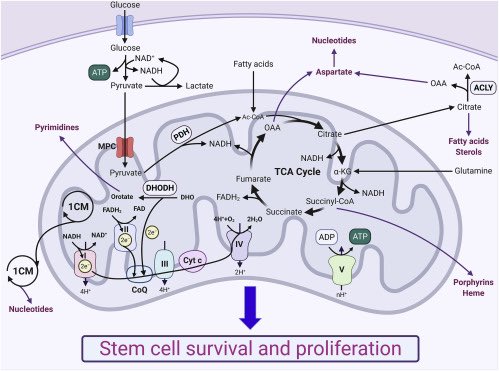
A key point is that alterations in mitochondrial function precede changes in transcription that are deterministic for stem cell fate.
Thus, mitochondria are signaling organelles, and this conceptually highlights mitochondrial metabolism as a key node in the control of stem cell fate and function.
This review provides a comprehensive summary of recent advances in understanding the mechanisms of aging-related mitochondrial dysfunction and its role in hindering skeletal muscle regeneration.
Barcelona study with 13 participants found that healthy lab-grown muscle exposed to ME/CFS or Long COVID blood quickly lost strength, briefly boosted metabolism, then entered mitochondrial and structural collapse with prolonged exposure.
https://t.co/P3RNKAP49l
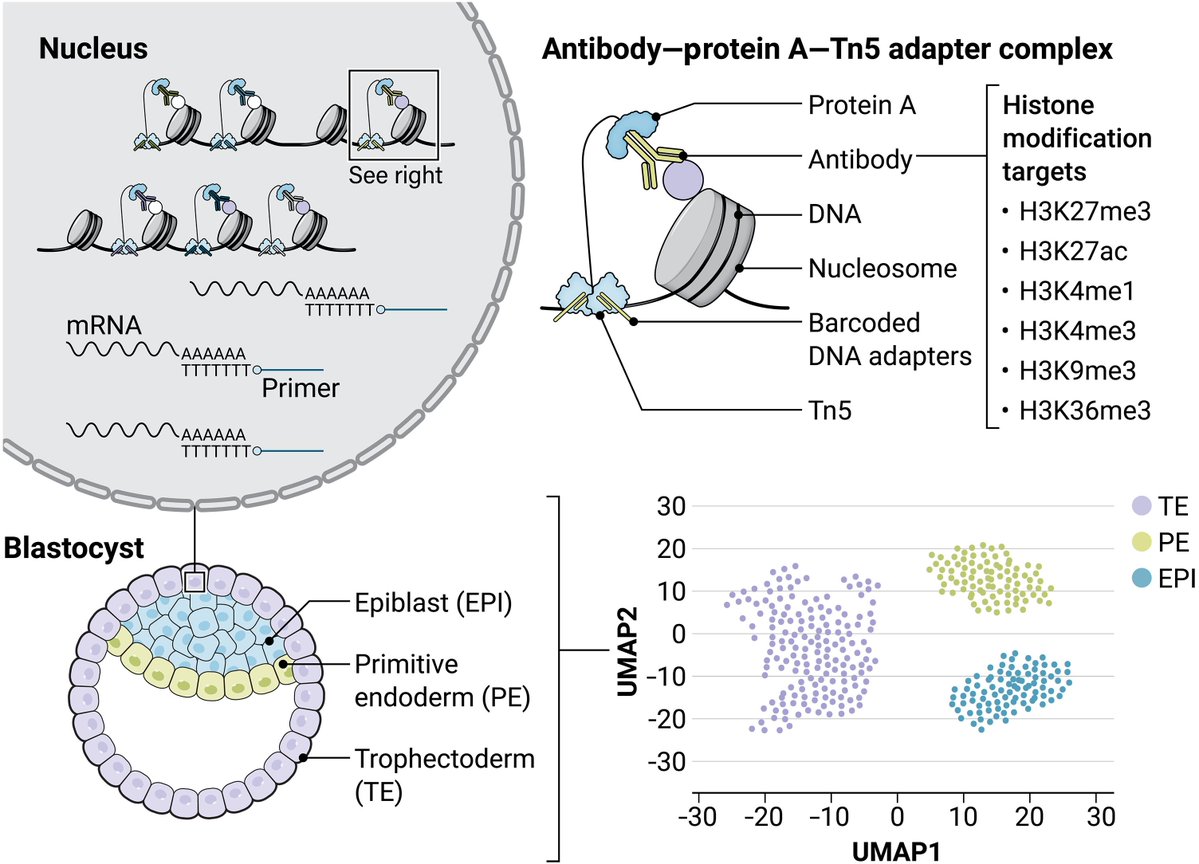
Single-cell multitargets and mRNA sequencing enable the simultaneous profiling of transcriptome and up to six histone modifications in individual cells @RuggGunnLab@ScienceAdvances
https://t.co/wpoUXLClye
https://t.co/xkOa8IQHzJ
preview by @haiqi_chen
Mechanotransduction in the nucleus
Multiple TFs transmit mechanical forces into transcriptional regulation.
Nuclear shape, size, and chromatin abnormalities are common features of many diseases.
Cognitive function [among other things] is influenced by the availability and metabolism of amino acids.
This graphic is meant to highlight the multifaceted roles of specific amino acids in neural pathways.
For instance, β-alanine stands as a neuromodulator with affinities for GABA and glycine receptors, intricately involved in synaptic responses. L-arginine, a precursor for nitric oxide, plays a pivotal role in synaptic plasticity by regulating neurotransmitters like glutamate and dopamine.
L-histidine's metabolism to histamine underscores its impact on alertness and the sleep/wake cycle, while L-leucine's influence on hunger signaling and brain energy metabolism links metabolic states to cognitive functions. L-serine’s contribution to neurotransmission through the production of D-serine, a co-agonist of the NMDA receptor, demonstrates the direct involvement of amino acids in modulating synaptic plasticity. L-tryptophan's metabolism to serotonin and melatonin ties its dietary intake directly to mood and sleep regulation.
Again, cognitive function [among other things] is influenced by the availability and metabolism of amino acids. This underscores the necessity of a well-rounded diet for maintaining vital cognitive functions. The sources of these amino acids – ranging from meats to dairy, legumes, and nuts – provide a roadmap for dietary strategies aimed at enhancing cognitive function and mental health.












![WilliamWallace's tweet photo. Cognitive function [among other things] is influenced by the availability and metabolism of amino acids.
This graphic is meant to highlight the multifaceted roles of specific amino acids in neural pathways.
For instance, β-alanine stands as a neuromodulator with affinities for GABA and glycine receptors, intricately involved in synaptic responses. L-arginine, a precursor for nitric oxide, plays a pivotal role in synaptic plasticity by regulating neurotransmitters like glutamate and dopamine.
L-histidine's metabolism to histamine underscores its impact on alertness and the sleep/wake cycle, while L-leucine's influence on hunger signaling and brain energy metabolism links metabolic states to cognitive functions. L-serine’s contribution to neurotransmission through the production of D-serine, a co-agonist of the NMDA receptor, demonstrates the direct involvement of amino acids in modulating synaptic plasticity. L-tryptophan's metabolism to serotonin and melatonin ties its dietary intake directly to mood and sleep regulation.
Again, cognitive function [among other things] is influenced by the availability and metabolism of amino acids. This underscores the necessity of a well-rounded diet for maintaining vital cognitive functions. The sources of these amino acids – ranging from meats to dairy, legumes, and nuts – provide a roadmap for dietary strategies aimed at enhancing cognitive function and mental health.](https://pbs.twimg.com/media/GxLnE6ZWMAAopo4.jpg)


