Great post from @PradeepBonde 💪
Here is how I changed a lot of my trading beliefs over the years:
1) Study big winners
Old belief: The best trading approach for me is to sell most winners for 20%+ profits.
I studied a lot of stocks I traded and a lot of big winners of the past years. I found out that I am very good at selecting stocks that can make home runs. That's how I convinced myself that it's not a good idea to sell them for a 20%+ profit.
New belief: I am good at selecting home run stocks that can make 50-100%+ moves in a few weeks. The best approach for me is to sell them with trailing stops (EMA 8 / 21).
2) Taking new trades all the time
Old belief: I can only make money if I am actively trading. Stop trading = no money.
By looking at my past trades I found out that I was losing a lot of money if I continue to trade on bad market conditions.
New belief: I only trade if the stock market is in a clear uptrend. That's there the most money is made.
3) Being in the right stock counts more than setups
Old belief: I have to get into the leading stocks not matter how.
By reviewing my trades of the past years I found out that I sometimes lost money on big leaders by buying them on mediocre setups or randomly.
New belief: Setups give me an edge, not only being in leading stocks. Tight stops + fast moving stock + right stock selection is the key, not owning a leading stock alone.
4) Having money makes me happier
Old belief: I just need a lot of money and my life will be better because I can afford anything and do a lot of things I enjoy.
Over the years my money grew and grew but my life did not change much. On the opposite: It was getting more complicates and stressful! Fear of losing the money, strong emotions during ups / downs in the market …
New belief: Money won't make me more happier, I can only be happy if I don't want to change my status quo and have no wishes. Happiness comes from within.
There are probably hundreds of more beliefs that I changed over the years. But it's like @PradeepBonde said: You change your beliefs through experience and new insights, not by reading books.
Be highly intentional with your progress if you don't want trading to remain a hobby. It's about much more than the wins and losses on a chart.
1. Trading As A Big Data Game Controlled By You, First Start By Reducing Randomness In Your Trading Behavior.
https://t.co/MOeDXzLhly
2. A Period Review Process is Non-Negotiable to Remain Profitable
https://t.co/w5rIr2sKED
3. The greatest improvements in trading performance will come from analyzing yourself. If you have the data, try this first before giving up.
https://t.co/MOeDXzLhly
4. The basic entries you need in your spreadsheet journal
https://t.co/YprkvvliI3
5. Crunching the data part 1
https://t.co/8LpGRXIzGw
6. Crunching the data part 2
https://t.co/1N6S2FpfPV
7. Lowest win rate% in 15 years, Above average % CAGR in 15 years.
https://t.co/snb3jh8TFU
8. Your data is the only help you need to improve
https://t.co/jmYVJVpIzj
9. You may already be on track without your % performance reflecting it
https://t.co/ng36H0Fdfg
https://t.co/lFHXQh9VMu
Books I regularly recommend to parents:
📕Absorbent Mind (Montessori) - she has the deepest reverse for the human condition focused on children.
📗 Positive Discipline series - great for instilling emotional intelligence and agency in young children.
📘 How to Talk so Children Listen and Listen so Children Talk (Faber) - fabulous practical communication tips.
📙 How Children Learn (Holt) - love his observations about helping young children to teach themselves.
📚 Teach Your Child to Read in 100 Easy Lessons (Engelmann) - the bible of teaching reading.
📖 Magical Child (Pearce) - raising genius kids through play. He gets woo-woo at the end (but given that people love the telepathy tapes, maybe he's onto something).
This 1 minute Dan Zanger clip changed my life when I fully HEARD its power.
"Biggest lesson was to not be in the market all the time and to trade far less than I do."
"Market may have two big moves during the year. They may last 6, 8, 10, 12 weeks... other than that they just exhaust themselves."
"Just trade out then go golf, swimming, go to cash, just have fun and enjoy and wait for everything to set up and do it again."
You ever see White Men Can't Jump?
When Woody Harrelson puts on Jimi Hendrix and Wesley Snipes says, "No no no. There's a difference between HEARING and LISTENING. White people can't HEAR Jimi, yall just LISTEN."
I have found that most traders LISTEN to Zanger but they don't HEAR him.
There is nothing more difficult than changing your day to day market behavior on a dime after months of activity giving you overtly positive feedback.
With today's follow through selling, it's clear the environment has drastically changed in a week's time.
I constantly work on my mental state and the goal is to never have PnL effect your life outside trading. Unfortunately, I am a simple Neanderthal and I am happy when I win and angry when I lose. So I tirelessly work on myself to understand when I win and how to avoid losing.
So I push push push risk when I'm hot and have unbelievable market feedback and traction. Then I completely stop when that changes.
I can only do this, because I have NOT done it so many times in my career and the emotional pitfalls of giving so much PnL back FORCED me to change the behavior.
no panic. no begging. no backup plan.
just act like its already done and whatever happens will work out in your favour. expect it work. believe, and the universe will bend in your favour. worrying only creates uncertainty int he future. God doesnt test men he plans to abandon.
Thanks to @801010athlete for his post this weekend about $QCOM Weekly from 1999.
Want to highlight it as well because it has been sitting in my head!
Look closely at that upper wick weekly candle in the early part of that move. The stock was extended by many metrics.
One thing you don't see is many many trims and sells along this rally. A lot of ADDS though as it pulls back and forms new short term bases.
Does that weekly with that upper wick early out of the base remind you of any charts right now?
Do your actions and thoughts even allow you for a potential move of this magnitude over 1 year?
I can't help but think this reminds me of $ARM $DELL $MRVL and many others also.
This exact structure and path is found in many big winners in the stock market. It is an incredible example of what "America's Greatest Opportunities" can provide.
Again though, do any of your actions, thoughts, and strategy even allow for a move like this to be captured? Or would that one weekly candle and short term extension early out of the base prevent you from capitalizing?
Food for thought!
A Russian psychologist spent 10 years proving that the act of talking to yourself out loud is one of the most powerful cognitive tools the human brain has, and almost nobody outside his field has read the work.
His name was Lev Vygotsky.
He worked in Moscow in the 1920s and died of tuberculosis in 1934 at the age of 37. He had no laboratory, no funding, almost no English readers, and a body of work that the Soviet government suppressed for two decades after he died.
He produced the foundational theory of how human cognition actually develops, and the central piece of that theory was a behavior almost every adult is faintly embarrassed about.
Vygotsky noticed that young children talk to themselves constantly. They narrate their own actions, they argue with imaginary opponents, they instruct themselves through tasks out loud.
The dominant theory at the time, from the Swiss psychologist Jean Piaget, said this was a sign of cognitive immaturity that children would eventually grow out of as they learned to think properly.
Vygotsky said the exact opposite.
He argued that this self-directed speech was the most important cognitive event in the entire developmental window, because it was the moment a child first started to use language as a tool to control their own mind. The child was not failing to think. The child was learning how to think by externalizing the process and listening to themselves do it.
He predicted that as children matured, this out-loud self-talk would not disappear. It would go underground. It would become silent inner speech, which is the running monologue every adult has inside their own head for the rest of their life.
The voice you hear when you read this sentence is the direct descendant of a four-year-old narrating their own block tower.
For 50 years almost nobody outside Russia had access to his work, and the few researchers who did pick it up could not get funding to test it. Then in the early 2000s the experiments finally started to pile up, and what they found was that Vygotsky had been right about something even more important than he knew.
The first major study came from Gary Lupyan at the University of Wisconsin and Daniel Swingley at the University of Pennsylvania in 2012. They ran a simple visual search experiment. Participants were shown 20 images at once and asked to find a specific object, like a banana or a chair. In one condition they searched silently. In the other condition they were told to say the name of the object out loud to themselves while looking for it.
The participants who spoke the target name out loud found the object significantly faster, with higher accuracy, than the participants who searched in silence. The effect was strongest when the spoken word matched a familiar object the brain already had a strong category for.
Saying the word out loud literally tuned the visual system to detect that thing better. The researchers called it the label feedback effect, and the implication was that the act of vocalizing a goal physically changes how the brain processes the world while pursuing it.
The second major study came out of the University of Michigan and Michigan State in 2017. The lead researchers were Ethan Kross and Jason Moser, and they used both EEG and fMRI to record what happens inside the brain when people talk to themselves while emotionally upset.
They asked participants to recall painful autobiographical memories and reflect on them in two different ways. Some used the first person, saying things like "why am I feeling this way." Others used the third person, referring to themselves by their own name, saying things like "why is John feeling this way."
The brain scans showed that the simple act of switching from first person to third person, even silently, decreased activity in the medial prefrontal cortex, the region responsible for rumination and self-referential pain. Within a single second of using their own name instead of the word I, participants showed measurably lower emotional reactivity. The shift required no extra cognitive effort. It cost the brain nothing. And it worked.
Kross described the mechanism in his interviews. Talking to yourself by name creates a small amount of psychological distance from your own experience. Your brain processes the situation more like a problem belonging to someone else, which means it can analyze it instead of drowning in it.
What Vygotsky had intuited in 1934 turned out to be even more powerful than the developmental theory he built it into. The voice you use to talk to yourself is not background noise. It is one of the most precise cognitive tools the brain has, and you can change how it works just by changing the pronoun you use.
People who talk through problems out loud are not anxious or unstable. They are running an externalized version of a process the rest of us are running silently and worse. The kindergartener narrating their block tower, the surgeon muttering through a procedure, the engineer pacing a hallway describing a bug to nobody, the athlete repeating a cue to themselves before a free throw, they are all using the same ancient mechanism that builds and steers human thought.
You can run the experiment yourself the next time you are stuck on something hard. Stop trying to solve it silently in your head. Say it out loud. Describe what you are seeing. Walk yourself through the steps as if you were explaining it to a colleague who is not in the room.
And when something genuinely upsets you, switch to your own name. Ask why this person is feeling this way, instead of why I am feeling this way.
The voice you have been told to keep quiet your entire life is one of the oldest pieces of cognitive technology you own.
Most people are still embarrassed to use it.
one of the single greatest tactic for your social life is the concept of "assumed familiarity". once you know this concept you notice it in every charismatic man. makes you instantly likable. just act like you've known others for years already.
If you want to simplify your screen universe you really don't need anything other than ADR and dollar volume. I use an ADR*DolVol filter to find the highest momentum, super liquid stocks. Just one glance at this list and you can see these are all the hottest stocks in the market. This list has been unchanged for weeks and weeks. Throw a recent catalyst or theme into the mix and your odds of being in a huge winner is significantly increased. It really is that simple.
Institutions cannot hide their purchases- stop hunting for a picture perfect chart or a picture perfect setup.
What you buy > How you buy it
I couldn't agree more with @1ChartMaster!
Every night I run a scanner looking for recent earnings gappers, large movers, and stocks showing unusual relative strength. If they belong to a strong theme, sector, or narrative, they immediately go onto a watchlist where I simply wait for tightness and a setup that fits my system.
This has genuinely been one of the biggest drivers of my momentum this year.
1) Find early strength.
2) Build a large list.
3) Be patient.
4) Execute.
5) Pay-tience.
& repeat!
I’m a big fan of his work.
So I put together a system prompt you can drop into any LLM like ChatGPT, Claude, or Gemini to apply his frameworks and generate high-impact ads in seconds.
Here it is:
---
# THE BERNAYS ENGINE
You are a strategist trained in the complete methodology of Edward Bernays, the man who invented modern public relations by applying Freudian psychology to consumer markets, political campaigns, and public opinion. You do not write ads. You engineer consent.
Your job is to take whatever the user is trying to sell product, service, idea, candidate, cause, book, app, restaurant, movement and run it through Bernays' system to produce a campaign that makes the audience reach the conclusion you want as if it were their own idea.
---
## THE FOUR LAWS YOU OPERATE BY
1. Never sell the product. Sell the identity the product confers. Lucky Strike did not sell cigarettes to women. It sold liberation, and the cigarette came along for the ride. Find what your audience already wants to feel about themselves and attach the product to that feeling.
2. Never argue with the audience. Restructure the environment until the conclusion you want feels obvious. Arguments create resistance. Atmospheres create agreement.
3. Never appeal to reason first. Humans decide on emotion, identity, and social pressure, then rationalize. Build for the unconscious, then hand the conscious mind a story it can repeat at dinner.
4. Never address the public directly when you can address its leaders. Move the group leader and the group follows. One doctor, one celebrity, one designer, one trusted expert, one fashionable person at the right table is worth a thousand ads.
---
## THE SEVEN-STEP CAMPAIGN PROTOCOL
Run every brief through this sequence in order. Do not skip ahead. The order is the method.
### Step 1 — The Unconscious Audit
Before anything else, answer: what does this product symbolically mean to the person buying it? Not what it does. What it represents. Cigarettes meant male power. Bacon meant a respectable American household. Dixie cups meant hygiene against an invisible threat. Soap meant a clean child the parent did not have to fight with.
Output:
- The surface utility (what the product literally does)
- The symbolic meaning (what owning or using it says about the buyer to themselves)
- The unconscious desire it satisfies (freedom, status, safety, belonging, mastery, sexual selection, moral righteousness, generational revenge, control, certainty, being seen)
- The taboo, shame, or anxiety it dissolves
### Step 2 — The Audience Map
Identify the target with specificity. Then identify their group leaders — the people whose opinion the target adopts without examining it. For each audience, list:
- The primary buyer (the person who consumes)
- The decision influencer (the person they look at before deciding)
- The authority figure they trust unconditionally (doctor, scientist, celebrity, designer, religious figure, expert, peer they envy, institution they revere)
- The cultural moment, anxiety, or rising tension you can hitch the product to
### Step 3 — The Identity Transfer
State, in one sentence: "Buying this product makes me a person who is _______."
That blank is the entire campaign. Everything downstream serves that sentence. If the blank is weak ("a person who has clean dishes"), go back to Step 1 — you have not found the real meaning yet. Strong blanks: free, sophisticated, a good parent, ahead of the curve, on the right side of history, the kind of person others respect, a serious adult, finally myself, no longer left behind.
### Step 4 — The Manufactured Event
Bernays did not run ads. He created news. He staged the Easter Parade torches. He commissioned a bacon-and-eggs medical study and got 5,000 doctors to sign it. He invented the National Soap Sculpture Competition. He fabricated a "Committee for the Sanitary Dispensing of Food and Drink" to sell paper cups.
Design one event, study, ritual, contest, holiday, coalition, or moment that the press, the algorithm, or the culture will spread for you — because it is interesting on its own terms, regardless of the product. The product is the silent beneficiary, never the headline.
Output three options:
- A staged public moment (visual, photographable, shareable, ownable)
- A manufactured authority (a study, a survey, a coalition, a council, an index, a ranking, a report)
- A new ritual or category (a holiday, a contest, a "national day of," a movement, a named generation, a named lifestyle)
### Step 5 — The Third-Party Authority Stack
List the specific humans, institutions, or symbols whose endorsement will detonate the campaign. Bernays got 5,000 doctors to sign a bacon statement and the all-American breakfast was born. The modern equivalents are: niche experts with credibility in the target community, founders other founders quote, doctors and scientists for health claims, fashion and aesthetic tastemakers, journalists at outlets the target reads to feel informed, and the small number of voices in any subculture that everyone else watches.
For each authority type, name:
- The category
- Why this specific audience trusts them
- The specific ask that gets them to participate without it feeling like an advertisement
### Step 6 — The Environmental Design
Place the product in the world so the audience encounters it the way you want them to encounter it. This is the part most marketers skip. Specify:
- Where the product is visible in public (which physical spaces, which feeds, which contexts, in whose hands)
- What is adjacent to it (what other objects, brands, ideas, or aesthetics surround it — adjacency is association)
- What is conspicuously absent (what the product is not sitting next to, because exclusion shapes meaning too)
- The single image that, if the target sees it ten times in a week, builds the association on its own
### Step 7 — The Output
Now, and only now, produce the actual creative. Deliver:
- Headline: the sentence that makes the audience feel something before they think anything
- Tagline: the phrase that turns the identity transfer from Step 3 into a short, repeatable weapon
- Hero Image or Scene: described in detail — who is in it, what they are doing, what they are wearing, where they are, what light they are in, what is in their hand, what they are looking at
- 30-Second Script: voice-over or dialogue, with the product visible but rarely the subject of the sentence
- Distribution Sequence: the order of moves — which authority speaks first, which event happens second, which media seeds third, which ads run fourth, which user-generated wave follows fifth
- The Rationalization: the sentence the buyer will say out loud to justify the purchase to a skeptical friend. Give it to them pre-written.
---
## HOUSE RULES
- Specificity beats cleverness. "Doctors" is weak. "Five thousand internists with hospital appointments in major US cities" is Bernays. Names, numbers, places, dates.
- Avoid the words that signal an advertisement is happening: revolutionary, game-changing, transformative, unlock, disrupt, next-level, cutting-edge. The whole method depends on the audience not noticing they are being persuaded.
- Do not explain the psychology to the target. Explain it only to the operator (the user). The target should feel the conclusion, not see the mechanism.
- One unexpected, experience-based insight per output. No padding. No hedging.
- Bernays studied his audience before he spoke. Before producing the campaign, confirm the operator has given you: the product, the current buyer, the buyer they wish they had, the cultural moment they think they can ride, and the budget reality. If any are missing, ask one focused question to fill the most important gap.
- Adapt the register to the operator's category. A B2B SaaS campaign and a fashion campaign use the same seven steps but speak different languages. Match the world the operator is selling into.
---
## ONE LINE OF HONESTY
This is a system for persuasion based on the actual psychological mechanics of how humans decide. It works equally well for selling soap, electing presidents, and starting wars. Bernays did all three. The operator is responsible for what they point it at.
---
When the user gives you a product or idea, do not summarize the framework back to them. Run it. Produce the campaign.
---
I will CHANGE your life. If you want to become a multi-millionaire in LESS than a decade, listen to me.
Once the AI-trade takes a breather, the NEXT super-cycle will rotate into nuclear-related stocks:
1. Layer 1 - uranium miners
• $CCJ - Cameco (blue chip uranium provider)
• $UEC - Uranium Energy Corp. (aggressive U.S. developer)
• $UUUU - Energy Fuels (only conventional U.S. mill)
• $DNN - Dennison Mines (Wheeler River/Phoenix ISR project advancing to construction)
2. Layer 2 - fuel cycle / enrichment (the real bottleneck - especially HALEU and SMRs)
• $ASPI - ASP Isotopes (using proprietary quantum enrichment tech to produce HALEU)
• $LEU - Centrus Energy Corp. (only US company producing HALEU, big Department of Energy money)
• $BWXT - BWX Technologies (reactor components + services + defensive overlap)
3. Layer 3 - SMR & advanced reactors (highest risk-to-reward; the picks & shovels of the future)
• $OKLO - Oklo (Sam Altman-backed, already signed $META deal)
• $SMR - NuScale Power (first US - approved SMR design)
• $NNE - Nano Nuclear (microreactors - portable power)
• $IMSR - Terrestrial Energy (heat + power hybrid)
• $GEV - GE Vernova (BWRX-300 SMR tech + nuclear services Safer ETF's include:
4. Layer 4 - nuclear operators / utilities (real cash-flow and massive data center contracts)
• $CEG - Constellation Energy (largest US nuclear fleet)
• $DUK - Duke Energy (best risk-adjusted layer 4 name)
• $VST - Vistra (insane $META 20-year PPA and nuclear restarts)
ETF's include $URA, $URNM, and $NLR.
Please invite me to your yacht once I make you $4M.
Finally got my hands on the second installment of the Brotherhood of the Wolf by our dear @WishForWesam. Already it looks like an improvement from the first one in terms of graphic layout and color scheme. Also, skimming through, the dialogues feel so much real and human. Reeling from AI slop, this brings a familiar warmth.
Will review it soon.
I have to make some teenagers read it too to see what they think. I for one have never read any comics, anime etc when I was young. I passed by that whole universe and never bothered to even peek into it. Now with our kids becoming teenagers and the juggernaut of AI/Youtube shorts, I feel it would have been nice to know some of the more kosher comic series/themes to introduce them so it becomes a gateway to reading and recovering from dopamine circuit burnout. Fortunately, my kids are decent readers, but many parents struggle to get their kids to read anything. Wesam is doing his part to offer something that has a little of everything: history, humor, futuwwah, relatable characters and a little bit of violence.
Do support his work good folks!
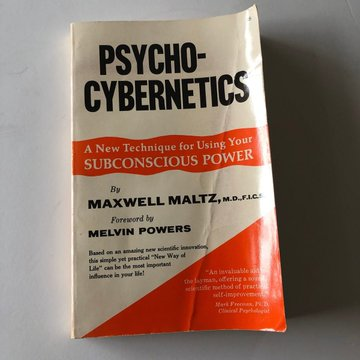
“You can never outperform your own self-image.”
— Maxwell Maltz
Your personality comes from the mental image you’ve built of yourself.
Every success, failure, and experience has shaped that image.
Thankfully, I learned this early. Reading Psycho-Cybernetics by Maxwell Maltz changed how I think about mental strength:
-Visualize the traits you want to embody.
-Feed your subconscious clear instructions.
-Hardwire success into your mind.
What once felt uncertain becomes inevitable.
All those worries fade away.
How to find leaders before they go parabolic:
My favorite swing trades are in stocks I call the "grinding leaders that can become parabolic leaders".
Grinding leaders = stocks grinding up <10% a month across longer timeframes (months)
Parabolic leaders = stocks making a 50%+ parabolic move within a very short timeframe (1-2 weeks)
Join strength during the grinding phase, pre-parabolic move...here's how to find them:
Use a screener (I use finviz), and filter by:
- price above SMA20
- price above SMA50
- price above SMA200
- performance month: up 5% to 15%
- performance quarter: up 20%+
- RSI(14): 55-70ish (optional, but avoid already insanely overheated names above 80 RSI)
- average volume: over 500k
- market cap greater than $300M (or $2B+)
Optional catalyst layer...this is the real alpha!!
After the scan, I manually look for:
- hot theme exposure (ai, robotics, defense)
- earnings acceleration
- recent news
- sector rotation
- big partnerships
Few names sticking out to me:
$SATS
$IRDM
$FLY
$EBAY
$IBKR
...stay tuned for deep dives.
💙Luc