The British army once sentenced Daniel Morgan to 500 lashes, a punishment that usually killed a man, for the crime of knocking out an officer who struck him. He survived every stroke. And he spent the rest of his life joking that the drummer had miscounted and only given him 499, so the British still owed him one. He collected that debt at a place called Cowpens.
Morgan was not born to anything. He was a rough, barely educated frontiersman who made his living hauling freight by wagon on the Virginia frontier, a big, powerful, hot-tempered young man. During the French and Indian War, serving as a civilian teamster with the British army, a British lieutenant struck him with the flat of a sword. Morgan answered with his fist and dropped the officer cold. For a colonial to strike a British officer was close to a capital offense, and the court-martial sentenced him to five hundred lashes with the cat-o'-nine-tails, a flogging meant to flay a man and very often to kill him.
They tied him up and laid it on, and Daniel Morgan did not die. He carried the ridged scars on his back for the rest of his life. But instead of breaking him, that brutal punishment forged something. It left him with a cold, permanent hatred of the British army and its contempt for colonial men like him, a hatred he would one day repay with interest. And it gave him his lifelong joke: the drummer lost count and stopped at 499, so the British, he liked to say, were still one lash short of paying him in full.
When the Revolution came, that uneducated wagoner turned out to be a natural soldier of rare gifts. He raised a company of frontier riflemen, crack shots who could kill at distances that terrified British regulars, and he led them north to Saratoga, where his marksmen helped shatter Burgoyne's army and win the turning-point victory of the war. Morgan had a feel for battle that trained European officers lacked, an instinct for ground, for timing, and above all for the men he led. He understood that his militia were not professional soldiers and could not be asked to do what professionals did, so instead of cursing them for it, he built his tactics around what they could do.
That genius reached its peak at the Battle of Cowpens in January 1781, one of the most perfectly fought battles in American history. Facing the dreaded Banastre Tarleton, Morgan set a trap built entirely on human nature. He put his unreliable militia in the front line and asked them only for two volleys, then permission to fall back, which they gladly did. Tarleton's British, seeing the Americans retreat, charged forward in a confident rush straight into Morgan's real line of hardened Continentals, and then Morgan sprang the jaws, hitting the British on both flanks at once in a double envelopment while his cavalry rode down their rear. In minutes Tarleton's command was destroyed, hundreds killed and captured, one of the most crushing and complete victories of the war, and Tarleton himself barely escaped. It was the frontier wagoner out-generaling the darlings of the British army.
So the debt was paid. The boy they tried to flog to death grew up to be the man who methodically dismantled the British in the field, who understood soldiers because he had been treated like dirt as one, and who turned the hard lessons of his own back into some of the finest tactics the Revolution ever saw. Remember Daniel Morgan. The British gave him 499 lashes and made an enemy who never forgot, and he collected the last one at Cowpens, with interest.
@StefanMolyneux God made us male and female, and we will be resurrected as males and females.
He also made us unified in body and soul. They are only separable now after the fall because that is what defines death. We will be resurrected as unified beings in both body and soul.
@derekradney All right, I know that’s probably not what you want to happen. It’s just my observation and opinion. I will look into your other posts on the subject.
@derekradney It seems to me that nondenominational churches serve the function of attracting new believers pretty well, and those who grow to require meat will move on to the PCA. I think it would require watering down worship to attract nonbelievers and new Christians.
Out: Nephilim
In: Anāwīm¹
¹ Impossible to translate: Those punished with cognition. The princess and the pea. Those who sacrifice the now and are therefore alien to it. Those who appear inexplicably passive but are valuating the future over the present. He who sacrifices himself by means of awareness. An intergenerational man who alone steers the next seven generations. Numbers 12:3. Why Christ died. What meekness means, why it inherets the earth. The remnant. The elect. The good shepherd.
@aunty_semitism@rLaur59115@realmikolson Sorry that’s all you have to say. We all need God’s grace to understand and believe, which is the work of the Holy Spirit. These passages make more sense when we realize that any good in us is the work of God.
@aunty_semitism@rLaur59115@realmikolson There is also the parable of the sower. Only those that are planted on fertile ground will persevere. We rely on God’s grace, which is the fertile ground. Pray for God’s grace each day so that you can persevere to the end. He will supply every need. It is our daily bread.
@aunty_semitism@rLaur59115@realmikolson I think Paul is recalling the Hebrew prophetic perfect tense there (even though he is writing in Greek). It is an outcome that is so sure that it is considered already done. Jesus is our peace, and we already have Him. He already lived the perfect life in my place.
@aunty_semitism@rLaur59115@realmikolson I’m using “hope” as Jesus does throughout the gospel of Luke. Are you resting your hopes on worldly things or on heavenly things? For example, the parable of the rich fool in Luke 12. Consider Hebrews 1:1 also: Faith is the assurance of what we hope for…
There’s so much money in AI because it’s the anti-reindustrialization play. The money isn’t just a bet on AI, it’s a bet on being able to avoid the painful economic reforms needed to reindustrialize for another couple of decades.
Simon has been found dead, reportedly from "suicide." RIP to Simon and to all whistleblowers who have died too young.
The truth about Lutnick will never die
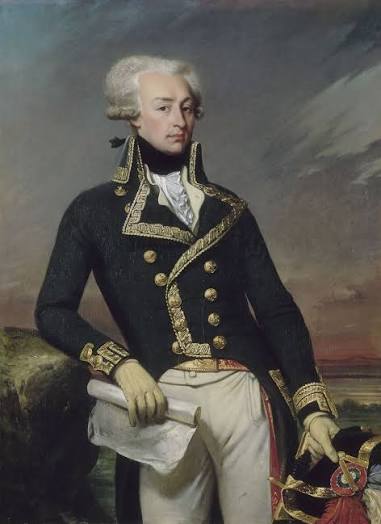
When Lafayette was buried in Paris, his son covered the coffin with American dirt carried from Bunker Hill.
He had wanted even more than that. On his farewell tour of America in 1824, Lafayette collected earth from every state he visited, planning to be buried in all of it.
But the steamboat carrying it sank in the Ohio River, so he gathered soil from Bunker Hill instead and brought it safely home to France.
He died in Paris in 1834. His son spread the American dirt over his grave exactly as he had wished.
That son's name was Georges Washington de Lafayette.
Decades earlier, while Lafayette sat in a foreign prison during the French Revolution, George Washington had taken in the boy and kept him safe in America.
An American flag flies over his grave to this day. It never came down, not even when the Nazis held Paris.
No one from another nation ever belonged to America the way Lafayette did.
@Xiaojie_Lovuh This is the problem in Voltaire’s Candide. There is nothing new under the sun, but what will you do about it? It’s not good to remain cynical. “We must cultivate our garden.” Make sure your tools are sharp before starting. “Return, O Lord…Establish the work of our hands!”