I spent 2 hours of my Saturday reviewing hundreds of charts. These are the setups that stood out and what you should focus on this week.
Software is starting to wake up. Semiconductors are taking a breather. The next rotation may already be underway.
$MSFT finally broke out.
$NBIS is setting up near a key trigger.
$PANW $CRWD earnings could be one of the most important software reports of the week.
Here’s the watchlist and recording:
$SPX: Strong week overall. Thursday breakout above 7517 held. Friday was indecisive. Above 7600 opens continuation. Failure there could mean a pullback toward 7550–7500.
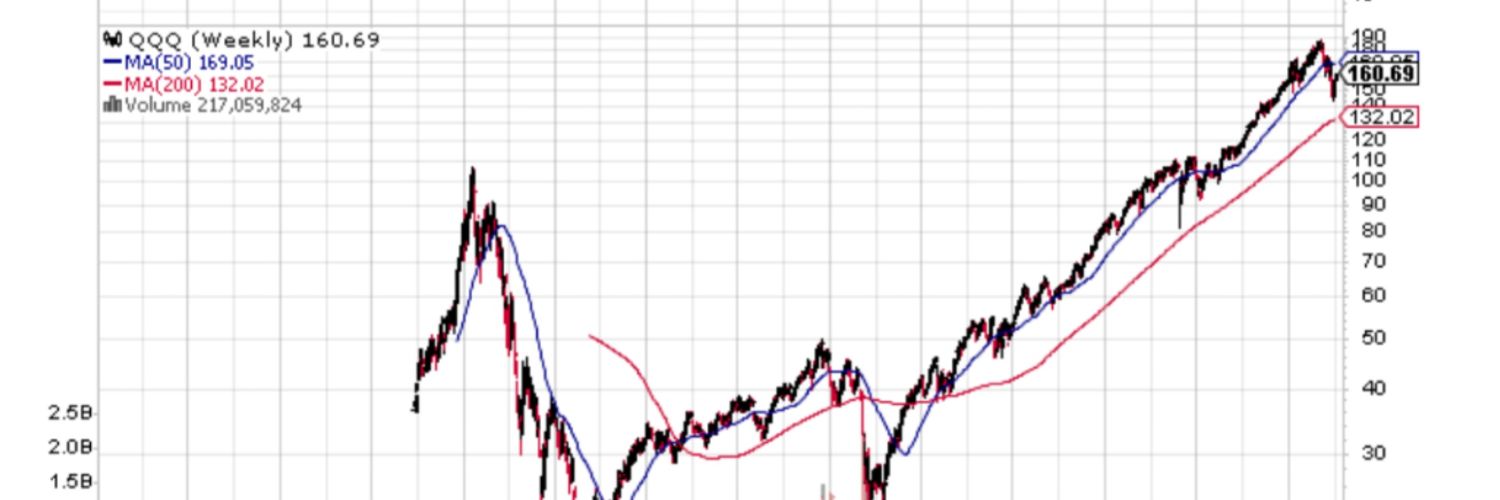
$QQQ: Similar setup to SPX. Still leading higher but extended from the 9-day. Above Friday highs keeps momentum intact.
$IWM: Still trapped in a range between 287 and 293. Less clear than SPX and QQQ. Watching for either a breakout or rotation into small caps.
$BTC: No trade for now. All major moving averages remain stacked bearishly. Needs reclaim of the 200-day around 80k.
$SMH: Momentum has slowed. Four straight days of consolidation. Software may be attracting capital away from semis short term.
$IGV: One of the most important charts right now. Closed above the 200-day for the first time since January. Holding 100 would be very bullish.
$AAPL: Continues to surprise. Every dip gets bought. 310 remains the key level. Below that opens a test of the 9-day around 306.
$MSFT: One of the strongest setups on the board. Broke above 433 and 442. Looking for continuation toward the 200-day near 458 and eventually gap-fill toward 480.
$NVDA: Ugly close Friday. Failed reclaim of the 9-day. Better opportunities elsewhere for now. Watching 200 below.
$GOOGL: Weak close. Could test the earnings gap near 365. Hands off until strength returns above 385.
$AMZN: Failed breakout attempt. Still above key moving averages. Above 275 opens ATHs and potentially 300.
$TSLA: Building a range. 450–453 is the key breakout area. Above that could trigger a move toward prior highs.
$META: Friday was a healthy backtest of the breakout. Above 633 then 645 opens gap-fill potential higher.
$AMD: Strong but consolidating. Range here would be healthy after the recent move.
$AVGO: Earnings next week. Looking constructive. Above 500 becomes interesting.
$SMCI: Strong sympathy move from $DELL earnings. Watching to see if momentum can continue.
$QCOM: Failed breakout Friday. Give it time. Watching for renewed strength early in the month.
$ARM: One of the strongest semis. Above 356 keeps the trend intact.
$INTC: Failed multiple breakout attempts at 125. Consolidation remains constructive.
$MU: Strong finish Friday. Holding 960 and reclaiming 980 could open the path toward 1000.
$SNDK: Constructive close. Watching 1700 closely.
$DELL: Huge earnings move. Now trading inside an earnings range. Break above 430 opens more upside.
$NOW: Continues to show strong relative strength. Above 126 could open 150.
$IBM: Strong breakout. Watching above 300.
$ORCL: Massive momentum shift. Broke the 200-day and exploded higher. One of the stronger enterprise software names right now.
$PLTR: Improving. Watching for reclaim and hold above the 200-day.
$IREN: Large flag pattern. Above 76–77 could trigger a move toward highs.
$ZS: Ugly earnings reaction but trying to recover.
$CRWD: Earnings this week. Strong run into the report.
$NBIS: One of my favorite setups. Above 233–234 could trigger a significant move.
$PANW: Earnings this week. Looking extremely strong.
$NET: Recovering sharply after a terrible earnings reaction. Short covering continues.
$RDDT: Looking better. Momentum name worth watching.
$DDOG: One of the strongest software charts. Earnings gap never filled. Trend remains intact.
$FSLR: Solar leadership continues. Above 260 could open 300.
$ENPH: Vertical momentum. Watching for continuation.
$LITE: Still under pressure. Needs time.
$AXTI: Similar to LITE. Momentum has cooled.
Overall theme:
Software is showing the strongest improvement in relative strength.
Semiconductors are consolidating after a huge run.
Individual names continue to offer better opportunities than the indices.
$MSFT, $NBIS, $PANW, $ORCL, and $NET are some of my favorite charts going into next week.
@ChampRDS@grok what’s a natural herbal or supplement based way to achieve something similar, doesn’t have to be as perfect. Zeolites or other chelations?
In 1798, a scientist effectively “weighed” the Earth — without leaving his laboratory.
The English scientist Henry Cavendish designed an incredibly sensitive experiment.
Inside a quiet wooden shed, he hung a horizontal rod from a very thin wire. Two small lead spheres were attached to the ends of the rod.
Nearby, he placed two much larger lead balls.
Because of gravity, the large spheres slightly pulled the smaller ones. The force was extremely tiny — so small that the rod twisted by only a minute fraction of a degree.
Yet that tiny twist held a big secret.
By carefully measuring this small movement, Cavendish determined the strength of the gravitational attraction between objects.
From this, scientists could calculate the mass of the entire Earth.
His estimate was remarkably close.
Cavendish calculated Earth’s mass to be about 6 × 10²⁴ kilograms, while modern measurements give 5.97 × 10²⁴ kilograms.
Sometimes the biggest discoveries come from measuring the smallest forces.
Demis Hassabis’s “Einstein test” for defining AGI:
Train a model on all human knowledge but cut it off at 1911, then see if it can independently discover general relativity (as Einstein did by 1915);
if yes, it’s AGI.
New podcast on AI (full episode). Links below.
A Motorcycle for the Mind
0:00 If you want to learn, do
2:13 Vibe coding is the new product management
6:49 Training models is the new coding
10:13 Is traditional software engineering dead?
13:07 There is no demand for average
14:12 The hottest new programming language is English
18:36 AI is adapting to us faster than we are adapting to it
22:56 No entrepreneur is worried about AI taking their job
26:46 The goal is not to have a job
29:49 AIs are not alive
32:55 AI fails the only true test of intelligence
36:49 Early adopters of AI have an enormous edge
39:37 AI meets you exactly where you are
43:02 Always leverage the best intelligence
44:37 If you can't define it, you can't program it
49:37 The solution to AI anxiety is action
🚨 I just learned about a concept, I can't stop thinking about.
The Four Burner Theory.
It destroyed Elon Musk's first marriage.
It explains why Bezos is jacked but divorced.
And why Zuckerberg has no real friends.
Once you understand it, your life will never be same:🧵
WARNING
Massive AI hype being built in a sudden burst
(and most of it fake)
1) A scary article: I was surprised to read a long article on Twitter (X) claiming it's just 6-12 months before a Covid-like event changes this world. It claims this will be the AI-event, where most white-collar jobs worldwide would be gone, because AI is that good now. That article got 100 M plus views. Clearly, people are spooked (naturally). So the psy-op has worked.
(and I saw other similar dark articles too)
2) Suddenly many influencers are pushing the same narrative, and it so turns out that media reported many are being paid heavy sums by AI firms to push their story (that AI singularity is arriving). But if AI is "revolutionary", does it need an influencer push? No. This should be a clear signal it's hyped.
3) A correction in IT stocks' and SaaS stock's prices is suddenly creating a doom scenario about these companies dying any moment now, with second- and third-order effects on entire economy. Stock investors who haven't studied AI technicals are automatically assuming it's all over, dead, gone, finished. WRONG. NO.
4) What is the truth, and what's most likely to happen?
In my opinion, based on years of observing AI trends, reading and learning AI technology, and doing AI at various levels, my take is as follows. I urge you to read this, and preserve your sanity. Please don't panic, nothing catastrophic is happening anytime soon.
A) IPO pressure: AI firms are going crazy pushing their God-narrative, as many giant IPOs are lined up soon. They need public to buy their paid subscriptions or else the story goes kaput. So they are creating a false hype. It's shameful, anti-social and deeply hurtful.
(Almost all AI firms released doom-scenarios just before their next funding rounds; investors who haven't learnt technology fall for it; pure FOMO. This playbook is so repetitive it's comical)
B) OpenAI is spooked: Sam Altman has lost the lead he temporarily managed to build against Google and others, and now his loss-making enterprise isn't the darling of any investor any more. He's terrified.
C) Elon Musk's Grok does not have the traction in consumer space anyway near what's needed to make it a profit-making entity. So with many other capex-heavy AI firms. But the GPU / TPU hungry AI ops need more capex each day, not less. It's a dead-end for most except cash rich Googles.
D) Enterprise AI is patchy, lagging, slow, choppy: Anyone who has ever built a company, or run a large department, or consulted a business enterprise knows how random, undefined, tacit, and unstructured most of the real world work actually is. No way is AI ever going to replace humans doing those very complex things on a daily basis. No way. Not tomorrow, not in 10 years. NO.
(I am not even beginning to get into 'regulated' industries' needs)
E) Consumer AI is cool, but has limits: The more AI regular humans (of all ages) use, the more the artificiality of it becomes apparent to anyone. The novelty cannot sustain the commercial numbers needed to make AI (foundation models) profitable. OpenAI and Perplexity would never have given free tiers for most Indians otherwise. They desperately need folks to stick to this opium.
F) LLMs aren't solved, Hallucinations aren't zero: The structure of any LLM is such that it will ALWAYS hallucinate, no matter how much fine-tuning humans do. In most sensitive business operations, you cannot allow LLMs to control the core data at all. Can you run an airline with a Generative AI system (LLM-based) that's 98% accurate? Can you run a precision-mfg. operation at 97% accuracy? Can you run a financial services firm with 95% accuracy? NO. NEVER. So the deterministic, old-fashioned computer software ERP will go nowhere. Nowhere at all. LLMs will be good as a top layer on those ERPs to glean insights, nothing more.
[ None can 'train away' hallucinations in a probabilistic LLM model, using larger datasets. You are actually claiming I'll build a dice that lands a 4, or a 6, each time ]
G) Agents aren't magical, humans aren't going anywhere: Multi-step agentic AI is being touted as the final solution where one founder sitting alone can run 100 agents and build an empire. Try doing that once, experience the frequent breakdowns, see the regular edges and new complexities, and you will realize that other than the most mundane of tasks, nothing else will be seamless. Yes, Voice AI agents are good, and many in the developing world are now deploying those, but that's hardly a cutting-edge technology that'll replace all humans.
H) IT and SaaS firms are going nowhere: Ironically, the more AI happens in enterprises, the more will be the need for humans to supervised and orchestrate those bits and pieces of AI, to ensure nothing flies off the rails. The complex software code that Claude and Codex can write only changes the nature of work for the human coders who now have to check the AI code thoroughly for the many edge cases in real world. The nature of IT and SaaS work will change, some companies that can't innovate and adapt will vanish, but many new ones will emerge in their place. (Yes, there'll will be some much-deserved disruption in short-term, and the non-innovating IT firms will have deserved every bit of it)
I) If IT and SaaS are dead, why are AI firms hyping: Ask this simple question - if AI is indeed killing IT and SaaS, then why are AI firms spending massive sums hyping their wares? They need spend nothing and still earn the spoils. But they know the truth.
J) The China angle: Models from China - many of them open-sourced - are getting better and more competitive. Many of them are cheaper, or free (for now). OpenAI complained recently that they are stealing from American models (via "distillation"). Imagine, just imagine - OpenAI that stole entire internet work of creative work is complaining the Chinese are stealing from it. A dacoit crying that thieves broke into his house. Rich. You think these are signs of singularity? Ha! The judicial backlash on stolen content and profiteering off of it hasn't even begun in most jurisdictions.
(now imagine what happens to American LLM-makers when Chinese models gain traction everywhere)
K) Downside of mindless AI already visible: Take just one example: In education everywhere, students, parents and teachers are all realizing that mindless AI use is harming the process of learning, not aiding it. The sensible, guarded and limited way AI should be brought into pedagogy hasn't even been given a proper thought. Students are just doing "cognitive offloading", and turning into non-thinking beings. This is bound to collapse sooner than later. Humans as species don't learn this way - it's a long, tortuous and slow process, always.
L) AI is normal technology: Serious researchers from the AI field have for years argued that AI is being hyped unnecessarily out of proportion, turned into Snake Oil like propositions, and most of AI's predictive powers are anyway not better than that of astrology. AI's ability to talk to use like humans has totally stumped normal people, and anthropomorphism has kicked in. Since no ERP talked to use like a human would, the computer revolution came about without the singularity fears.
M) AI in law and judiciary: The impact will be on the grunt work. It will be cut down substantially. But no judge will outsource their cognition to AI, now will any lawyer. The fact that an LLM can read a complex document fast and summarise it means nothing if it hallucinates. And LLMs will forever hallucinate; that's their structure. (so you'll need humans to sign off on LLM outputs)
N) Enterprise AI's lessons: Every company that has mindlessly gone in on AI has learnt that employees just stopped using it if it didn't adapt to the existing workflows. AI cannot magically alter anything: it can speed things up (with hallucinations), it can generate beautiful stuff (needed or not) and it can help save some time, but the company-to-company needs are so different, it cannot be force-fit on all in one shot. (that is what foundation LLM firms are trying to do). Remember: Enterprise work is not just code. It’s messy data, old legacy systems, compliance needs, multiple integrations, business context, human complexities, and more. Services firms are going nowhere.
O) AI has no solutions for the human situation: Fertility rates everywhere are dropping. Humans are being converted into permanently marketable selves. Consumption comfort has made us soft, and our morality is totally adrift. AI doesn't solve any of this, it just force-multiplies most of it. We built it. It reflects what we are.
5) So what should you do?
a) Read up on AI. Its technical side. How LLMs are created. What they just cannot do. What they can. Why they aren't superhuman at all. Why AI is a good but normal set of technologies.
b) Think why regulated industries (at least 25) cannot hand over their future to AI, LLMs, and GenAI.
c) Check the history of Indian IT and how it kept rebooting itself to suit a new era (from Y2K, to outsourcing, to SaaS backend support, to much more).
d) Check how human societies eventually revolt when artificiality starts overpowering natural human interactions.
e) Be prepared for more hype and nonsense. Sadly, the AI firms won't stop at it at all. They need more humans to subscribe to their paid tiers, and fear seems to be the chosen weapon. Tragic.
[I am subscribed to more than 10 such paid AI tools currently, and know exactly what's good and what's not, and why no singularity is arriving]
f) Adapt your work, and bits of it, to AI tools that can adjust to the workflow well. Let your discretion be supreme.
g) If AI is the shiny new tap, IT is the plumbing behind it.
Remember:
Elon Musk's predictions have mostly gone wrong
Geoffrey Hinton's predictions have gone wrong
Mustafa Suleyman's predictions have gone bust
Yet they keep predicting.
Sad part:
We are living in an age of bullshit. And LLMs are excellent bullshitting machines. The reason the AI Bros are continuing doing so is no one is holding them accountable for their nonstop lies.
But what about AGI:
If AGI is ever built, it won't be by any one company. The technology diffuses rapidly each day. So multiple AGIs in multiple hands. Goes without saying governments will capture (claim) that technology almost immediately. If that day ever arrives, UBI is happening too.
Finally:
Your brain, running on just 20 watts, continues to outthink LLMs fueled by the energy of an entire planet. Never underestimate yourself. And stop falling prey to AI hype.
Im going to repost again for the people in the back not paying an ounce of attention what is going on in the market.
Nick explains this very well. And no, this one isn’t a meme.
It just seems implausible this is what we are made of, essentially, nanotechnology about a billion years beyond anything we can design or make ourselves.
Incredible.
This is the DNA Repair System. Look how many parts work together to make the system function.
Without DNA Repair, mutations in DNA would completely destroy its functionality very quickly - it would degrade rapidly into non-functional junk. Which means, the DNA Repair System would have to have been around since the very beginning of Life; DNA and the Repair Systems would have to arise together, at the same time, or DNA could not survive - and neither could Life.
But how complex is the DNA Repair System?
It requires 6-7 major systems, working in coordination together. Combined, those systems contain a total of about 130-200+ total unique proteins that make up the systems to do the job.
Two things make this system most likely designed:
1. DNA cannot survive without DNA Repair. The entire system must be in place at the very start of Life, or Life never starts. But creating the systems requires the information in DNA - they both must arise together, simultaneously.
2. The specified, irreducible complexity of the system. DNA Repair requires a minimal amount of specifically engineered protein systems to function. Just look at how many separate systems are involved in that process!
How can anyone see something like this and believe it arose by an accident of natural processes?
Life is so clearly intelligently Created.
I finally read this because I saw about 40 billion posts claiming it was one of the most insightful things ever written, and it turns out that it’s exactly what I assumed, which is a collection of basic self-help cliches
@ti_morse@sulaimanghori@xai@grok could you summarize this interview podcast in a few pages (don’t make it one page which is useless) ? Don’t miss any key analysis or insights or news.