AI companies are buying large volumes of used, rare, and out-of-print books, scanning them for training data, and in many cases destroying the physical copies afterward.
This practice has accelerated as labs seek high-quality, pre-2022 human-written text free of AI-generated content that now saturates much of the open web.
The most documented example is Anthropic’s internal effort known as Project Panama. Court filings from copyright litigation revealed that the company acquired millions of physical books from used-book sellers and wholesalers such as Better World Books. Workers used hydraulic cutting machines to slice off the spines, fed the loose pages into industrial high-speed scanners, and then discarded or pulped the remains. An internal planning document described the goal as an effort to destructively scan books at massive scale. A federal judge later ruled that purchasing the books, creating internal digital copies this way, and destroying the originals constituted transformative fair use under U.S. copyright law, relying in part on the first-sale doctrine.
Similar activity is now widespread. Specialized brokers, including ISBNdb, openly market bulk acquisition services to AI labs, offering orders ranging from thousands to as many as one million titles. They emphasize older printed books as “structurally clean” training data.
Booksellers in the United States and Europe have reported sudden surges in bulk orders for mixed, random selections that include rare and out-of-print volumes. Some of these titles may represent among the last readily available physical copies. While a substantial portion of the books involved would otherwise have been remaindered, recycled, or sent to landfills, the inclusion of uncommon editions has drawn criticism from archivists, collectors, and rare-book dealers who note that gentler, non-destructive scanning methods exist yet are slower and more expensive.
The process remains largely quiet because the intermediary services promise anonymity to their AI clients. Public attention has grown mainly through litigation disclosures and reporting by outlets that examined the court records and interviewed booksellers.
The practice highlights a practical tension in large-scale AI development: the demand for vast quantities of reliable human text collides with the finite physical supply of older printed works and the cultural value of preserving rare copies.
A recent research demonstrates that birdwatching can literally rewire the human brain through neuroplasticity, producing measurable structural and functional changes that enhance perception, attention, and cognitive performance—potentially even helping to buffer against age-related decline.
While birdwatching has long been celebrated for its calming, restorative qualities, emerging neuroscientific findings reveal it delivers far deeper benefits. A 2026 study used diffusion-weighted and functional MRI to compare the brains of 29 expert birdwatchers (ages 24–75) with 29 matched novices (ages 22–79). Experts showed greater tissue density—indicating more compact, efficient neural organization—in regions tied to attention, perception, working memory, spatial awareness, and object recognition.
These structural adaptations enabled experts to identify birds, including unfamiliar or non-local species, with significantly higher speed and accuracy. During identification tasks, experts displayed increased activity in key areas such as the bilateral prefrontal cortex, bilateral intraparietal sulcus, and right occipitotemporal cortex—regions critical for visuospatial attention, object categorization, and memory.
This mirrors brain remodeling observed in other expertise domains, like multilingualism or professional musicianship, where prolonged practice fine-tunes visual and auditory processing. By repeatedly attending to subtle cues in plumage, songs, flight patterns, and behavior, birdwatchers drive cortical reorganization. Notably, these expertise-linked changes persisted across the adult lifespan, with older experts exhibiting brain features in relevant regions more akin to those of younger individuals—suggesting the development of cognitive reserve that may protect against aging effects.
[Wing, E. A., et al. (2026). The tuned cortex: Convergent expertise-related structural and functional remodeling across the adult lifespan. Journal of Neuroscience. Advance online publication. DOI: 10.1523/JNEUROSCI.1307-25.2026]
“The Scalpel” Festival UPDATE 7-26-24!
Local Sightings Film Festival LIVE Screening!
Monster of the Week (Block)
9-27-24 7pm NW Film Forum
https://t.co/PgUVWu04vS
https://t.co/3VdToicICQ
#nwfilmforum
“The Scalpel” LIVE PNW SCREENING!
Issaquah Film Festival
Grand Finale - Best Films of the PNW - Sun,8-4-24 5:45 (Q&A following screening)
Issaquah Highlands at Grand Ridge Plaza
https://t.co/tH36oEZttL
https://t.co/3VdToicICQ
#issaquahfilmfestival#tarot77entertainment#iff2024
The James Webb telescope appears to have detected dimethyl sulfide (DMS) in the atmosphere of a planet ~125 light-years from earth. This is not conclusive proof of alien life, but to the best of our scientific knowledge, DMS is only produced by living organisms. https://t.co/wLpczLCxOM
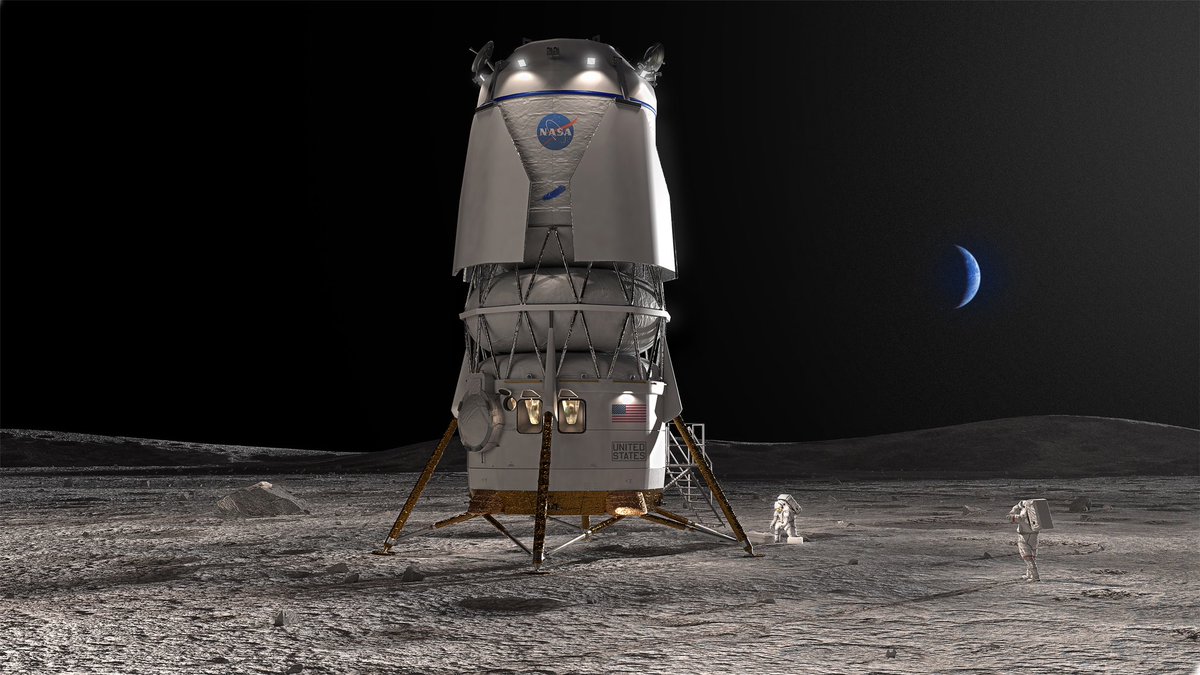
Honored to be on this journey with @NASA to land astronauts on the Moon — this time to stay. Together, we’ll be solving the boil-off problem and making LOX-LH2 a storable propellant combination, pushing forward the state of the art for all deep space missions. #Artemis #MoonToMars https://t.co/hqt4OqiREM
Many know and love the jumbo wrench on Aurora Ave. Turns out, the owner of this motorcycle repair shop went to art school.
New story today from @feliksbanel: https://t.co/KLL1dPm0Kq
I think @theproof must have slipped something in the tea he offered me. 😅 Or maybe the provocative questions he asked, which caught me by surprise in a good way, got me to open up more than I ever have publicly. 🤯
https://t.co/27xKMRstGz
I've long-admired @PlantChompers, but his new interview w/ @theproof reminded me that few have led a life as interesting, inspirational, & impactful as Chris MacAskill.
Recommend this conversation for a tour of nutrition & tech history, + much more.
https://t.co/mdtX16kh6o
I see a big-o silhouetto of a mammal,
𝗦𝗽𝗼𝘁 𝗮 𝗺𝗼𝗼𝘀𝗲, spot a moose, will you eat a native willow?
Wildlife and crossings, very, very enlightening me
Her name is Leo, call her Leo
Her name is Leo, call her Leo
Our friend Leo, caught on video – say hello
#misheardlyrics
Is that a MOOSE? Yes, it's a moose!!! This is the first recorded moose sighting @MountRainierNPS & southwestern Washington! Could this be same moose recently observed on the I-90 wildlife undercrossing at Resort Creek? Check out @WSDOT’s video https://t.co/LW446Gz0Fu @WDFW -tc/pw







![Rainmaker1973's tweet photo. A recent research demonstrates that birdwatching can literally rewire the human brain through neuroplasticity, producing measurable structural and functional changes that enhance perception, attention, and cognitive performance—potentially even helping to buffer against age-related decline.
While birdwatching has long been celebrated for its calming, restorative qualities, emerging neuroscientific findings reveal it delivers far deeper benefits. A 2026 study used diffusion-weighted and functional MRI to compare the brains of 29 expert birdwatchers (ages 24–75) with 29 matched novices (ages 22–79). Experts showed greater tissue density—indicating more compact, efficient neural organization—in regions tied to attention, perception, working memory, spatial awareness, and object recognition.
These structural adaptations enabled experts to identify birds, including unfamiliar or non-local species, with significantly higher speed and accuracy. During identification tasks, experts displayed increased activity in key areas such as the bilateral prefrontal cortex, bilateral intraparietal sulcus, and right occipitotemporal cortex—regions critical for visuospatial attention, object categorization, and memory.
This mirrors brain remodeling observed in other expertise domains, like multilingualism or professional musicianship, where prolonged practice fine-tunes visual and auditory processing. By repeatedly attending to subtle cues in plumage, songs, flight patterns, and behavior, birdwatchers drive cortical reorganization. Notably, these expertise-linked changes persisted across the adult lifespan, with older experts exhibiting brain features in relevant regions more akin to those of younger individuals—suggesting the development of cognitive reserve that may protect against aging effects.
[Wing, E. A., et al. (2026). The tuned cortex: Convergent expertise-related structural and functional remodeling across the adult lifespan. Journal of Neuroscience. Advance online publication. DOI: 10.1523/JNEUROSCI.1307-25.2026]](https://pbs.twimg.com/media/HCa8DVgXkAAq6OX.jpg)