Some improvements to my AI software factory
👉 https://t.co/GuOcRRbold
• CronJob scans requirements issues
• Planning agent breaks them down and defines deps
• Max 3 issues at a time
• Coding agents create implementation plans before coding
Demo 🎥: https://t.co/57B2P6F02q
7H Profile · Fractal Model Pro|
https://t.co/QYAzGy3gEU
This version is not a fully polished commercial tool. I am sharing it as an open source resource so you can use it as a base. modify the code. and customize the settings or logic to fit your own trading style and needs
holy f*ck, this free course teaches harness engineering from scratch better than Stanford
built for coding agents like Claude Code
↳ https://t.co/xUCprAHdb0
14 lectures, 8 projects
templates you can copy into your own repo
a model like Claude Opus 5.5 is only one part of an agent
the harness is everything around it
it's what lets the agent work for hours across sessions
what the harness does:
> instructions - how the agent behaves in your repo
> state - progress survives between sessions
> verification - tests, linting, type checks
> scope - every run stays on one task
> lifecycle - start, hand off, finish cleanly
how the 8 projects build on each other:
> a prompt-only agent vs one with repo rules
> multi-session continuity, runtime feedback, verification
> loop engineering: one agent builds, another one checks
> graph engineering: shared state and parallel runs
> rollback, routing and human approval on top
the best part: it also explains when a single agent loop stops being enough
templates for Claude Code, Codexx or any repo:
> AGENTS.md and init scripts
> feature lists and progress tracking
> loop state and maker-checker prompts
> a harness-creator skill that scaffolds a new setup
100% open source
call me crazy but its pretty clear now.
rea + bughunter is going to catch more bugs in shipped apps than bug bounties ever did.
rea opens any app you own in one command.
bughunter runs 681 real disclosed reports as skills and checks your build against every one.
one reads your code. one red-teams it - before you ship, not after a breach.
if this lands on your timeline dont scroll past it.
heres the 60-second setup, free:
1. open claude code in your own repo
2. install rea and bughunter as skills
3. point them at your build: "map this, then hunt it like an attacker would"
4. fix what they flag before anyone outside sees it
send this to anyone shipping an app.
thats it. thank me later.
most people ship their app unaudited and hope.
the ones who run this sleep fine.
simple as that.
Most people think using Claude Code is about writing better prompts.
It’s not.
The real unlock is structuring your repository so Claude can think like an engineer.
If your repo is messy, Claude behaves like a chatbot.
If your repo is structured, Claude behaves like a developer living inside your codebase.
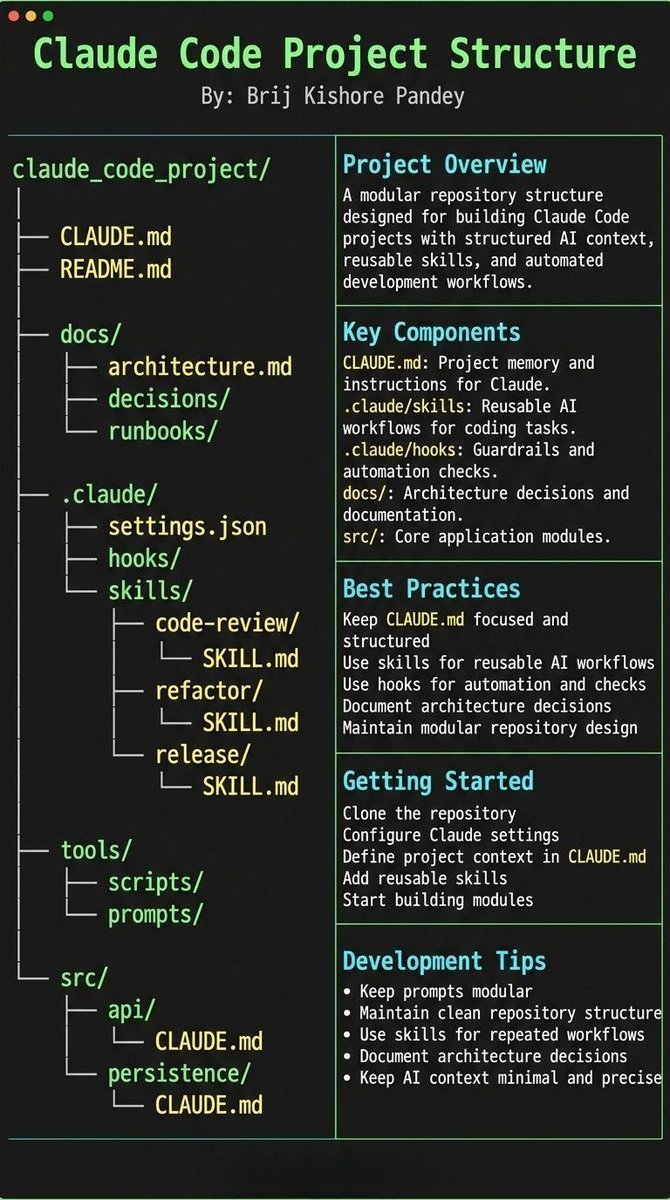
Your project only needs 4 things:
• the why → what the system does
• the map → where things live
• the rules → what’s allowed / forbidden
• the workflows → how work gets done
I call this:
The Anatomy of a Claude Code Project 👇
━━━━━━━━━━━━━━━
1️⃣ CLAUDE.md = Repo Memory (Keep it Short)
This file is the north star for Claude.
Not a massive document.
Just three things:
• Purpose → why the system exists
• Repo map → how the project is structured
• Rules + commands → how Claude should operate
If CLAUDE.md becomes too long, the model starts missing critical signals.
Clarity beats size.
━━━━━━━━━━━━━━━
2️⃣ .claude/skills/ = Reusable Expert Modes
Stop repeating instructions in prompts.
Turn common workflows into reusable skills.
Examples:
• code review checklist
• refactoring playbook
• debugging workflow
• release procedures
Now Claude can switch into specialized modes instantly.
Result:
More consistent outputs across sessions and teammates.
━━━━━━━━━━━━━━━
3️⃣ .claude/hooks/ = Guardrails
Models forget.
Hooks don’t.
Use hooks for things that must always happen automatically.
Examples:
• run formatters after edits
• trigger tests after core changes
• block sensitive directories (auth, billing, migrations)
Hooks turn AI workflows into reliable engineering systems.
━━━━━━━━━━━━━━━
4️⃣ docs/ = Progressive Context
Don’t overload prompts with information.
Instead, let Claude navigate your documentation.
Examples:
• architecture overview
• ADRs (engineering decisions)
• operational runbooks
Claude doesn’t need everything in memory.
It just needs to know where truth lives.
━━━━━━━━━━━━━━━
5️⃣ Local CLAUDE.md for Critical Modules
Some areas of your system have hidden complexity.
Add local context files there.
Example:
src/auth/CLAUDE.md
src/persistence/CLAUDE.md
infra/CLAUDE.md
Now Claude understands the danger zones exactly when it works in them.
This dramatically reduces mistakes.
━━━━━━━━━━━━━━━
Here’s the shift most people miss:
Prompting is temporary.
Structure is permanent.
Once your repository is designed for AI:
Claude stops acting like a chatbot...
…and starts behaving like a project-native engineer. 🚀
Follow @swadeshkumar_ for more !!
Jev + Claude Opus 5.5... i can't understand why everyone isn't wiring this up yet
once jev takes over the forks, that cost falls from about $110 a day to $4. it's the best way i know to run opus
what jev takes care of:
-> ranks which project notes are worth loading before the context is built
-> passes the easy steps to a faster worker
-> chooses a recovery path when a tool breaks, so no retry runs blind
-> runs the targeted checks first and the full test suite after
opus handles the hard reasoning. jev picks among options the harness has already prepared and validated
jev engineering in one line: the expensive model thinks and the cheap one decides
$106 a day saved on the same work is a number your manager will remember
start with the paper, then open the full jev guide below
YOU'RE RUNNING 1 CLAUDE. THE GUY WHO SHIPPED 5 FEATURES TODAY RAN F*CKING 5.
One session. One task. You sit there watching it think.
Meanwhile someone opened 5 terminals and typed:
claude -w auth
claude -w payments
claude -w search
claude -w dark-mode
claude -w tests
That's it. One flag.
Every -w session gets its own git worktree: its own folder, its own branch, its own Claude. Same repo, so 5 agents can't overwrite each other's files.
Auth gets 2FA. Payments gets fixed. Search gets filters. Dark mode ships. Coverage goes up.
5 PRs by the time your single session finishes task #1.
The full tree
> claude -w <name> → new worktree in .claude/worktrees/<name>
> each worktree = own branch + own working folder
> one .git shared underneath, zero file collisions
> .worktreeinclude copies your .env and local configs into every worktree
> subagents can run isolated too: isolation: worktree in the frontmatter
> review, merge the PRs, clean up worktrees when done
Paste the tree + this prompt into Claude Code ↓
Set up this repo for parallel Claude Code sessions:
Add .claude/worktrees/ to .gitignore.
Create a .worktreeinclude listing the gitignored files every worktree needs (.env, local config).
Split my backlog into 5 independent tasks that don't touch the same files, and give me the exact claude -w <name> command plus a one-line task prompt for each.
Each session must run the tests and open its own PR when done.
Show me every file as a diff first.
save it, it'll come in handy.
Your agent can spend all night repeating the same mistake
Prompt, Context, Loop, and Harness Engineering
Find the failing layer and learn exactly what to fix
The four-layer playbook for agents that finish the job ↓ https://t.co/9kRuT1MlC3
THIS IS ACTUAL F*CKING GOLD
Anthropic just documented how to stop your Claude Code subagents from burning tokens on thinking they don't need.
The idea: the grunt work runs on Haiku 5.5 at low effort, Sonnet 5.5 builds at its default, and Opus 5.5 stays on call for the calls that matter.
Lower effort is faster and cheaper on simple steps, and you set it once per subagent.
You just start Claude Code like this:
claude --model sonnet --advisor opus
and give every grunt subagent two lines of frontmatter:
model: haiku
effort: low
this is how it splits:
→ Sonnet 5.5 runs the session at medium effort and writes the code
→ Haiku 5.5 subagents search, grep and run tests on low effort
→ Opus 5.5 waits on call and reads the transcript only when it's asked
→ you stop paying for deep reasoning on work that's just lookups
Opus only steps in at three moments:
→ before a plan gets locked
→ when the same error comes back twice
→ before Claude calls the task done
Haiku runs light. Sonnet builds. Opus decides.
JEV engineering is the same idea one layer down: the forks that need no thinker (which file, which tool, retry or stop) get settled by JEV in milliseconds, and the big models only see the ones that actually split
the full tree
> Sonnet 5.5 runs the main session at medium effort
> search maps the repo on Haiku 5.5, effort low
> grep finds every call site on Haiku 5.5, effort low
> test-runner runs the suite on Haiku 5.5, effort low, reports only failures
> Opus 5.5 on call as advisor, reads the full transcript when consulted
> JEV routes micro-forks in milliseconds
paste the tree and this prompt into Claude Code ↓
"Rebuild my Claude Code setup around this tree:
1. Run the main session on Sonnet 5.5 with Opus 5.5 as advisor.
2. Create three read-only subagents in .claude/agents with model: haiku and effort: low: search (maps the repo), grep (finds call sites), test-runner (runs the suite, reports only failures).
3. Add one rule to CLAUDE.md: consult the advisor before a plan locks, after the same error twice, and before a task is marked done.
4. Route fast deterministic forks (tool choice, path selection, retries) through JEV.
Show me every change as a diff first. Nothing gets edited until I say go."
↳ https://t.co/neE4NaJIKR
save it, your token bill will feel the difference.
Someone put an entire AI agent team on GitHub for FREE, and it might be one of the most useful repos I've seen this week
Instead of talking to one AI assistant and manually managing every task, you can organize a whole team of specialized agents from a single chat
And the setup is surprisingly interesting
You get an agent roster, a team leader that delegates work, shared memory, reusable routines, control over execution, app integrations, and MCP support
7 components working together instead of one giant prompt trying to do everything
The best part is that you can see how the system is structured rather than treating your AI agents like a black box
One chat to coordinate an entire team
This is the kind of open source AI tooling worth bookmarking
the fastest growing GitHub repos in finance + AI this week:
1. TradingAgents (+5,315 ★)
multi-agent LLM trading framework: analysts, researchers, a trader and a risk team arguing before every trade. almost 3x last week's growth, now 118K stars.
https://t.co/IvYOYlN59H
2. day-trader-skill (+2,832 ★)
11 Claude skills for day trading. chart scanner, news tracker, stop planner, and a "time machine" that replays the session 10,000 times before you trade. paper trading by default. 11 days old.
https://t.co/SSRBUQuAjI
3. last30days-skill (+809 ★)
agent skill that researches any topic across Reddit, X, YouTube, HN and Polymarket, and ranks results by upvotes, likes and real money.
https://t.co/qTvearAaRf
4. Vibe-Trading (+779 ★)
personal trading agent from HKUDS. research, backtests and paper trading through chat, with MCP support. shipping fixes almost every day.
https://t.co/15UUXF0Zuf
5. Kronos (+773 ★)
open source foundation model for candlestick charts, trained on data from 45+ exchanges. last week's #1, code still hasn't changed since april.
https://t.co/DHLAm9hr9a
6. trader-skill (+479 ★)
same author as #2, the original pack. reads an investor's 13F so you can copy them, and tracks the trades Congress members disclose. never places an order without your yes.
https://t.co/5C6VHrrF2v
7. freqtrade (+341 ★)
the OG open source crypto trading bot, with a machine learning module (FreqAI). backtests and Telegram control, runs in dry-run first.
https://t.co/jPcLHBzt3C
8. daily_stock_analysis (+337 ★)
LLM stock analysis for US, China, HK, Japan, Korea and Taiwan. sends you a daily decision dashboard to Telegram, Discord, Slack or email.
https://t.co/OVbMoYxkd3
9. OpenBB (+323 ★)
open data platform for analysts, quants and AI agents. connect your data sources once, then use them in Python, Excel or an AI copilot.
https://t.co/I0JzAAMRdo
10. tick-stock-panel (+322 ★)
self-hosted quant workbench for China A-shares. LLM helps build the strategy, then backtest and monitoring.
https://t.co/2Klnbe9L5M
bookmark this and start today.
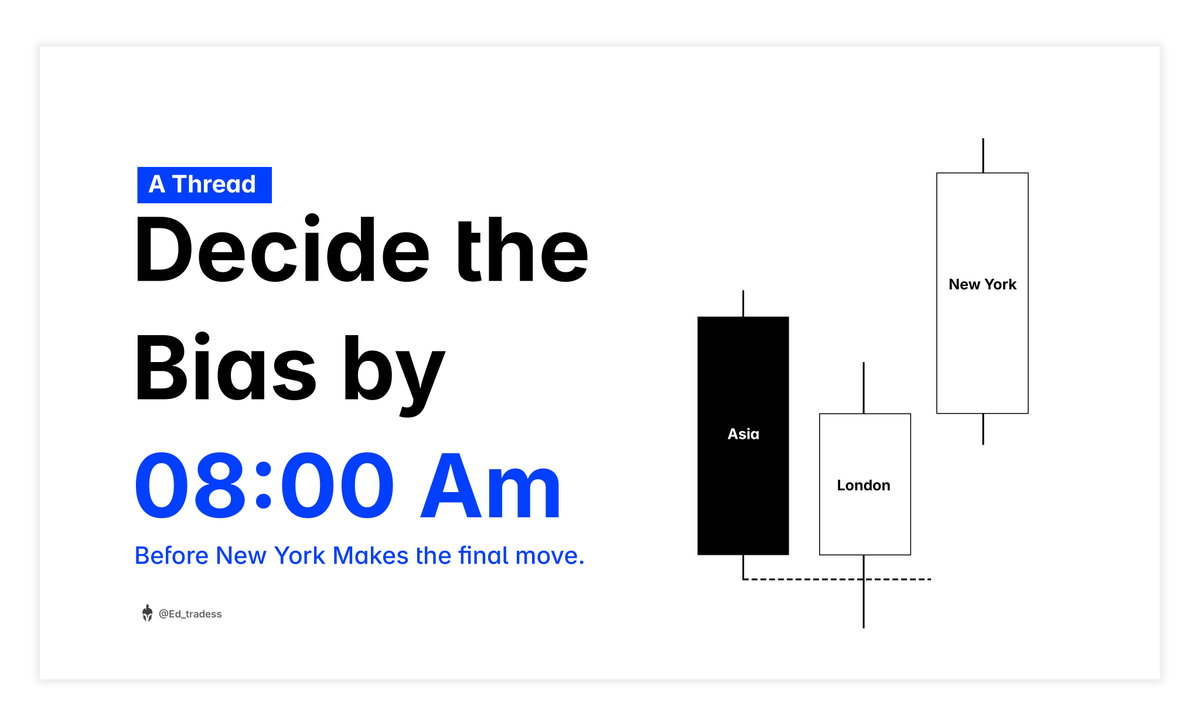
The 7H Profile | A Complete Guide 📕
Most traders wait for New York to show them the move. Very few understand that Asia and London have already provided the clues.
Learn how to read all 6 variations of the 7H Profile and understand how the market positions itself before New York opens.