The current AI industry stack:
1. Mostly monopoly or oligopoly compute companies, from ASML to NVDA to MU etc.
who mostly sell to,
2. Three serious hyperscalers.
who mostly sell to,
3. Two serious model companies.
who sell to,
4. All sorts of companies, large and tiny.
1) EU has lagged the US in productivity growth for decades. But at current purchasing power, hourly incomes seem not to have diverged. Does this mean Europe is not falling behind? A lesser-known national accounts indicator — real Gross Domestic Income — suggests otherwise. 🧵
@A_May_MD In explaining the distribution of cancer cases, were the incidents of cancer higher in the 50mg group because those patients had more prior exposure to other treatments than the 25mg and placebo groups?
@Goulderbilt@andrewcoye Insurance underwriting profits also use basically no assets (float is a liability) so aren’t represented in BV. And acquisitions are marked on the balanced sheet at historical costs which don’t fully reflect today’s earning power and value.
@Goulderbilt@andrewcoye Over $250 Billion in Float + Deferred tax liability is arguably permanent capital that isn’t in their book value. Historically, the market price tends to stay close to this “adjusted BV” metric.
@FishtownCap Seems like your MSR numbers are incorrect for 22 and 23. Additionally, high incremental Capex will show itself in BHE earnings starting in 26. They are a regulated utility with fixed ROE, so the money has to have gone somewhere. Check the 2026 BHE investor ppt for guidance.
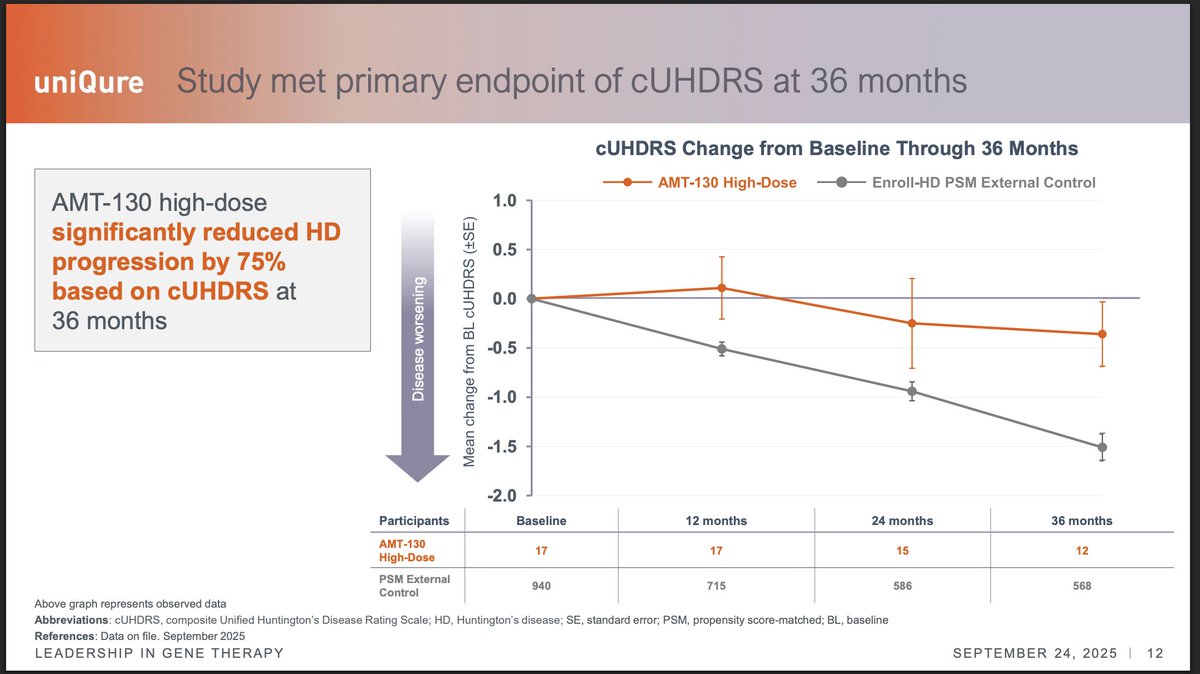
@NoseRubInvest Looking at the most recent $QURE investor presentation, the data looks different. Wondering why there's a discrepancy between 24 & 12-month data unless they changed parameters mid-study.