Get the right project members (data engineers, subject-matter experts and other stakeholders) on board early and you drastically minimize the likelihood that a #DataScience project will fail.
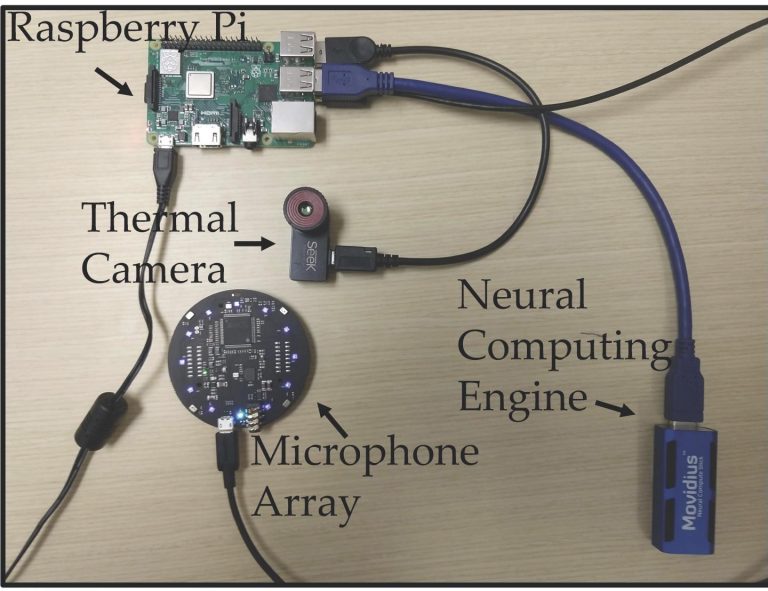
FluSense, from @UMassAmherst researchers, can help forecast viral outbreaks by monitoring coughing with a mic array, thermal sensor, neural computing engine, and Raspberry Pi. It's made the news thanks to its potential relevance to tackling COVID-19.
https://t.co/R5NHdLj2mo
The developers from FluSense also shared their labeled cough data 👏 I love #OpenSource and #OpenData. Pojects like our app "Hatschi" benefit from it & could help to quickly detect respiratory diseases. #WirVsVirus
No matter which projects will be selected, I've learned so much from #WirVsVirusHack. For example how inspiring and impactful virtual collaborations and open source are. In my opinion, everyone involved is a winner. We should keep this wonderful spirit! @WirvsVirusHack
Pretty neat idea to generate labeled data for quick, scalable over-the-phone diagnosis of COVID-19. At last week's #WirvsVirusHack we developed a prototype for a symptom tracking app for this very reason: https://t.co/K05Hzv30oL
Help us scale #COVID19 detection over the phone.
If you have a #COVID19 diagnosis or are healthy, consider recording a breathing sample anonymously at https://t.co/6oCGY4TlHo
We hope this data leads to techniques to help diagnosis of #COVID19 over the phone.
We just created a github repo for #hatschi - an application that automatically tracks respiratory symptoms by analyzing cough sounds from e.g. a smartphone mic: https://t.co/K05Hzv30oL. Stay tuned! #WirVsVirusHack#wirbleibendaheim
We found great resources and papers on which we can build up our own prototype today. Topic: Automated recognition of respiratory disease symptoms based on cough audio analysis. #WirvsVirusHackathon#WirvsVirusHack#TensorFlow
The @CorrelAid podcast "CorrelTalk" is now on Spotify:
https://t.co/XazutSsA6v. Stay tuned & subscribe if you're interested in #Data4Good and #DataScience content (only in german for now)!
The number one thing to keep in mind about machine learning is that performance is evaluated on samples from one dataset, but the model is used in production on samples that may not necessarily follow the same characteristics...
CS224N Natural Language Processing with Deep Learning 2019 @Stanford course videos by @chrmanning, @abigail_e_see & guests are now mostly available (16 of 20). Big update from 2017. YouTube playlist: https://t.co/gFwwXJqYuQ – new CS224N online hub: https://t.co/HTnMzCAjS3 #NLProc
Stages of research:
1) Brickwall. Stuck, stuck, stuck... (>4 months)
2) Breakthrough. An idea that seems to work (1 month)
3) Polishing. Refine the idea till is clear an simple (>2 months)
4) Frustration. This idea is so simple, why did this take me so long
Things I wish they taught us at school:
- start early
- take small steps
- it does not have to be right in the beginning
- ask for feedback and apply it
- don’t be shy to ask for help at every stage you are stuck
- teach what you know to others since you learn in the process
Whenever I install something that takes a lot of configuration, I always wish I'd documented my process publicly to save other people time
Props to @logart1995 for documenting his 40 hour (!) process of installing Tensorflow w/ GPU on Ubuntu! https://t.co/QdZuhVJ2Vq #datablog