The hardest financial decision isn’t what to buy.
It’s recognizing when you’ve won.
At some point, the scarce asset stops being money and becomes time.
The problem is he’s comparing it to his salary.
That made sense when his paycheck was the thing growing the account. It isn’t anymore. But it’s still what his brain reaches for, so a 10% dip turns into “that’s more than I make in a year.”
The money is there to pay for his life. So compare it to that. A 10% drawdown is however many months of expenses, and it’s probably fewer than he thinks.
Good question about having a mid-life crisis w/your investments
It's harder to sit through stock market losses w/a bigger portfolio
The next stock market crash will be a lot more painful for a new group of wealthier investors w/more $$$ at stake
https://t.co/Ra00V8ELAq
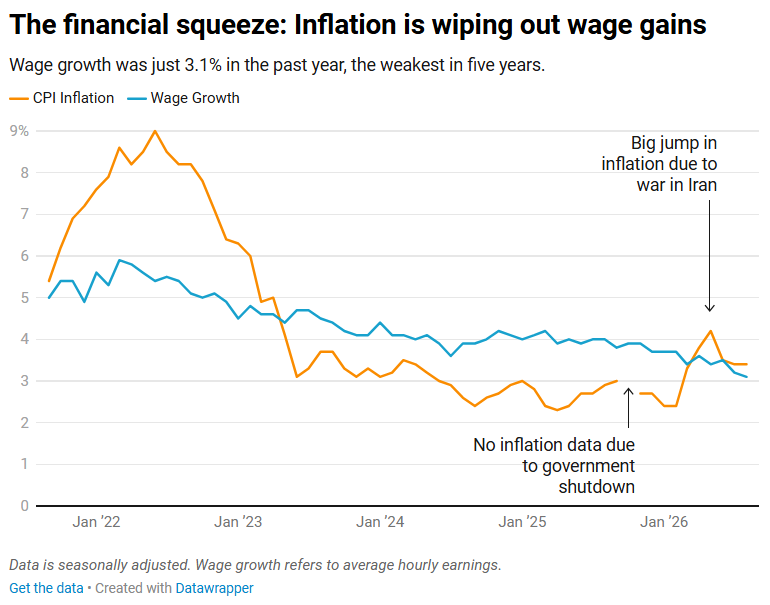
One big sore spot in the August jobs report = wages
Wage growth is the lowest in 5 years
Wage growth = 3.1% in the past year
Inflation is likely to be ~3.5% (it was 3.4% in July)
Americans are being squeezed financially right now.
Inflation has wiped out all wage gains since April (and March was close). Credit card debt is at a record high, savings is the lowest in years, and personal loan use is up. Consumption is almost certainly going to slow.
@BowTiedBull 30 year breakevens are 2.2. The 5.25 is real rates.
If real rates are up because AI capex is bidding for savings then fine, that comes with growth. If it's deficits and there is nobody left who wants duration, that's a straight hit to every long dated asset.
@TKopelman Yes definitely but at the cost of a good chunk of returns.
Ultimately comes down to doing a good deal pre-tax. They’re out there, but you need to know how to diligence.
@DividendMil You’re acting like there’s no alternative.
Total return generally beats these strategies and you control the taxes.
Why force income when you don’t need to?