Auto manufacturers are now engineering cars in a way they if you break one small thing, a massive repair is needed
Example: This door handle on the inside of this new 2023 vehicle broke, you would think you just need a new door handle. Wrong
You now have to replace the entire door panel because they have manufactured it so that the door handle can not be removed
So now instead of paying a small amount of money for a new door handle, you have pay insane amounts of money for a whole door panel
This should be illegal. We need much stronger right to repair laws in America
Pre-orders for Grand Theft Auto VI will officially begin on June 25 on digital storefronts and at other select retailers.
Check out the official cover art, also available as downloadable artwork at https://t.co/XPwC8URCQ4
HISTORY HAS BEEN MADE 🫨
Sabastian Sawe becomes the first person ever to break the 2-hour barrier in official race conditions, storming to a historic 1:59:30‼️
@KejelchaYomif, on his marathon debut, also breaks 2 hours with a stunning 1:59:41 and @jacobkiplimo2 clocks 2:00:28, also faster than the previous world record 😤
LIVE: They are coming home.
Watch as the Artemis II crew returns to Earth, splashing down at around 8:07pm ET (0007 UTC April 11). https://t.co/n3vZE2rcFv
Sweet dreams, @NASAArtemis II crew.
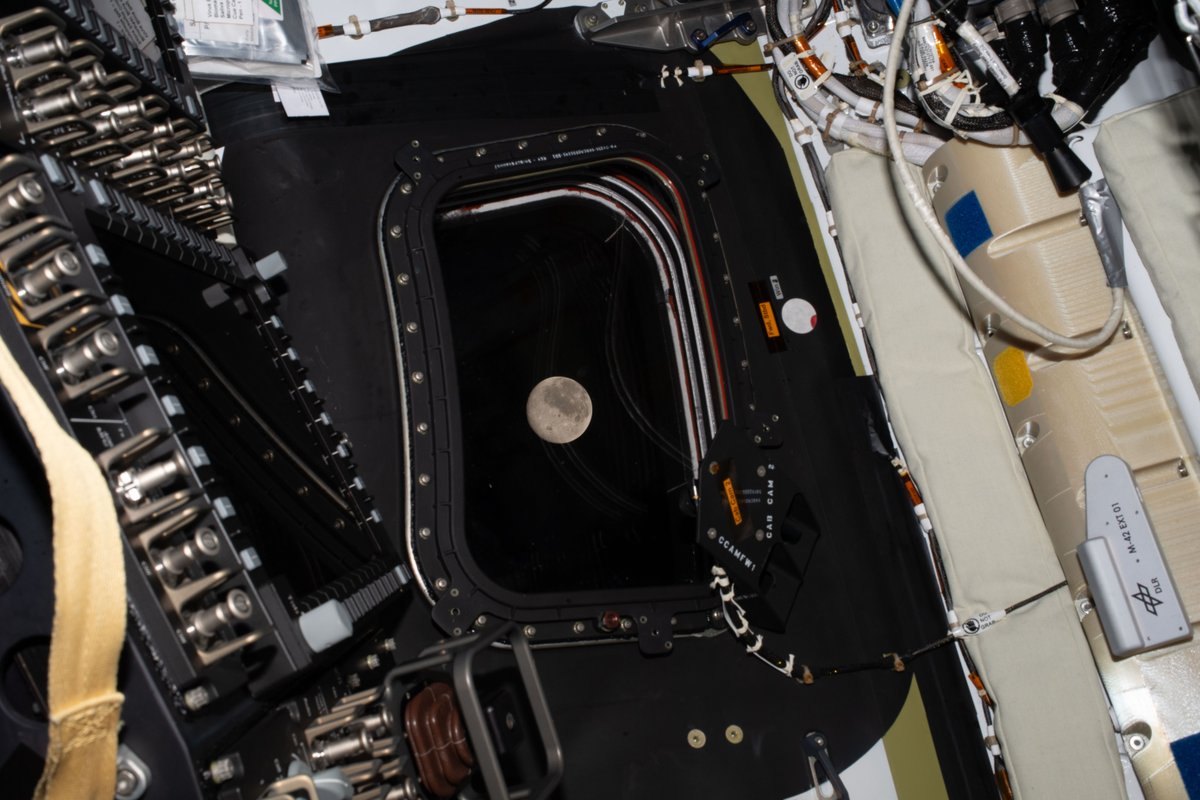
One last look at the Moon before flight day six and your epic lunar flyby, taking you farther into space than humans have EVER traveled.
Make new friends, but keep the old.
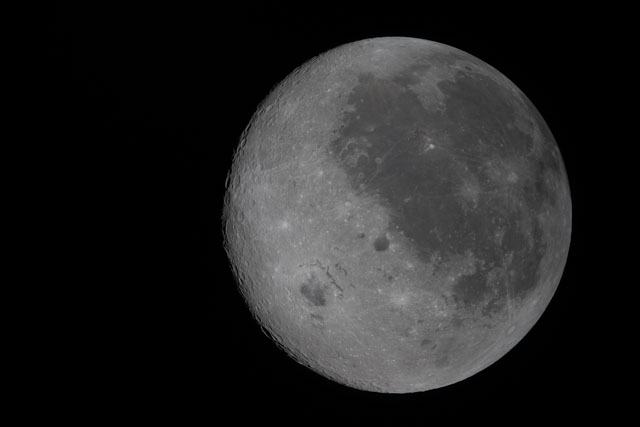
A new photo captures the Moon's near side on the right (the side we see from Earth, identifiable by its dark splotches) and its far side on the left. The Artemis II crew are the first to see the far side with human eyes.
As the Artemis II astronauts prepare for today's lunar flyby, they each take a moment to reflect on the legacy of the Apollo 8 mission. Onboard with them is an Apollo 8 patch that flew aboard the lunar-orbiting mission over fifty years ago.
What will the Artemis-2 astronauts do during the entire 10-day mission?
Day by day overview:
Day 1. Launch.
Launch on the SLS rocket, stage separation, orbital insertion. Maneuvers around the spent stage, initial system checks, change from spacesuits to everyday clothing.
Day 2. Beginning the journey to the Moon:
Simulator exercises, then the main maneuver—translunar injection (TLI), which places Orion on a trajectory to fly around the Moon and return to Earth.
Day 3. Preparation
Rehearsals for lunar observations in zero gravity, corrective maneuver, emergency procedures training (e.g., CPR).
Day 4. Course correction
Second minor maneuver, communication with Mission Control, media sessions, photography of Earth and the Moon at the midpoint.
Day 5. Lunar Entry
For the first time since 1972, humans will be in cislunar space. Spacesuit tests: rapid pressurization, life support systems checks. Another course correction.
Day 6. Lunar Flyby
The main day: The Orion spacecraft will fly at an altitude of 6,400–9,650 km above the lunar surface.
This distance is approximately 15–24 times greater than the orbital altitude of the ISS. Plus, the Moon itself is smaller. Visually, the Moon will look like a basketball at arm's length to the astronauts. There will be only three hours for observations during closest approach. The astronauts will take photographs and record geological data. Depending on the launch time, the Artemis 2 crew could break the record for the longest distance from Earth.
Day 7. Lunar Exit
Data transfer to scientists, psychological and physical debriefings. Symbolic call with the ISS crew. First maneuver of the return trajectory.
Day 8. Demonstrations
Radiation protection training (using water and thermal protection as barriers). Testing the Orion attitude control systems in various modes.
Day 9. Preparing for reentry
The last full day of the flight. Technological demonstrations, course corrections, fitting of compression suits to help the body adapt to weightlessness.
Day 10. Return
Final maneuver, atmospheric reentry, during which the temperature will reach 1650°C. Parachute deployment, splashdown in the Pacific Ocean off San Francisco. Crew pickup by US Navy ships.
Liftoff.
The Artemis II mission launched from @NASAKennedy at 6:35pm ET (2235 UTC), propelling four astronauts on a journey around the Moon.
Artemis II will pave the way for future Moon landings, as well as the next giant leap — astronauts on Mars.
How to setup your Claude code project?
TL;DR
Most developers skip the setup and just start prompting. That's the mistake.
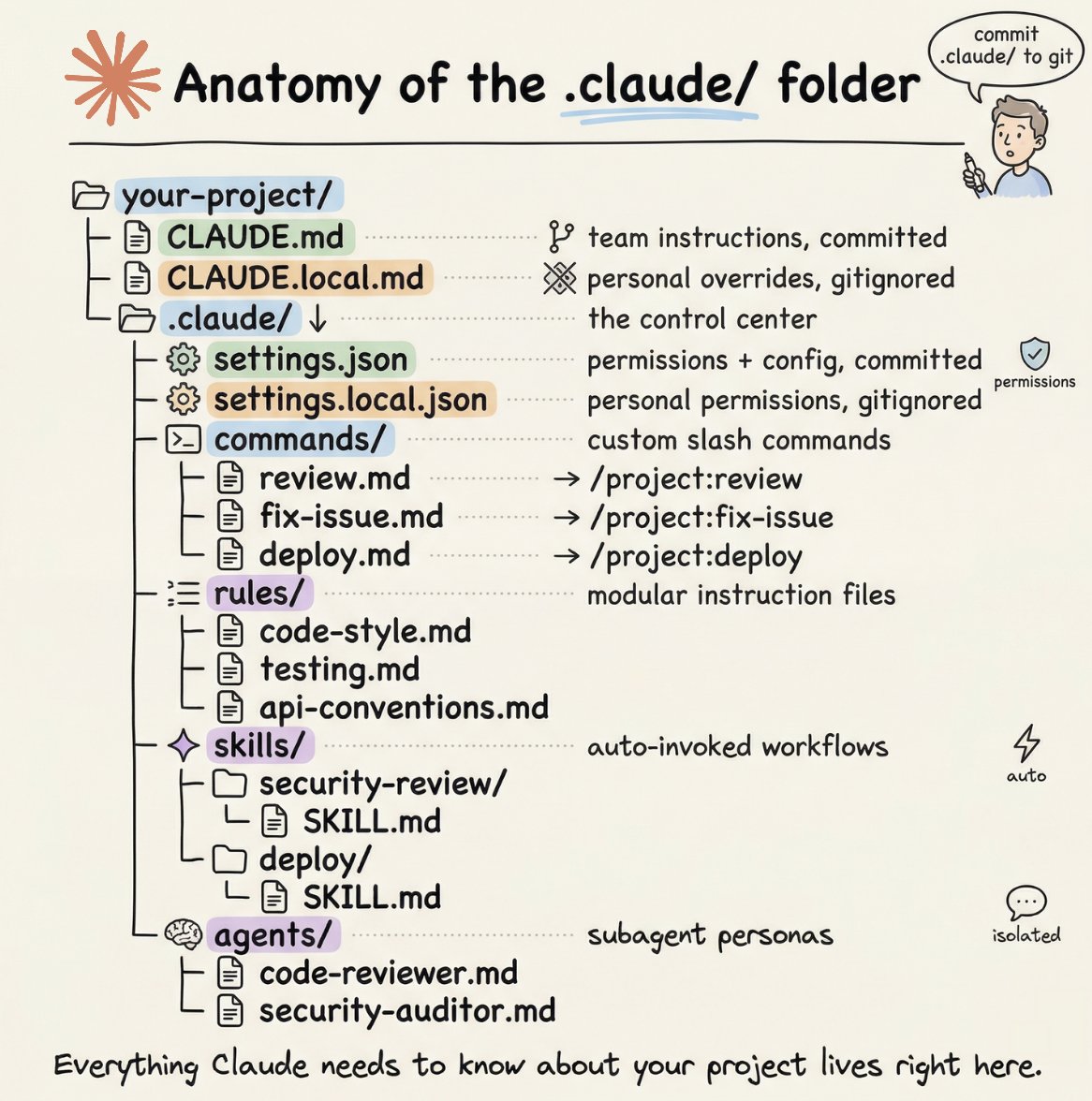
A proper Claude Code project lives inside a .𝗰𝗹𝗮𝘂𝗱𝗲/ folder. Start with 𝗖𝗟𝗔𝗨𝗗𝗘.𝗺𝗱 as Claude's instruction manual. Split it into a 𝗿𝘂𝗹𝗲𝘀/ folder as it grows. Add 𝗰𝗼𝗺𝗺𝗮𝗻𝗱𝘀/ for repeatable workflows, 𝘀𝗸𝗶𝗹𝗹𝘀/ for context-triggered automation, and 𝗮𝗴𝗲𝗻𝘁𝘀/ for isolated subagents. Lock down permissions in 𝘀𝗲𝘁𝘁𝗶𝗻𝗴𝘀.𝗷𝘀𝗼𝗻.
There are two .𝗰𝗹𝗮𝘂𝗱𝗲/ folders: one committed with your repo, one global at ~/.𝗰𝗹𝗮𝘂𝗱𝗲/ for personal preferences and auto-memory across projects.
The .𝗰𝗹𝗮𝘂𝗱𝗲/ folder is infrastructure. Treat it like one.
The article below is a complete guide to 𝗖𝗟𝗔𝗨𝗗𝗘.𝗺𝗱, custom commands, skills, agents, and permissions, and how to set them up properly.
You know that annoying experience on mobile websites where you need to find the little close button and can't swipe a menu closed?
The solution is simpler than you think.
With basic CSS scroll APIs, you can get built-in interruptible swipe gestures 🥳
Has anyone noticed now how cars come with features but you can’t use them unless you pay them a subscription fee? I imagine the price of the car has the hardware for the feature already in it included in the price. They are charging people to use their own navigation, listen to music, heated seats and more, how is this legal?