Hindus and Muslims are two separate nations, and our coexistence has never been peaceful. Leftists and liberals had the opportunity to put an end to all future riots in 1947, but they were too obsessed with diversity and secularism, putting our future at risk.
- Enters prompt: chatgpt prove to me that the undeciphered Indus script is Tamil
- AI puts rubbish together to convince him that it completed the task
- Posts on X and gets cooked
Read. Carefully.
Especially the Congress-Left-Muslim cabal that does propaganda 24/7 to damage India’s reputation—to the delight of those who don’t want India to continue rising. For them especially: read every word of this👇
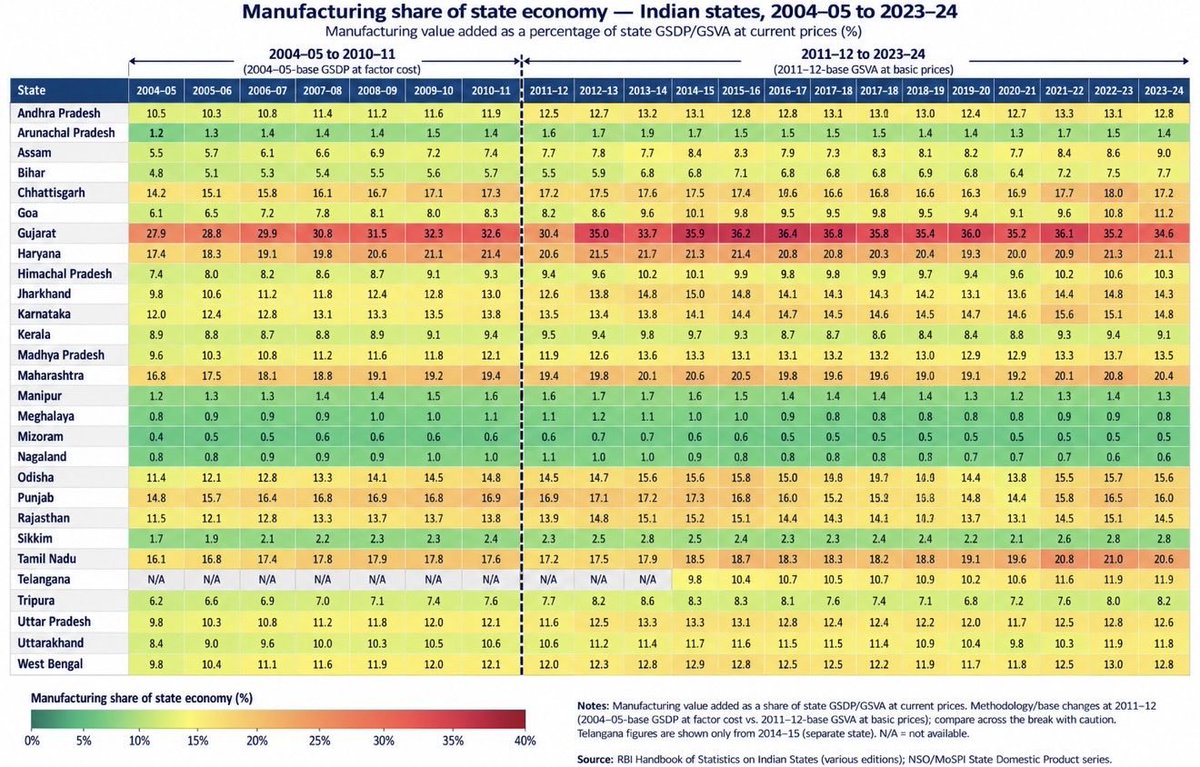
One of the easiest ways to refute this with data is the chart below. Gujarat - traditional state of business elites - has the highest % of mfg of all states in India. Whereas look at West Bengal - base of intellectual elites.
(Saw this chart somewhere on X yday)
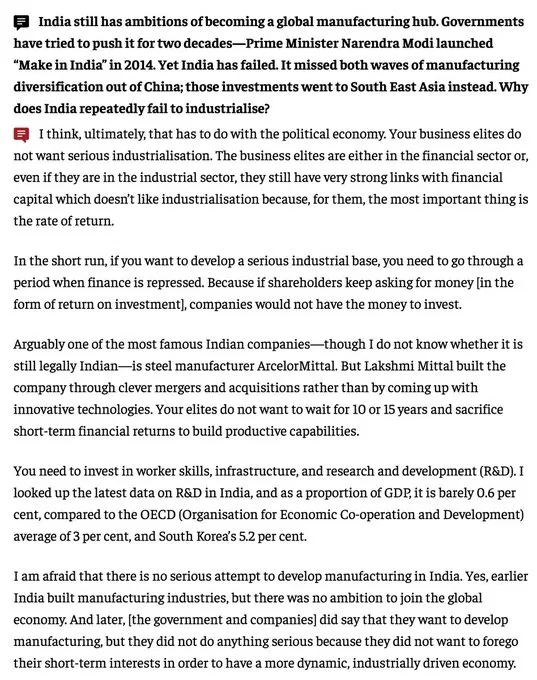
India puts less than 1% of its money into research, South Korea puts almost 5%, China puts 2.4%
Indian companies are making record profits, but they refuse to build new factories. Instead, they pay off old loans, buy back their own shares, and sit on cash. Rich business families in India prefer safe investments over running production plants. Only 36% of research money comes from private companies.
When parking money in banks pays more than building factories, nobody builds factories. Board rooms keep picking quick profits over long term projects
When companies leave China, most pick Vietnam, Thailand, or Indonesia over India. Southeast Asia got $225 billion in factory investment in 2024. Vietnam alone got $25 billion, and 67% of it went into building factories.
India got $39 billion total, and new factory projects dropped from $111 billion to $74 billion in just 1 year. India sells cheap workers, but Vietnam sells fast delivery, smooth customs, and reliable supply chains.
Companies do not move factories to save on wages, they move to ship faster
Best engineering graduates in India go into banking and consulting, not manufacturing. Sons and daughters of factory owners sell those factories and invest money in stock markets instead.
South Korea and China made their rich families build factories even when profits were low for years. India never forced that choice. Indian elites picked comfortable financial returns over difficult production work.
Manufacturing has been stuck between 14% and 17% of GDP for 30 years. Government subsidies and tax breaks have not moved that number even slightly
But Now its changing but still needed Reform :)
Open challenge to everybody who says "India has failed to industrialise.”
I’m biased. I actively promote manufacturing in India.
But I don’t buy this idea at all.
Come spend time on the ground.
I'll show you how:
- Factories are expanding
- Capex is rising
- New machinery is coming in
- VC money is entering manufacturing
- New ecosystems are being built around semiconductors, electronics and deep tech
Is everything perfect? Absolutely not.
We still have serious gaps in skills, supply chains, R&D and infrastructure.
But something has clearly changed.
The ambition to build in India is no longer theoretical.
More founders are realising that manufacturing isn’t just another sector to invest in.
It may be one of the biggest opportunities of the next decade.
And honestly, if this debate gets more people to look at manufacturing seriously, that’s a good thing.
Even day:
"We are the result of the last drop of ejaculation from MBQ's left testicle"
Odd day:
"We have a history of rich civilizations... yada yada"
Takeaway: "79 years on, we can not identify ourselves as anything other than a bunch of sister lusters & goat f@#kers"
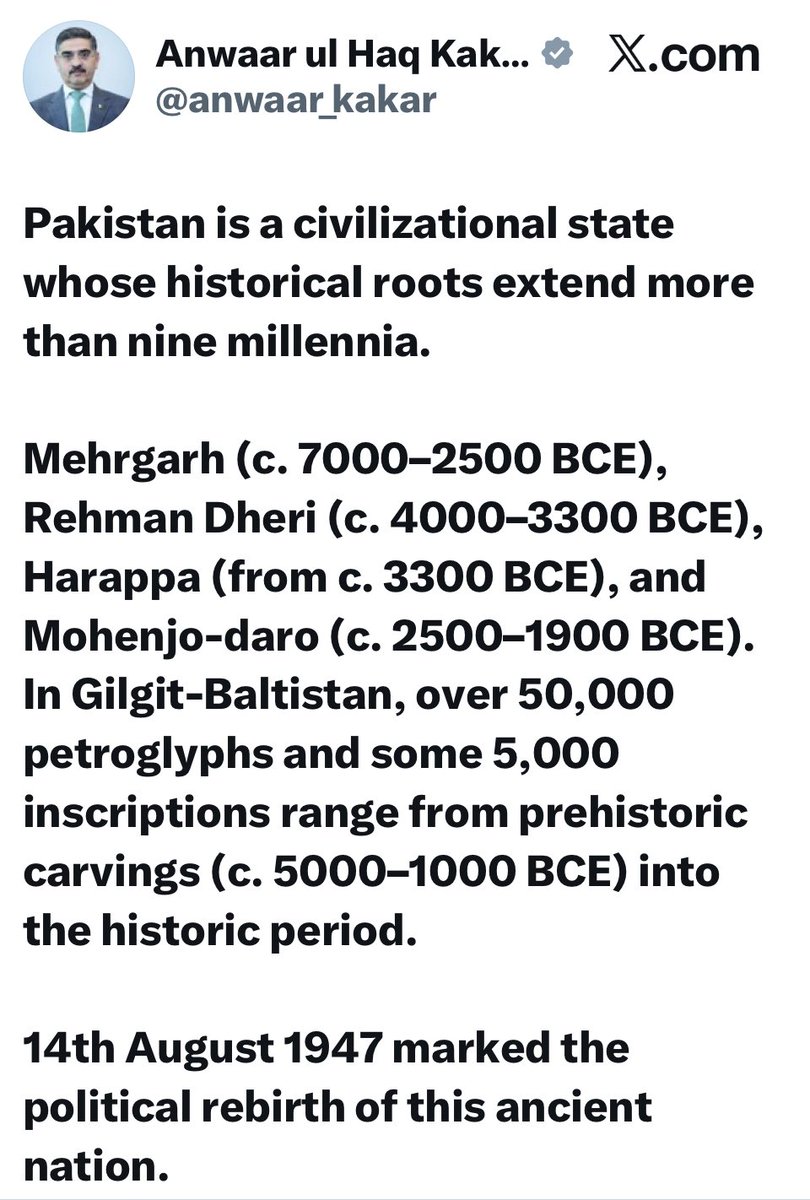
Pakistan never existed as a nation before 1947 there is no such thing as ancient Pakistan.
These all civilisation have no historical roots connected with religion of Islam on the foundation of which Pakistan came into existence.
Suddenly these Pakistanis don’t consider themselves descendants of Arabs or Turks?
But they dare not accept the truth about being descendants of the Sindhu-Saraswati civilisation.
Anyways none of these Muridke & Bahawalpur Madrassa chhaps have any knowledge of the glorious civilisational history & culture.
Vinayak employed the agency of history as he had during his work on the 1857 War of Independence to create a sense of identity, pride & belonging.
About the constant insinuations about the book being an ode of hatred, especially towards the Muslims, historian Janaki Bakhle opines
Major religions like Hinduism—the world’s third-largest faith—are excluded from human-rights discourse, international bodies and religious-freedom monitoring organizations. This asymmetry needs to be addressed, writes @avatans
https://t.co/PxEVYcwG5i
There is an uncomfortable truth buried in the World Bank's latest intellectual pivot. For decades, the Bank preached the gospel of free markets, open trade, and minimal state intervention to developing nations - while the rich world quietly subsidised, protected, and directed its own industries to global dominance. Now, confronted with the spectacle of the US Inflation Reduction Act, European industrial strategies, and China's state-capitalist juggernaut, the Bank has done something institutions rarely do: it has changed its mind. Industrial policy, the Bank now concedes, can work. The question is how.
Even with my very basic Sanskrit knowledge derived entirely from chanting slokas and mantras I know the difference between स- and सु- and JNU "scholar" and "makeup artist" doesn't