India's spend on AI and deep-tech R&D is set to cross $1.4 trillion. Not billion. $1.4 trillion.
The experts and VCs will tell you India spends only $18 billion a year on R&D and needs to get to $100 billion. Respect to them. They are not wrong about where India was. They are wrong about where India is going. Look at who is already writing the cheques.
Neysa, Sarvam and Yotta. Indian AI startups raised $1.6 billion in the first nine months of 2026, almost double last year. Mumbai just overtook Bengaluru as India's AI funding capital.
Vultr. The American cloud company switched on a 20 MW AI supercluster in Chennai with about 10,000 AMD GPUs. It is Vultr's biggest outside the US, and global companies have already reserved much of it.
L&T. India's engineering giant just won another multi-year order to fill its Chennai AI factory with NVIDIA B300 GPUs, worth $268 million to $535 million. That comes three months after a $1.1 billion to $1.6 billion order to build a 10,000-GPU NVIDIA AI factory for Together AI on the same campus. Phase 1 is 250 MW, and L&T is planning it as a gigawatt-scale hub.
IBM. IBM invests about $3 billion a year in India. Its quantum computer for Amaravati is due to be installed in early 2027, and IBM is in talks with at least two more states.
Quantum. QNu Labs in Bengaluru built a 1,000 km quantum-safe network in one year against a two-year target. India's quantum computers are at 48 qubits today. The target is 1,000.
JPMorgan, Goldman Sachs, Wells Fargo, HSBC and Barclays. They are building their core cyber defence out of India. Nearly half of firms with cyber centres here now have global security teams reporting to leaders in India. The number one skill they are hiring for is AI security. Wall Street's front door is guarded from India.
Amazon. It plans another $7 billion for Indian clean energy by 2030, on top of $4 billion already contracted. It just signed up four new wind and solar projects worth 934 MW, including its largest wind project in Asia. AI runs on power, and the power is being bought now.
Tata Electronics. An $11 billion chip fab rising in Dholera, designed AI-first. $5 to $6 billion of it is equipment alone, and Tata already works with 1,200 to 1,300 suppliers across its electronics and chip businesses.
Semiconductors. 12 chip plants approved, and trial chips are already rolling out of Micron, CG Semi and Kaynes in Gujarat. At full capacity they will still cover only about 10% of the 100 billion chips a year India could need by 2030. That gap is not a problem. It is the next order book.
NTT. Japan's $88 billion tech group plans optical ground stations near its data centres in Mumbai, Bengaluru, Chennai, Noida and Kolkata, to bring satellite data down to earth on beams of light.
Pixxel. The Bengaluru space startup is building GigaPixxel, a 250,000 sq ft satellite factory near the city's airport. 50 satellites in parallel by mid-2027, 100 by the end of 2027, 200 by mid-2028. 90% of them will be built for other customers, and the US and Europe are already asking. The world wants satellites quickly and cheaply. India is building the factory.
The list goes on and on. $1.4 trillion is just what I see. I am sure I missed a few hundred billion. You can disagree with me and say these are just investments. My point is that these are investments to boost research.
Capital is heading to India. Compute is moving to India. Chips are being produced in India. What more do you want?
India is the opportunity of a lifetime. AI is being built in India for the world. India is literally building the future of the planet.
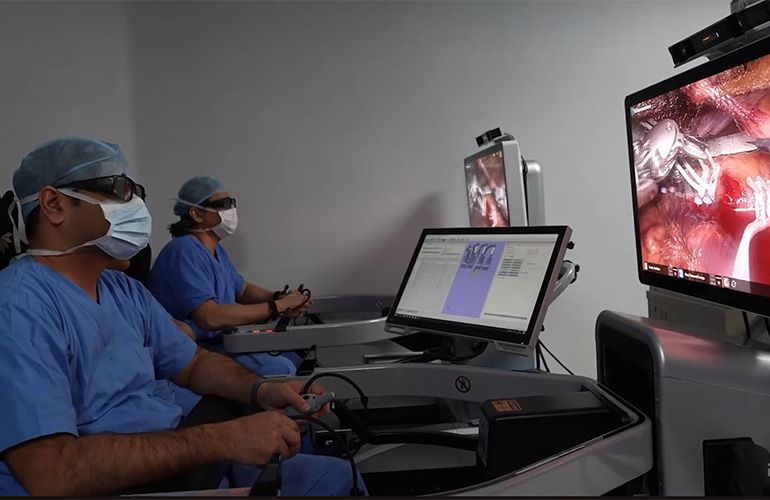
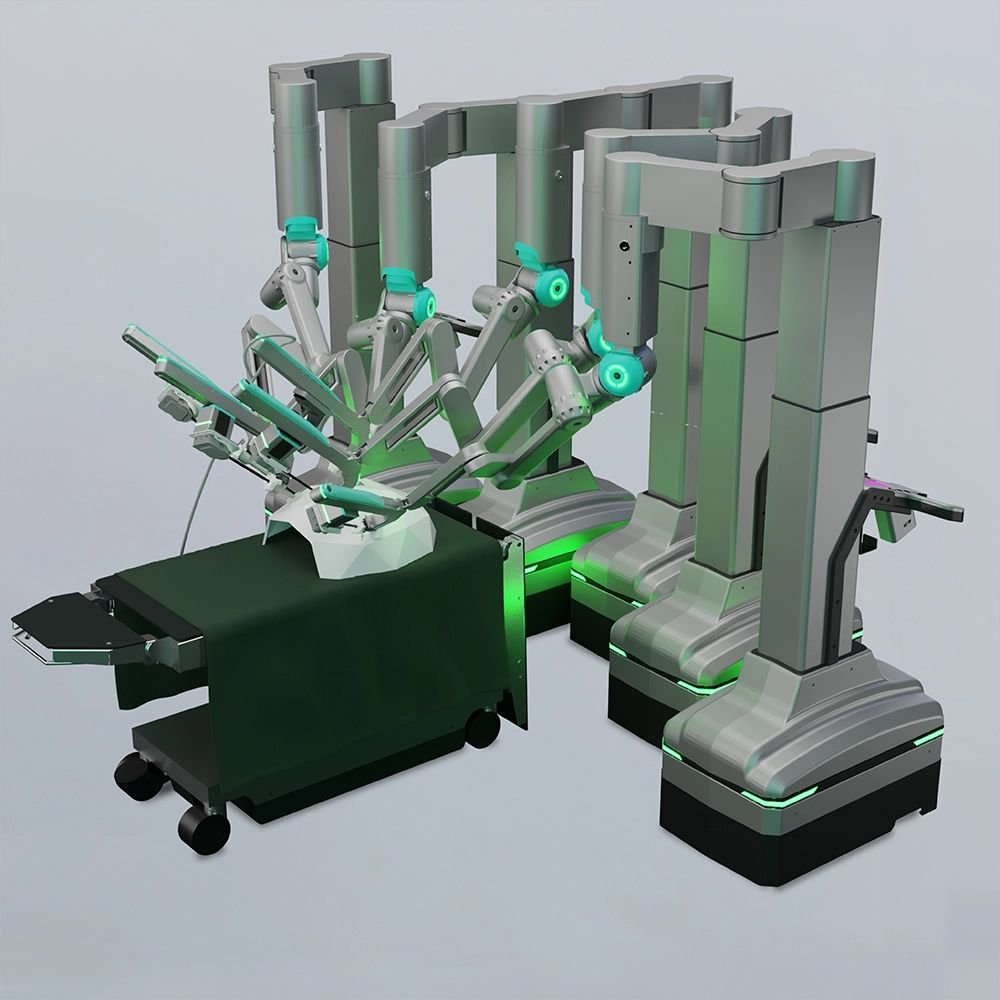
In Gurugram, 2 surgeons did a heart bypass without opening the chest / stopping the heart: 5 robotic arms, 2 consoles, a world 1st. The robot was Indian, SSi Mantra.
Why is this so quiet?
2 surgeons, Dr. Nitin Kumar Rajput of Medanta Hospital, Gurugram and Dr. Lalit Malik of Manipal Hospital, Jaipur, performed a heart bypass on a beating heart.
In such procedures, called TECAB, the bypass is done entirely through small ports with robotic arms. This time, all 5 arms of the robot worked together, driven by the 2 surgeons from 2 separate consoles, in complete sync. A stabiliser held just the target spot steady while the rest of the heart pumped on.
This is the world's 1st dual-console, beating-heart TECAB. The patient's recovery is encouraging.
And the robot was not imported. It was the SSi Mantra, built in India by SS Innovations, a company founded by cardiac surgeon Dr. Sudhir Srivastava, who guided the team.
Robotic surgery is costly mostly because the robots are. SS Innovations says it exists to change exactly that, to make world class robotic surgery affordable and accessible.
The announcement is the company's, dated 19 November. A journal publication is yet to come.
Names to remember: Dr. Rajput, Dr. Malik and Dr. Srivastava. 🙏🙏
Sources: SS Innovations, MassDevice, Mint
Photo 1: Drs. Nitin Kumar Rajput and Lalit Malik performing a beating-heart TECAB procedure with the SSi Mantra. Credit: SS Innovations via MassDevice.
Photo 2: The 5 arm SSi Mantra cart, official render from SS Innovations.
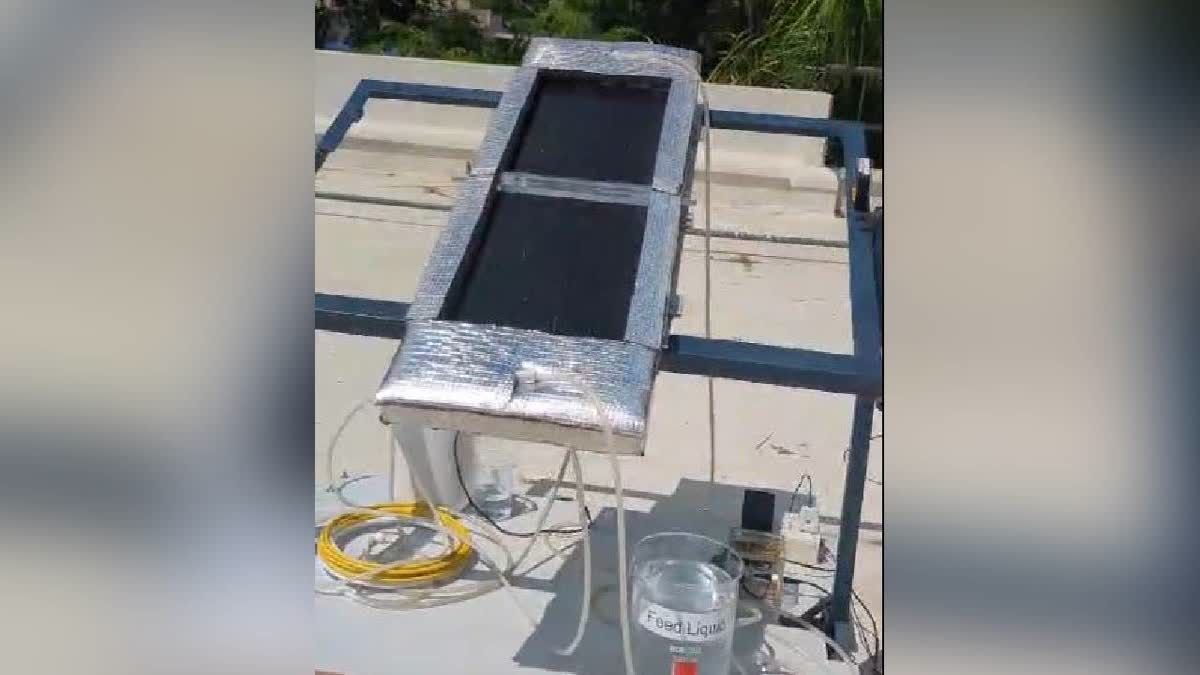
A lab at IIT Kanpur has built a water purifier that runs on sunlight alone. No electricity, no pumps, no RO cartridges.
Salty water flows over a black nanoparticle coated sheet that heats up in the sun. The water turns to vapour, slips through a fine membrane that lets only vapour pass, and condenses as clean drinking water. Salt, dissolved metals and bacteria stay behind.
In the institute's own lab tests, the prototype made 3.4 litres of fresh water a day from water with 35 grams of salt per litre, and rejected 99.5% of the salt.
A patent application has been filed by Prof. Jishnu Bhattacharya and Pavan Kumar Shakya, and IIT Kanpur is offering the tech for licensing. It is a lab prototype, not a product yet. All numbers about the device are from lab tests, not field trials.
P.S. P.S. The inventor aims to make it cheaper than RO purifiers, which cost Rs 9,000 to 18,000. No price has been announced yet.
Source: CGWB; IIT Kanpur; Shakya and Bhattacharya, Desalination
Photo 1: Both in one frame, with names under each.
Photo 2: The prototype via ETV Bharat.
Photo 3: IIT Kanpur's own flyer with the prototype, patent number and TRL 6.
$1 billion in a single quarter. That's what Suzuki earned shipping Made in India cars to the world between July and September. Now India’s EVs are on Europe’s roads.
In January 2025, Suzuki's president Toshihiro Suzuki stood in New Delhi and made a promise: "First, we will export this vehicle to Europe, then Japan; we would like to leverage India's scale and export to the world."
He kept it. The e Vitara, built in India, now drives on roads in Germany, Italy, Norway and Switzerland, and sells in nearly 50 countries. In October, it outsold Tesla's Model Y in the Netherlands.
Even Toyota is in on it. Its all-electric Urban Cruiser comes off the same Suzuki line in India, and in April it was the No. 2 car in Norway, ahead of Tesla's Model Y.
And India is shipping Fronx and Jimny back to Japan, Suzuki's own home.
From April to October, Maruti Suzuki exported 280,141 cars, up 18%. That's more than half of every car India exported.
Built in India. Driven in Europe. Sold back to Japan.
Kanpai to Europe from India. Sayonara, Tesla.
For those calling our manufacturing as screwdriver technology: Designed in India, Made in India 5-axes precision CNC machines with the accuracy of 2 microns! For reference, the thickness of human hair is about 80 microns.
(5-axes = x, y, z, rotate, turn)
This is the way electronics and semiconductor manufacturing ecosystem is taking shape.
India now manufacturing things that go into things that go into things…
🚨BIG BLOW TO CHINA: India Imports Solar Silver Paste Worth 10000 Crore From China, Now India Develops Indigenous Silver Paste at 24% Lower Cost.
India was importing a critical material used in solar panel manufacturing, reportedly worth nearly ₹10,000 crore annually, with China dominating the supply chain. Now, an IIT Bombay-incubated Indian startup has developed the country's first indigenous solar silver metallisation paste, potentially breaking a crucial technological dependency.
The bigger breakthrough? The indigenous alternative could be around 24% cheaper than the imported Chinese material.
This is not just another startup achievement. Silver paste is a critical component used to create the conductive lines on solar cells that collect and transfer electricity. Without it, efficient solar cell manufacturing becomes difficult.
Despite becoming a major player in solar module manufacturing, India continued importing this specialised material from China and other international suppliers. In other words, we were manufacturing solar panels but remained dependent on foreign countries for one of their most important components.
That dependency could now begin to change.
Developed by IIT Bombay-incubated NED Materials Private Limited, the indigenous formulation has reportedly undergone industrial testing, achieving a solar cell efficiency of 22.47%.
The next target is even bigger: developing silver-coated copper paste to reduce dependence on silver itself.
This is what genuine technological self-reliance looks like: not simply assembling products imported from elsewhere, but developing the critical technologies and materials that power them.
India sold about $480 billion of goods and services to the world in just six months. That is 48% of its $1 trillion export target. It’s very conservative. What will it take to get to $5 trillion in exports? The answer is simple: You have to fight for your right to party.
Europe wants to make things in India. Not just for India. For the world. Sounds like a slogan, right? It isn't. It is called a flywheel. Here is how it spins.
It starts with cars. Once the India-EU trade deal kicks in, duties on European cars drop from as high as 110% to 30–35% for up to 100,000 cars in year one, then fall to 10%.
Looks like India is opening the door to imports. It's not. It's the hook. I expect European brands bring in 100 new models to sell. Learn what Indians love. Then build those cars in India, not only for India, but for the world.
A car plant never comes alone. It pulls in component makers, steel, rubber and startups. Recently I wrote about the Mercedes ecosystem and Pirelli. This is how it multiplies.
And the road runs both ways. India gets a quota of 250,000 cars a year into the EU at 8% duty, falling to zero by year five.
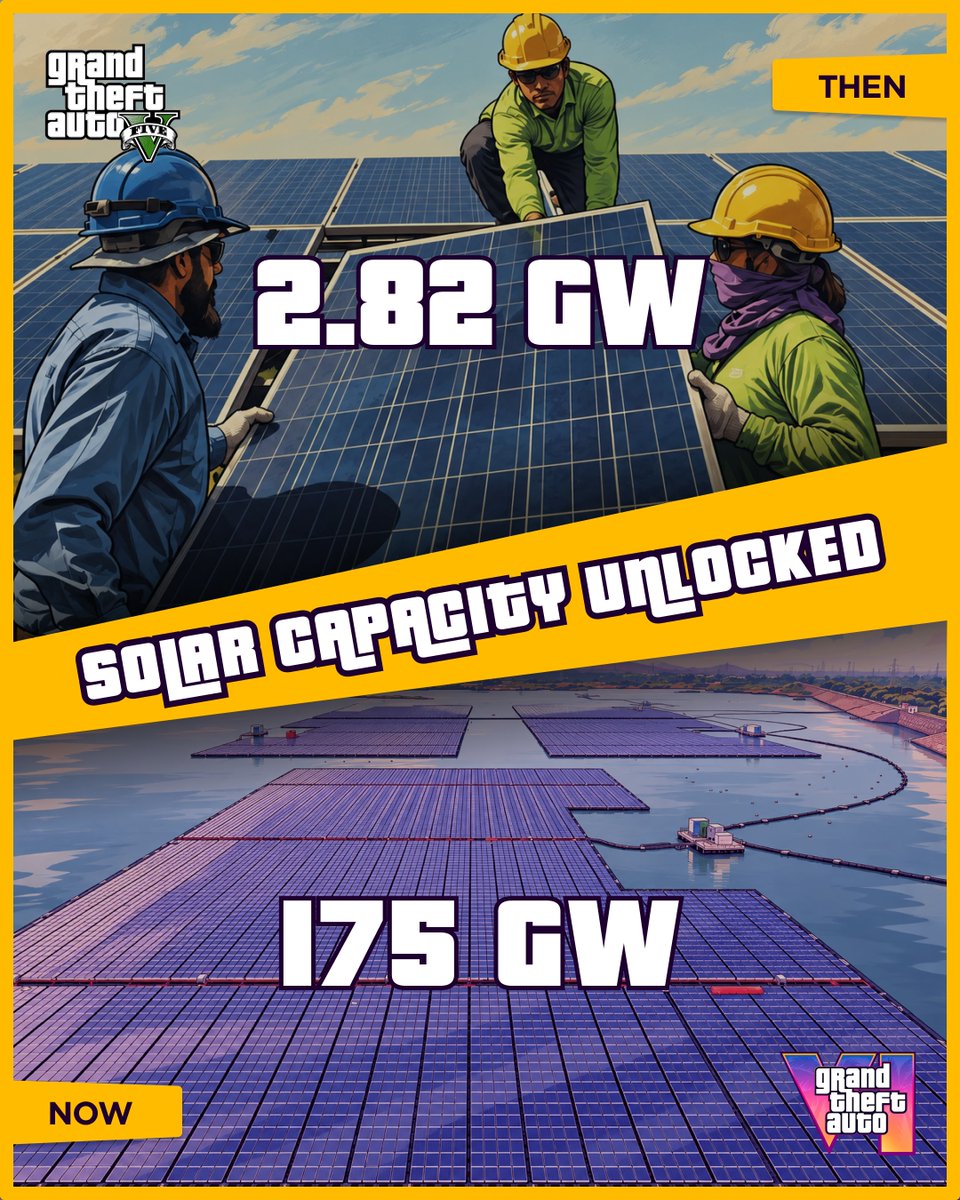
All this takes energy. Solar is the best bet. India can make 50 GW of solar cells a year. That already covers its maximum annual demand. Expected: 70 GW by December, 100 GW+ three to four months later.
So for the first time, India is eyeing significant solar cell exports. Europe and Africa are in its sights. India's solar makers project about $89 billion of investment, nearly 70% of it in polysilicon, wafers and cells. The hard stuff.
Factories need ports. At VOC Port in Thoothukudi, Adani Ports, MEIL and Vishwa Samudra are bidding for a $1.25 billion outer harbour. It's part of a $1.83 billion plan with a $580 million container terminal.
That is the loop. Open the door and the brands come. Provide them with energy and the brands bring the factories. The factories bring the suppliers. The suppliers build a surplus that needs new ports. The new ports pull in the next factories. Faster every turn.
Now the friction nobody talks about. India signs trade deals, then exporters leave money on the table. Paperwork. Certificates of origin. Europe's carbon rules. Customs delays. MSMEs feel it the most. Solve for that and the same flywheel spins faster. Show the world how seamless it is and sign more great deals.
Global brands. Indian factories. Indian ports. One flywheel. Global reach. The EU deal is expected to be signed in December 2026. Now every Indian exporter has to grab the wheel and push. Wake up and fight for your right to party.
That's how India will get to $5 trillion in annual exports.
In 1950, a newly independent India was running low on food. India requested the US for help.
It wasn't provided immediately. After much debate in the US congress on why they should help India, Truman signed the India food relief act to provide India with $190 million of assistance to help it buy US wheat.
But that US wheat came with a weed. The weed known as Parthenium or also called "Congress grass." This weed destroyed any plant around it. Till today, India has not been able to get rid of this weed.
Some 35 million hectares of arable Indian farmland has been laid waste by this weed. Including, and as far as, Andaman & Nicobar Islands.
This weed is one of the biggest causes of losses for Indian agriculture and productivity. American experts still say it came into India "accidentally."
Whitepill of the day. 😍😍
Jai Siya Ram.
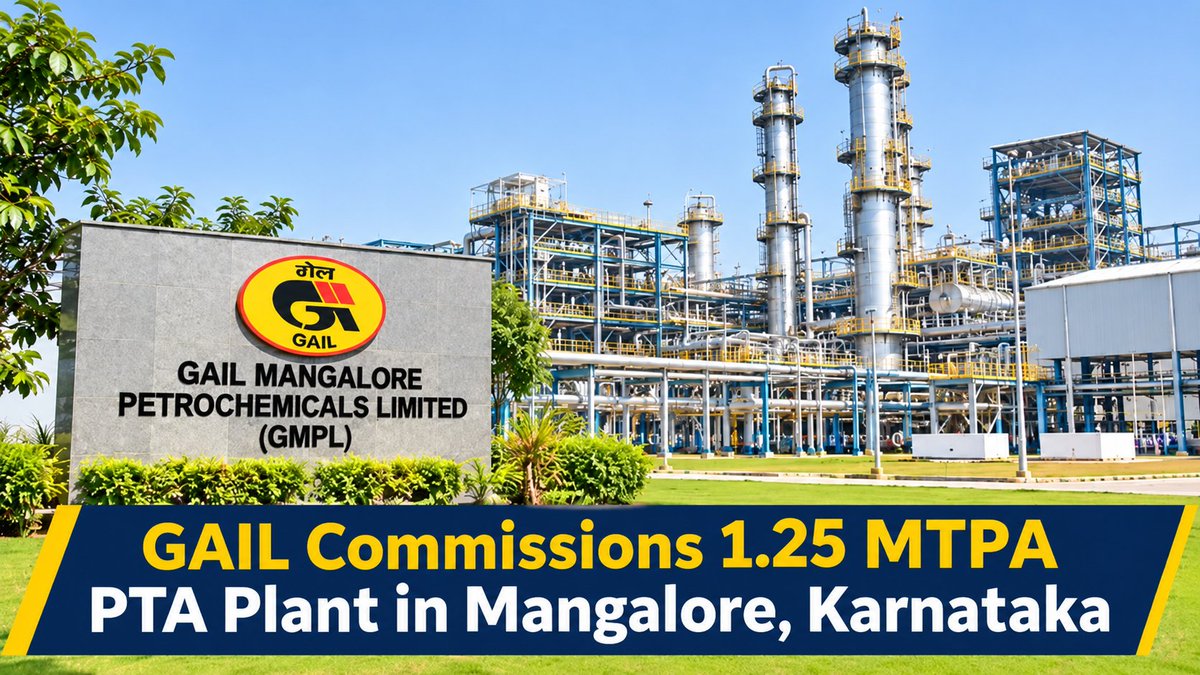
GAIL has commissioned a 1.25 million tonnes per annum (MTPA) PTA(Purified Terephthalic Acid - critical raw material for polyester fibres, yarn, PET bottles and packaging) plant at Karnataka.
Now comes the best part -
We IMPORTED 2.09 million tonnes of PTA worth ₹13,501 crore in FY25.
GAIL's 1.25 MTPA facility, at full capacity, will substitute nearly 60% of that import volume.
So, we are gonna save almost Rs 8000 Cr in Forex now.
If this doesn't make you happy, then I don't know what will!!!!
#HowIndiaNews
Lift off Bro. India will have 400 new unicorns in the next 5 years. 400 startups worth more than $1 billion each. By the fifth year, more than two new Indian unicorns will be minted every week. Sounds mad, right? It isn't. It is called escape velocity. Here is the data.
India already has 161 future unicorns worth about $66 billion. India is ranked third in the world for future billion dollar startups, and it is still climbing.
The front of the line is 51 private startups valued between $500 million and $1 billion, on track to cross $1 billion within three years. 15 of them joined just this year. Nine climbed up from the group behind, and Bengaluru fintech Scapia and EV maker Simple Energy jumped straight in.
Right behind them are 110 more, valued between $200 million and $500 million, on track to go unicorn within five years. Together they are worth about $32 billion, and that group has doubled since 2021, when there were just 54.
These 161 companies employ more than 170,000 people. The 51 at the front alone have raised about $9 billion. The 41 that disclosed revenue reported $3.5 billion for FY25, growing 50% on average.
Seven from last year's list have already crossed $1 billion: Twin Health, KreditBee, Cloudnine Hospitals, Dhan, La Renon Healthcare, Neo Wealth Management and InVideo AI. Twin Health more than tripled its valuation, from $700 million to over $2 billion.
Two more, Shadowfax and Turtlemint, have already listed on the stock market this year.
It is not just apps. Fintech leads, with names like InsuranceDekho and Finova Capital. But Agnikul is building rockets, Lohum is refining critical minerals for batteries and Rayzon Solar is making solar modules. Ema AI, UnifyApps and Observe AI are building AI.
This week Agrani Labs, a Bengaluru AI chip startup founded by former Intel and AMD engineers, is closing a $108 million round led by Peak XV, with Google joining in. Its valuation is about $350 million, ten times what it was just a year ago.
Today Bengaluru's EloElo, the company behind microdrama app Story TV, raised $80 million co-led by Hollywood's NBCUniversal, at a $500 million valuation. That is almost five times its last round, and its apps have 40 million monthly users.
Matter is building India's first geared electric motorcycle in Ahmedabad. EVs, aerospace and defence are rising fast in the next wave.
Bengaluru has 53 of them, Delhi NCR has 36 and Mumbai has 24. Just wait for the next wave from Pune, Ahmedabad, Indore, Hyderabad, Chennai, Jaipur and Kochi.
And the IPO door is now in India. Companies once expected to raise in the US are looking at India instead. In October, India was the world's largest IPO market, raising $4.8 billion, more than double the US. Jio Platforms led with a $3.2 billion offering, the biggest IPO in India's history.
The next wave of global unicorns is already here. They are being built in India, backed by money from around the world, and listing at home.
Do you still think I am wrong? I offer you this. SpaceX needed four attempts to get Falcon 1 into orbit. Skyroot Aerospace, a startup from India, did it with Vikram-1 on its very first try.
🇮🇳 India’s UPI overtakes Visa’s daily transaction volume, becoming the global leader.
Visa - 650 million transactions per day
UPI - 822 million transactions per day
How India Can Seize Technology Leadership: Dr. Mashelkar’s Blueprint
India’s top scientist who ignited Mukesh Ambani’s Jio ambitions shares eye-opening INSIGHTS on India’s technology potential and what is stopping India:.
Poverty Provokes Innovation
a. Padma Vibhushan Raghunath Mashelkar transformed India’s premier scientific organizations CSIR and NPL. Mukesh Ambani waited for him to retire, and then asked him to create Reliance Innovation Council with Nobel Laureates and global academics.
b. When Jio was just an idea, Mukesh Ambani remarked: “Doc, we must leapfrog.” Dr. Mashelkar replied: “Mukesh, do you know why does a frog leap? Because it is afraid of the predator. So, it jumps a few feet. You don’t have to jump a few feet. You must pole vault. That involves risk.”
Jio became one of the largest corporate bets in history with the untested 4G LTE technology.
c. In Dec 2025, Mukesh Ambani spoke in his honour at an event: Dr. Mashelkar was brought up by his widowed mother in a chawl in utter poverty.
His mother was refused a daily-wage job because the minimum qualification was third standard. That’s when she vowed her son would receive the highest education in the world.
How India Can Pole Vault
a. India’s Weakness: “Indian industry has never come forward to invest in R&D. Bulk of R&D work in India remains confined to Technology Readiness Level TRL 1 to 4 (laboratory level).
Why? Because TRL 5 to 7 requires long-horizon risk capital. (TRL 9 is commercial). That is missing in India,” says Dr. Mashelkar.
b. India’s Strength: “India’s talent is its strength. See how Indians perform in Silicon Valley. When legendary GE CEO Jack Welch set up the Jack Welch R&D Center in Bangalore 25 yrs ago, he was asked why are you here?
He replied: “Because I get the highest intellectual capital per dollar in India.”
c. Until 1989, India had zero international patents. In 1989, Dr. Mashelkar took over as director of National Chemical Laboratory (NCL).
Within 3 hours of joining, he made a daring claim to the NCL team of 1,100 (note: just like Elon Musk does): “India will license patents to the rest of the world.”
d. “We had zero culture of patenting, and here I was telling the NCL community we will license our technology to multi-billion global chemical giants like DuPont and Dow Chemical.
Why was I doing that? Because I knew that the NCL scientists sitting in that auditorium had world-class talent.”
e. A young scientist approached me after the lecture and said: “Do you know GE’s R&D budget is 2.5 times entire India’s R&D budget?” I told him what matters is the power of an idea and mindset. We will change the rules of the game.
f. We had no budget, no imported equipment, no industrial ecosystem. But we could do mathematical modeling and simulation end-to-end in the lab. That required only talent.
We aimed for a new breakthrough in polycarbonate, where GE was the leader with 40% world market share.
g. My team said: “If this technology was doable, GE would have done it.” In India whenever you talk of cutting-edge technology, the industry asks: “Has the US done it? Has Japan done it? So how can we do it?”
Tech innovators in US & China don’t ask this question. They don’t care what others have done or not done.
h. “You know what? We got the global patent. GE R&D in the US was surprised that some crazy lab in Chennai had beaten them. They sent down a team. When they saw our talent, they said we will partner with you. That’s how the Jack Welch R&D Center came up.”
i. Rising to Your Potential: The same people at NCL who were just copying others, were able to achieve international patents. From import substitution, we became an export-oriented lab in one year.
All that had changed was the mindset. It became a case study at Harvard Business School. “Every individual has a Mukesh Ambani in them. It’s just a question of rising to your potential," says Dr. Mashelkar.
5 Ways to Become a Tech Powerhouse
a. Dr. Mashelkar’s 5-Pillar Framework: The 1st way is you invent a new technology. The 2nd way is you buy a technology (strategic acquisition).
The 3rd way is: “Buy to Make Better.” It means you buy with an intention to make cheaper & better yourself. China does that using iterative R&D (reverse engineering).
b. 4th Way: “Make to Buy Better”: India needed AOS chemical technology. We went to Arimitsu, then Chevron, then Shell. All refused. They viewed us as a potential competitor.
So, we decided to make it ourselves. We reached pilot plant stage (TRL 4). At that point, finance dept turned us down.
c. A competitor told me: “We were keeping a watch on you. If you had gone for the pilot plant, we would have given you the technology. Because we knew you will become our competitors.”
That is called “Make to Buy Better.” When you want to shake hand with someone, they will look at the strength of your hand.
d. 5th Way: “Make it Together”: When I was heading CSIR in 2000, the Finance Minister called me and said he wanted to give something to scientists in the first budget of the new millennium. “Give me an idea in 30 minutes.”
e. I wrote my idea: “Indian industry is behind the curve due to no risk-taking. So, let govt take the risk and give money to pvt sector.” FM granted ₹50 cr. It was a big amount in 2000 just for “gambling” in risky technologies. Govt doing that was unheard of.
f. It worked because Ministry of Science, Planning Commission, and Bureaucracy were all bypassed. We formed a public-private initiative with ₹50 cr seed money. Our first product was a cutting-edge bioinformatics software. TCS and 19 Indian genomics labs worked in sync like an orchestra.
g. In 18 months, our software product BioSuit was launched in Silicon Valley, and proved 10x better & cheaper than best-in-class. “By the time I retired in 2006, we had 250 public institutions and 100 private companies working together on new technologies.”
h. Govt Has to Have Ambition: China has refused Lithium-Ion battery tech to India. KPIT has created its own sodium-ion battery. It is at TRL-7 now. To reach TRL-9 (commercial), it needs govt’s backing. (Just the way China supported BYD & others.)
i. Technologies that make the world bend before you don’t emerge from playing it safe. Chasing moonshot ideas (like US/China innovators) requires a culture where failure is celebrated.
Chandrayaan-3 succeeded because Chandrayaan-2 failed. Every mistake of Chandrayaan-2 was identified and not repeated.
Endpiece: Convex Lens Leadership
At his municipal school, Dr. Mashelkar’s physics teacher Principal Bhave gave a demo of convex lens under the sun. He then turned and said:
“Mashelkar, if you concentrate your energies like this and not diffuse (waste) them, you can burn the world.” Dr. Mashelkar says: “India needs convex lens leadership today.”
Just in 8 years :
FASTag share in toll collection :
2018: 20%
2026: 99%
UPI share in merchant payments (P2M):
2018: 6%
2026: 85%
RuPay's share in India’s debit card market:
2018: 15%
2026: 83%
This is the difference a strong leadership can make...
Do you feel India should depend on other countries for processing the critical minerals that power our future?
I certainly don’t!
Lithium, nickel, cobalt…these are essential for EVs, batteries, electronics and defence. Yet, we remain heavily dependent on imports of refined materials.
To address this, the Cabinet has approved a scheme to change this.
Key highlights:
New critical mineral processing plants.
Capital subsidy to boost investment.
Greater domestic value addition.
Stronger supply chains.
The principle is clear...India must have capabilities to build technologies of the future!
https://t.co/deencvjivt
An idea to consider during uncertain geopolitical times:
Indian govt gives up to Rs. 78,000 subsidy for solar panels. Some states give additional 20-30k subsidy.
So, by investing a little in your own batteries and inverter, and getting the rest, like solar panels, on subsidy, you can get 3 KW of hybrid power (On-grid to avail subsidy, but also can work off-grid during power failure).
Typical practical setup:
> 2–3 kW solar panels (to claim maximum subsidy)
> Hybrid inverter
> 3–5+ kWh LiFePO4 battery bank (preferred for longer life)
Can keep your home powered for days even if some loserpower adversary takes out the grid, to blame the govt, and causes a blackout.
Confirm with your local electricity company whether they allow hybrid configurations in your area (rules can vary by state and I don't know for sure).
Today, I was reading about something called the Mandela Effect.
It is actually a very interesting psychological phenomenon. In this, a large group of people share the exact same false or distorted memory of a historical event. A mass delusion of some sort.
The name of this effect came from the mass false memory, that Nelson Mandela died in prison. When in reality, he didn't
There are many examples of Mandela effect in the world, and one of which is very popular in India. And it pertains to Islamic invasions.
Most of us believe that Indian kings of the time were pushovers and they usually folded and ran at the first sight of Islamic invading armies.
This memory has been reinforced with history books telling us how Ghazni invaded us 17 times or how Ghori defeated us and installed an Islamic Sultanate that ruled India forever after that, etc etc
This makes us think, we always lost.
The reality however, is slightly different.
Because we are never taught about the following battles. Battles which can bust the Mandela effect prevalent on this subject.
Battles in which Indian kingdoms, sometimes alone, sometimes together, smashed, annihilated and routed the invaders, over both land and the sea.
These are those battles, that we are never told about.
637 CE - An Arab force under the Umar Caliphate invades what is today's Thana, get their ass kicked by the Chalukya Empire, They tried to repeat it in both Bharuch and Dabhol, with similar ending.
738 CE - A confederation of Chalukyas, Pratiharas, Bappa Rawal and other Mewar Chiefs, destroy the Ummayad armies in the Battle of Rajasthan. The rout was total. So much for the narrative that we kept fighting amongst ourselves.
739 CE - A naval invasion of Sindhi Arabs, was defeated by the unknown Saindhava Dynasty on the Saurashtra Coast
758 CE - The Arabs launched a second naval invasion, but the result was the same. They were totally annihilated by the Saindhava King Krishnaraja off Saurashtra coast
776 CE - A third and final naval invasion was launched by Arab Sindhis. Records say more than a thousand ships were launched.
We don't know the exact number, but what we do know that they were so badly routed by the Saindhava King Agukka, that the Arabs gave up on their intentions to invade India for the next 250 years.
1021 CE - Mahmud Of Ghazni laid Siege to the Lohkot Fortress defended by the Lohara Dynasty of Kashmir. He tried to capture it for more than a month, but the Loharas repelled all the attacks. Finally Mahmud of Ghazni was forced to Withdraw and he never subjugated the Loharas till the end.
1034 CE - Raja Suheldev of Shravasti, destroys the Armies of Salar Masud, the nephew of Mahmud of Ghazni, in what is called the Battle of Bahraich.
And by destroyed, I meant the entire Ghaznavid army was annihilated. There is even a nice book written on it by @authoramish Do read it
1034 CE - Now this one is a subject for a very good movie.
Ahmad Niyaltigin, the Ghaznavid governor of Punjab, raided the prosperous city of Benaras, which was held at that time by the Kalachuri King Gangayadeva. The usual pillage and destruction followed.
What happened after that, was a little different. Because Gangayadeva didn't keep quiet. He followed the Ghaznavid army, caught up with them at Kangra, which was then under Ghaznavi control and routed them.
1043 CE - A confederacy of Raja Bhoja of Paramaras, Karna of the Kalachuris, the Chahamanas and the Tomaras, recover a good chunk of the territories lost to the Ghaznavids in the previous decade of invasions.
Our history books teach us we lost. Not the fact that we actually recovered our territories quickly afterwards.
1109 CE - Ghaznavids again raid Kannauj and take prisoner the Gahadavala king Madanachandra. His son defeats the Ghaznavids, secures his father and sends them scurrying back where they came from.
1178 CE - 13 years before the battle with Prithviraja, Muhammad of Ghor tries to invade India thru Rajasthan. He meets a determined army, led by the by Regent Queen Naikidevi of the Solankis (Chaulukyas).
The Solankis totally annihilate the Ghurid army, in what we call the Battle of Kasahrada, and send them scurrying into the desert, with no water and provisions. Most of the army dies in the retreat and Muhammad of Ghor himself was lucky to make it back home in one piece.
1204 CE - When Qutub Ud Din Aibak expanded the Ghurid Rule in the Gangetic belt and captured the fortress of Kalinjar, located in present day Banda in UP, from the Chandelas. King Trilokyavarman, mounted a counter attack, recaptured the fort, killed every single member of the Ghurid Army.
So Qutub ud Din Aibak marched against them with a new army, which was routed in the Battle of Kakadadaha, fought in present day Lalitpur district of UP.
Aibak didn't return after that and Chandelas continued to rule for another 115 years.
All of us talk about repeated Invasions and Plunder and what not.
I will never understand why nobody actually talks about the resistance and defeats that we repeatedly inflicted on these armies, over land and sea, for more than 300 years.
P:S: I may have missed out on some more battles. Please do point them out in the comments section. I will be very happy.
P:P:S: All these battles are marked on https://t.co/qxLVr1muHi. You can see the territorial changes post some battles on the site.