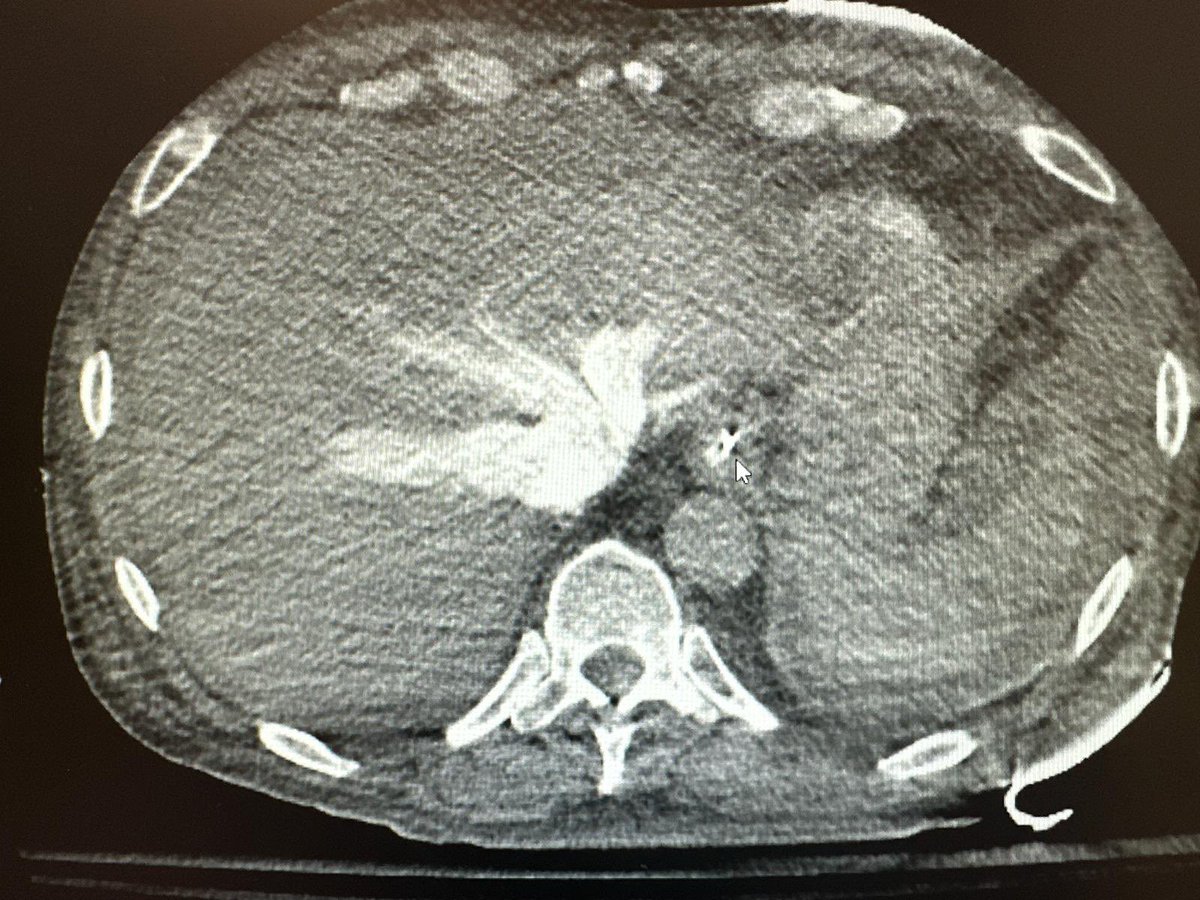
@PulmCrit@akatzzzzz Is there solid evidence that this benefits compared to AC in any patient centered outcome? Everything I’ve read is based on RV/LV. I refer patients who are very symptomatic with new large clots but my feeling is we are overdoing MT.
@emcrit@PulmCrit For the first 24 hours in patients who come in with acidosis that’s primarily driven by renal failure. Still not indication your lactic acid of 20 patient in septic shock.
this guy invented/discovered the anion gap. It was a long time before I realized the anion gap was invented/discovered. I thought it just always existed like gravity or time.
@IM_Crit_ It’s mostly consolidated lung. It could be necrotizing pneumonia but very little fluid to call it empyema. You surely aren’t going to put a chest tube in there. A bronch might work better.
75 year old female gets transferred to you over night, patient is in shock on levophed with an up trending lactate, elevated probnp and small trop leak. She has bilateral infiltrates. What are next steps?
#POCUS#pccm
@MubarakAlhatemi Yes absolutely. Patient was too unstable to complete a CTA and went into refractory shock. Unfortunately wasn’t a candidate for mechanical support 2/2 to above
Patient gets transferred to you from a standalone ER intubated on max Levo epi and phenyl looking completely mottled. Not much info is sent with the patient. ultrasound shows this. What are your next moves
@MubarakAlhatemi It was cardiogenic shock that got complicated with an aortic dissection that you can see in the other videos making mechanical support not really an option.
@critconcepts I agree! That happens to me a lot. There is a flap in the aorta that was consistent with dissection. It’s also seen in the cross sectional view of the aorta
@StefanKornst That’s actually lung in a pleural effusion. Differentiating the two is tricky but a pericardial effusion would extend in between the aorta and the heart