Imagine a doctor’s life in the prosperous west. He’s at his professional peak, rubbing shoulders with the giants in his field. Something propels him homeward. Is it the struggles of the hapless people back home? Is it the seed of compassion that was planted in him as a child? Is it the design of destiny?
Marthanda Varma Sankaran Valiathan was born in a notable family in Mavelikkara in Kerala. He had his early education in a government school. Some seeds are planted, even when we aren’t sure about what fruits the seed will bring about. MS Valiathan’s early life is a classic example. His parents instilled in him a love for languages - Malayalam, Sanskrit and English. His maternal uncle wa a doctor and trained in Edinburgh who inspired the young boy. His neighbour was an Ayurvedic doctor. Valiathan was enamoured by the white coat and joined the Trivandrum Medical college. He flew to England for his postgraduate training as a surgeon in Liverpool university. His heart was set on heart surgery . After a brief stint in PGI, he once again went for training - this time on the other side of Atlantic , in Johns Hopkins University. His mentors were Dr Vincent Gott and Dr Charles Hufnagel - both pioneers in cardiac surgery. Hufnagel in particular, invented the ball valve which he used to treat aortic regurgitation, even before the advent of heart lung bypass. Gott pioneered the development of clot resistant surface - since blood can easily clot if it comes in contact with foreign surfaces, a serious issue when implanting heart valves. In short, their team work made heart valve replacement safe and effective.
Valves in heart are like doors between rooms. They keep what should be inside a chamber inside and what should be outside a chamber outside. However they are like rotating irregularly shaped doors in a house that’s constantly moving - making them quite complex. The heart valves, can get damaged in old age- which is what the American team in Hopkins specialized in. After learning cardiac surgery, Dr Valiathan decided to return to India - much to the disappointment of his mentor.
After landing in India, Dr Valiathan’s first major problem was finding a job. He joined an ad hoc post in Safdarjung - but could do neither surgery nor research. He then moved to IIT Madras, where he spent some time teaching. Meanwhile his mentor Dr Hufnagel felt sorry for him and wondered if Valiathan had made a foolish mistake of leaving the US.
Then, destiny intervened.
One fine morning, Dr Valiathan got a call from CM Achutha Menon to set up a hospital in Kerala - the Sree Chitra Tirunal Medical center in Trivandrum. He got work and the authority to do everything he could to improve the situation. It was then that Dr Valiathan faced his second road block - unlike the US patients who he was used to operating, his valve disease patients were quite young. This is because Rheumatic fever is common in India , not the west. The fever would damage the valves - the door would either get stuck or flail hopelessly. The logical solution was to change the valve - except the western made valves were expensive costing approximately $1200.
Many patients couldn’t afford the cost and were sent away. Dr Valiathan vowed than no one would be condemned to death, because they couldn’t ‘afford’ to live. He set forth with a team of doctors to solve the problem. Natural valves from animals like pigs were not a scalable solution. Valves from human taken during autopsies were even less so. While the west was moving towards bio-valves, that mimicked natural valves as much as possible, they had shorter lives. Indian patients were young and needed valves that last a lifetime.
The solution was a mechanical valve with a tilt disc design. When they tried the first generation valve, it failed miserably. Second time - failed. Third time - failed. It took 12 years for Dr Valiathan , but he finally struck gold in the fourth generation valve. At long last , India had its own valve which cost just 315 dollars ! It was time to put the valve in a man.
K.D Muralitharan from Kunamkulam was operated the valve. Two decades after the surgery, he is still alive. Every year on December 6th, he gets a call from his favourite doctor, Dr Valiathan - the man who operated on him. A bond that was forged through a valve.
In a success story of public private partnership, TTK industries in Chennai was given the license for making the valve. There was initial skepticism - after all the company only made condoms and gloves. They lived up to their side of the deal. Today the company makes 1200 valves per month and the valves are meant not just for Indian patients, but also exported across the world ! As the US healthcare grapples with spiralling costs, doctors wonder if the Indian made valve ( a category III medical device in US) could be the answer for poor uninsured patients.
He retired as the founding director of Sree Chitra Tirunal and became the VC of Manipal University.
With more time on his hands, he didn’t rest on his laurels. His early exposure to Sanskrit and his neighbour who was an Ayurvedic Vaidya rekindled his interest in Ayurveda. He once again became a student - this time under Sri Raghavan Thirumalpad, an octogenarian Ayurveda scholar. It wasn’t just the language of Ayurveda which was different - but the entire mental model and indeed outlook on life. From Bailey , Love and Schwartz, he had to shift gears to Charaka , Susruta and Vagbhata ! It changed his understanding of medicine.
Life had come a full circle for Dr Valiathan. Well, almost. His coming of age, is in someways, reflects the coming of age of India too -From being thought of as lightweight to finding a place in the global stage. What motivates such people to reach unforeseen heights? Perhaps Charaka’s immortal words hold a clue,
“Medicine owes its call not to selfish goals or worldly pleasure, but to compassion for fellow beings .In seeking to know my legacy, you have but seen the leaves of a universal tree, too vast for your eyes. May your sight grow and your quest never end”
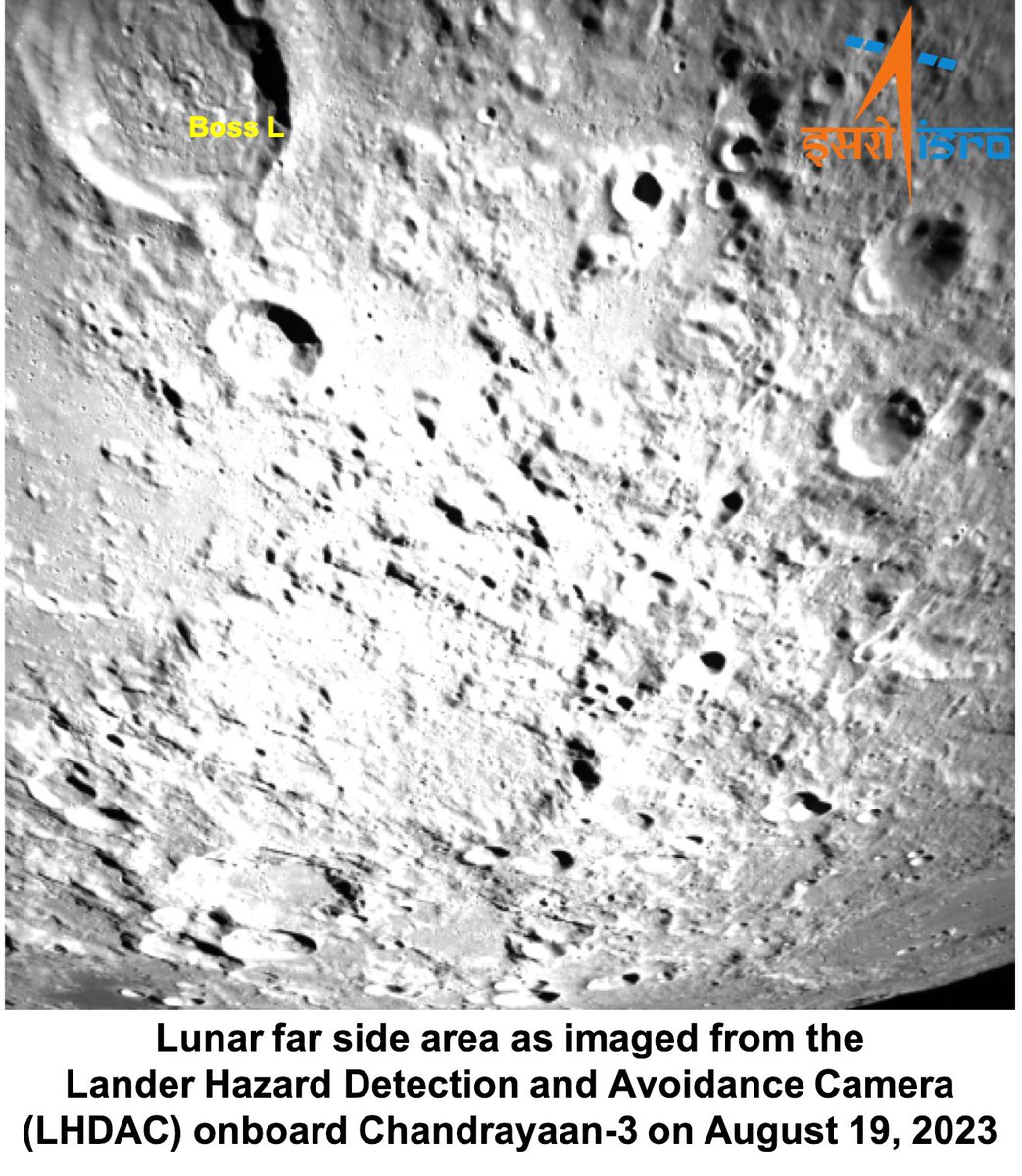
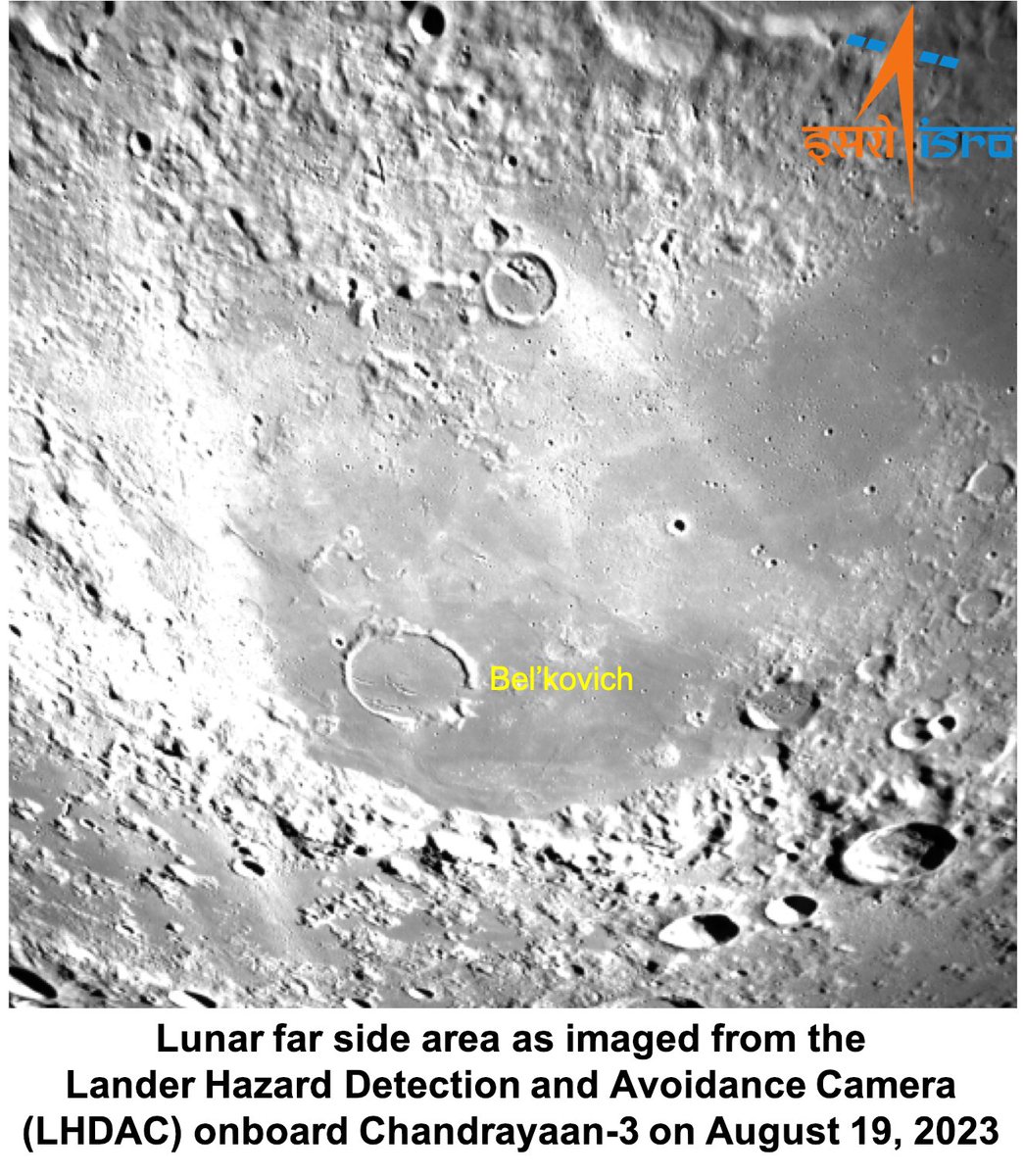
Chandrayaan-3 Mission:
Here are the images of
Lunar far side area
captured by the
Lander Hazard Detection and Avoidance Camera (LHDAC).
This camera that assists in locating a safe landing area -- without boulders or deep trenches -- during the descent is developed by ISRO at SAC https://t.co/cr5Kp0ssOW
#Chandrayaan_3
#Ch3
Chandrayaan-3 Mission:
'India🇮🇳,
I reached my destination
and you too!'
: Chandrayaan-3
Chandrayaan-3 has successfully
soft-landed on the moon 🌖!.
Congratulations, India🇮🇳!
#Chandrayaan_3#Ch3