You can now fork a session in Orchestrator. Click Fork on a turn and you get a new session with its own worktree and branch, starting from that point, while the original keeps going.
https://t.co/JOaE2ABlJC v0.14.9 is out.
- Your agents can now use desktop apps.
- ⌘K searches inside your files and chats.
- Start a task by pasting a screenshot.
- Everything your agents make, in one gallery.
Plus 145 improvements from 28 contributors.
See thread below 🧵
looking for a conductor alternative after today's news? our team will hop on a 30 min call and walk you through migrating to @useOrchestrator
https://t.co/JYSgIBFDt3
https://t.co/jwI1H18IeV
Hand off four tickets at 6 PM. Wake up to four PRs ready to merge.
Overnight, your agents resume after the usage limit, fix their own CI, and answer review comments. You review and merge from your phone.
Stop babysitting agents. Start orchestrating them.
https://t.co/W0oxQJlCNX v0.14.3 is out.
Artifacts: everything your agents make, in one place.
Chat now suggests your next message.
Manage agent CLIs right from Settings, and nudged to update then to latest versions.
Redesigned shortcuts, and a faster app overall.
See thread below for details 🧵
I have been building this app with him, for the last, well, 8 months and I have seen it through the cranky desktop, the nodejs running on :3001, seeing the initial phases of the app and we've come pretty far I'd say. but genuinely at this point, I think the product is very very much stable and genuinely like the product and I'd prefer it over anything else. I literally wanted to try out some other, but man couldn't leave it. Way Ahead we are, Way more to go. See you at the top.
8 months ago I built a tool for myself because managing coding agents was a nightmare.
Today @useOrchestrator has over 13,000 stars on GitHub.
Thank you to everyone who starred it, broke it, fixed it, and built on it!
(this whole video was made in Orchestrator, no video editors / external tools were used)
Our #neatHack submission
Everyone goes on about tokenmaxxxing. But what about when you are on a budget? There have been countless incidents where devs have gone at par with their expected credits budget.
That's why we introduce: Tally, the CFO for your AI Agents.
Just do: npm install -g tally-agents, and it runs in your terminal. You can do it yourself or just let your agent handle the hassle 👀
Built with:
@arithecfo: helped frame Tally’s business around cost per verified task, making agent spending and potential savings measurable. Tally reads the monthly budget, records actual spend by model tier, and sends attempt reports to Ari for cost analysis and hypothetical model comparisons.
@EntireHQ: to track our work while building Tally and save checkpoints of important changes. Tally also uses Entire’s code graph to understand which files a task may affect. If a worker hits its budget limit, checkpoint information helps the next worker continue from where it stopped. When the graph finds no matches, Tally searches the repository instead.
@neatlogs: to track which model Tally chose, how much it spent, and whether each task succeeded. Tally uses those past results to help choose models for future tasks. The traces also helped us debug workers starting or stopping incorrectly. Our latest parallel run automatically recorded both Tally’s decisions and the workers’ activity.
@useOrchestrator: to coordinate the coding agents building Tally, each in its own branch and workspace. Tally also uses it to launch workers on selected models, monitor their token usage, and stop them at budget limits.
@crustdata: We used CrustData to research potential customers for Tally, looking for software companies with 20–500 employees. We reviewed 10 returned companies and kept six as possible prospects for the business plan.
links in comments :)
https://t.co/PhRTZoPlDr
You paid ₹1,000 for a domain.
You didn't buy a website or a server. You bought one line in a list Verisign keeps (NIXI for .in): this name, this registrar, these nameservers.
For one year.
Ep 1 of Things Even Vibe Coders Should Know 👇
You should be able to use smarter models in your agent.
You should be able to use cheaper models in your agent.
You should be able to use local models in your agent.
You should be able to use a different model for every job.
You should be able to switch models in the middle of a conversation.
You should be able to choose what data your agent has.
You should be able to choose what it remembers and what it forgets.
You should be able to choose what computer your agent runs on.
You should be able to run it on a machine that never touches the internet.
You should be able to run it while your laptop is closed.
You should be able to reach it from the apps you already use.
You should be able to choose how your agent thinks.
You should be able to read the prompt it runs on.
You should be able to see every tool it has, and turn off the ones you don't want.
You should be able to teach it something once and never explain it again.
You should be able to know what it did, and when, and why.
You should be able to export your agent.
You should be able to read the code.
You should be able to change the code.
Your agent should be yours.
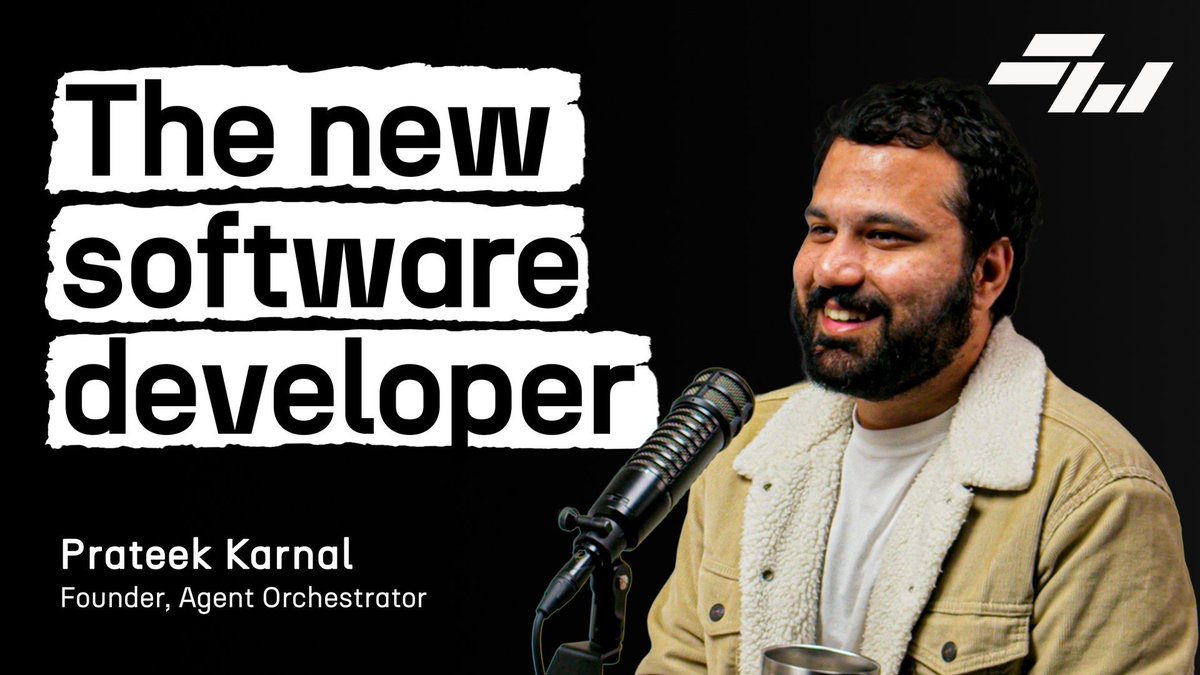
Four coding agents at once was my limit. I lost track. @agent_wrapper runs ten to twenty and built Agent Orchestrator to keep up. His honest productivity gain: two to three times. Verifying output stays human work. New episode of the podcast.
https://t.co/z7pFnEqemO