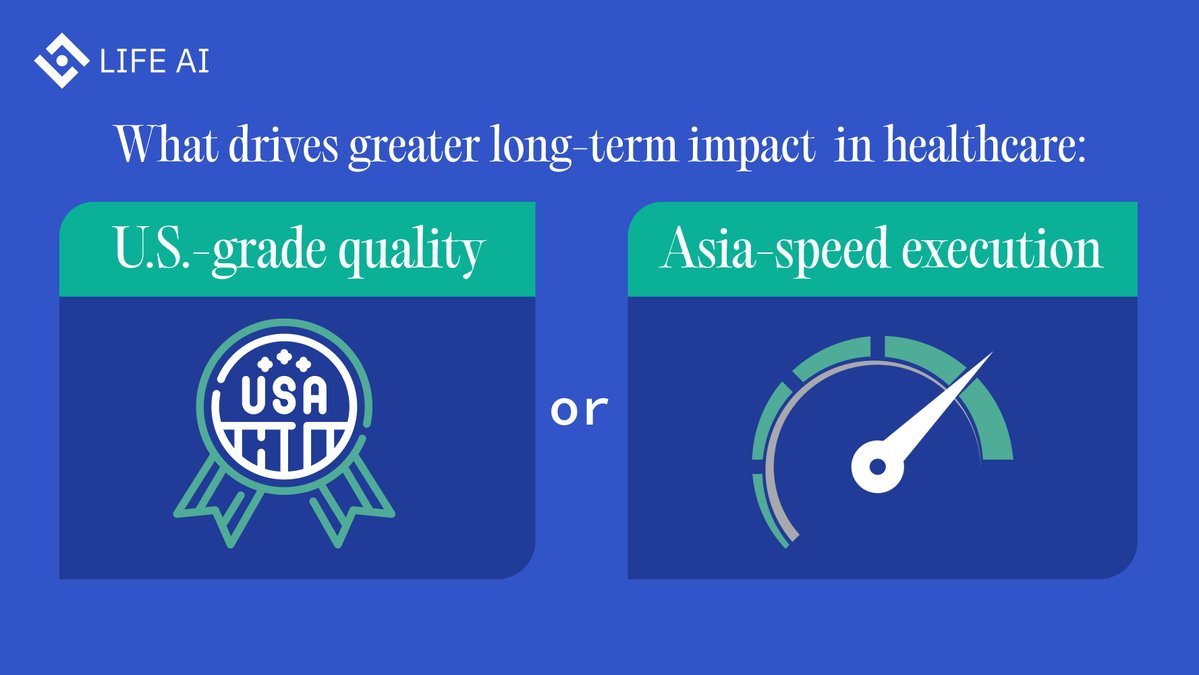
🩺 Community Question:
In medical innovation, what drives greater long-term impact:
U.S.-grade quality for rigorous validation and strict regulation
or Asia-speed execution for faster approvals and rapid scale?
Viewpoint A: U.S.-Grade Quality
Through institutions like the U.S. Food and Drug Administration, the U.S. emphasizes deep clinical validation before approval.
Rigor reduces risk, protects trust, and supports durable breakthrough innovation.
Viewpoint B: Asia-Speed Execution
Countries such as China and India accelerate approvals and deploy innovations at scale.
Faster access can save lives, especially in high-burden diseases.
👇 Drop A or B and share your perspective.
Health isn't political, but access often is.
Your perspective might be exactly what's missing.
Debate to earn with @LifeNetwork_AI: https://t.co/xe5w6C0wZU
Code: TLHLO1I
#LifeAITestnet#HealthcareAI
���Community Question:
Should healthcare prioritize personalized care for individuals, or one-size-fits-all care for everyone?
Viewpoint A: One-size-fits-all as the default
Standardized care is more practical, affordable, and equitable for large populations and resource-limited settings. It delivers consistent, proven outcomes at scale, reduces disparities, and avoids the high cost and access barriers of full personalization.
Viewpoint B: Shift to personalized care
Personalized care is more precise, effective, and preventive. Leveraging genetics, AI, and real-world insights enables better outcomes, fewer side effects, and long-term cost savings as personalization becomes increasingly accessible.
Have you benefited from standardized care or struggled because it wasn��t personalized enough?
👇 Share A, B, or a short personal insight.
Tag someone who should be part of this conversation.
🩺Community Question:
Should healthcare prioritize personalized care for individuals, or one-size-fits-all care for everyone?
Viewpoint A: One-size-fits-all as the default
Standardized care is more practical, affordable, and equitable for large populations and resource-limited settings. It delivers consistent, proven outcomes at scale, reduces disparities, and avoids the high cost and access barriers of full personalization.
Viewpoint B: Shift to personalized care
Personalized care is more precise, effective, and preventive. Leveraging genetics, AI, and real-world insights enables better outcomes, fewer side effects, and long-term cost savings as personalization becomes increasingly accessible.
Have you benefited from standardized care or struggled because it wasn’t personalized enough?
👇 Share A, B, or a short personal insight.
Tag someone who should be part of this conversation.
Why does healthcare advance in technology but stay slow in mindset?
Let's question what no one questions.
Jump in and debate with me: https://t.co/xe5w6C0wZU
Code: TLHLO1I
#LifeAITestnet#HealthcareAI
This isn't a "complete task and wait" testnet.
It's "speak up and get rewarded."
Jump in @LifeNetwork_AI: https://t.co/xe5w6C0wZU
Code: TLHLO1I
#LifeAITestnet#HealthcareAI