We are using our package to characterise the burstiness of events in patient health records to better understand the triggers of poor health in patients with multiple long term conditions part of the #NIHRAIM programme
Just out! Our package for exploring the temporal dynamics of time course data, with a focus on Burstiness of events. @AI_MULTIPLY#AI https://t.co/mNZYiXm8Tv
1/14 Excited to introduce PertEval-scFM! It provides benchmark and evaluation tools for perturbation effect prediction models, including single-cell foundation models (scFMs). Paper and GitHub link at the end of the thread! 🧵👇
We're really proud to publish our Shiny R Expression Portal, making it easy for others to present any type of expression data on the web. Great work from @rafaelhenkin and team!
🎉⚙️ I'm very happy to publish shinyExprPortal w/ @_katriona, Myles Lewis and @thebarneslab : a #bioinformatics#shiny#R package to share results of omics projects: https://t.co/IVcJcoYfmS Config file + expr matrix + measures/clinical = interactive data portal supplements!
UK & Ireland Major Trauma Haemorrhage:
What Now? What Next?
12th & 13th March, Wellcome Trust, London & online
Register for free here:
https://t.co/ofoiCSMv5L
Critical bleeding is still the leading cause of potentially preventable deaths in major trauma patients. Despite huge improvements in overall outcomes over the past 10 years, mortality from torso haemorrhage remains very high, and over 50% in some series.
This is a national (UK & Ireland) meeting to bring together all MTCs, Air ambulances and anyone interested to discuss future management, pathways and prrotocols for bleeding management. (Worldwide attendees online are very welcome)
The past year has seen two major clinical trials completed across the national trauma system – UK-REBOA and CRYOSTAT2. What does data from these trials tell us about our current pathways and practices for major haemorrhage. What should happen now? What are the implications of these studies? How should we change our practice? And can we look to the future to improve our decisions, practices and outcomes?
The aim of the event is to use results from the trials and other contemporaneous data to facilitate a national discussion regarding how they should be incorporated into practice in the UK. We will cover the bleeding pathway from prehospital care through to operative or interventional haemorrhage control. The event will be fully interactive, and we would really like to bring out the views and experiences of front-line clinicians and transfusion practitioners.
Day 1 - “What Now?” will focus on results and additional data from the trials, to discuss the place of REBOA and cryoprecipitate in future pathways, and also how we can improve our practices for non-compressible haemorrhage, critical bleeding, resuscitation and coagulopathy management in general.
Day 2 - “What next?” focuses on challenges in decision-making, and introduces the COMBAT-AID programmes work to bring AI decision support to these patients. Draft programme is available on the registration pagee.
The event is funded by the NIHR HTA and the US DoD COMBAT AID programmes. , and will be intentionally interactive – we would really like to hear everyone's views, thoughts and ideas.
In-person attendance is limited to just over 150 attendees, and we have reserved spaces for representatives from UK & Ireland MTCs and air ambulance services. Some 40 or so additional places are available.
If you would like to join us in person then please indicate whether you would like to be present in person for one or both days. We will inform you by Tuesday 27th February if we have secured space for you.
The meeting will also be livestreamed so you can also register for online access.
We look forward to seeing you, in person or online, and look forward to two days of intense discussion that will translate into new approaches and guidance for our patients.
Please spread the word!
Lots of potential for #MachineLearning in identifying diagnostic #biomarkers, but need appropriate training sets that include confounding comorbidities
Our latest: Multi-omic diagnostics of prostate #cancer in the presence of benign prostatic hyperplasia
https://t.co/J2E2m2PMo7
🚀Come and join Data Science for Health Equity next week where we will launch our new three-year strategy, laying out our focus areas for 2024–2027. We've also got a special in-conversation sessions from Angela Saini & @Maxi_Macki
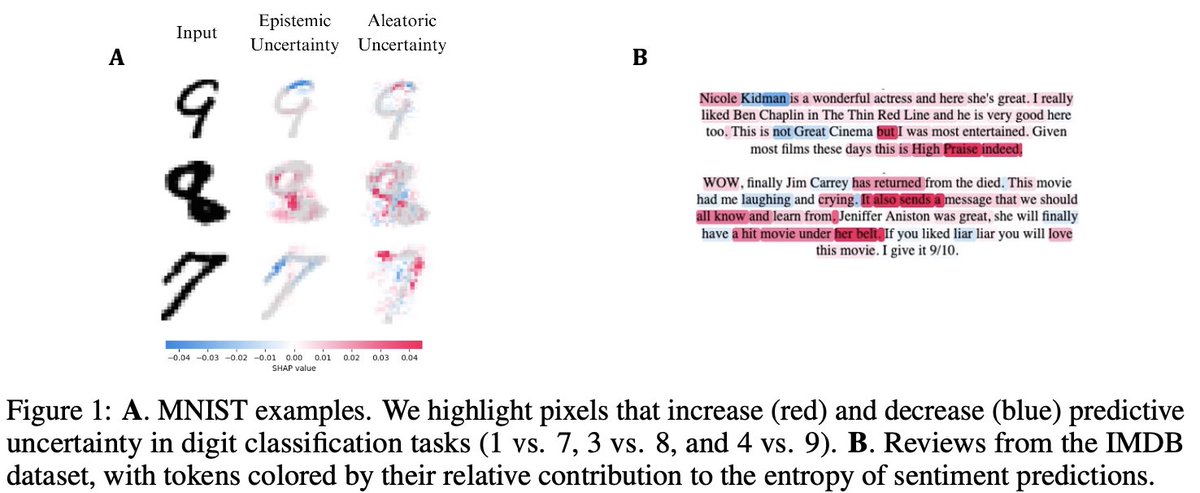
Explaining model *predictions* is all well and good – but what about model *uncertainty*? Pleased to announce that our paper on information theoretic Shapley values will be presented at #NeurIPS2023. See you in NOLA! @josh_ke_ohara@NiekTax@ido_guy https://t.co/k5viTKmqVi
Fantasitic collaboration with @EtoFabiola@Sarah_Finer and @Ladyroho emphasising the need to identify, prevent, and manage multimorbidity early in the life course @AIMultiplyNcl https://t.co/QlDxsBm6zl
A massive day for UK trauma with the publication in @JAMA_current of two game-changing trauma trials: @CRYOSTAT_2 and @UKREBOATrial.
Both turning points in how we understand and treat trauma patients.
UK-REBOA: https://t.co/PLEs7LXZ5o
CRYOSTAT-2:
https://t.co/U9Yv0857JO
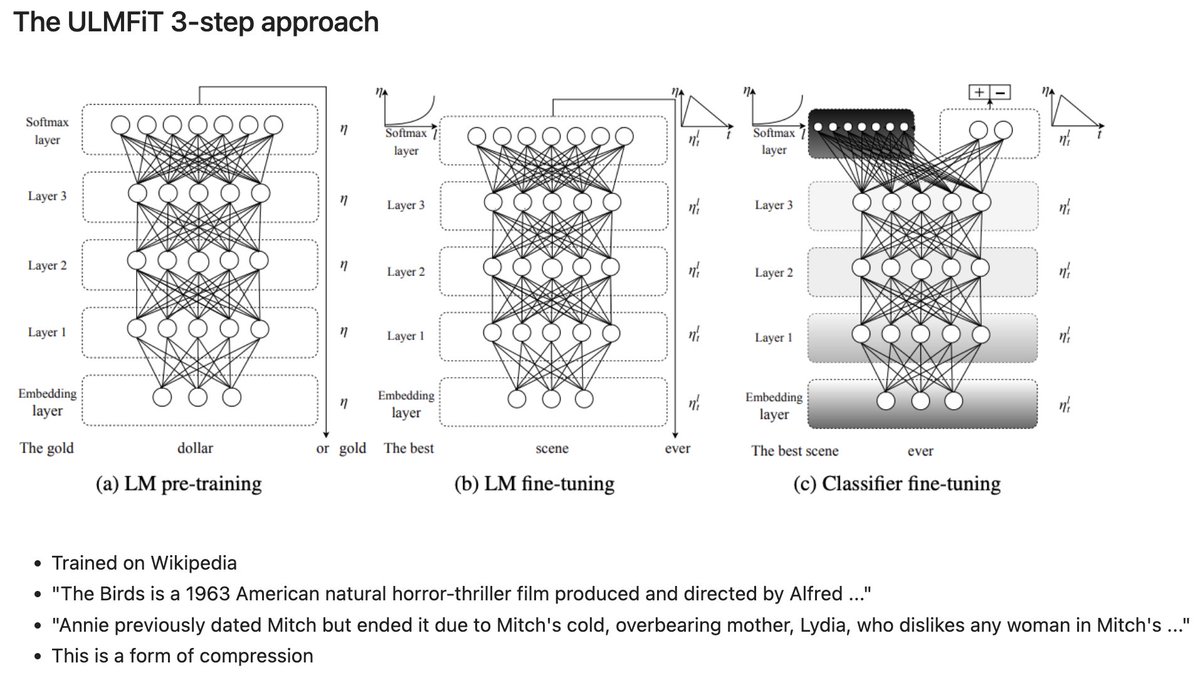
I just uploaded a 90 minute tutorial, which is designed to be the one place I point coders at when they ask "hey, tell me everything I need to know about LLMs!"
It starts at the basics: the 3-step pre-training / fine-tuning / classifier ULMFiT approach used in all modern LLMs.
🌟 Don't miss out on this exciting opportunity for a 5-year post-doctoral fellowship in my group! Perfect for those with expertise in AI, bioinformatics, or robust data science skills. Apply by September 29th. @QMULWHRI#PostDocFellowship#AI#Genomics
https://t.co/B39n1FtiGc
Even more fundamentally, I wonder what the bioinformatics community would look like if we paid subscriptions to Ensembl, UCSC, Gtex, Chembl, OpenTargets or maybe even Bioconductor?
It's about 2 years since I declined to renew my IPA licence and tools like metascape and enrichr are making me wonder why it took so long to come to this decision