One of the biggest frustrations of internal change/improvement leaders are organisational “rules”. These are processes & policies that add little value but create obstacles to change & innovation & sap our energy. A common mantra is that we need to “break the rules”. I often say we should flip our thinking. Rather than breaking the rules (which implies risk & danger in undermining authority) we need to give ourselves “permission” (which implies believing in our own authority & positive intent to find ways to move forward).
So I appreciated this sketchnote & podcast from @tnvora, based on a new book by Jillian Reilly. It identifies “ten permissions” to move beyond inherited rules & develop new, intentional ways of thinking, acting & leading. We can all give ourselves permission to:
•Experiment: Try new approaches, projects & roles, treating leadership as an ongoing journey of learning & discovery.
•Take it outside: Seek diverse perspectives from outside traditional boundaries—collaborating, exploring & staying curious.
•Feel your way: Trust emotion & intuition, using self-awareness as an asset in complex, people-centred work.
•Forget about the future: Focus on the present & immediate next steps, rather than over-planning in uncertain environments.
•Think small: Value small wins & the compounding power of incremental improvement.
•Travel light: Let go of unnecessary baggage—whether that’s limiting beliefs, old roles, or redundant processes.
•Look for trouble: Welcome challenges & tricky conversations as opportunities for development & positive disruption.
•Make believe: Imagine alternative futures & cultivate creativity.
https://t.co/qrKpUhJtQP
Between 1 January and 31 March 2025, our Welfare team have granted £81,670 to support our soldiers, veterans and families in need. This support covers a variety of different areas, with the biggest spends this quarter being on allowable med, and hardship.
This would not be possible without the continued support of you, our donors, so thank you for helping us make a difference.
If you are, or if you know of, an Airborne veteran in need of some support, please reach out. Our team are here to help and are happy to have a chat to help you get back on the log.
SUPPORT OUR PARAS - proud to be the reserve parachute for British Airborne Forces; past, present & future.
#Paras
#Airborne
#Paratrooper
@supportourparas@BritishArmy@16AirAssltBCT
Ah, this tariff stuff is the funniest shit ever. All you can do is laugh.
Literally never watched a country commit economic suicide in real time before, and I did three tours in Afghanistan.
Why superficial, so called "staff engagement" is worse than no engagement at all.
This is about "listening sessions" & "engagement workshops" where people put their ideas forward (often on post-it notes) where nothing happens afterwards or "suggestion boxes" that don't get opened often. It allows leaders to say “We asked for employee input” without actually giving up control. It’s engagement without risk.
It has a side effect. It erodes trust. People see through the act & resent it. They disengage more. It turns hopeful people into even bigger cynics.
Three key questions to ask about any "staff involvement" strategy:
1. What happens to these ideas after this meeting?
2. Who decides which ones move forward?
3. How do we measure if this process is working?
Real collaboration isn’t a meeting. It’s a way of thinking & behaviour, role modelled by leaders:
- Being open and creating visible feedback loops
- Ensuring follow-through & action on the ideas put forward
- Distributing decision-making power
- Enabling dialogue across the system
- Setting accountability goals for collaborative working:
https://t.co/3eRS8jucZ9. By Bette Ludwig @BetteFreelancer.
New research shows that fatigue from Teams, Zoom and other virtual meetings is a demonstrable neurological phenomenon. It differs from the fatigue experienced in face-to-face settings (brain images show that). Certain platform features, such as seeing our own faces, makes the fatigue worse.
Scientifically-based strategies to address "Teams fatigue":
1) Mix in some audio-only meetings (eg, phone calls/conference calls): this reduces the cognitive load and means people can move about during the meeting
2) Try to stick with one platform: switching between Teams, Zoom, Google Meet etc, makes the fatigue worse
3) Practice "IT mindfulness": actively explore & adapt the technology to better suit your needs
4) Switch off the "self-view" function (so others can see your face on screen but you cant): in virtual settings, maintaining a continuous self-view can unintentionally affect both individual performance & group dynamics
https://t.co/QqYZqF00JH. Newly published in @mitsmr.
Graphic via @springroleinc.
The most dangerous, oddly glorified, yet overlooked problem in the world:
Overthinking and underacting.
It's why you're stressed, depressed and your immune system is always in chaos.
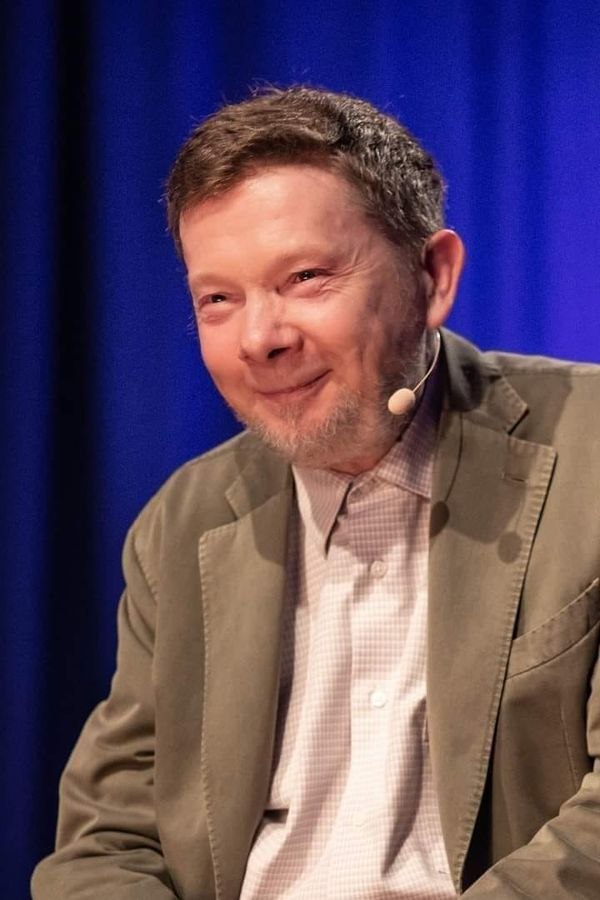
Here's Eckhart Tolle 7-step protocol to escape the prison of overthinking: 🧵
@HarvardBiz@HarvardBiz overthinking certainly stifles growth of the person and reduces growth mindset - some
organisations suffer hugely from this- however organisation culture either deepens or stifles overthinking.
Emotional intelligence >> IQ
Dr. Daniel Goleman, a psychologist who spent 3 decades studying Emotional intelligence, says:
"The amygdala (emotional brain) often overrides the prefrontal cortex (rational brain) during stress."
5 lessons he teaches to master your emotions:
@HelenBevan Disruptive change is going to be the biggest approach in the new era we now live in. Adapting and being agile to this disruptive approach is going to be critical.
https://t.co/7Ssk5uGFf5
As I said the other day, two options on the table with Ukraine:
1) Russian refusal is all theatre, the ceasefire will be signed eventually (probably with more concessions forced out of Ukraine), but initial refusal shenanigans let Putin appear like a strong man and claim a win.
2) Putin has humiliated Trump, after Trump burned vital alliances, alienated all the USA’s international partners, and facilitated the killing of Ukrainians on Putin’s behalf. And there’s almost nothing Trump can do about it without looking desperately weak.
Both of these options are terrible—proving once again the idiocy of a transactional approach to foreign affairs.
And in the meantime, even after two weeks of the USA stacking the deck against them, heroic Ukraine continues to take the fight to the invaders inside Russia itself. Slava Ukraini.
There is a serious decision point coming imminently for European leadership. Trump’s blinding and partial disarming of Ukraine has created a real risk of the front line collapsing and Russian tanks advancing on Kyiv.
Trump’s desire to hand Russia victory will need European leaders to decide if we deploy air power to defend Ukraine from total overrun.
This is not helped by having pro-Russian American troops behind our front lines. The situation has the potential to escalate beyond our worst nightmares.
The worst US president in history, and his desire to hand Putin a win, has created the most dangerous security situation the world has faced since 1939.
“Let’s show our gratitude to the generation to whom we owe absolutely everything.” 🇬🇧
This May we’ll celebrate 80 years since VE Day and thank all those who made it happen, says Minister Al Carns.
A major military procession and flypast over London will mark the anniversary. ✈️
Starmer has done the right thing today.
We will need to go further, and bring other countries with us, but he has put the UK into a genuine position of leadership in support of #Ukraine.
I’ll criticise when he gets things wrong, but today he’s done the right thing.