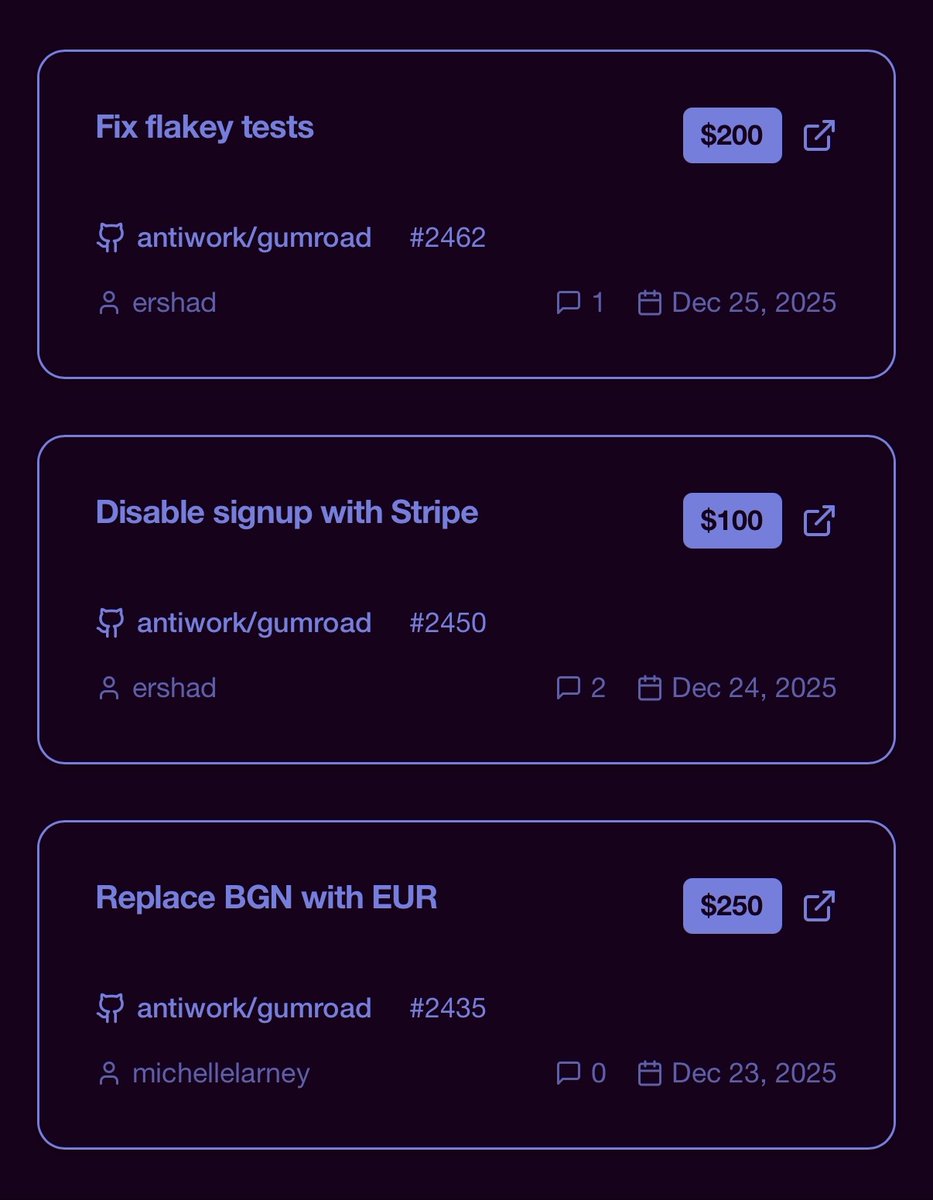
I’m looking for people who are ready to lock in with zero distractions for the next 3 months.
Let’s commit to this roadmap and actually follow through.
Forget the AI noise for now. Focus on becoming solid in backend engineering and system design.
It might sound unrealistic, but you’ll be surprised at how much you grow by the end of June / early July.
Read below 👇🏿
the terminal is quietly becoming one of the most interesting surfaces in interaction design
i've been experimenting with what a personal website feels like when it lives in the terminal instead of a browser
Top 10 DSA problems that still dominate coding rounds:
1. Two Sum (hash map)
2. Sliding Window Max / Longest Substring (window + freq map)
3. Binary Search on answer (min capacity, koko bananas)
4. Merge Intervals (sort + scan)
5. Top K Frequent (heap / bucket)
6. LRU Cache (hash map + doubly linked list)
7. Kth smallest in BST / inorder (stack)
8. Linked List cycle + reverse (fast/slow)
9. Islands / shortest path (BFS/DFS)
10. DP classics (coin change, LIS)
Learn to code these fast, explain tradeoffs, and handle edge cases and you should be able to clear most rounds.
Low-key websites I quietly rely on
1) https://t.co/FDnurfhwge
Gives you a brutally clear learning path for roles like frontend, backend, DevOps, etc
No fluff, just “learn this → then this → then this”.
2) https://t.co/1xhB1Us0oz
An online playground to quickly test HTML, CSS, JS without setting up anything locally
Perfect for quick experiments and debugging ideas
3) https://t.co/d80zVxq6TY
A collection of reusable React hooks with real use cases
Saves time and helps you avoid rewriting the same logic again and again
4) https://t.co/UgqeLiqese
Concise cheat sheets for languages, frameworks, and tools. Ideal when you forget syntax and don’t want to read a 20-minute blog
5) https://t.co/OehnjnfVix
Turns messy JSON into a clean visual tree
Makes understanding large APIs and configs way easier than staring at raw text
6) https://t.co/mcMPeqEFWJ
Lets you generate and preview color palettes instantly
Useful when you want decent UI colors without guessing or copying blindly
7) https://t.co/9yEsuJrWCB
Build, test, and debug regex step by step with explanations Honestly, the fastest way to stop hating regex
8) https://t.co/7eM95WZ8cJ
Shows how big an npm package really is before you install it
Helps you avoid bloating your app with “tiny” libraries
9) https://t.co/Za87baZsBk
Tells you which CSS/JS features actually work across browsers Essential before using shiny new features in production
10) https://t.co/YeYh94AX4R
Google’s own diagnostics tools for DNS, email, headers, and network issues
Surprisingly useful for debugging real-world problems
👉 Which one of these do you already use and which one did you not know existed?
If your goal is backend mastery, you don’t need 60 projects.
You need 5 projects that force you to think like a backend engineer.
Here are the most important 5, in order
1. Build your own Web Server
HTTP parsing, routing, middleware, concurrency, timeouts.
This teaches you how every backend request actually flows.
2. Build your own Database / Key-Value Store
Storage engine, indexing, WAL, compaction, concurrency control.
You’ll finally understand why databases are slow or fast.
3. Build your own Cache System (Redis-like)
Eviction policies (LRU/LFU), TTLs, memory management, persistence tradeoffs.
This teaches performance and real-world scaling.
4. Build your own Message Queue / Broker
Producers, consumers, retries, ordering, at-least-once vs exactly-once.
This is core to modern distributed backend systems.
5. Build a Distributed System (Mini Microservices Platform)
Service-to-service calls, auth, rate limiting, failures, retries, observability.
This ties everything together and separates seniors from juniors.
That’s it.
If you can build these 5 end-to-end, you don’t “know backend” -
you understand systems.
Everything else is a variation or deeper optimization of these fundamentals.
why don't people just make 5k a month by :
- getting an aged yt account
- optimize a tik tok page for viral videos that can be repurposed
- downloading viral proven tik tok videos
- upload tik tok videos into gemini
- script video with gemini
- generate voicover with eleven labs
- edit in capcut
- post one video daily
its that easy
How to contribute to open source :
Step 1:
>Don't overthink it.
>Open source is just people building things together.
Step 2:
>Pick one programming language you’re comfortable with.
>You don’t need to know everything.
Step 3:
> Learn basic Git & GitHub.
> Clone, branch, commit, open a PR ,that's enough.
Step 4 (important) :
>Find a project.
>I use Ossium (link in replies) to find projects by interest.
Step 5:
> Choose small, approachable repos.
>Avoid scary ones at the beginning.
Step 6:
>Set the project up locally.
>Understand how it actually works.
Step 7:
> Look for a small issue.
> Docs, bug fixes, or tiny
improvements are perfect.
Step 8:
> Fix it and open a PR.
> Don't overthink it.
Step 9:
> Learn from reviews.
> Your first merged PR builds confidence fast.
That's how open source really starts.
I’m non-technical but want to deeply understand AI.
@karpathy's “Intro to LLMs” is the best resource I’ve found so far.
Here are my biggest takeaways and questions from his 60-minute talk:
1. A large language model is “just two files.”
Under the hood, an LLM like LLaMA‑2‑70B is literally (1) a giant parameters file (the learned weights) and (2) a small run file (code that implements the neural net and feeds data through it).
Question: If the architecture code is tiny and public, what actual moat is left besides the weights?
2. Open‑weights vs closed models.
LLaMA‑2 is open‑weights: architecture + weights + paper are public. GPT‑4, Claude, etc. are closed: you get an API/web UI but not the actual model.
Question: For a company, when is “renting” a closed model strategically worse than owning an open‑weights model?
3. Training vs inference: training is the hard, expensive part.
Running the model (inference) is cheap; getting the weights (training) is a major industrial process.
Question: Where is the greatest axis of innovation in front of us to lower the cost of training significantly?
4. Pre‑training compresses ~10 TB of internet text.
LLaMA‑2‑70B is trained on roughly 10 TB of scraped internet text, compressed into 140 GB of parameters—a ~100× lossy compression of “internet knowledge.”
Question: Given that we’ve run out of knowledge on the internet to pre-train models on, is new data going to be the limiting factor on model improvement moving forward?
5. Training scale: ~6,000 GPUs × 12 days ≈ ~$2M for LLaMA‑2‑70B.
That’s already described as “rookie numbers” compared to modern frontier models, which are ~10× bigger in data/compute and cost tens to hundreds of millions.
Question: How far are we from “more compute” no longer being a competitive advantage?
6. Frontier models just scale this up by another ~10×.
State‑of‑the‑art models (i.e. GPT‑5) simply dial up parameters, data, and compute by large factors relative to LLaMA‑2‑70B.
Question: How much of GPT‑5‑style capability is just more scale vs genuinely new algorithms?
7. Core objective of an LLM predict the next word in a sequence.
LLMs are trained to take a sequence like “the cat sat on the” and predict the probability distribution over the next word (“mat” with ~97%, etc.).
Question: The beauty and the curse of LLMs is them being probabilistic. How can we create the right constraints such that people trust LLMs in enterprise settings?
8. Architecture is known: the Transformer.
We know all the math and wiring (layers, attention, etc.); that part is transparent and simple relative to behavior.
Question: If the architecture is commoditized, where exactly do you build sustainable differentiation? And how much more shelf life is there on the Transformer before a new architecture takes over?
9. Parameters are a black box.
Billions of weights cooperate to solve next‑word prediction, but we don’t really know “what each one does”—only how to adjust them to lower loss.
Rabbit hole: Read about mechanistic interpretability work.
10. Treat LLMs as empirical artifacts, not engineered machines.
They’re less like cars (fully understood mechanisms) and more like organisms we poke, test, benchmark, and characterize behaviorally.
Rabbit hole: Understand the current process for evals & if/what limitations exist in today’s eval tools.
11. Pre‑training vs. fine-tuning.
Pre-training favors quantity over quality; Fine-tuning flips that: maybe ~100k really good dialogs matter more than another terabyte of web junk.
Question: How much incremental performance can fine tuning and RHLF drive for models? Is it a fraction of what pre training does for performance or is it more meaningful than that?
12. Knowledge vs behavior.
Pre-training loads the model with world knowledge; Fine-tuning teaches it to be helpful, harmless, and to respond in Q&A format.
Rabbit hole: I’d love to deeply understand how exactly a model is fine tuned from beginning to end.
13. Reinforcement learning from human feedback (RLHF) via comparisons.
It’s often easier for labelers to rank several options vs. write the best one from scratch; RLHF uses these rankings to further improve the model.
Question: When exactly does it make sense to fine tune a model vs. use RHLF & does the answer depend on the domain of knowledge the model will be used for?
14. Closed vs open models.
Closed models are stronger but opaque; open‑weights models are weaker but hackable, fine‑tunable, and deployable on your own infra.
Question: As companies deploy agents, what is the most important consideration to make as they think about their AI tech stack?
15. Scaling laws: performance is a smooth, predictable function of model size and data.
Given parameters (N) and data (D), you can predict next‑token accuracy with surprising reliability, and the curve hasn’t obviously saturated yet.
Question: If capabilities keep scaling smoothly, what non‑technical bottlenecks (data rights, energy, chips, regulation) become the real limiters?
16. GPU and data “gold rush” is driven by scaling law confidence.
Since everyone believes “more compute → better model,” there’s a race to grab GPUs, data, and money.
Question: Let’s assume scaling laws no longer scale. Who is most screwed when the music stops?
17. LLMs as tool-using agents, not just text predictors.
Modern LLMs don’t just “think in text”; they orchestrate tools.
Given a natural-language task, the model decides to (1) browse the web, (2) call a calculator or write Python to compute ratios and extrapolations, (3) generate plots with matplotlib, and (4) even hand off to an image model (like DALL·E) to create visuals.
The intelligence is increasingly in the coordination layer: the LLM becomes a kind of “foreman” that plans, calls tools, checks outputs, and weaves everything back into a coherent answer.
18. How do LLMs know when to make a tool call?
“It emits special words, e.g. |BROWSER|. It captures the output that follows, sends it off to a tool, comes back with the result and continues the generation. How does the LLM know to emit these special words? Finetuning datasets teach it how and when to browse, by example.”
19. System 1 vs System 2 thinking applied to LLMs.
Concept popularized in Thinking Fast and Slow.
System 1 = fast, instinctive; System 2 = slower, deliberate, tree‑searchy reasoning.
Right now LLMs mostly operate in System 1 mode: same “chunk time” per token.
Rabbit hole: Explore how “chain‑of‑thought” method works & what limitations still exist in System 2 thinking for LLMs.
20. Desired future: trade time for accuracy.
This was before the first reasoning model (GPT O1) came out.
At the time, Karpathy talked about this idea of wanting to be able to say: “Here’s a hard problem, take 30 minutes,” and get a more accurate answer than a quick reply; currently, the models can’t do that in a principled way.
21. Model self‑improvement example: AlphaGo’s two stages.
AlphaGo first imitates human Go games, then surpasses humans via self‑play and a simple, cheap reward signal (did you win?).
Question: What’s the best way to improve models in domains where there isn’t a simple reward function, like creative writing or design?
22. Retrieval‑augmented generation (RAG) as “local browsing.”
Instead of searching the internet, the model searches your uploaded files and pulls snippets into its context before answering.
Question: Where does RAG break down in production?
23. Think of LLMs as the kernel process of a new operating system.
This process is coordinating resources including tools, memory, and I/O for problem-solving.
Future LLM will:
- read/generate text
- have more knowledge than any single human about all subjects
- browse the internet
- use existing software infrastructure
- see and generate images and video
- hear and speak and generate music
- think for a long time using system 2
- “self-improve” in domains with a reward function
- customized and fine-tuned
- communicate with other LLMs
Rabbit hole: Draw out the LLM OS and explain it to someone. This will show how well you understand the technology.
24. The LLM OS is reminiscent of today’s operating systems.
The finite context window is like working memory; browsing/RAG are like paging data in from disk or the internet; rapidly growing closed vs. open ecosystem; Managing what’s in context is a core challenge.
Rabbit hole: Explore techniques for working across many context windows & longer-running tasks.
25. New computing stack → new security problems.
Just as OS’ created new attack surfaces (malware, exploits), LLM‑centric stacks create their own families of attacks. Jailbreaks, adversarial prompting, adversarial suffixes, and prompt injection.
Question: security for AI systems seems orders of magnitude harder than traditional software because the # of edge cases feels infinite. Is this assumption right or wrong?
26: LLMs are a new computing paradigm with huge promise and serious challenges.
They compress internet‑scale knowledge, act as operating‑system‑like kernels, orchestrate tools and modalities, and open up both transformative products and novel security risks.
Question: what is the most nascent part of the LLM OS that needs to be built up in order to accelerate diffusion of the technology?
Link to the full “Intro to LLMs” video below 👇


![bot_unixporn's tweet photo. [OC][Hyprland] Ambxst 1.0.0 - Finally!
Link: https://t.co/5ZqK0v5XeE
#unixporn #linux #screenshot https://t.co/jVBvIr2mo7](https://pbs.twimg.com/media/HAXT0X4XMAAabsQ.png)
![bot_unixporn's tweet photo. [OC][Hyprland] Ambxst 1.0.0 - Finally!
Link: https://t.co/5ZqK0v5XeE
#unixporn #linux #screenshot https://t.co/jVBvIr2mo7](https://pbs.twimg.com/media/HAXT0X3XQAAXldr.png)
![bot_unixporn's tweet photo. [OC][Hyprland] Ambxst 1.0.0 - Finally!
Link: https://t.co/5ZqK0v5XeE
#unixporn #linux #screenshot https://t.co/jVBvIr2mo7](https://pbs.twimg.com/media/HAXT0X1WoAAybsK.png)










![bot_unixporn's tweet photo. [OC][Hyprland] Ambxst 1.0.0 - Finally!
Link: https://t.co/5ZqK0v5XeE
#unixporn #linux #screenshot https://t.co/jVBvIr2mo7](https://pbs.twimg.com/media/HAXT0X-WAAAmAfz.png)