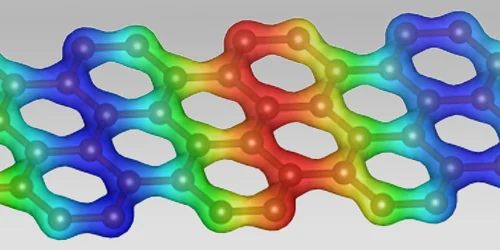
Physicist Nathaniel Craig shares how he worked with GPT-6 Astra to develop a candidate lattice definition of the Standard Model.
It’s the first post on our new science blog:
https://t.co/pLd0XmTUxD
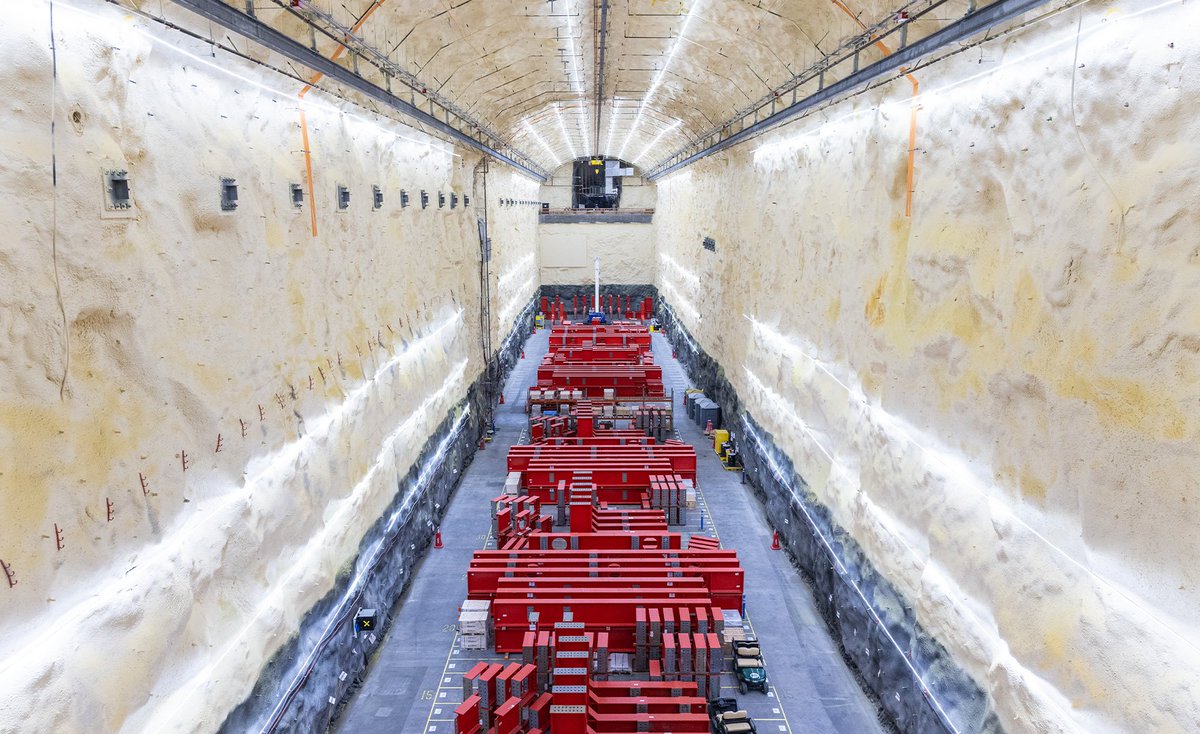
Construction for @DUNEscience is entering its next phase. 🏗️
“This is a heavy duty engineering operation, it’s like building a ship underground," said DUNE co-spokesperson David Newbold to The Guardian.
https://t.co/mueTS13qUj
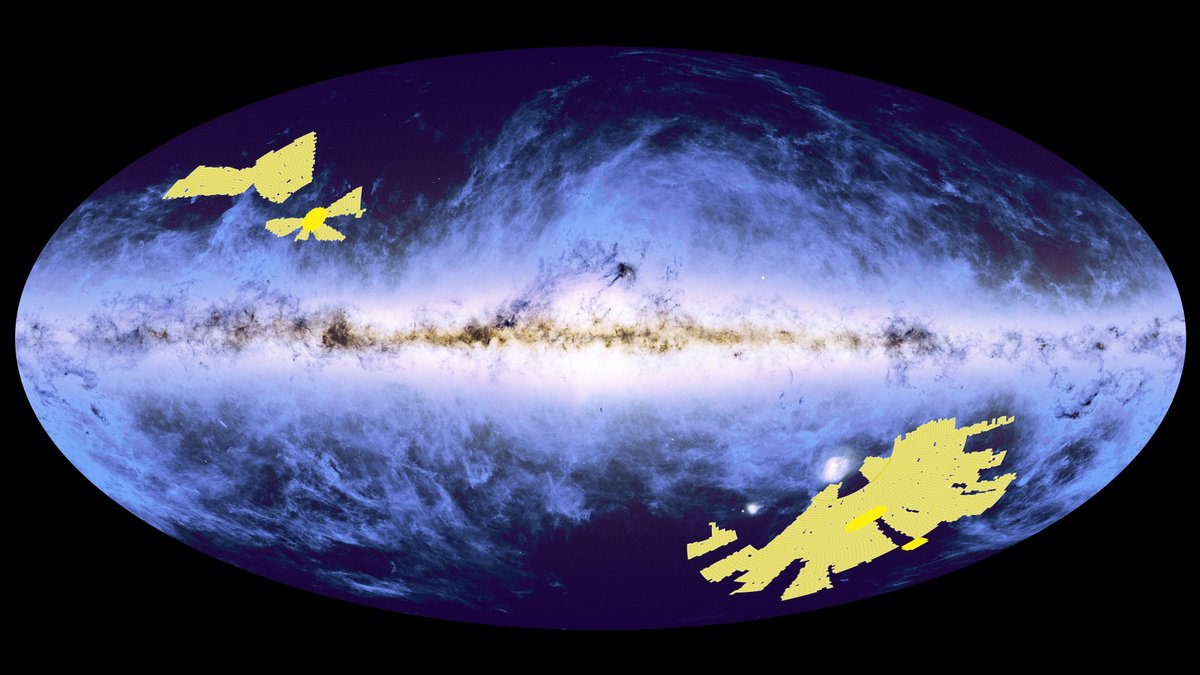
Our Euclid space telescope has released its largest dataset yet, revealing over 900 million galaxies!
Covering an area of sky equivalent to 9500 full Moons, the data lays the foundation for an unprecedented 3D map of the Universe.
Read more: https://t.co/EonhHowm2W
These images show gravitational lenses, which occur when the gravity of a massive foreground object (such as a galaxy cluster) bends and magnifies light from a more distant background object.
They also lay the groundwork for follow-up observations by the new @NASARoman ⬇️
Anticipation is building for DUNE!
Construction is starting nearly one mile underground on the Deep Underground Neutrino Experiment. SLAC plays key roles in hardware, electronics, data acquisition & machine learning reconstruction for this massive neutrino experiment.
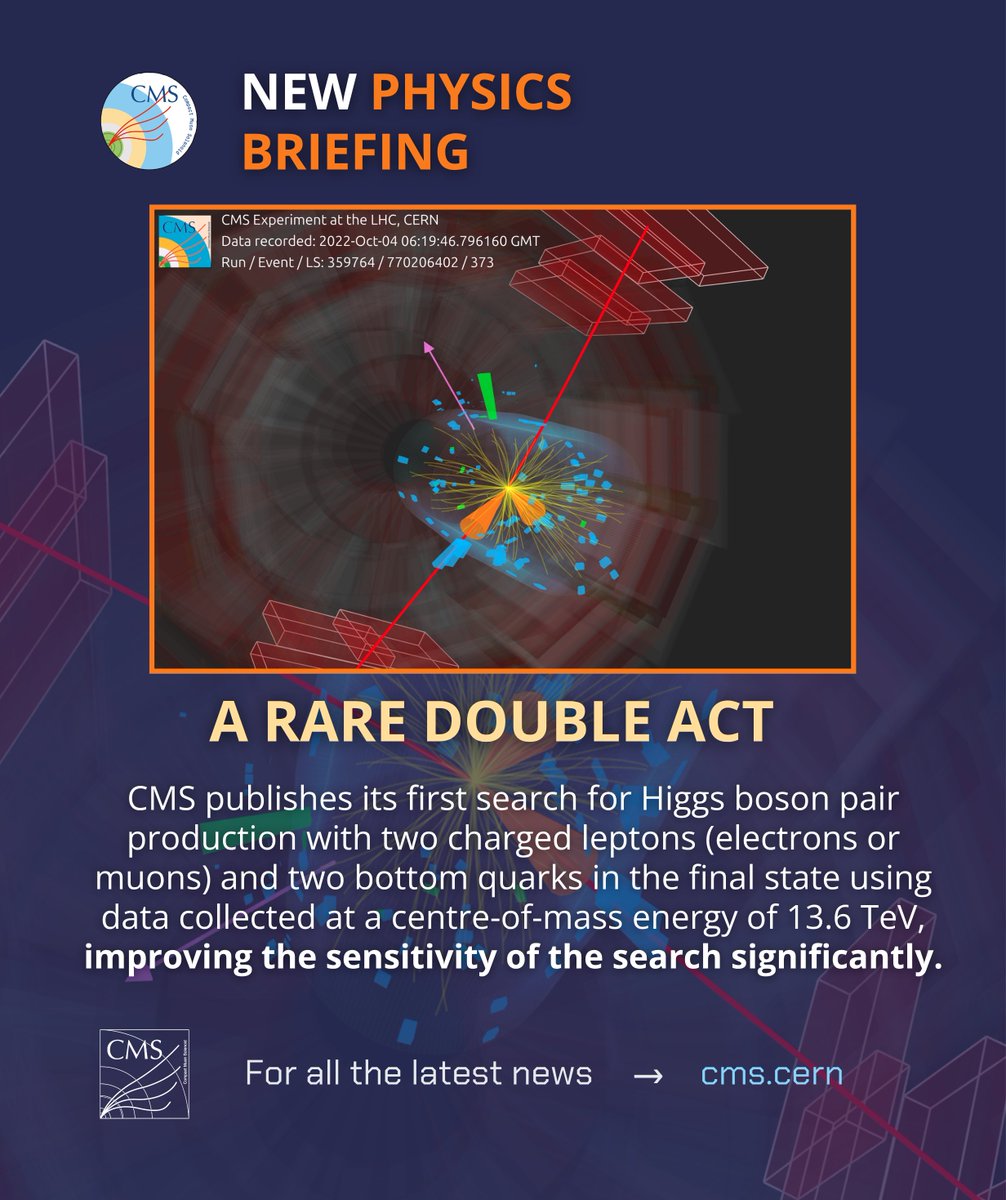
A rare double act: CMS publishes its first search for Higgs boson pair production with two charged leptons and two bottom quarks in the final state using data collected at a centre-of-mass energy of 13.6 TeV, improving the sensitivity of the search.
🔗 https://t.co/vIMvAgrIpm
An atom cloud in space reached an equivalent temperature four times lower than the previous record: 9.7 picokelvin, with its expansion tracked for seven seconds. @sciencemagazine https://t.co/dRoko5RSqq
A new study examined spinning active particles that stir fluid at high Reynolds numbers, revealing a regime where fluid inertia promotes collective organization — opening new doors for bio-inspired technologies.
Read more: https://t.co/Ub4QVjvuHk
Researchers observed the mysterious phenomenon of ultraquantum turbulence in a quantum gas far from equilibrium, capturing insights to inform studies of ultracold quantum gases and condensation phenomena.
Read the Letter: https://t.co/197kXK1qpD
A new paper analyzes the thermodynamics of biological mixtures to derive the mathematical conditions for metastability of phase separated states — showing that Hopfield liquids can retrieve information through nucleation of target phases.
Read more: https://t.co/rizrQM9vLY
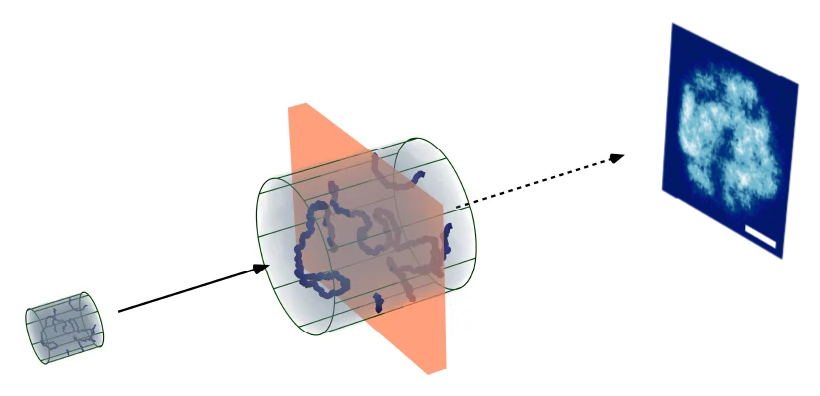
Using a quantum-gas magnifier, researchers captured snapshots of the particle density in circular slices of ultracold potassium atoms and found direct evidence of Vinen, or “ultraquantum,” turbulence.
Learn more about the experiments: https://t.co/0CyXRc2lhP
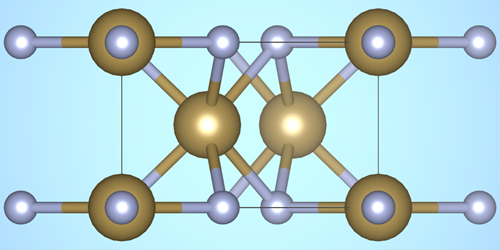
While metals typically rely on electrons to transport heat, researchers have now identified a specific crystal form of tantalum nitride that conducts heat efficiently through both electrons and phonons.
Read more: https://t.co/aOnBMMcrpy
Light–matter hybrids have formed a supersolid at room temperature, bringing crystal-like order and superfluid behavior together without the near-absolute-zero cooling used in atomic experiments. @ScienceAdvances https://t.co/a1pBX22ClA
Researchers have created a resonant cavity for matter waves by corralling ultracold atoms between two sheets of light — an experimental platform that could be used to study exotic phenomena like black hole event horizons.
Read more in the Focus: https://t.co/xsAYH2r26h
Researchers developed a framework to calculate superconducting coherence lengths and penetration depths without phenomenological parameters, potentially informing the predictive design of new superconductors under extreme conditions.
Read the paper: https://t.co/ywwQGeRmB1
How do you calculate a conventional superconductor’s characterizing quantities when first-principles calculations are computationally impractical? Researchers detail a new formalism that could make it easier to identify new superconductors.
Learn more: https://t.co/PIWninbO91
Thirty years of primordial deuterium abundances: A provenance-aware statistical reanalysis
Richard de Grijs, Giuseppe Bono
https://t.co/Z2gujjaUfG [𝚊𝚜𝚝𝚛𝚘-𝚙𝚑.𝙲𝙾]
What is the zeptoverse, and what could it tell us about dark matter? ⚛️
A Cambridge-led team of physicists, working at @CERN, have detected an ultra-rare decay of a subatomic particle known as a beauty quark.
The results are at such tiny scales – trillionths of a billionth of a metre – that they could open the door to the zeptoverse, where new physics and subatomic particles could be hiding.
Find out more 👉 https://t.co/h9MPldzZaZ