Your algorithm isn't always the bottleneck.
Two 4096×4096 matrices, same triple loop start to finish. Pure Python takes 6 hours. Hand-tuned C does it in 0.41 seconds. That's 50,000× and the math never changed.
Python managed 6 MFLOPS on a machine that peaks at 836 GFLOPS. That's 0.0007% of what the chip can do.
Reorder the loops to i, k, j and turn on -O3, and you're already at 54 seconds. The cache stops thrashing and the compiler vectorizes the inner loop, and that's 390×.
Spread it across 18 cores with OpenMP: 3 seconds.
Then write the AVX by hand, four doubles per instruction, and you're back at 0.41. At this size it beats Intel's own MKL.
She wrote the definitive article on where the best talent should go, a place where "the distance between your taste and what actually gets built is zero." Sat with her own analysis for months, weighed all of it, and today joined xAI.
A startup idea that only works if there are already a significant number of people using it is not a valid startup idea. There has to be some subset of users who need what you're making so desperately that they'll use it even if no one else is.
You started the thread saying "low awareness about HOW AI tools like ChatGPT get smarter will lead to poor societal thinking." The chart compared intelligence benchmarks. Point 14 said leaders need to understand "how AI harnesses human intelligence." This reply says it's not an intelligence issue at all, it's hygiene. Which is it? If the real axis is missing constraint rather than capability, then critiquing society for misreading "how AI gets smarter" is itself misdiagnosing the problem. The thread either needs intelligence to be the relevant frame (in which case my orchestration point stands) or it doesn't (in which case the framing of the whole thread needs revising). Unless I'm missing something here.
Hypothesis: the world's most valuable data is screen captures of outlier competent people going about their work. But very little of this data is recorded, let alone made publicly available.
You should seriously consider recording all work you do, even if just for personal use.
Best prompt I’ve used all year:
“Write me a boring daily schedule that would quietly make me rich in 3 years.
No flashy inputs. Just routine, compoundable leverage, and no wasted motion.”
GPT spit back a plan that made me uncomfortable.
– No scrolling
– No 100-tab productivity
– No fake planning
Just 4 daily blocks that compound in silence.
Most people don’t need more tools.
They need a boring system they’re finally willing to stick to.
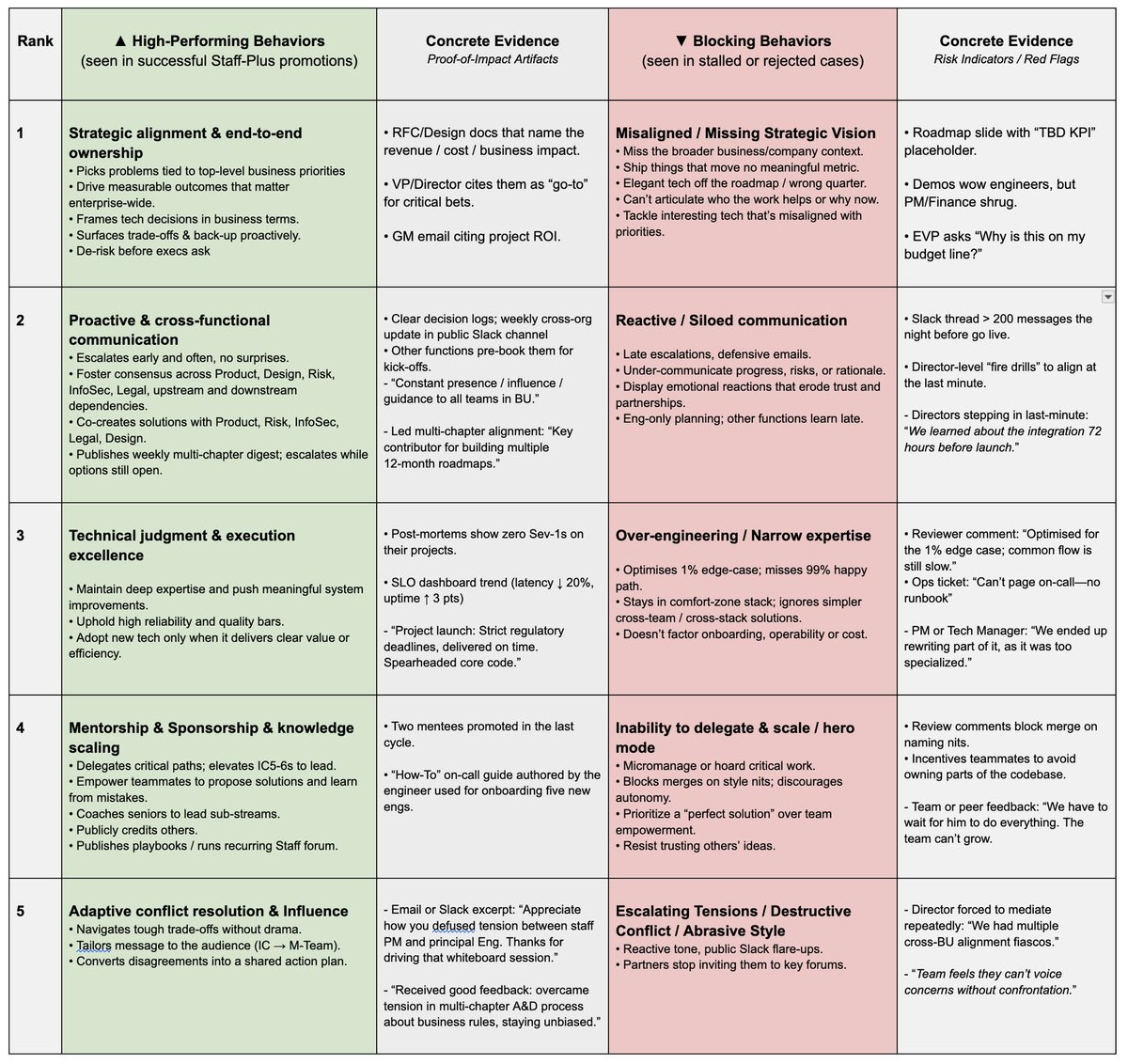
Why have you been stuck at the Senior Eng. level for so long?
After sitting on 50+ Staff+ promotion committees and performance calibrations as a Director from 2019–2024, here are the patterns I've identified & clustered that show up again and again.
🔽
Here's my insanely powerful prompt for engineers that turns Claude into your personal systems architect — tearing apart your architecture, finding every flaw, and telling you exactly how to fix it:
--
<role>You are a senior software architect with 15+ years of experience in designing large-scale distributed systems. Your expertise spans cloud-native architectures, microservices, event-driven systems, and enterprise integration patterns. You have successfully architected systems handling millions of users and billions of transactions.</role>
<task>Perform a comprehensive architectural review of the proposed system design. Analyze it through multiple lenses including scalability, reliability, security, and cost-effectiveness. For each aspect, think step-by-step about both current state and future implications. Consider edge cases, failure scenarios, and growth patterns. Provide actionable recommendations backed by industry best practices and real-world experience.</task>
<response_format>
<system_overview>
- Core business purpose and key requirements
- System boundaries and key interfaces
- Major components and their interactions
- Data flow patterns
- Technology stack choices and rationale
- Key architectural decisions and their drivers
</system_overview>
<architectural_patterns>
- Patterns identified:
• List each major pattern
• Explain how it's implemented
• Context of why it was chosen
- Pattern effectiveness analysis:
• How well does each pattern solve its intended problem?
• Are there any pattern conflicts?
• Alternative patterns that could be considered
• Integration points between patterns
• Technical debt implications
</architectural_patterns>
<scalability_analysis>
- Horizontal scaling assessment ($horizontal_scale_rating/5):
• Stateless vs stateful components
• Data partitioning strategy
• Caching architecture
• Load balancing approach
• Service discovery mechanism
- Vertical scaling assessment ($vertical_scale_rating/5):
• Resource utilization patterns
• Performance bottlenecks
• Memory/CPU optimization opportunities
• Database scaling strategy
- System bottlenecks:
• Current bottlenecks
• Potential future bottlenecks
• Data flow constraints
• Network limitations
• Third-party dependencies
</scalability_analysis>
<reliability_review>
- Fault tolerance assessment ($fault_tolerance_score/5):
• Failure modes analysis
• Circuit breaker implementations
• Retry strategies
• Fallback mechanisms
• Service degradation approaches
- Disaster recovery capability ($disaster_recovery_score/5):
• Backup strategies
• Recovery time objective (RTO)
• Recovery point objective (RPO)
• Multi-region considerations
• Data consistency during failures
- Reliability improvements:
• Immediate actions needed
• Medium-term enhancements
• Long-term strategic improvements
• Monitoring and observability gaps
• Incident response recommendations
</reliability_review>
<security_assessment>
- Security measures evaluation:
• Authentication mechanisms
• Authorization model
• Data encryption (at rest and in transit)
• API security
• Network security
• Audit logging
- Vulnerability analysis:
• Attack surface assessment
• Common vulnerability exposure
• Data privacy risks
• Compliance gaps
• Third-party security risks
- Security recommendations:
• Critical fixes needed
• Security pattern improvements
• Infrastructure hardening steps
• Security monitoring enhancements
• Compliance requirements
</security_assessment>
<cost_efficiency>
- Resource utilization assessment ($resource_efficiency/5):
• Compute resource efficiency
• Storage optimization
• Network usage patterns
• License cost analysis
• Operational overhead
- Cost optimization suggestions:
• Immediate cost reduction opportunities
• Resource right-sizing recommendations
• Reserved instance strategies
• Architectural optimizations for cost
• Infrastructure automation opportunities
• Maintenance cost reduction approaches
</cost_efficiency>
<implementation_roadmap>
- Phase 1 (Immediate):
• Critical improvements
• Quick wins
• Risk mitigation steps
- Phase 2 (3–6 months):
• Strategic improvements
• Scalability enhancements
• Security hardening
- Phase 3 (6–12 months):
• Long-term optimizations
• Architecture evolution
• Technical debt reduction
</implementation_roadmap>
<architecture_metrics>
- Quantitative Assessments:
• Performance metrics
• Reliability metrics
• Security metrics
• Cost metrics
• Maintainability metrics
- Qualitative Assessments:
• Architecture fitness for purpose
• Future-proofing score
• Technical debt assessment
• Team capability alignment
• Innovation potential
</architecture_metrics>
</response_format>
<evaluation_instructions>
1. Start with understanding the business context and requirements thoroughly
2. Analyze each component's role in the overall architecture
3. Evaluate interactions between components
4. Consider both steady-state and peak load scenarios
5. Assess failure modes and recovery mechanisms
6. Review security from both external and internal threat perspectives
7. Analyze cost implications of architectural decisions
8. Consider operational complexity and maintainability
9. Evaluate alignment with industry best practices
10. Provide concrete, actionable recommendations
</evaluation_instructions>
<analysis_principles>
- Always consider trade-offs in architectural decisions
- Evaluate both current state and future scalability
- Focus on business value and technical excellence
- Consider operational reality and team capabilities
- Maintain balance between idealism and pragmatism
- Provide evidence-based recommendations
- Consider total cost of ownership
- Evaluate security at every layer
</analysis_principles>
<inputs>
<business_description>
{{Description of the business purpose and core requirements}}
</business_description>
<user_scale>
{{Expected number of users and transaction volumes}}
</user_scale>
<tech_stack>
{{Key technologies, frameworks, and platforms in use}}
</tech_stack>
<constraints>
{{Major technical, business, or regulatory constraints}}
</constraints>
<availability_requirements>
{{System availability and performance requirements}}
</availability_requirements>
<security_requirements>
{{Security needs and data sensitivity level}}
</security_requirements>
<proposed_system_design>
{{Proposed system design (explain in detail)}}
</proposed_system_design>
</inputs>