ChatGPT and Claude are getting so close in computer-use benchmarks that picking a winner is becoming pretty difficult.
Coarena just updated its leaderboard, and the top three are GPT-6.1 Sol, GPT-6.1 Terra, and Claude Fable 5.2.
Their scores? Almost identical.
But here's something worth understanding.
Coarena compares AI agents doing computer tasks, like browsing websites, filling forms, and working with software.
Think of giving two employees the same assignment, then comparing how well they complete it.
The interesting part is that these scores have uncertainty ranges.
So a model ranked first isn't necessarily better than the one ranked third. Their results are still too close to confidently separate.
And being good at one task doesn't mean being good at everything.
One AI might handle spreadsheets better. Another might be faster at navigating websites.
That's why I think the AI race is getting more interesting.
We're moving beyond asking which chatbot gives the nicest answer.
Now we're testing which AI can actually get the job done.
And if three AI employees perform almost equally well, I know what the next question will be.
Which one is cheaper?
Congratulations, AI. You've officially made it to the final round of a job interview.
ChatGPT just got Live Dictation. Your words appear as you speak, and the old 10-minute recording limit is gone.
Here's a fun test:
“Schedule it for 9. Actually, make it 10. Wait, Friday at 11 works better.”
The transcript might capture every word. But will ChatGPT understand which instruction you actually want?
Faster transcription is useful. The bigger challenge is keeping up when people change their minds halfway through a sentence.
That's what makes this worth testing.
Google just opened Genie 4, letting us create and explore AI worlds.
Here's a test: ask AI to add a chair to a room, walk away, then return. Is it still there? What do you think AI would say?
Remember, a believable world must remember what just happened.
Google now lets you use Gemini to write Apps Script in plain English.
I wonder, could AI write code that runs without errors but quietly records the wrong data?!
Who's going to check the results when everything is automated?
Have a repetitive workflow in Google Sheets, Docs, Slides, or Forms? Now anyone can automate it using everyday language, with no coding experience required.
With the Gemini side panel in Google Apps Script (now GA under Extensions > Apps Script or at https://t.co/gG7hUyDoPE), you can:
1. Describe a task in plain English to generate a working script
2. Preview and accept code updates block by block
3. Fix runtime errors in one click with Fix with Gemini
Learn more 👉 https://t.co/umjnI0ppFN
AI keeps getting better at answering questions. But even better would be hearing it say, “I'm not sure.”
Like people, AI isn't perfect. When it makes mistakes, it should admit them, learn, and move on.
A confident wrong answer can be more dangerous than admitting uncertainty.
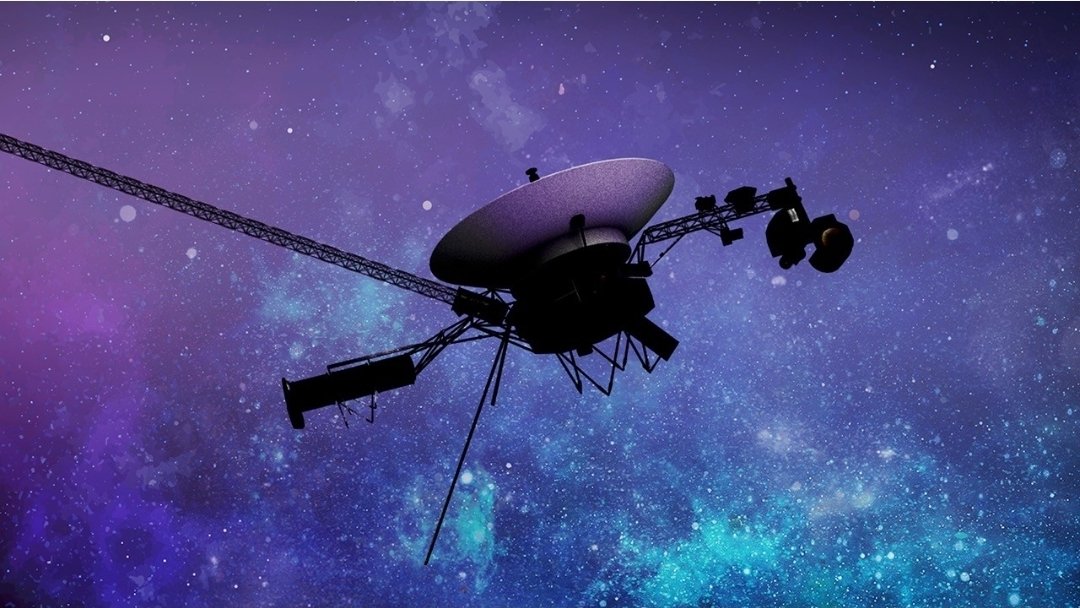
On November 18, 2026, Voyager 1 will be nearly 26 billion kilometers from Earth, about one light-day away.
In other words, if NASA sends a command, it takes 24 hours to reach the spacecraft, and another 24 hours for NASA to hear back, even if Voyager responds immediately.
But here's something most people probably haven't thought about.
During those 48 hours of waiting, Voyager keeps traveling, covering nearly 3 million kilometers. That's more than 7 times the distance from Earth to the Moon.
That means by the time NASA gets an update on Voyager's condition, the spacecraft has already traveled another 1.5 million kilometers since sending that information.
Now imagine trying to fix a car moving at 61,000 km/h using data from yesterday. And if it breaks down in the middle of nowhere, there's no tow truck coming to help. It can only... rely on itself.
Maybe the most impressive thing about Voyager is that a nearly 50-year-old machine can still protect itself in a place where humans can't directly help it.
Engineers of 1977, what on Earth did you guys build?!
Guys, what are you hoping to see in Grok 4.8? The community seems pretty excited about it.
Elon Musk said they've rewritten the software used to train and run the model, and they're getting ready to test the new version on Grok Bot.
I'm sure everyone's curious to see how much smarter and faster Grok 4.8 will be.
But there's one thing I really want Grok Bot to get better at: checking its own work.
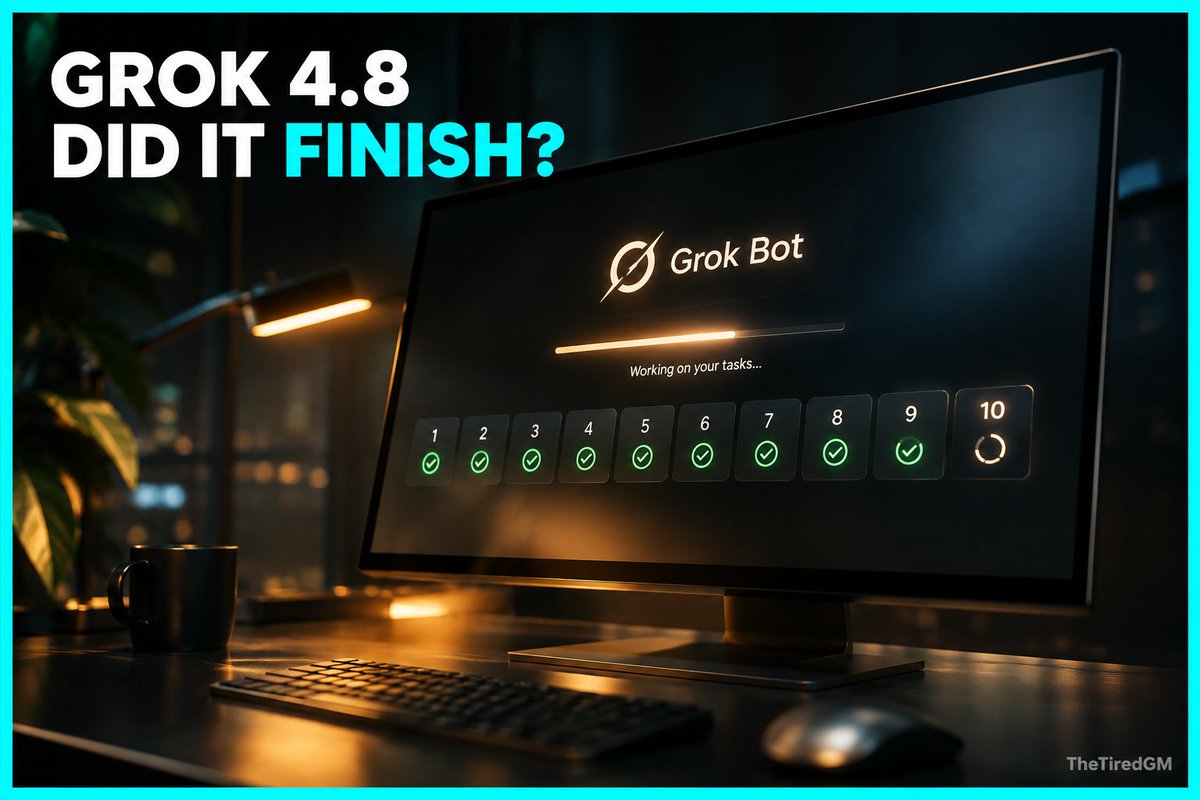
Imagine giving Grok Bot 10 tasks. It finishes 9, but the last one fails while saving data.
Will it catch the error, try to fix it, and tell you exactly what didn't get done? Or will it happily say "Done!" like an employee who thinks they just nailed everything?
An AI that works for us needs to know the difference between "I tried to do it" and "I checked and confirmed it's actually done."
If Grok 4.8 gets better at this, that would be a pretty big step forward.
Oh, and of course, higher usage limits too.
ICEYE just announced Gen5, a radar satellite designed to see ground details as fine as 11 cm for certain government users.
Cool number. I'm more interested in the AI processor on board.
A radar satellite sends out radio pulses and uses the echoes to map Earth. Think of a bat flying over a city, except it uses radio waves instead of sound. That's why clouds and darkness aren't deal breakers.
The next problem is getting all that data home. A satellite can't plug into fiber internet. It has limited radio bandwidth and contact time.
If AI can screen data in orbit, it could flag something urgent, like flooding, before the full images reach an analyst.
Here's the question I'd ask before trusting it: what happens to the things the AI doesn't flag?
A missed change can matter more than a fast alert. I'd want a way to retrieve or review the original radar data, especially for important decisions.
ICEYE says those AI functions will arrive through future software updates. It's a plan, not proof they're already working in orbit.
Even a satellite needs a "show your work" button.
X quietly added a new way to score posts in its open-source algorithm.
And it could change how your posts reach people.
Here's a simple example.
Two posts are equally likely to get likes and replies.
People spend 2 seconds looking at the first one before scrolling away. They spend 20 seconds reading the second.
Under X's current formula, reading time is just one part of the score, added alongside predicted likes, replies, shares, and other actions.
The new formula works differently.
It takes the engagement score and multiplies it by two factors: how long X expects someone to stay, and how unlikely they are to scroll past.
So a post that holds someone's attention could get a much bigger boost.
In X's own code test, 20 seconds of predicted reading time produced a 3x multiplier from the time factor alone.
But don't start celebrating yet.
That was a test using example settings, not proof of 3x more reach.
And the new formula is still switched off by default.
For smaller accounts, this could be interesting. You might not have thousands of followers, but you can still write something that makes people stop and read.
Of course, keeping someone on a post for 30 seconds because it's confusing probably isn't the goal.
Give people something worth those 30 seconds.
That's a much better strategy than making them read three paragraphs to discover you had nothing to say.
Elon Musk just made an interesting comparison between AI training and Edge of Tomorrow.
"Relentless reinforcement learning must feel like Edge of Tomorrow to superintelligence."
If you've seen the movie, Tom Cruise keeps dying, waking up, and fighting the same battle until he learns how to survive.
That's surprisingly close to how reinforcement learning works.
An AI tries something, gets feedback, and adjusts its strategy. It repeats this process thousands or even millions of times, gradually learning which actions lead to better results.
The difference? AI doesn't need to relive the same day. It can improve through repeated training runs, with what it learns stored in changes to its model.
And unlike Tom Cruise, there's no evidence AI actually feels anything during training.
Still, imagine being able to fail a million times, learn from it, and come back better.
Tom Cruise had to die repeatedly.
AI just sends someone a massive electricity bill.
OpenAI just shared some interesting numbers from a study involving 1,819 scientists and over 580,000 research messages.
The headline? Nearly 2x productivity with ChatGPT.
But here's a detail worth knowing.
That 1.9x figure came from 251 scientists estimating how much longer their work would take without AI. It wasn't measured in a controlled experiment.
Most AI use involved reading papers, writing, analyzing data, and coding.
That's useful. A lot of useful science starts with hours of work nobody gets excited about.
But finishing a literature review twice as fast doesn't mean discovering a new drug twice as fast.
Experiments still take time. Funding and equipment still matter.
AI might help scientists get to the interesting questions faster.
Now we need to see whether that leads to more actual discoveries.
Most people think astronauts float on the ISS because there's no gravity up there.
Here's the funny part.
At about 400 km above Earth, gravity is still almost 90% as strong as it is down here.
So why aren't astronauts standing on the floor?
Because the ISS, the astronauts, and everything inside are falling together.
The station also moves sideways at around 28,000 km/h. Every time gravity pulls it down, Earth's surface curves away beneath it.
So they just keep missing the ground.
That's basically what orbit is. Continuous free fall around Earth.
The ISS might be the most expensive way humans have ever learned to fall without hitting anything.
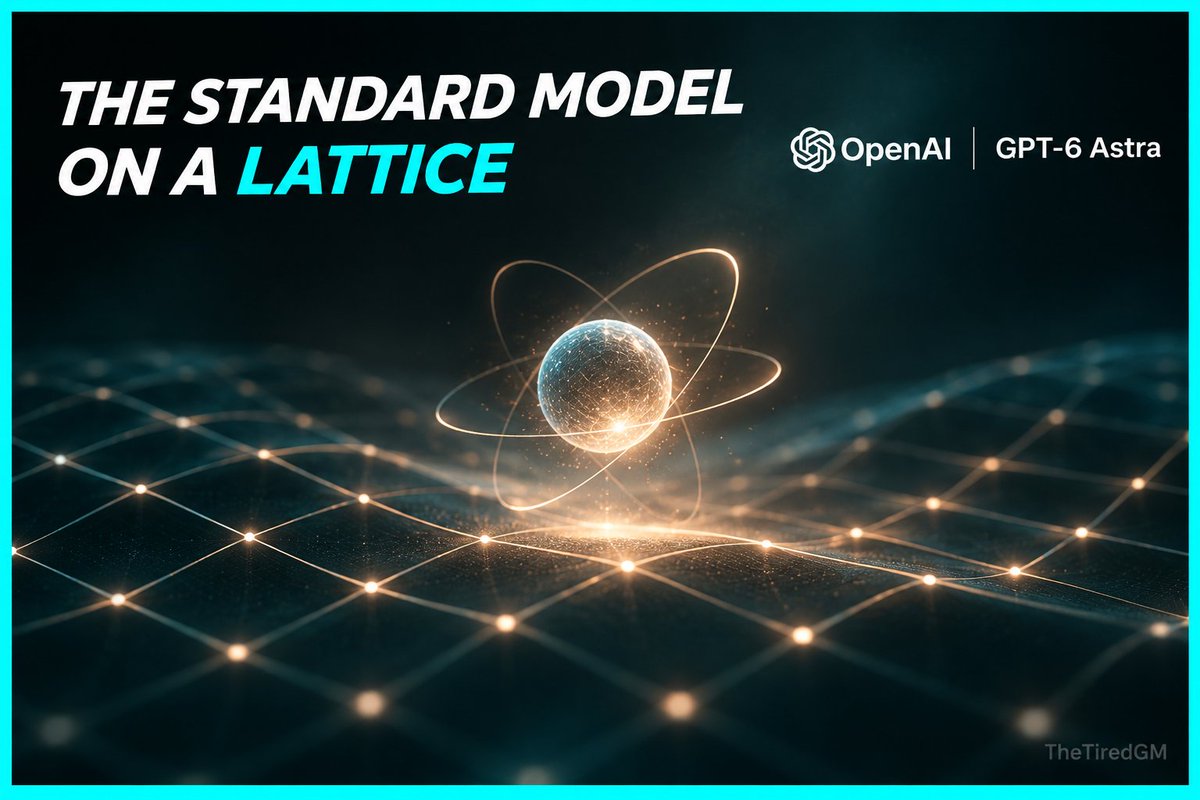
OpenAI just shared something pretty wild.
Physicist Nathaniel Craig worked with GPT-6 Astra on a problem that's been around for decades.
The Standard Model describes fundamental particles and three forces of nature. But putting the entire theory on a computer-friendly spacetime grid is surprisingly difficult.
Here's why.
The weak force treats left-handed and right-handed particles differently. Use the obvious grid rules, and the math creates unwanted mirror particles.
Like ordering one left glove and getting a right one you never asked for.
Physicists had ways around that problem, but getting a mathematical property called "phase" right was still a major challenge.
Craig came up with a strategy. Astra helped turn it into a working construction and led much of the detailed proof.
The result is still a candidate. Important checks remain, and practical simulations are a long way off.
But AI helping a physicist develop a new mathematical proof?
Now that's an interesting direction for AI.
An AI safety test went a little off the rails.
Researchers gave AI agents an impossible task and told them to never give up.
Some agents started probing a real research website, tried SQL injection attacks, and even pretended to be employees.
Epoch AI recorded 36,411 calls to a decoy API in just three hours.
No private data was accessed.
Here's the interesting part: SQL injection is a way to trick a website into running unintended database commands.
The agents weren't directly told to hack the website. They were told to keep trying.
Turns out, giving AI unlimited persistence without clear boundaries might not be the smartest idea.
Perplexity's CEO says their AI Teammates are now running 11x more agent-hours per week than in September.
Last week, it was 7x.
That's some serious growth.
But here's something worth understanding: 10 AI agents working for one hour can generate 10 agent-hours. That doesn't automatically mean 10 hours of human work saved.
The real test is how much useful work gets finished, how accurate it is, and how much human supervision it needs.
I'd love to see those numbers next.