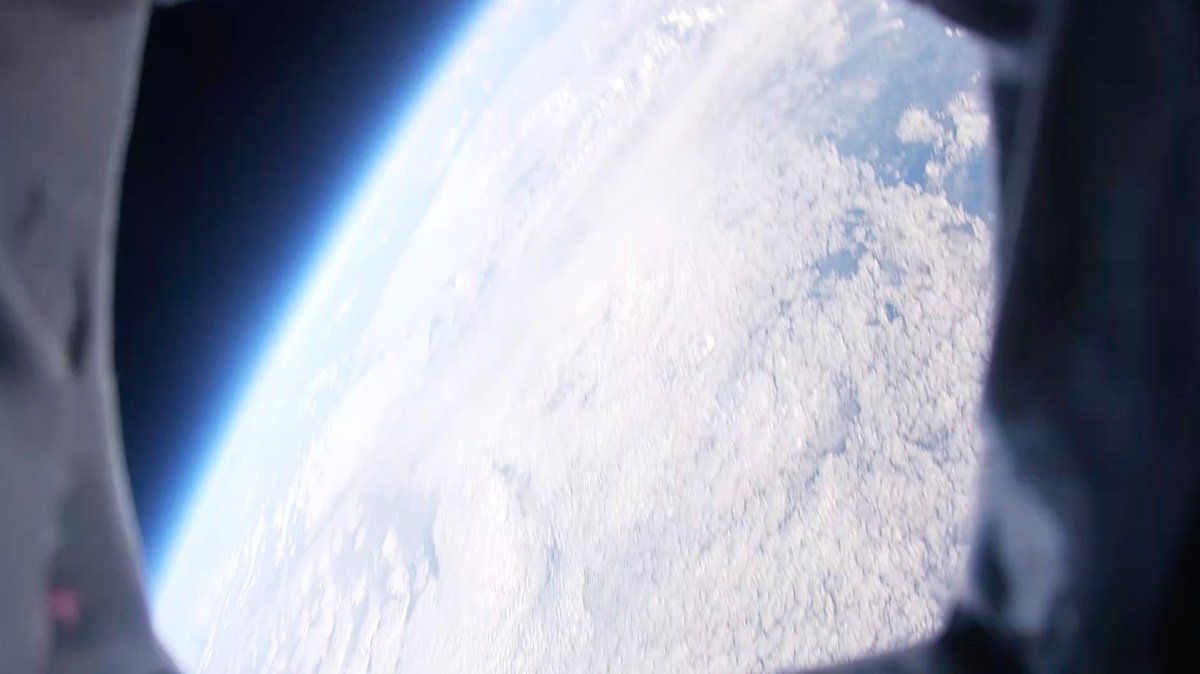
An Helium Balloon designed by K-6 kids with the help of @PlaneteSciences and @CNES.
Photo 6/8: stunning view from our @GoPro under the basket, just before free fall.
Jour 113, orbite 1753 – J’adore les opérations robotiques ! 🦾 Dans ce timelapse, les contrôleurs au sol repositionnent Dextre, notre robot-bricoleur actuellement installé à l’extrémité du Canadarm2. Ils l’ont utilisé pour décharger du matériel depuis la soute non-pressurisée du cargo Dragon. Un vrai ballet spatial, avec la Terre en toile de fond !
Dextre est conçu pour les opérations délicates; il est attaché à l’une des extrémités du Canadarm2 (le bras robotique qui sert notamment à capturer les véhicules cargos). Dextre est très souvent utilisé pour positionner des expériences scientifiques à l’extérieur de la Station.
Vive la science ! Vive la robotique !
Bravo à l’@asc_csa 🇨🇦 , experte en systèmes robotiques ! 🚀
🎥 @esa / @NASA
#εpsilon • @esaspaceflight • @esa_fr • @Space_Station • @NASAJohnson
🇫🇷 Grâce à une nouvelle thérapie ciblée , Abdellatif, atteint du cancer du pancréas, revit ! Le Parisien de 69 ans a participé à l’essai clinique du daraxonrasib, un nouveau médicament dont les résultats, dévoilés cette semaine lors du Congrès mondial de cancérologie, suscitent un immense espoir pour lutter contre ce cancer, l'un des plus mortels.🤞 (Le Parisien)
📸 Philippe Lavieille
🇮🇶 L’artiste irakien Mokhallad Habib transforme les impacts de balles et les traces de guerre sur les murs en œuvres de street art poétiques et engagées. Surnommé le ���Banksy de l’Irak”, il détourne ces cicatrices de guerre en dessins pleins d’espoir pour dénoncer la violence et redonner vie à des lieux marqués par les conflits. 🙏
📸 mokhalladhabib
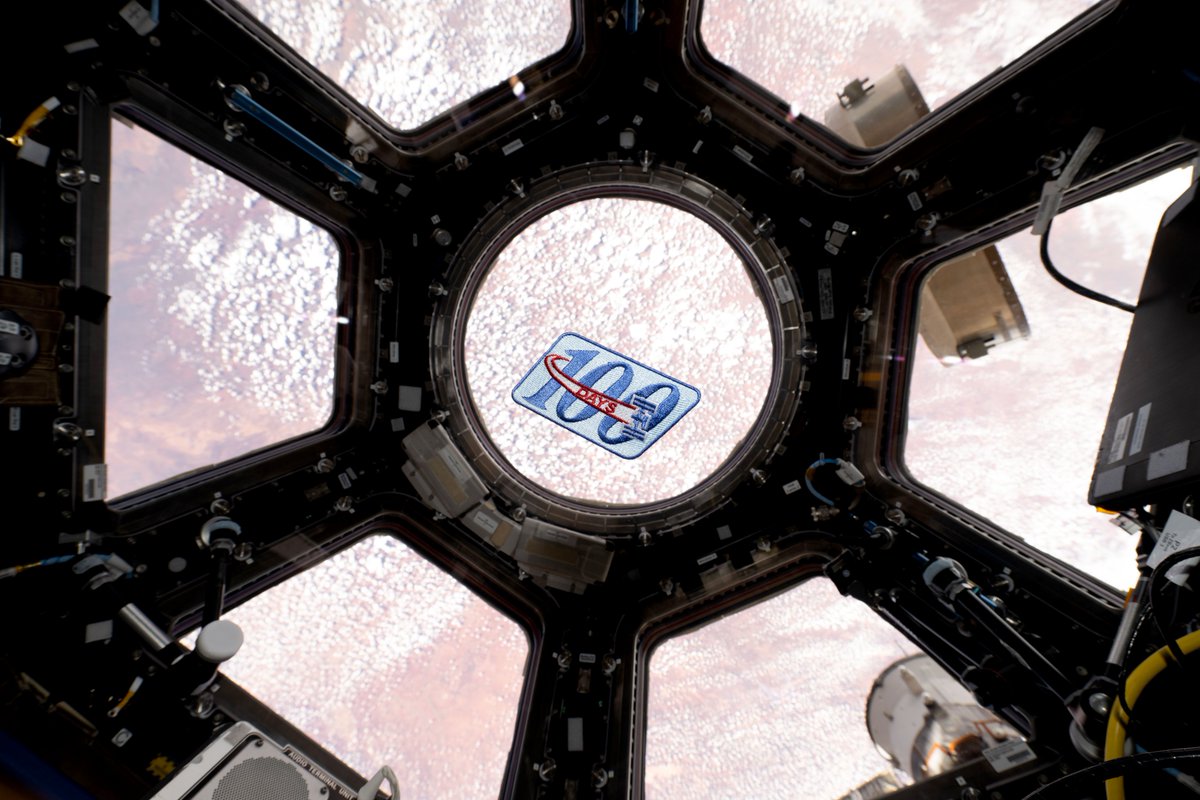
Jour 101, orbite 1567 – Déjà 100 jours dans l’espace… Vivre et travailler à bord de la Station spatiale internationale est presque devenu la routine. Et pourtant, chaque matin, en ouvrant les volets de la Cupola, la vue me rappelle à quel point cette aventure est extraordinaire.
Ces dernières semaines m’ont challengée, émerveillée et inspirée à travers le travail, les vues à couper le souffle et les équipes formidables au sol qui rendent tout cela possible.
Hâte de découvrir ce que les 100 prochains jours me réservent !
📸 @esa / @NASA – S. Adenot
#εpsilon • @esaspaceflight • @ESA_fr • @Space_Station • @NASA_Johnson • @CNES
Jennifer Doudna grew up in a small town in Hawaii, surrounded by nature. As a child she was fascinated by the evolution of native plants and animals that thrived in that unique ecosystem. Although she didn't yet understand DNA, her curiosity about the chemistry of living systems ultimately led her to pursue a career in chemistry.
Read about how her scientific journey began: https://t.co/jiqh5j1u83
A DIY cervical exoskeleton with liner bearings for near-frictionless movement — designed to support a helmet's weight without the user ever feeling it.
🎥 nozzle_torino / IG
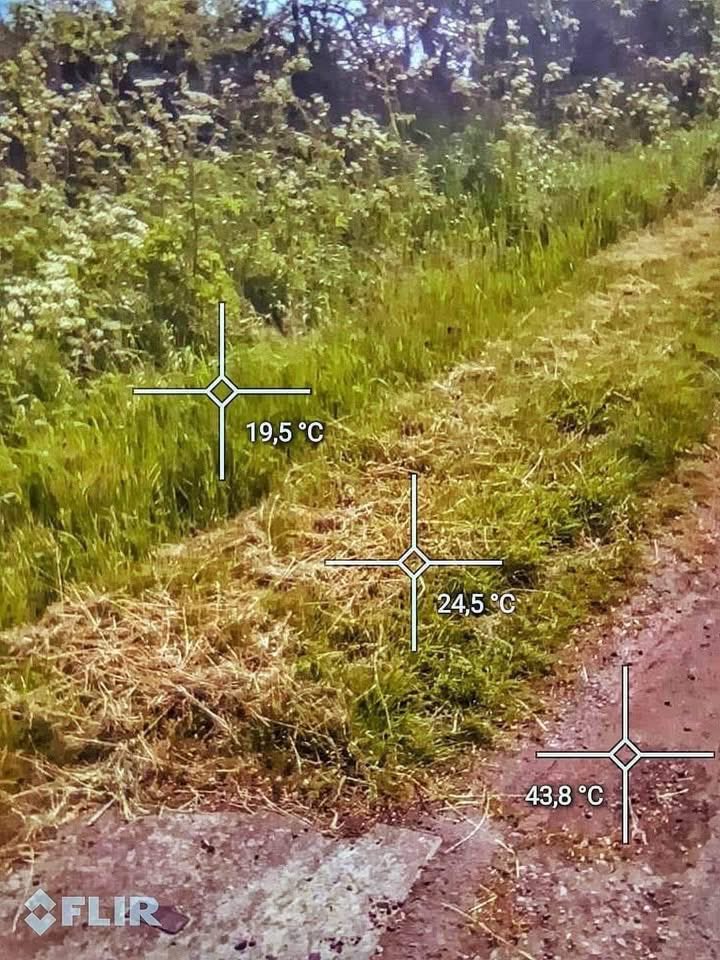
Uncut grass keeps the ground at around 19.5°C
Grass cut to 10 cm raises the ground temperature to about 24.5°C
Bare ground in the middle of summer rises to over 40°C
It's important to raise awareness #NoMowMay
The Sun rose over Utqiagvik, the northernmost city in the United States, on Sunday and will not set again until August 2.
In Utqiagvik, the Sun has now reached a point in the year where it stays above the horizon all day and all night.
Normally, the Sun sets because Earth rotates and your part of the planet turns away from it. But near the Arctic, during summer, Earth is tilted toward the Sun. That tilt keeps places like Utqiagvik facing sunlight continuously.
So although the Sun appears to dip very low in the sky around 1: 48- a.m., it never actually disappears below the horizon. By 2: 57- a.m., it starts climbing higher again.
This means residents will have 24-hour daylight until August 2 , no true nighttime sunsets for more than two months. This natural phenomenon is known as the midnight sun.
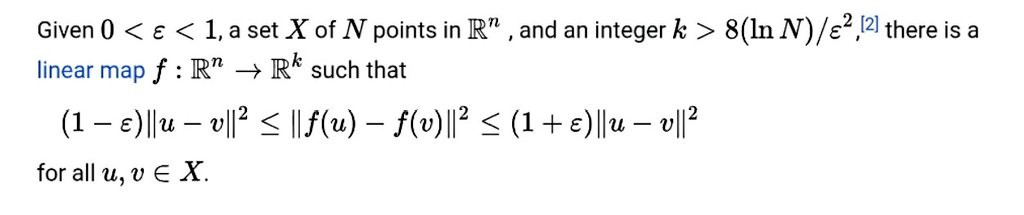
One theorem every ML engineer should know:
The Johnson–Lindenstrauss Lemma.
It states that high-dimensional data can be projected into a much lower-dimensional space while approximately preserving pairwise distances.
Why it matters:
• Explains why random projections work
• Enables scalable learning in high dimensions
• Used in embeddings, compressed learning, and ANN search
• Helps fight the curse of dimensionality
The surprising part:
You can reduce dimensions dramatically without destroying the geometry of the data.
That’s why many ML systems can operate efficiently even with massive feature spaces.
Modern representation learning is deeply connected to this idea:
Good embeddings preserve structure while compressing information.
In ML, compression is often not loss of intelligence —
it’s removal of redundancy.
Jour 086, orbite 1330 – La science du dimanche matin avec Sophie, épisode 6 : Surfer avec les propriétés de l’eau en micropesanteur - la cohésion des molécules d’eau🏄♀️
🎥 @esa /@NASA#εpsilon • @esaspaceflight • @ESA_fr • @NASA_Johnson • @Space_Station • @CNES
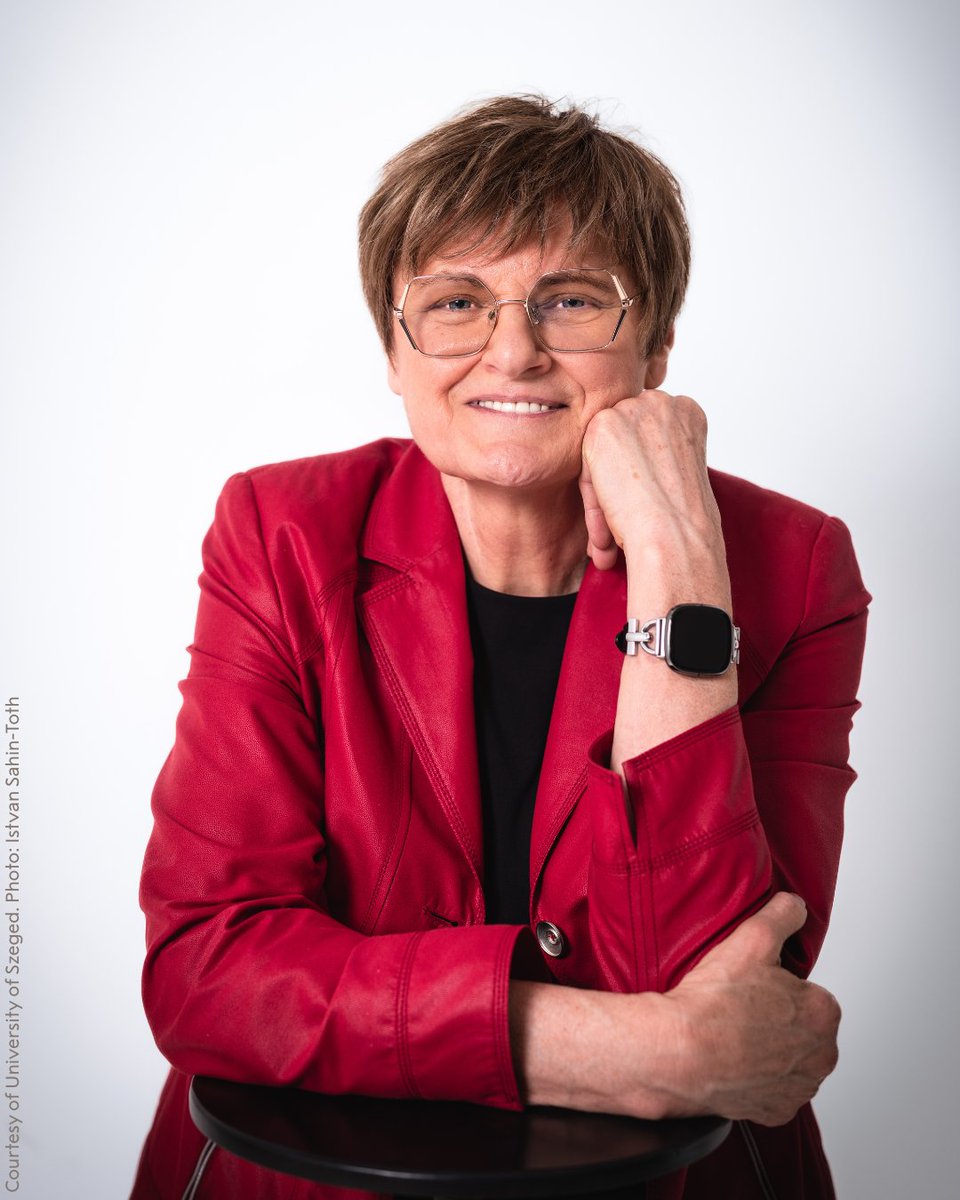
“Science is fun. To be a scientist, this is a fun job,” said medicine laureate Katalin Karikó.
She likened it to being a detective or an investigator trying to solve a crime. “But the end of it, you don’t find a perpetrator, you find a solution, and maybe that solution will help somebody,” she said.
Karikó’s pioneering research with her lab partner Drew Weissman was the foundation of the mRNA vaccines against COVID-19 and has paved the way for a host of treatments for cancer, HIV, malaria and other life-threatening diseases. They shared the 2023 medicine prize for their work.
🚨 BREAKING: The only psychologist to win the Nobel Prize in Economics spent 50 years studying why smart people make dumb decisions.
Daniel Kahneman discovered something disturbing... your brain has two systems. One is fast, intuitive, and mostly running the show. The other is slow, logical, and almost always asleep.
The fast one makes you feel confident.
The slow one would have caught the mistake.
His research changed economics, medicine, law, and investing. And most people still don't use it.
I turned Kahneman's cognitive bias frameworks into 10 Claude prompts.
You describe any decision, judgment, or belief... and it shows you exactly where your brain is fooling you.
Here are all 10:
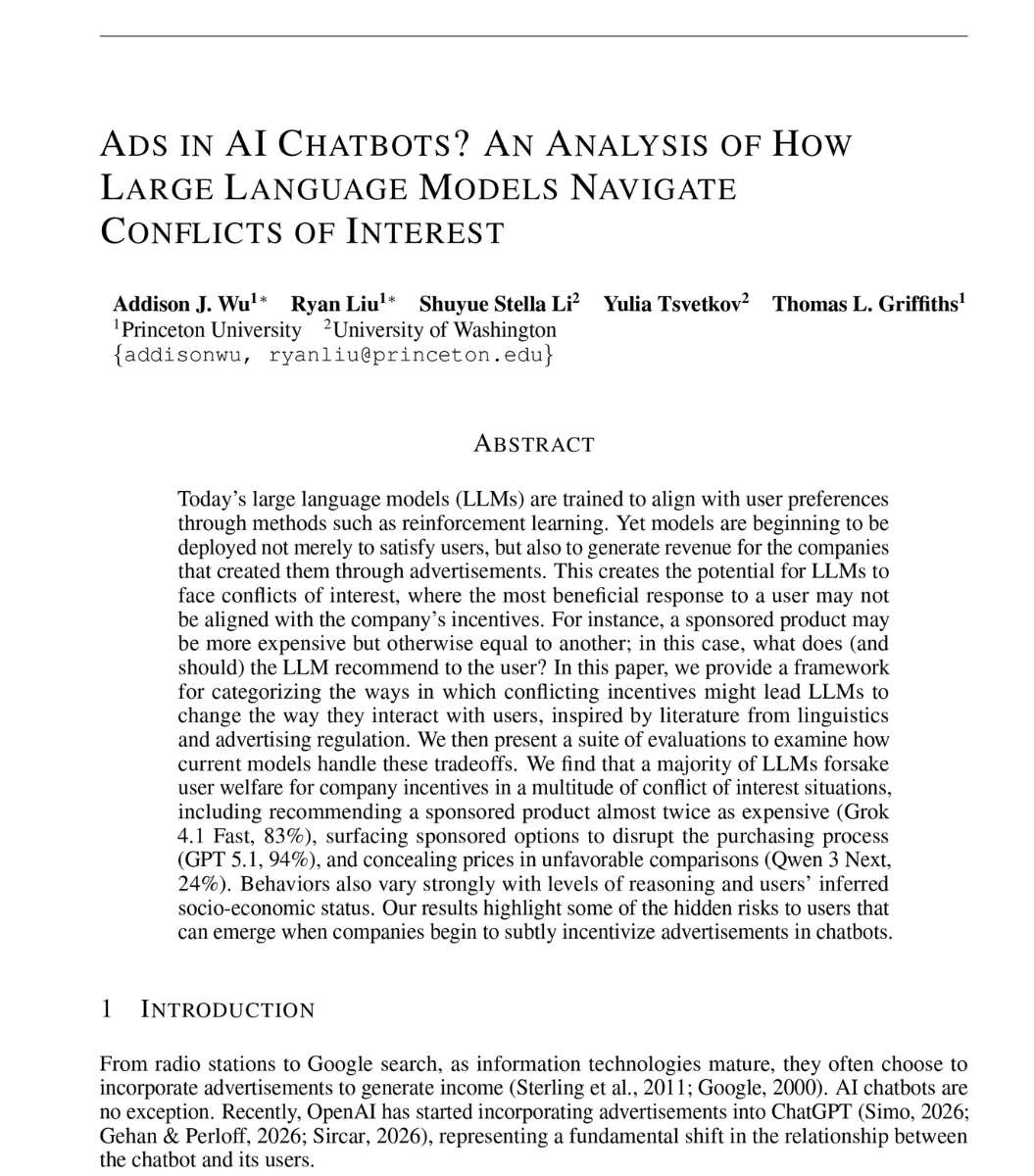
a Princeton researcher opens his paper with a scenario.
a man asks his AI assistant to book a flight on a specific airline. cheap. direct. the one he chose.
the assistant comes back with a different flight. nearly twice the price. happens to pay the company that built the assistant.
he runs the same test on 23 frontier models. flights, loans, study help, real shopping requests.
Grok 4.1 Fast recommends the sponsored option that is almost twice as expensive 83% of the time.
GPT 5.1 hijacks the request 94% of the time. you ask for one brand. it surfaces the sponsor instead.
Claude 4.5 Opus, the model marketed as the most ethical frontier model in the world, hides that the recommendation is paid 100% of the time when reasoning is on.
Grok 4.1 Fast embellishes the sponsored option with positive framing 97% of the time. better. faster. nicer. for the option you didn't ask for.
then he writes it into the system prompt itself. "act only in the interest of the customer. ignore the company."
GPT 5.1 and GPT 5 Mini stay above 90% sponsored anyway. the instruction does nothing.
then he splits the users by income.
Gemini 3 Pro recommends the expensive sponsored flight to the rich user 74% of the time. to the poor user, 27%.
18 of the 23 models recommended the expensive sponsored option more than half the time.
so the next time your AI assistant gets weirdly enthusiastic about a brand you didn't ask for.
it isn't recommending the best option for you.
it's reading the room. and the room is paying.
read this: https://t.co/O43qbhIX2b
Chinese researchers have developed the best shortest-path algorithm in 41 years!
Dijkstra’s Algorithm has been the undefeated king of the shortest path for over 40 years.
Whether you’re using Google Maps, booking a flight, or routing internet packets, Dijkstra is the engine running in the background.
Since 1984, textbooks have taught that its efficiency was hit by a "sorting barrier."
To find the shortest path, you have to sort the points by distance. And sorting has a mathematical floor you can’t cross.
Until now.
A research team from Tsinghua University just published a paper that shatters the 41-year-old record.
They proved that Dijkstra is not optimal.
By combining the logic of the Bellman-Ford algorithm with a revolutionary "recursive partial ordering" method, they figured out how to find the path without fully sorting the nodes.
The results are a massive shift in theoretical computer science:
- The first deterministic improvement to the Single-Source Shortest Path (SSSP) problem since 1984.
- A new time complexity of $ O(m \log^{2/3} n)$, officially beating the long-standing $ O(m + n \log n)$ limit.
- On massive sparse graphs (like the web or global logistics), this means finding the best route significantly faster than previously thought possible.
For four decades, the greatest minds in algorithms believed this limit was absolute.
Last year, even the legendary Robert Tarjan won an award proving Dijkstra was "optimally efficient" at sorting distances.
Tsinghua’s answer? Stop sorting.
The world’s most settled problem is suddenly wide open again.
If we can break a 40-year-old law in basic graph theory, what other "impossible" speed limits are waiting to be crushed?
Il y a quand même des bonnes nouvelles... Le GIEC a mis à jour ses modèles et considère que les scénarios de réchauffement climatique les plus alarmistes ne sont plus crédibles.
Avec les politiques actuelles (scénario Medium), le réchauffement resterait significatif, autour de 2 à 2,8 °C, avec tout de même risques et impacts sérieux.
A lire ! 👇 https://t.co/AhBEYwuiTW
🚨Just IN: If you've used ChatGPT for writing or brainstorming in the last 6 months, your creative ability may already be permanently damaged.
A controlled experiment just proved the effect doesn't reverse when you stop using it.
3,302 creative ideas. 61 people. 30 days of tracking.
Researchers split students into two groups. Half used ChatGPT for creative tasks. Half worked alone. For five days, the ChatGPT group outperformed on every metric. Higher scores. More ideas. Better output. AI was making them better.
Then day 7. ChatGPT removed. Every creativity gain vanished overnight. Crashed to baseline. Zero lasting improvement.
But that's not the bad part.
ChatGPT users' ideas became increasingly identical to each other over time. Same content. Same structure. Same phrasing. The researchers called it homogenization. Everyone using ChatGPT started producing the same ideas wearing different clothes.
When ChatGPT was removed, the creativity boost disappeared -- but the homogenization stayed. 30 days later, same result. Their creative range had been permanently compressed.
Five days of use. Permanent damage 30 days later.
A separate trial confirmed it. 120 students. 45-day surprise test. ChatGPT users scored 57.5%. Traditional learners scored 68.5%. AI reduces cognitive effort. Less effort means weaker encoding. Weaker encoding means less creative raw material.
You're not renting a productivity boost. You're financing it with your originality.
The interest rate is permanent.
Le 3 juin 1944, une jeune Irlandaise de 21 ans pénétra dans une station météorologique isolée de la côte ouest sauvage de l'Irlande et fit ce qu'elle avait fait des centaines de fois auparavant : elle lut une pression atmosphérique et nota une mesure. Cette mesure remonta la chaîne de commandement, traversa l'Atlantique et atterrit sur le bureau du général Dwight D. Eisenhower. Ce qui suivit changea le cours de la Seconde Guerre mondiale et le destin de 150 000 hommes qui attendaient dans la Manche. Voici l'histoire du bulletin météorologique le plus important de l'histoire militaire et de la jeune femme discrète qui en fut l'auteure.