Vesak lanterns in Sri Lanka for the Vesak Festival.
They are the most iconic visual symbol of the Vesak Festival in Sri Lanka, the holiest Buddhist holiday commemorating the birth, enlightenment, and passing of Lord Buddha.
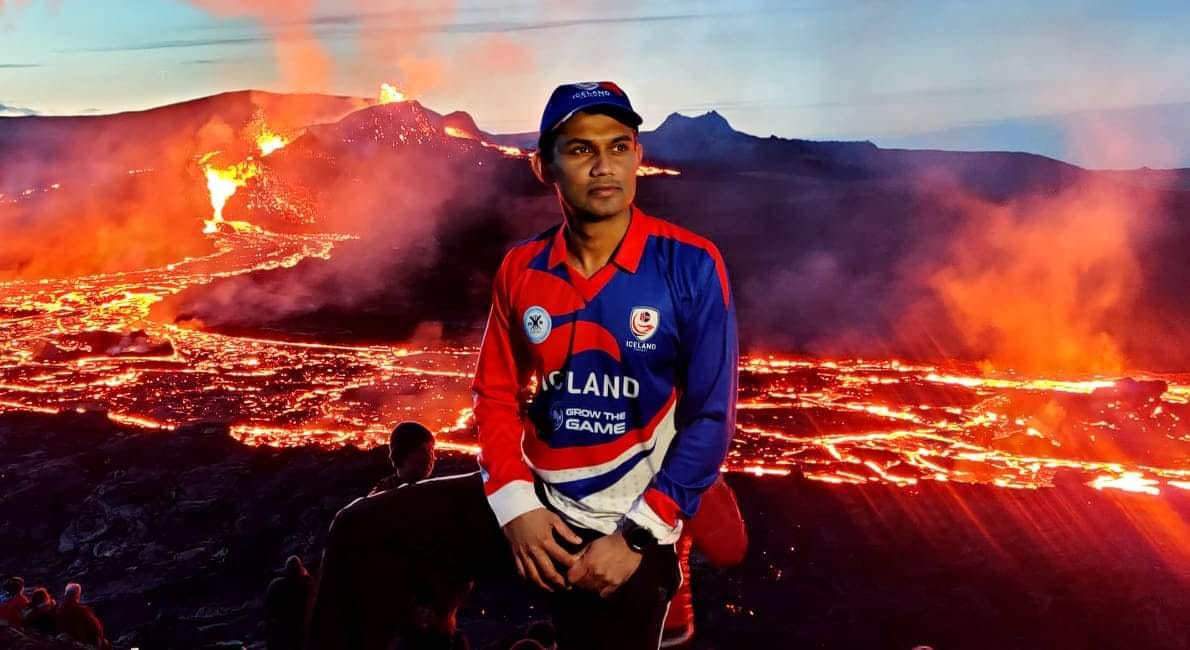
We often get asked whether there are any big names playing in Icelandic domestic cricket. Absolutely, take Wijesundara Rajapaksha Wasala Mudiyanselage Prabhath Kelum Bandara Weerasooriya. That's undoubtedly a huge name.
🚀 The wait is over! Episode 07 of Debug Diaries is here! 🎙️
This time, we’re taking a journey through the years of CSE with Prof. Sanath Jayasena, from the very first batch of 1985. 💡
🎧 Tune in now!
https://t.co/EWzsoNHCak
🇱🇰 Sri Lanka Strips Ex-Presidents of Benefits - Parliament Votes 151–1
⭕ Pension is now the only benefit left for retired presidents. It ends upon their death; spouses do not receive it.
⭕ According to Minister Ananda Wijepala, the government spent Rs. 98.5 million in 2024 on benefits for 5 ex-presidents and 1 widow.
👉 Average = Rs. 1.37 million per month per president/widow.
⭕ For comparison, a single Parliament sitting costs about Rs. 50 million today (Rs. 31.2 million in 2022).
⭕ Rather than encouraging dignified retirement, this incentivizes maximizing personal gain while in office.
⭕ When no post-office dignity is guaranteed, the temptation to extract benefits while in power increases dramatically.
⭕ The annual Rs. 98.5 million saved is minuscule compared to the long-term cost to Sri Lanka, which could far exceed these savings.
⭕ Good populist politics but bad long-term policy.
#SriLanka #PresidentialEntitlements
#SriLanka's largest solar power project 'Rividanavi' was launched by President #AKD today
📏 Land: 500 acres in Monaragala
⚡Capacity: 100MW with 12MWh battery storage
💰 Investment: $140Mn
💵 Annual forex saving on fuel: Rs.21Bn
🏭 Reduction of CO2 emissions: 150,000MT/year
-DM
Contempt of court is a much abused cudgel used to stifle normal discourse essential for the functioning of a democratic society. Now the government's spokesperson Dr Jayatissa is deploying it against those who see Sudantha Thilakasiri's confident prediction that Ranil Wickremesinghe would spend two weeks in remand.
When the government abuses prosecutorial discretion to arrest a person under section 5(1) of the Offences against Public Property Act, No 12 of 1982, the decision to remand the person is taken by the Police, not by the Judge (see section 8). So, what the Minister is claiming is that we are guilty of contempt of court when we complain of actions taken by the executive arm and draw a logical and plausible link between that and the statements of one of their propagandists. Sorry, Dr Nalinda Jayatissa, that argument fails. Democratic discourse will continue.
I asked the Energy Minister about the government’s stated plan to raise an estimated USD 5 billion over the next eight years for grid expansion and electricity system upgrades. This comes after amendments to the Electricity Act that made transmission 100% state-owned. The Minister disagreed with most of my questions, Here’s what he said.
#SriLanka #Energy #Electricity #PowerSector #GridUpgrade #EnergyMinister
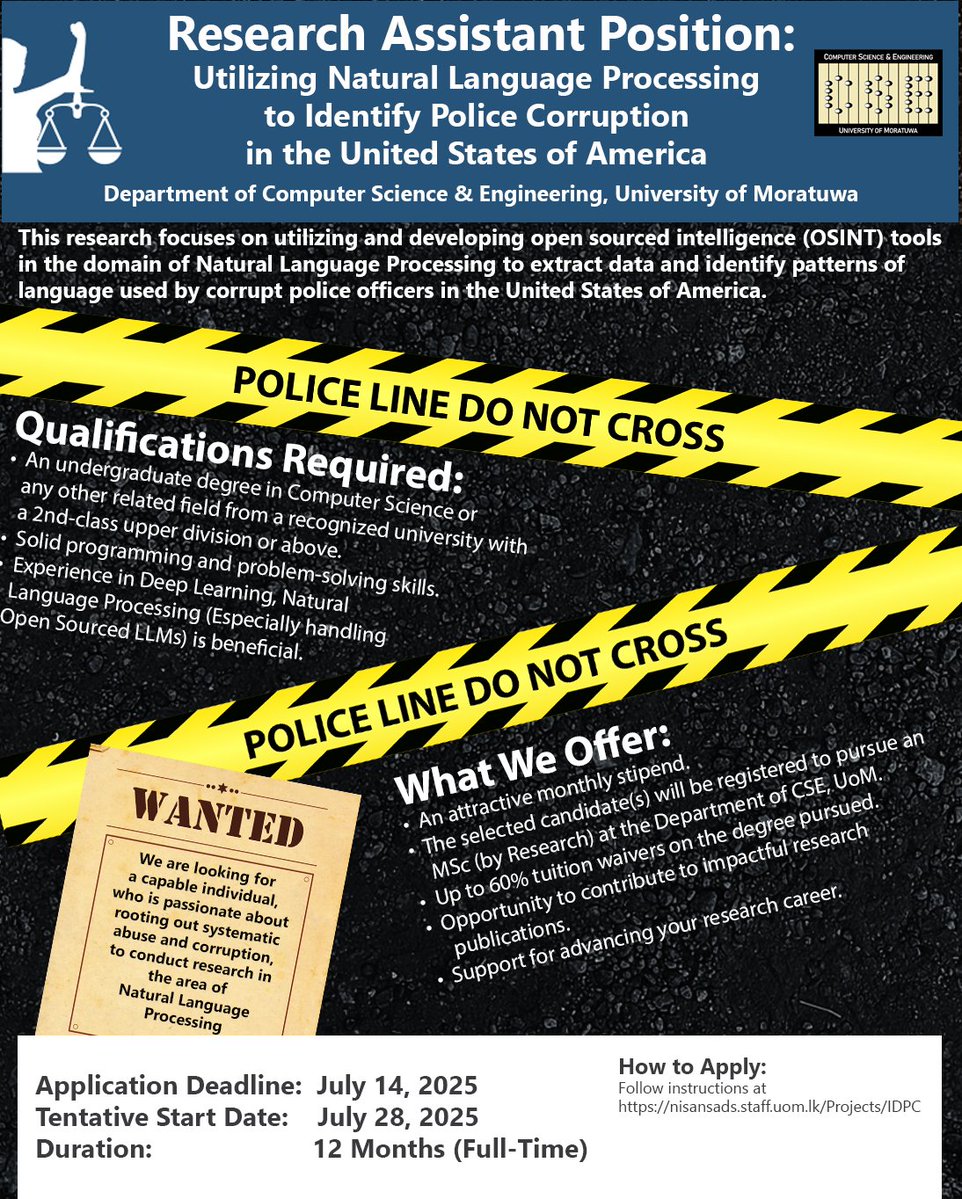
Position: Research Assistant
We are seeking a Research Assistant to work under Dr. @NisansaDdS
Duration: 12 months (full-time)
More information: https://t.co/Tu0N50bYj2
Apply by using the provided Google Form link: https://t.co/l2qxk2adsB
Serious red flags from @WorldBank, @ADB_HQ & JICA on Sri Lanka’s proposed Electricity Act amendments.
They warn it risks killing investor confidence, undermining reforms, and burdening consumers.
Is this reform ? Or a return to the old games in a new wrapper?
#ElectricityAct #SriLanka #EnergyReform #CEB
Professor Priyanga Dunusinghe recently said that no meaningful economic reforms are currently moving forward. In my view, this stagnation stems from a significant ideological clash between the NPP and the JVP. The JVP appears committed to establishing a fully state-controlled, communist-style economy—rejecting market-oriented, private sector-led growth. Such an approach is deeply concerning. At a time when Sri Lanka urgently needs investment, innovation, and economic liberalization, pursuing a rigid, state-dominated model could lead to long-term economic disaster. (Video Credit : Ada Derana)
The narrative linking Japan’s stagnation since 1991 to its financial crisis is largely a myth, more recently discussed in this episode of @dwarkeshpodcast.
Japan’s growth performance is almost entirely explained by poor demographics. See Table 1 of my paper with @King_ofSweden and Wen Yao, The Wealth of Working Nations:
🔗https://t.co/lm2iigVRXc
If you look beyond GDP or GDP per capita—and instead use GDP per working-age adult (defined in several robust ways to consider, for instance, that Japanese retire later than in other G7 economies) or output per hour worked—Japan has kept pace with its peer group.
In fact, from 1999 to 2019 (we stop before COVID; the paper was written in 2023, although it was published more recently), Japan outperformed the U.S. in terms of growth per working-age adult.
There is no plausible world in which Japan could be 50% richer than it is today, given its demographics. That claim defies the basic logic of the neoclassical growth model.
Could Japan be 10% richer without the bad 1990s? Perhaps. But not more than that.
And Japan’s present is the future of every advanced economy. Let’s stop obsessing over the financial crisis and focus on what actually matters: Demographics is destiny.
In 1998, Nobel laureate Paul Krugman predicted the Internet’s growth would stall, claiming Metcalfe’s law was flawed because “most people have nothing to say to each other.” He suggested its economic impact by 2005 would be comparable to the fax machine’s.
That same year, I ran a website, scientists shared papers online, and I championed the web. Yet, I recall someone dismissing it: “Faxes are simpler; we don’t need the Internet.”
The Internet proved transformative, but it took time and new business models to unlock its potential. I believe AI will follow a similar trajectory.
In my work, AI offers little help with complex tasks. I spend days on single functions, experimenting and studying alternatives to deepen my understanding. However, for routine tasks—like building a website, where I’m not an expert and “good enough” suffices—AI is a game-changer. Large language models let me handle such work myself, bypassing the need to outsource.
As an individual, AI empowers me to tackle mundane tasks quickly, freeing me to focus on high-value work. But does it benefit my employer? Hardly. Universities, like many organizations, lack the structure to capitalize on AI. Most professors, if they use AI at all, merely reduce time spent on course materials.
This pattern likely holds broadly: AI boosts individual productivity, but organizations struggle to harness its potential due to rigid structures and outdated processes.
In a perceptive analysis, @himalkk looks at @JVPSriLanka's role in stifling #lka economic progress for (at least) 1/3 of post-independence period. JVP's contribution to #EconomicCrisisLK is significant, yet ignored or underplayed by left-leaning academics
https://t.co/lbAWoadZJB