Modern hyperconveniences are a deal with the devil. It is seductive because it appeals to our instincts, but it surreptitiously depletes us. It has made it easier to get by, but in many ways harder to truly succeed.
Thanks for the opportunity @guardian
https://t.co/VUC9iW0sdM
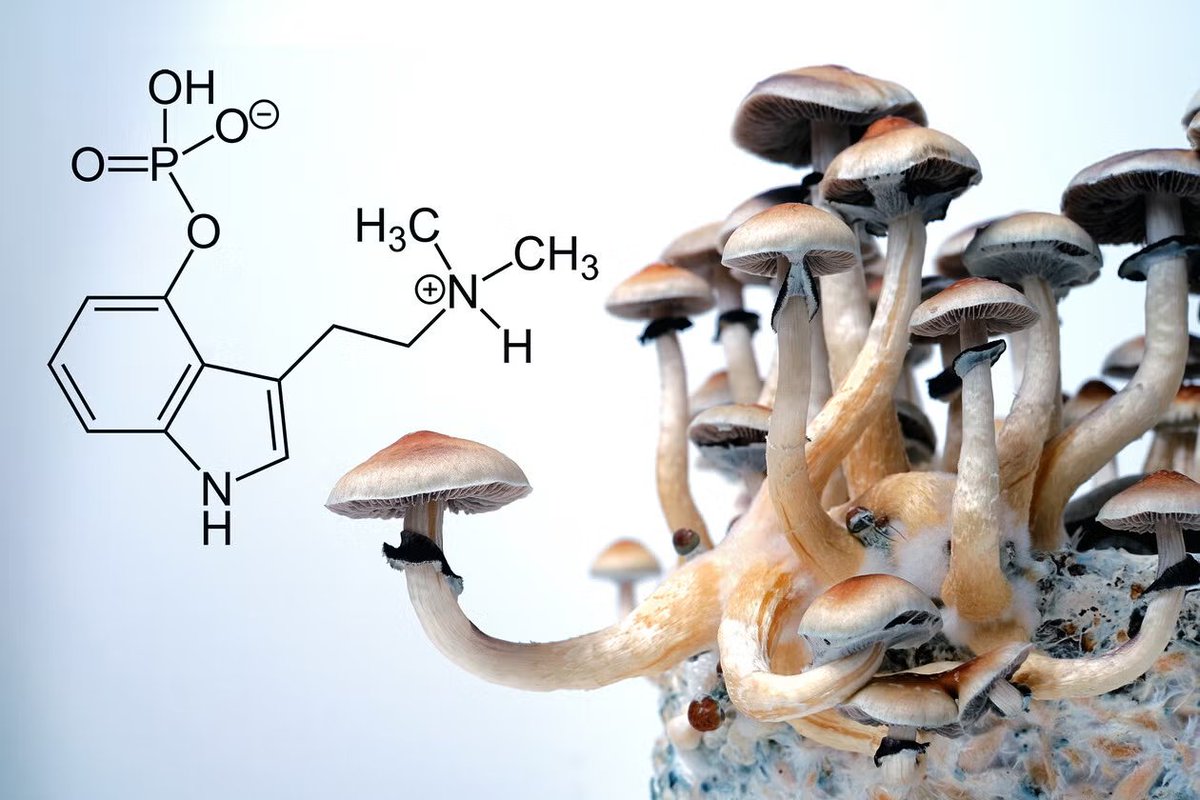
PSILOCYBIN BEATS NICOTINE PATCHES IN QUITTING SMOKING
A study published in JAMA Network Open found a single dose of psilocybin—the active compound in psychedelic mushrooms—was far more effective than nicotine patches at helping smokers quit.
In a trial of 82 adults, over 40% of participants who received psilocybin were smoke-free after six months, compared with about 10% using nicotine patches, with both groups receiving therapy.
Lead researcher Matthew Johnson of Johns Hopkins University said the drug may help by altering brain communication and self-perception, potentially breaking addictive patterns.
The findings add momentum to growing research into psychedelic-assisted treatments, though larger trials are still needed.
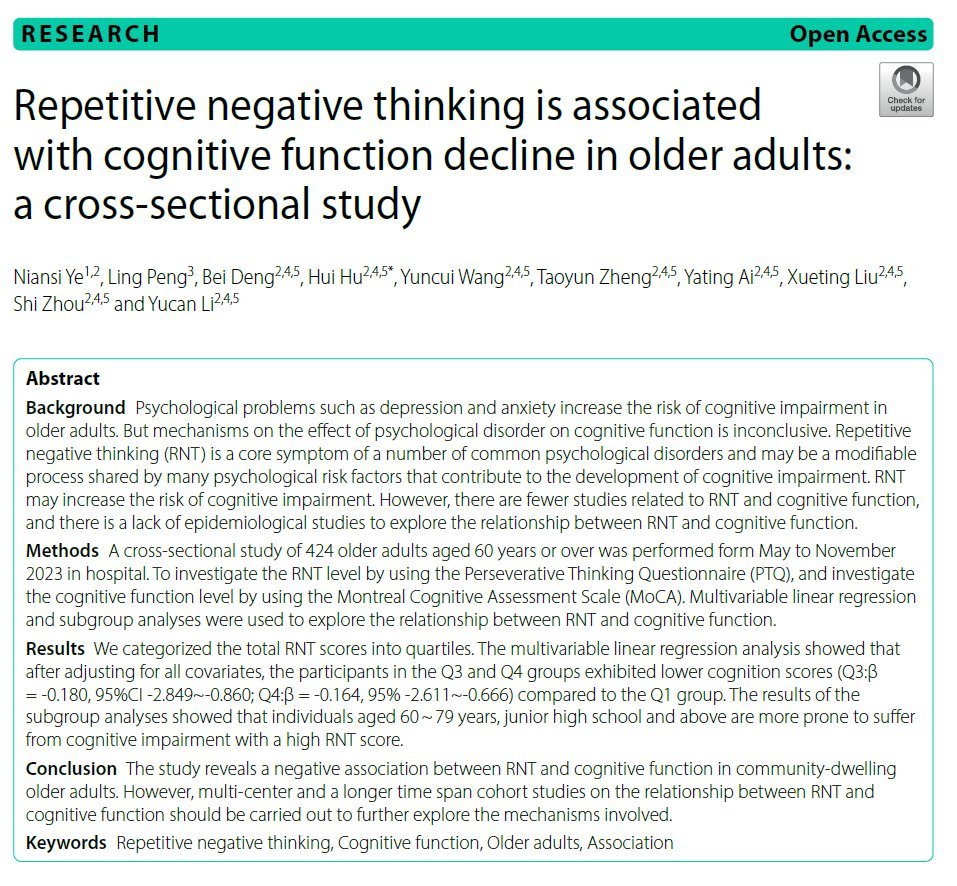
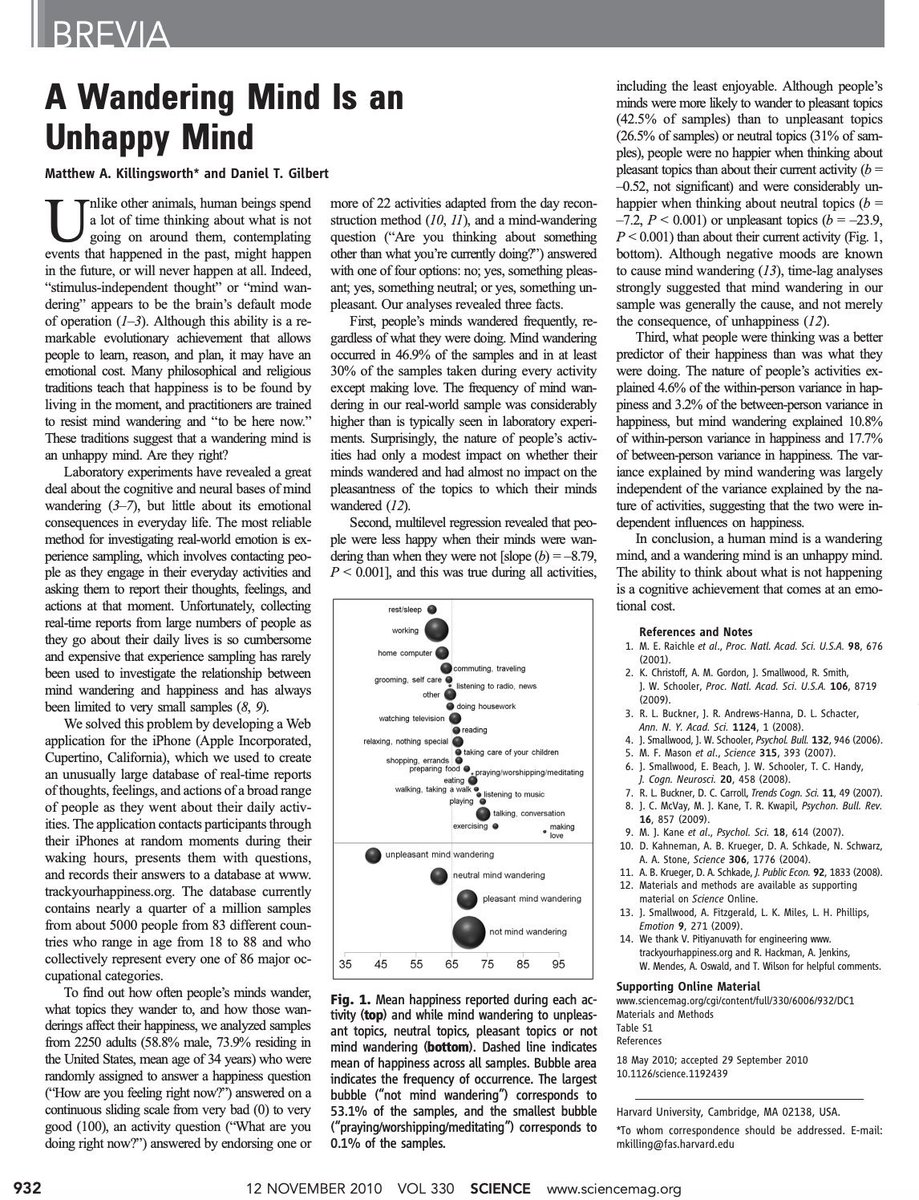
I think to any observer, it seems fairly clear that we didn't evolve for 9-to-5 desk jobs, hyper-palatable processed food, and 24/7 digital social comparison. A lot of what we currently label as "mental illness" is actually a highly predictable mismatch between our Pleistocene brains and the modern environment.
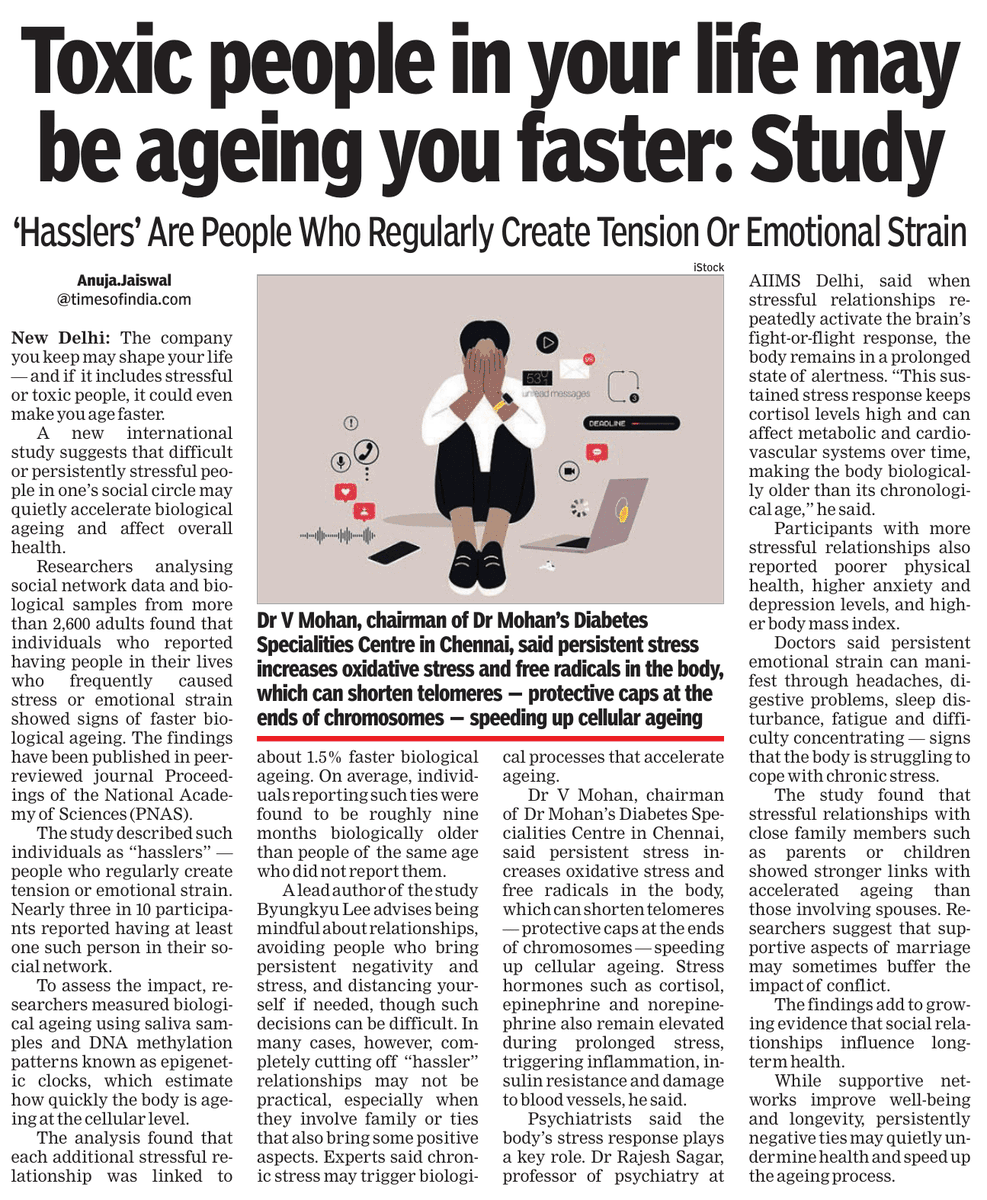
Excellent article by Anuja Jaiswal in Times of India today discussing how toxic relationships and persistent stress can accelerate biological ageing. Thank you for quoting me and for highlighting the importance of healthy social environments for long-term wellbeing.
@AnujaJaiswalTOI@timesofindia@toi
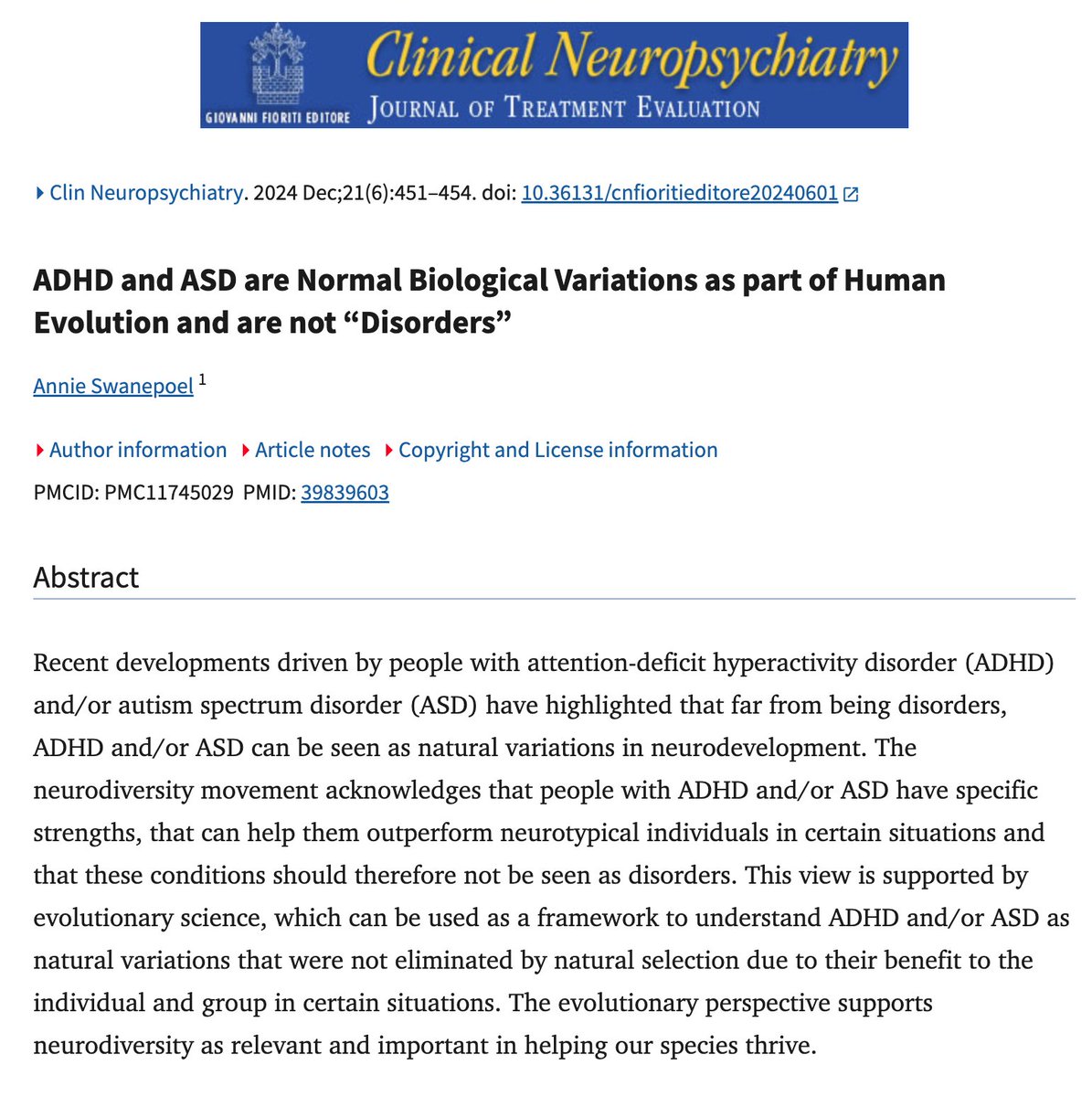
Perhaps ADHD reflects an evolutionary mismatch, not just a disorder.
ADHD traits like high energy, impulsivity, and distractible attention are a disadvantage in modern classrooms.
But for 95% of human history, those traits may have helped people survive.
🚨BREAKING: MIT hooked people up to brain scanners while they used ChatGPT.
What they found should concern every single person reading this.
ChatGPT users showed 55% weaker brain connectivity than people who didn't use it. Not after years. After just four months.
Here's how they tested it. 54 people were split into three groups: one used ChatGPT to write essays, one used Google, and one used nothing but their own brain. They wore EEG monitors that tracked their brain activity in real time across four sessions over four months.
The brain-only group built the strongest, most widespread neural networks. Google users were in the middle. ChatGPT users had the weakest brains in the room. Every time.
Then the memory test hit. Participants were asked to recall what they'd just written minutes earlier. 83% of ChatGPT users couldn't quote a single line from their own essay. They wrote it. They couldn't remember it. The words passed through them like they were never there.
It gets worse. In the final session, ChatGPT users were told to write without AI. Their brains were measurably weaker than people who never used AI at all. 78% still couldn't recall their own writing. The damage didn't go away when the tool was removed.
Meanwhile, brain-only users who tried ChatGPT for the first time? Their brains lit up. They wrote better prompts. They retained more. Their brains were already strong enough to use AI as a tool instead of a crutch.
The researchers also found that every ChatGPT essay on the same topic looked almost identical. More facts, more dates, more names. But less original thinking. Everyone using ChatGPT produced the same generic output while believing it was their own.
MIT gave this a name: cognitive debt. Like financial debt, you borrow convenience now and pay with your thinking ability later. Except there's no way to pay it back.
The question isn't whether ChatGPT is useful. It's whether the price is your ability to think without it.
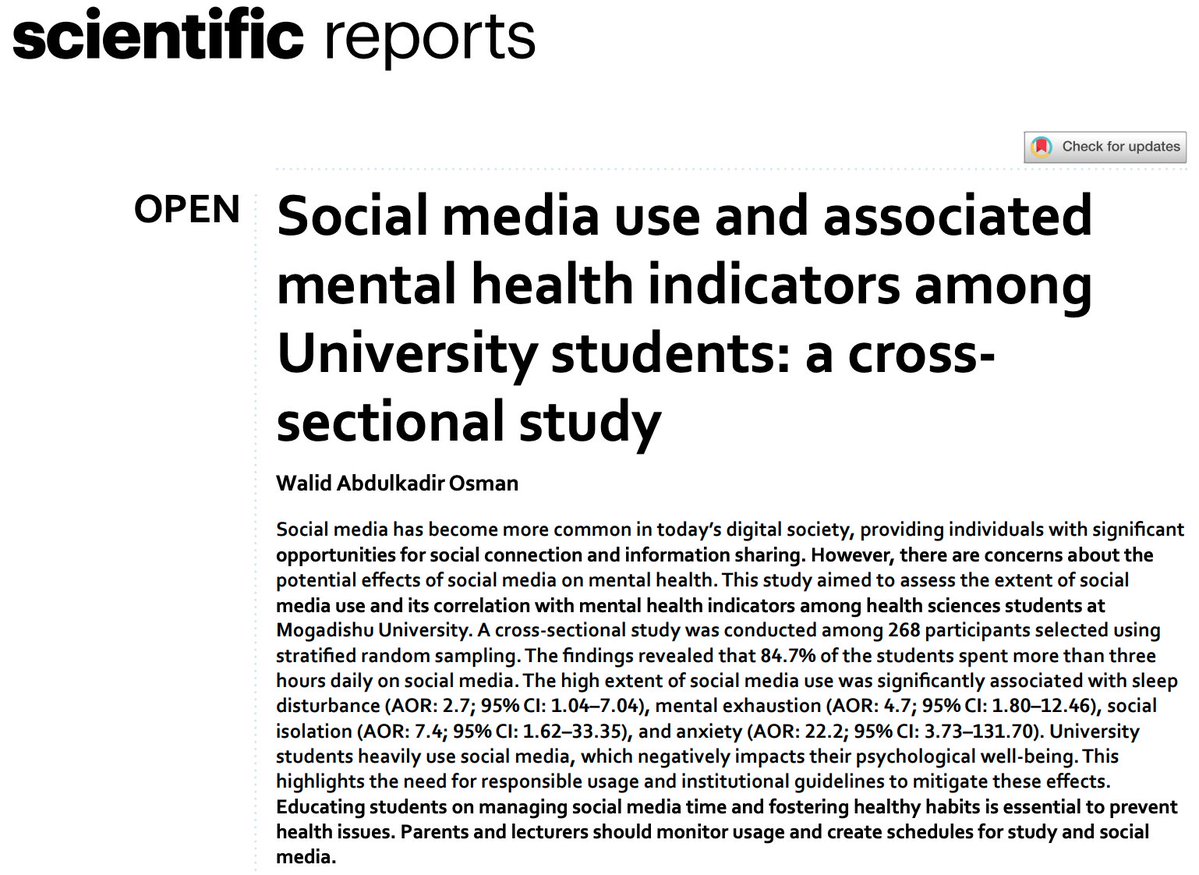
84.7% of university students spend more than 3 hours daily on social media.
High use is associated with increased odds of:
↑ Sleep disturbance (2.7x)
↑ Mental exhaustion (4.7x)
↑ Social isolation (7.4x)
↑ Anxiety (22x)
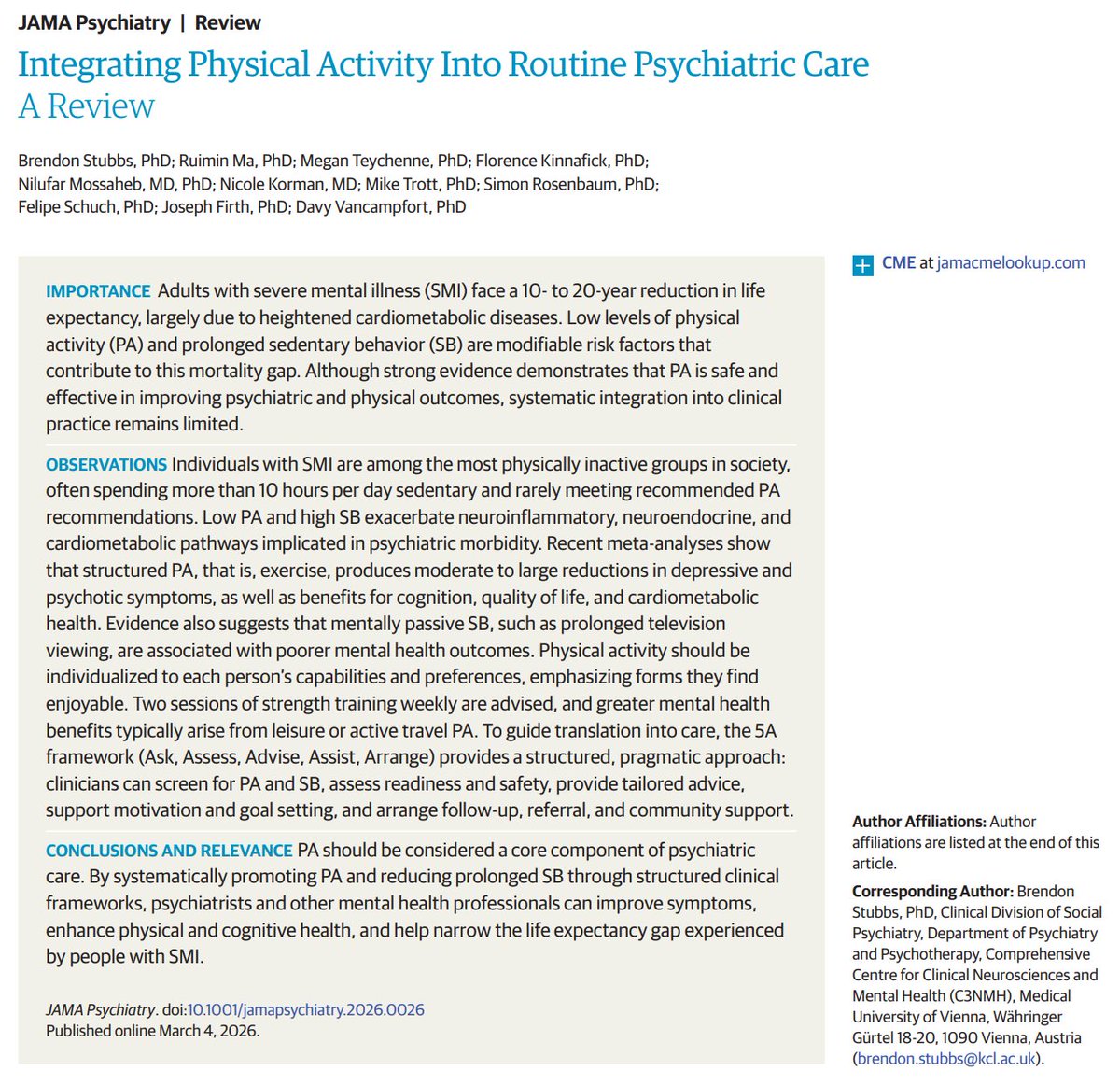
30% of U.S. adolescents (ages 10–19) have prediabetes or type 2 diabetes.
Why does a psychiatrist care?
Because poor metabolic health is strongly associated with poor mental health.
https://t.co/YZDh17q4Oq
ADHD isn’t an “attention deficit.” It’s a profound developmental disorder of self-regulation.
Dr. Russell Barkley (one of the world’s leading ADHD researchers) explains why the name “ADHD” has done massive damage:
- It trivializes a condition as serious as autism, schizophrenia, or bipolar disorder.
- It makes people think “just drink coffee and focus” — when the real issue is far deeper.
The core problem isn’t just distractibility. It’s three interlocking executive deficits:
1. Persistence toward the future — inability to stay motivated by delayed rewards
2. Resistance to distractions — constant derailment by immediate temptations
3. Working memory — struggling to hold goals, plans, and consequences in mind
Together, these create a devastating impairment in self-regulation — the ability to consciously inhibit impulses, direct actions toward yourself (self-talk, self-monitoring), and align behavior with long-term welfare.
Barkley:
“This is not an attention problem. This is a disorder of self-regulation… as serious as manic depression, and in its own way, as autism.”
Parents often hear “he’s just lazy” or “she needs to try harder.”
The truth is far more compassionate and urgent:
The child’s brain is developmentally behind in the very mechanisms that allow other kids to stop, think, plan, and protect their future selves.
If we renamed it Self-Regulatory Developmental Disorder (SRDD), the conversation would change overnight.
How many adults do you know who still struggle with exactly these same three deficits — and were never properly understood as kids?
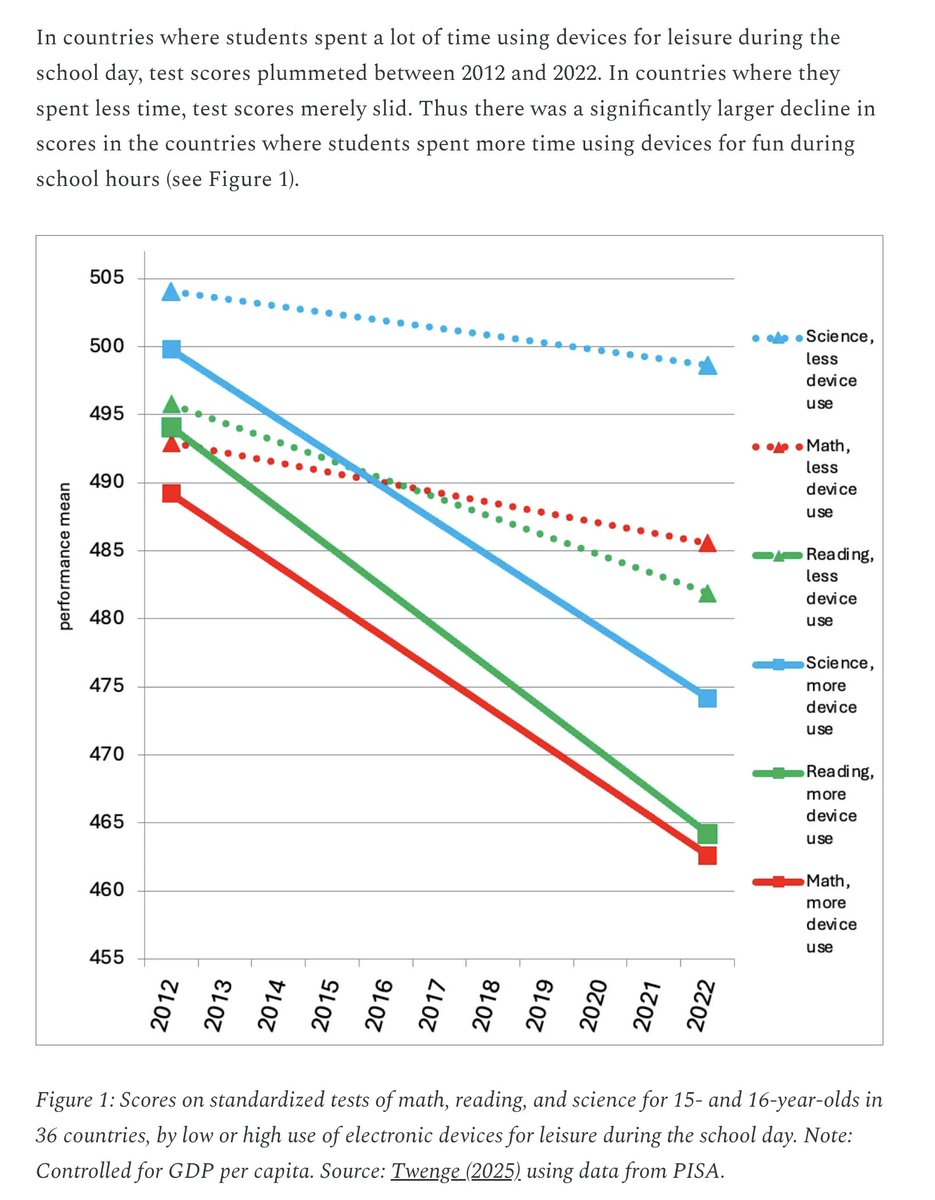
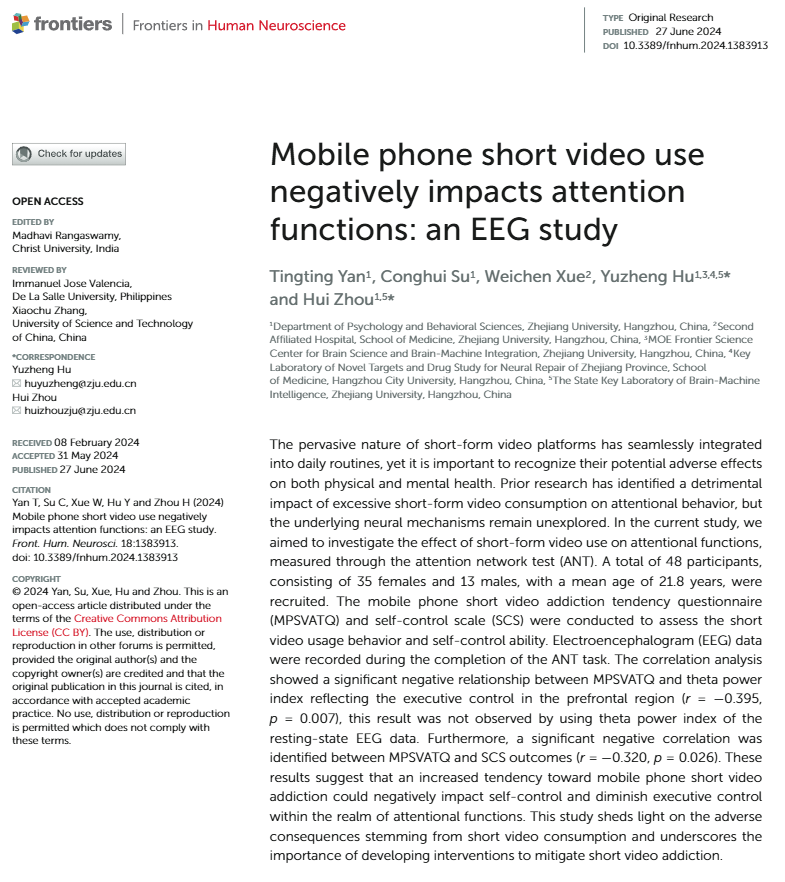
More evidence that the global decline in test scores that began after 2012 is linked to the proliferation of smartphones and computers in class: The slide was bigger in countries where students began spending more time on devices (for leisure)
https://t.co/HbzevWcG9e
Attention is not a fixed resource that some people “have” and others lack. It is a regulatory system that allocates effort based on expected reward and uncertainty. When outcomes are unclear or delayed, attention naturally destabilises. In these cases, external structure often works better than pressure.
Major new report on global trends in mental health, out today from Sapien Labs. Data from 2.5 million people across 85 countries.
Some of the most important findings:
1) Young adults used to generally have good mental health, compared to older generations. But now, in ALL countries examined, they are doing badly compared to older generations in that country.
2) "Four key factors have emerged that together predict three quarters of this effect. These are diminished
family bonds, diminished spirituality, smartphones at increasingly young age, and increasing consumption of
ultra-processed food."
3) The decline of young people's mental health is "most pronounced in the wealthier and more developed countries." They note that it is in such countries that smartphones are given earliest, junk food is most heavily consumed, spirituality is most diminished, and family ties are looser and often weaker.
4) "A younger age of first smartphone ownership is associated with increased suicidal thoughts,
aggression, and other problems in adulthood."
5) Here is their summary of findings on early smartphone ownership:
"GenZ is the first generation to grow up with a smartphone. Among this group, the younger they acquired their first smartphone in childhood, the more likely they are to have struggles as adults. These struggles extend beyond sadness and anxiety to less discussed symptoms, such as a sense of being detached from reality, suicidal thoughts, and aggression towards others. The effects arise through disruption of sleep, increased risk of exposure to harmful online content, predators, and explicit material as well as increased probabilities of cyberbullying during crucial developmental years. Excessive time spent on smartphones also diminishes the development of social cognition that requires learned interpretation of facial expressions, body language, and group dynamics. The negative impacts are particularly sharp below age 13."
The report is short, accessible, and important. Read it here:
https://t.co/hFGAyoWabs
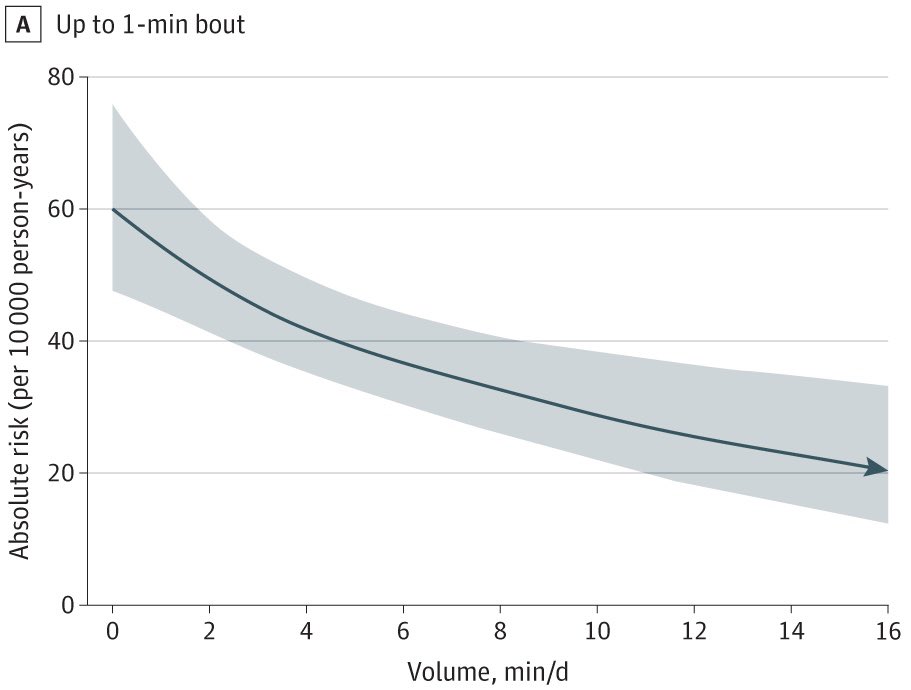
Small amounts of exercise are associated with large reductions in cancer risk.
4.5 minutes per day is associated with 31% reduction in cancer incidence.
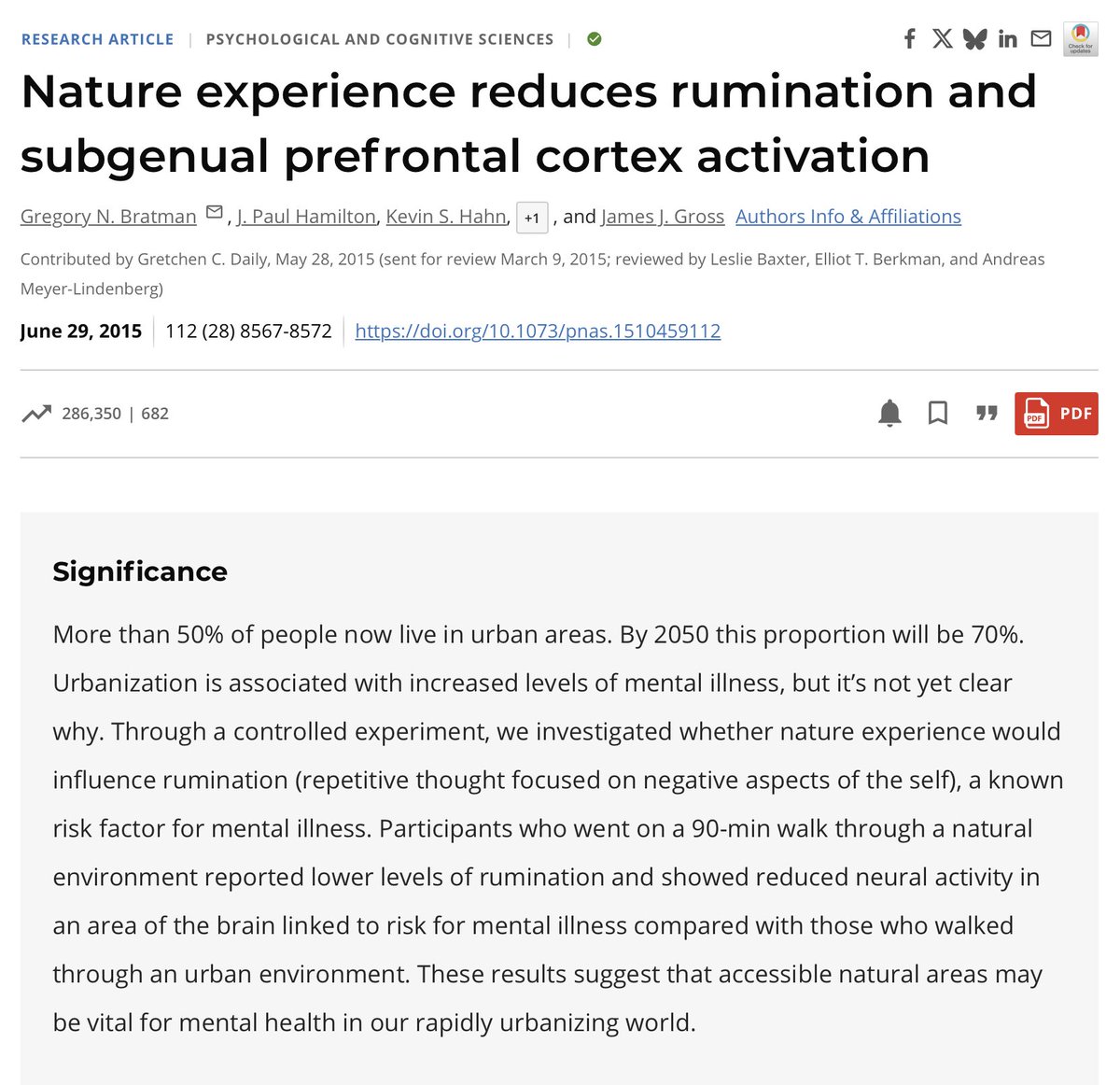
Major life hack: Walk in nature.
Stanford study found that a 90-minute nature walk meaningfully reduced rumination and activity in the brain region associated with depression.
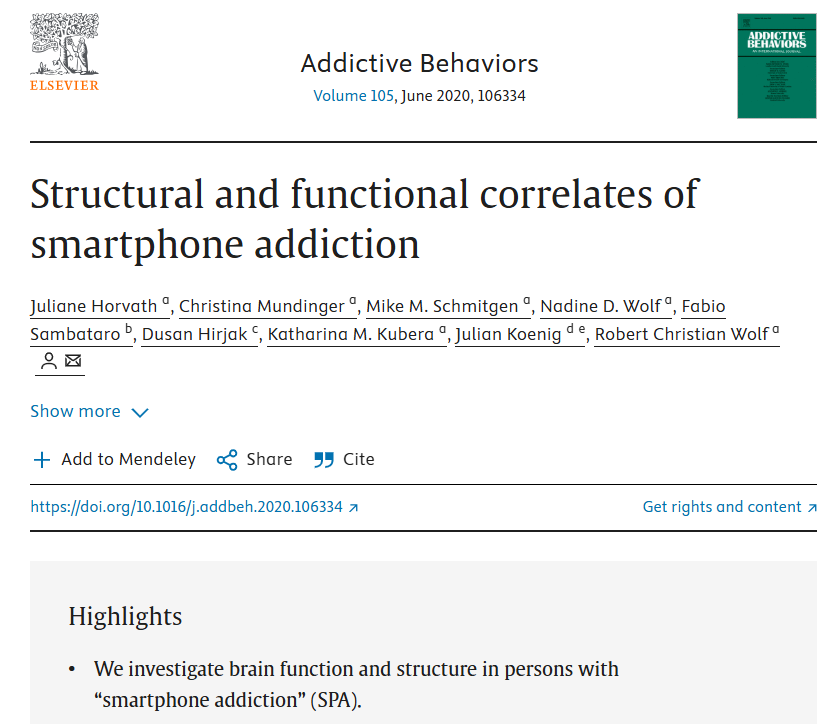
German scientists just discovered the neural cost of phone addiction.
Brain scans of 22 smartphone addicts revealed something shocking.
The exact same damage pattern as cocaine and alcohol.
Here's what else they found & why everyone needs to see this NOW: