@AppleSupport Looks like my account is hacked, and someone is using my account to purchase games subscriptions. I am trying to reset my password as a first step, but the reset password page is throwing 503 https://t.co/NjtefnouQY Can you help on this on priority
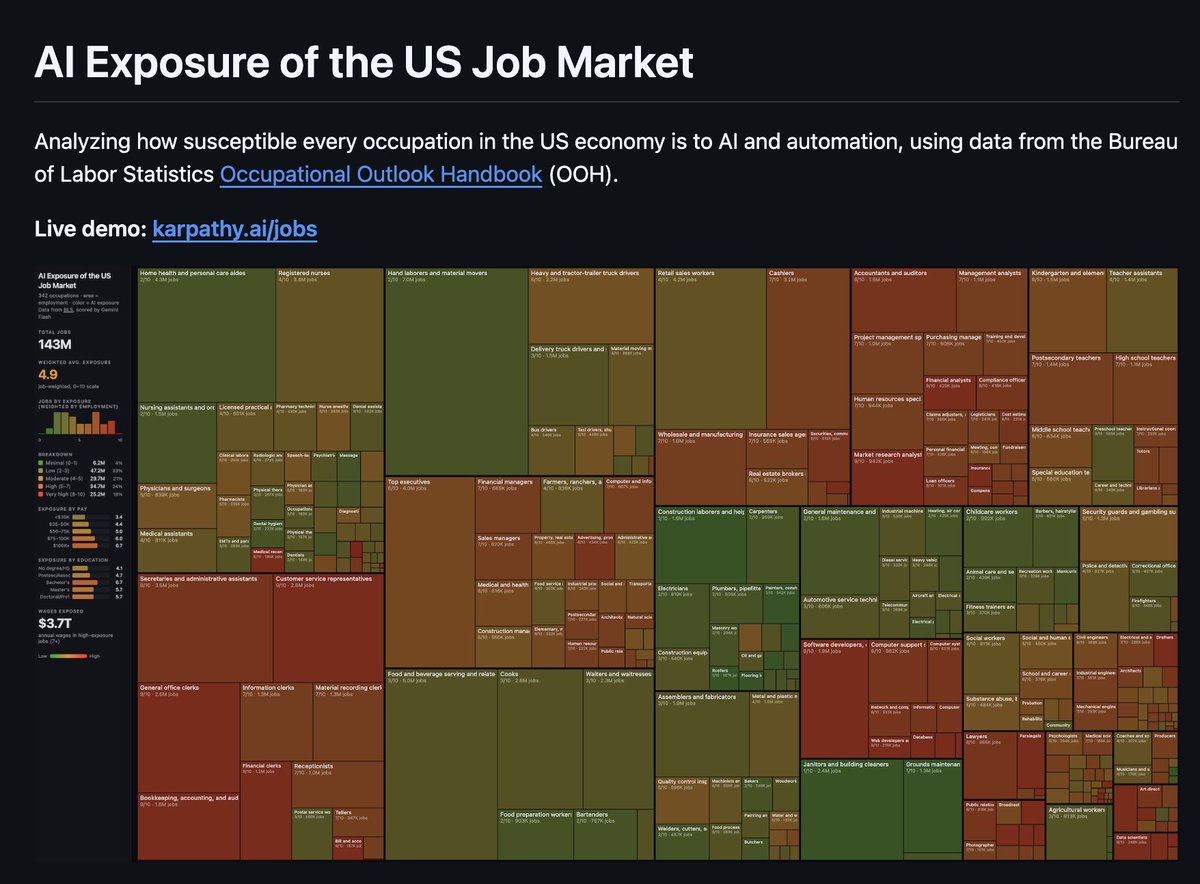
5 minutes ago, @karpathy just dropped karpathy/jobs!
he scraped every job in the US economy (342 occupations from BLS), scored each one's AI exposure 0-10 using an LLM, and visualized it as a treemap.
if your whole job happens on a screen you're cooked.
average score across all jobs is 5.3/10.
software devs: 8-9.
roofers: 0-1.
medical transcriptionists: 10/10 💀
https://t.co/7MWRgdtLDI
Over the last few weeks I’ve been asking questions here about how teams keep track of what’s actually safe to demo or promise as products change.
A pattern kept coming up:
things exist but aren’t really ready
sales/CS rely on tribal knowledge
docs exist, but aren’t trusted or enforced
problems only surface when a customer escalation happens
I’ve started building a very small MVP to act as a single source of truth for feature status (what’s live, beta, internal-only, safe to demo, safe to promise) and to log customer promises so teams can see when they’re at risk.
This is still early and scrappy — I’m not selling anything yet.
I’m mainly looking for honest feedback from people in CS, SE, sales, or PM:
Does this problem feel real in your org?
What would make a tool like this actually get used?
What would make you not trust it?
If you’re open to a quick chat or want to see screenshots, happy to share.
Appreciate all the discussions here — they directly shaped what I’m building.